

INTERNATIONAL JOURNAL
OF ASIA-PACIFIC
HERITAGE STUDIES
Sustainable Consernation of
Asia-Pacific Cultural Heritage for
The UNESCO CHAIR


INDEX
Ⅰ INTRODUCTION
1 | Introduction of UNESCO CHAIR Programme
2 | Summary of 2018 UNESCO CHAIR Programme
in KNUCH
Ⅱ RESEARCH OF
ASIA-PACIFIC
TRADITIONAL
MATERIALS AND
TECHNIQUE
1 | Research on Natural Materials in Laos
2 | Survey of Uzbekistan Traditional Ikat
3 | Research on Construction Method and Materials
for Brick Construction in Khmer, Cambodia
4 | Basic Survey for the Construction of Database
Ⅲ INTERNATIONAL
JOURNAL OF
ASIA-PACIFIC
HERITAGE STUDIES
1 | Hosting the 2018 UNESCO CHAIR
International Conference
2 | The 2018 International Conference
for the UNESCO CHAIR
Ⅳ THE FOURTH MID-
TERM INVITATIONAL
TRAINING PROGRAM
FOR CAMBODIAN
EXPERTS IN 2018
1 | Program Overview
2 | Program Contents
3 | Related Photos about the program
007
008
015
031
051
065
075
081
193
193
199
2018
INTERNATIONAL
JOURNAL OF
ASIA-PACIFIC
HERITAGE STUDIES


INTRODUCTION
Ⅰ | Introduction of UNESCO CHAIR Programme
Ⅱ | Summary of 2018 UNESCO CHAIR Programme in KNUCH


7
INTERNATIONAL JOURNAL OF
ASIA-PACIFIC HERITAGE STUDIES
SUSTAINABLE CONSERBATION OF
ASIA-PACIFIC CULTURAL HERITAGE FOR THE UNESCO CHAIR
1.1 Summary of UNESCO CHAIR
Programme
The UNESCO Chair Program was adopted through
the resolution of the 26th General Assembly
in 1992 for enhancing competence through
exchange and cooperation of higher education
institutions and realizing UNESCO ideals. The
UNESCO program provides activities such as
education, research, and exchange of academics
and students, workshops, seminars, development
of teaching programs, and publication, and serves
as a "sink tank" and bridge among academic
society, community and policy makers.
1.2 UNESCO CHAIR Programme in Korea
National University of Cultural Heritage
In March 2017, the Korea National University
of Cultural Heritage signed a agreement of the
UNESCO CHAIR Programme under the theme
of 'Capacity Building for the Preservation and
Restoration of Asia-Pacific Cultural Heritage'.
The purpose of this program is as follows:
ㅇ To support the reinforcement of capacity building of
students, professors, specialists and crafters in
the field of heritage preservation and restoration.
ㅇ For this purpose, the KNUCH performs a global and
national training workshop to study and preserve
materials and techniques which are used in Asia-Pacific
Table 1. Purpose of UNESCO CHAIR Programme in KNUCH
regions.
ㅇ To research a traditional way for preservation and
restoration of cultural heritage, providing the research
for sharing a database of traditional methods and
materials by online-service, and founding an online-
training programme for supporting independent heritage
preservation.
ㅇ To improve a network with nations who benefit
the programme through the understanding of
their heritages
ㅇ To found a social network between trainers and
specialists for the reinforcement of capacity building
for heritage preservation and restoration
ㅇ To improve an information for the development of
policy and to support a programme for
heritage restoration and preserve in Asia-Pacific
regions
ㅇ To promote a characterization about research and
training for restoration and preservation of cultural
heritage in Asia-Pacific regions, in cooperation
with UNESCO, supporting a maintenance policy
of cultural heritage.
Picture 1. Logo of UNESCO CHAIR
Ⅰ Introduction of
UNESCO CHAIR Programme
INTRODUCTION

8
INTERNATIONAL JOURNAL OF
ASIA-PACIFIC HERITAGE STUDIES
SUSTAINABLE CONSERBATION OF
ASIA-PACIFIC CULTURAL HERITAGE FOR THE UNESCO CHAIR
Ⅱ Summary of 2018 UNESCO
CHAIR Programme in KNUCH
2.1 Research of Asia-Pacific Traditional
Materials and Technique
The Research of Asia-Pacific Traditional
Materials and Technique among the UNESCO
CHAIR Programme in KNUCH is conducting
basic research on tangible and intangible cultural
heritages in developing countries in the Asia-
Pacific region,
Currently, cultural heritage research in Asia-
Pacific region lacks research on their traditional
materials and method. It is urgent reason that
the investigations are demanded for experts and
technicians of cultural heritage to strengthen
their capacities. Therefore, the research is carried
out with the following objectives.
Table 1. Purpose of Research of Asia-Pacific Traditional
Materials and Technique
ㅇ Collection basic data on traditional materials and
technology methods of developing countries in
the Asia-Pacific region.
ㅇ To enhance technical capabilities related to
the conservation and restoration of cultural
heritage in the Asia-Pacific region.
ㅇ Creating a network of cultural heritage field in
the Asia-Pacific region.
The Research of 2018 Asia-Pacific Traditional
Materials and Technique was conducted on the
subjects of Laos's natural materials, Uzbekistan's
traditional textiles, Cambodia's construction
methods and materials for brick construction
in Khmer, and the research was also conducted
to collect basic data to build a database of the
survey results. The following is a summary of the
contents.
Category
Contents
Natural
Materials
Objective
Research on
Natural Materials in Laos
Location
Laos (Luang Prabang)
Period
2018.08.15.~2018.08.19
Visit
Institutions
the Department of Luang Prabang
World Heritage (DPL), Traditional
Arts & Ethnology Centre (TAEC),
Wat Xieng Thong and the Royal
Palace Museum in Luang Prabang
Researcher
Yongjae Chung, Jia YU, Seonhye
Jeong, Ryu Songyi, Nara Lee
Traditional
Textiels
Objective
Research on Uzbekistan
Traditional Ikat
Location
Uzbekistan (Margilan)
Period
2018.09.12.~2018.09.21
Visit
Institutions
Margilan Crafts
Development Centre
Researcher YeonokSim, Sunyong Lee,
Geunil Park, Sohee Shin
Construction
Materials and
Method
Objective
Research on Construction
Method and Materials for Brick
Construction in Khmer
Location
Cambodia (Siem reap)
Period
2018.08.23.~2018.08.28
Visit
Institutions
Roluos Archeological Complex
(Lolei, Preah Ko, and Bakong),
Banteay Srei, Royal palace,
Bapuon, Bayon, Ankor Wat
Researcher
Heondeok Jang, Hyeonok Yoo,
Soyoung kim, Hyojeong Kim,
Sangok Lee, Dohyeon Nam
Database
Objective
Basic Survey for
the Construction of Database
Researcher
Youngjae Kim, Soyoung Kim,
Hyojeong Kim, Hyeseon Park,
Donghyen Lee
Table 2. Overview by Team for Research on Traditional
Materials and Technology in Asia-Pacific
2.2 Hosting the 2018 UNESCO CHAIR
International Conference
The International Conference <Sustainable Con-
INTRODUCTION
9
INTERNATIONAL JOURNAL OF
ASIA-PACIFIC HERITAGE STUDIES
SUSTAINABLE CONSERBATION OF
ASIA-PACIFIC CULTURAL HERITAGE FOR THE UNESCO CHAIR
servation of Asia-Pacific Cultural Heritage>,
hosted by Korea National University of Cultural
Heritage(KNUCH) and sponsored by Korean
National Commission for UNESCO, Cultural
Heritage Administration of Korea and Korea
Cultural Heritage Foundation, aims to enhance
international and domestic interest in conserva-
tion and restoration for cultural heritage.
The main purpose of the project is to share the
latest research trends on the preservation and
restoration of cultural heritage in Asia, to provide
a place of communication for international
and domestic cultural heritage experts and to
establish a cultural heritage network in Asia-
Pacific region.
Table 3. Summary of the 2018 UNESCO CHAIR International
Conference
Category
Contents
Date
2018.10.24
Location
National Palace Museum of Korea
Purpose
ㅇ Sharing the latest research trends on
conservation and restoration of
cultural heritage in Asia-Pacific regions.
ㅇ Improving international interest in
cultural heritage field.
ㅇ Creating a network of cultural heritage field
in Asia-Pacific regions.
Contents
ㅇ Lecture by International experts on
cultural heritage field.
ㅇ Final Result of research Asia-Pacific
Traditional Materials and Technique.
ㅇ Final Result of the 4th mid-term invitational
training course.
Category
Name
Group
Field
Survey
Jia
YU
Korea National University
of Cultural Heritage
Sunyong
LEE
Korea National University
of Cultural Heritage
Hyeonok
YOO
Korea National University
of Cultural Heritage
Mid-term
Training
Course
(Cambodia)
Basith
SY
APSARA Authority
Visaradaputra
SYTHA
APSARA Authority
Panhavontey
KEAN
APSARA Authority
Table 4. List of Speakers
Lecturer
Masaki
KOIWA
Waseda University
Yasutaka
MATSUMOTO
Nanjing Tech University
Ryuichi
TANIGAWA
Kanazawa University
Jihon
KIM
Korean National Commission for
UNESCO
Sujeong
LEE
Cultural Heritage Administration
of Korea
2.3 The Fourth Mid-term Invitational
Training Program for Cambodian
Experts in 2018
In 2018, Korea Cultural Heritage Foundati
-on(KCHF) held the 4th Mid-Term Invitational
Training Program. The Cambodian experts
are from the Authority for the Protection of
the Site and Management of the Region of
Angkor(APSARA) who are the technical staffs;
engineer, architects and archaeologist. They
stayed 89days in Korea and learn about how to
conserve the old historic buildings especially
about their structures and safety.
Table 5. Summary of the 4th Mid-Term Invitational Training
Program for Cambodian Experts in 2018
Category
Contents
Date
2018.08~2018.10
Location
Korea National University of Cultural Heritage
Purpose
ㅇ To enhance technical capabilities related to the
conservation and restoration of cultural
heritage in Cambodia
Contents
ㅇ Strengthen the work capabilities of
the professional staff
ㅇ Conduct a theoretical (philosophy) study of
conservation and restoration of
cultural heritage
ㅇ Focused training on the 3D modeling of
architectural cultural heritages
ㅇ To link theory and practice education through
field survey on the conservation and
restoration sites in Korea
Sovanlylin
MENG
APSARA Authority

10
INTERNATIONAL JOURNAL OF
ASIA-PACIFIC HERITAGE STUDIES
SUSTAINABLE CONSERBATION OF
ASIA-PACIFIC CULTURAL HERITAGE FOR THE UNESCO CHAIR
Table 6. Name of Cambodian Experts
Name
Group
Sovanlylin
MENG
Technical staff of Department of
Conservation of the Monuments in Angkor
Parkand Archeological Prevention, APSARA
National Authority
Panhavontey
KEAN
Technical staff of Department of
Conservation of the Monuments in Angkor
Parkand Archeological Prevention, APSARA
National Authority
Basith
SY
Technical staff of Department of
Conservation of the Monuments in Angkor
Parkand Archeological Prevention, APSARA
National Authority
Visaradaputra
SYTHA
Technical staff of Department of
Conservation of the Monuments in Angkor
Parkand Archeological Prevention, APSARA
National Authority

RESEARCH OF ASIA-P
ACIFIC TRADIRIONAL MA
TERIALS AND TECHNIQUE
Ⅰ | Research on Natural Materials in Laos
Ⅱ | Survey of Uzbekistan Traditional Ikat
Ⅲ | Research on Construction Method and Materials for Brick
Construction in Khmer, Cambodia
Ⅳ | Basic Survey for The Construction of Database


Research
on
Natural
Materials
in Laos
GROUP
| Korea National University of Cultural Heritage
NAME
| Yongjae Chung / Jia Yu / Seonhye Jeong
| Songyi Ryu / Nara Lee

15
INTERNATIONAL JOURNAL OF
ASIA-PACIFIC HERITAGE STUDIES
SUSTAINABLE CONSERBATION OF
ASIA-PACIFIC CULTURAL HERITAGE FOR THE UNESCO CHAIR
Ⅰ Research on Natural Materials
in Laos
GROUP
| Korea National University of Cultural Heritage
NAME
| Yongjae Chung / Jia Yu / Seonhye Jeong
| Songyi Ryu / Nara Lee
1. Overview
1.1. Purpose of research
In order to research local craft techniques
and natural materials of Laos, we visited four
relevant establishments in Luang Prabang; the
Department of Luang Prabang World Heritage
(DPL), Traditional Arts & Ethnology Centre
(TAEC), Wat Xieng Thong and the Royal Palace
Museum in Luang Prabang. In addition, we
conducted an interview with a traditional craft
expert affiliated to Luang Prabang Fine Arts
School to study the traditional craft materials
and techniques in Luang Prabang.
In this research, we investigated the local
craft techniques and natural materials of Laos
along with relevant cases of transmission and
educational programs
1.2. Method of research
From August 15, 2018 to August 19, 2018, we
visited institutions and conducted interviews with
experts in Luang Prabang, Laos. The research
was documented using methods such as voice
recording, shorthand, photograph and video
recording. The form and main contents of the
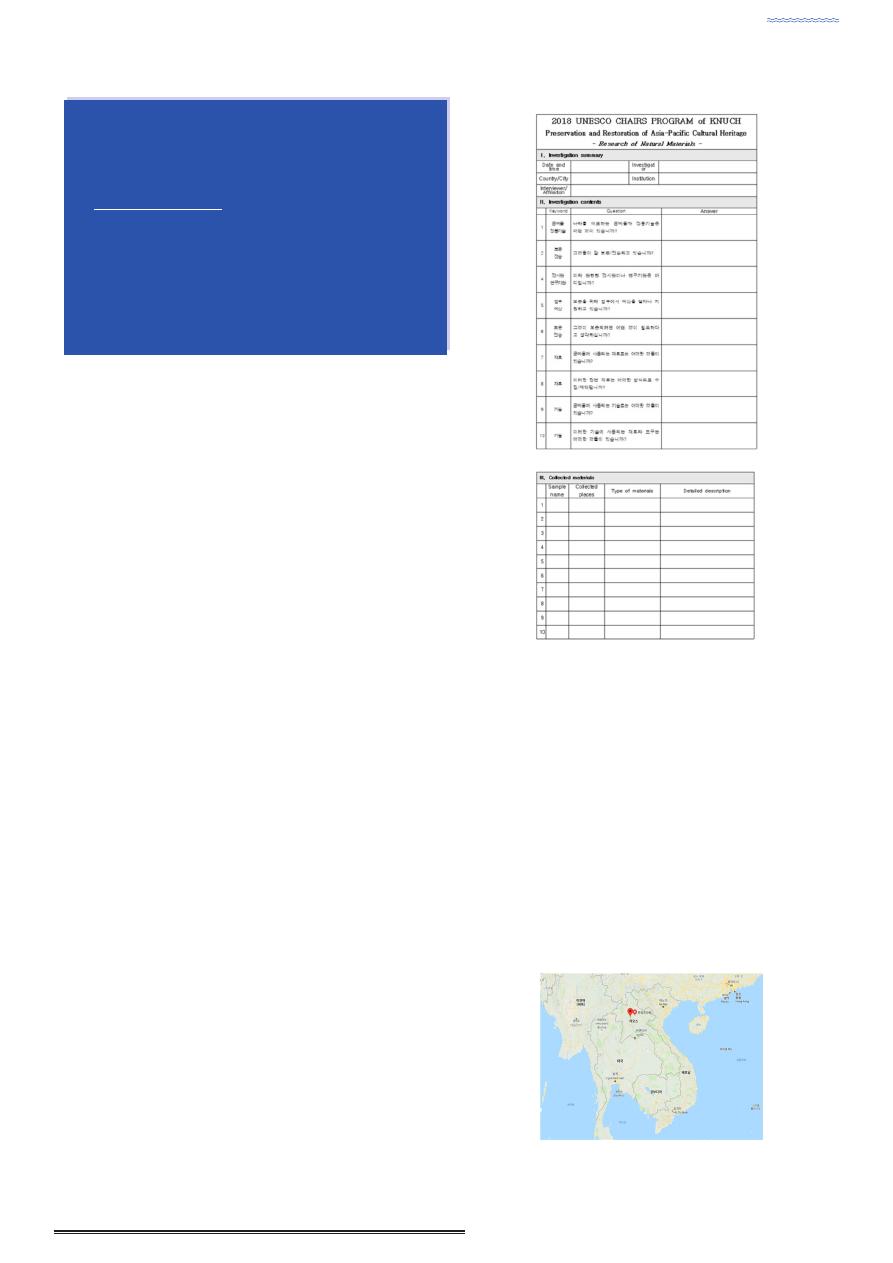
survey for question and answer were as follows.
Picture 1. Survey form for natural material
2. Research Contents
2.1. Scope of research
2.1.1. Country and region researched
The country and region investigated in this
research was Luang Prabang, Lao People’s
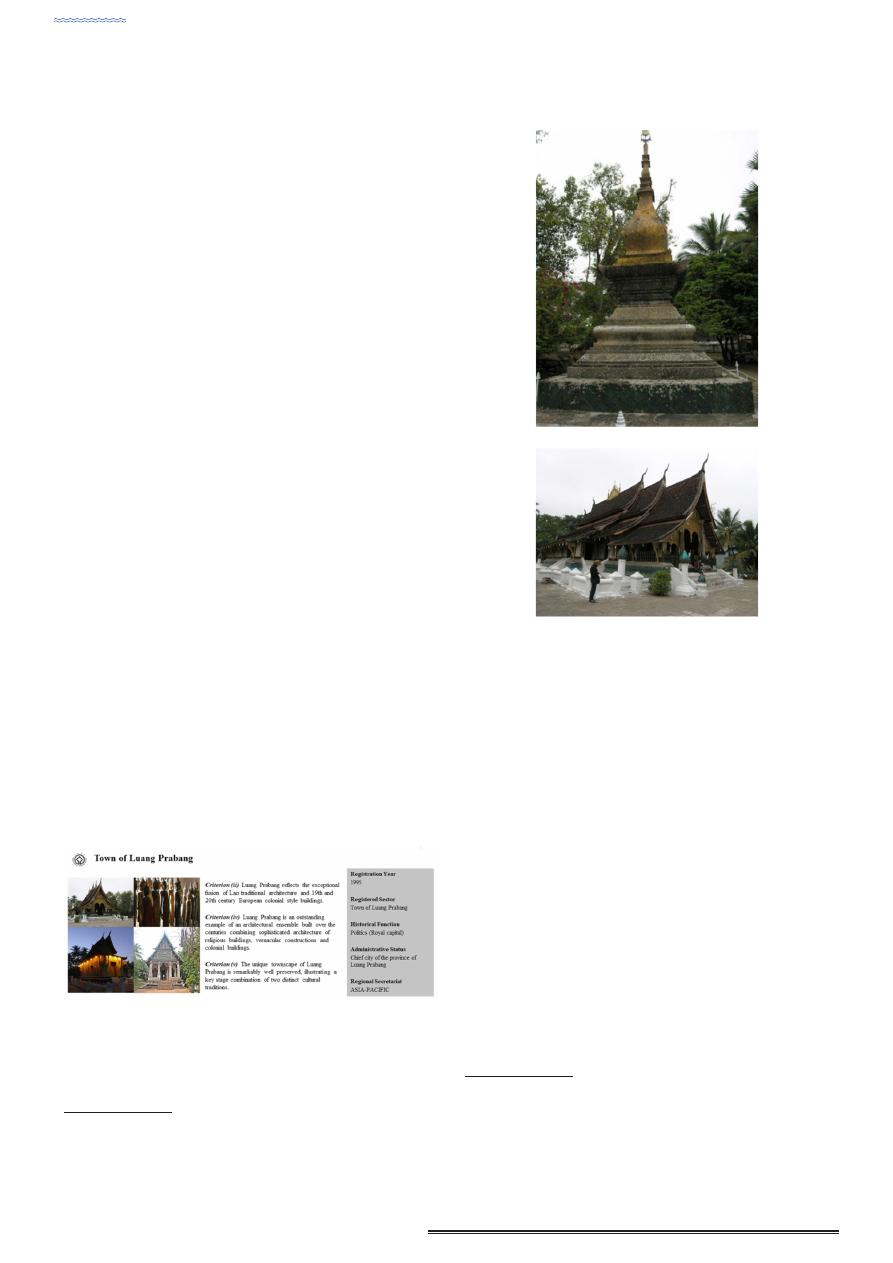
Democratic Republic (Lao PDR: Laos) located in
the Indochinese peninsula.
Picture 2. Luang Prabang, Laos
16
INTERNATIONAL JOURNAL OF
ASIA-PACIFIC HERITAGE STUDIES
SUSTAINABLE CONSERBATION OF
ASIA-PACIFIC CULTURAL HERITAGE FOR THE UNESCO CHAIR
2.1.2. Overview of the country and region
researched
Officially called the Lao People's Democratic
Republic, Laos is located in the center of
Indochinese Peninsula. The country has a land
area of approximately 236,800 km2(about 1.1
times the size of the Korean peninsula), and 70%
of its landmass is made up of mountainous areas.
The total population of Laos is 6.85 million (as
of 2017) and the capital city of Vientiane has a
population of 820,900 (as of 2015). The official
language is Lao, and the people consist of 49
diverse ethnic groups including Lao Loum(50%),
Lao Theung(30%) and Lao Soung(10%)1.
Luang Prabang, a city situated on the Mekong
River basin in the northwest of Laos, is the capital
of Luang Prabang Province. Since it became the
capital of the Kingdom of Lan Xang in the 14th
century, Luang Prabang has flourished as the
capital and the center of religion and commerce
of many Kingdoms of Laos. It was the city where
the King of Laos stayed until the abolishment of
monarchy in 1975. Characterized by an exquisite
combination of traditional architecture of
Southeast Asia and French colonial architecture
from the 19th and 20th centuries, the entire city
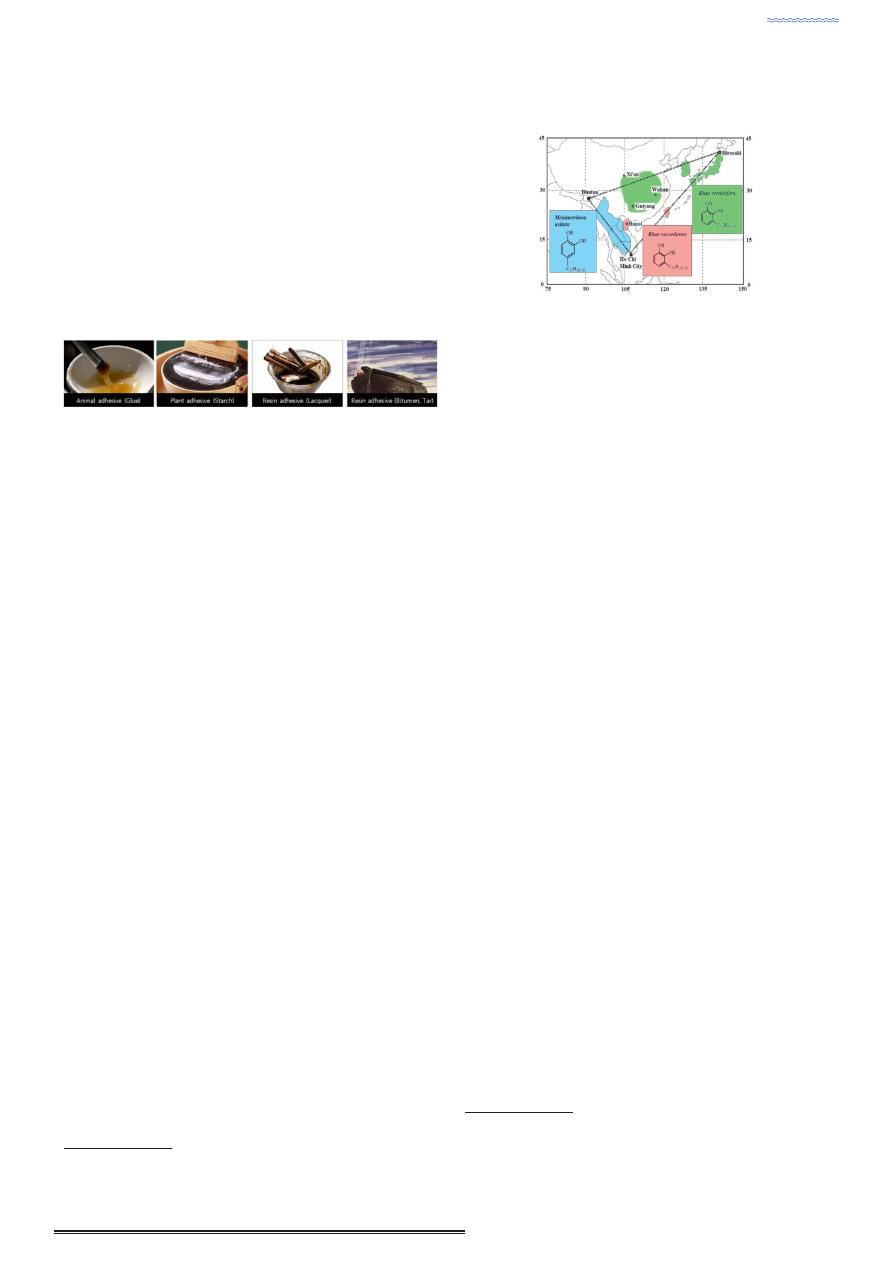
was designated as a UNESCO World Heritage
Site in 19952.
1 | Refer to Country Information on Korea Trade Investment
Promotion Agency Website (https://www.kotra.or.kr)
2 | Refer to Doosan Encyclopedia (http://www.doopedia.co.kr/)
Picture 3. Luang Prabang - UNESCO World Heritage Site
Picture 4. Architecture in Luang Prabang, Laos (ⓒ UNESCO)
2.2. Content of research conducted
2.2.1. Preliminary research
Glue played an important role in the invention
and use of tools by humans. The first case of
human use of adhesive materials is known to be
tar, which was used on stoneware in Italy about
200,000 years ago
3 .
Thus, collecting materials that exist in nature and
using them as adhesives have been practiced for
a long time by humankind
4 .
Adhesion is a phenomenon in which two solid
surfaces bond to each other with a third substance
working as an adhesive in between, and thus an
adhesive is a substance used to affix two objects
to each other
5 .
3 | Refer to Wikipedia (https://ko.wikipedia.org/)
4 | Handbook for Adhesives, Japan Adhesive Association,
translated by Lee Hyeonggyun, Sehwa,
5 | Chemistry Dictionary, by Sehwa Editorial Department,
Sehwa, 2001
17
INTERNATIONAL JOURNAL OF
ASIA-PACIFIC HERITAGE STUDIES
SUSTAINABLE CONSERBATION OF
ASIA-PACIFIC CULTURAL HERITAGE FOR THE UNESCO CHAIR
Adhesives that have been used since ancient
times by humankind are made of natural
materials and can be divided into three groups;
animal adhesives such as glue made by boiling
animal skin, bones, and intestines, vegetable
glues made from starch, wheat, glutinous rice,
and resin adhesives such as lacquer made from
sap and bark of wood.
Picture 5. Types of natural adhesives
Among these adhesives, lacquer is the only
natural substance that is cured by enzymes.
It has been used as adhesive, paint and hardener
for thousands of years in many Asian countries
because of its strong and beautiful properties
6 .
The lacquer trees that grow in Korea, China and
Japan are Toxicodendron vernicifluum species
and the main component obtained from these
trees is known as urushiol.
The lacquer trees native to Vietnam and Taiwan
are Toxicodendron succedanea species and their
main component is laccol. In addition, the lacquer
trees native to Myanmar, Laos, Cambodia and
Thailand are Gluta usitata species and their main
component is thitsiol.
Thus, different lacquer trees are native to
respectively counties in Asia according to the
climate and vegetation environment of each
country. For this reason, the lacquer used in each
country differs in type.
6 | Lacquer Chemistry and Applications, Rong Lu, Elsevier, 2015
Picture 6. Distribution of lacquer tree species (ⓒ Lacquer
Chemistry and Applications, Rong Lu, Elsevier)
In general, the lacquer culture in Southeast Asia
is well known for the lacquer usage in Vietnam,
Thailand and Myanmar.
On the other hand, there is hardly any lacquer
culture remaining in Laos and Cambodia due to
long war and resulting disappearance of records
and literature. Recently, a movement to revive
the lacquer culture of Laos is taking place in the
field of history, botany, and chemistry in Laos
7 .
2.2.2. Field survey
○ Department of Luang Prabang World Heritage
(DPL)
1) Overview
As the capital of the first kingdom of Laos, Luang
Prabang has a long history and many cultural
heritages. In 1995, The Old Town (about 800
hectares) of Luang Prabang was designated as a
UNESCO World Heritage Site in 1995.
About 601 structures, landscapes and intangible
heritages (including mendicancy) in the Old
Town along with 188 natural wetlands are
included in the list and managed accordingly.
Preservation and maintenance of the Old Town
of Luang Prabang are carried out according to
the regulations of UNESCO, as well as the city
and province with assistance from France, Japan,
and Korea.
7 | Lao lacquer culture and history-Analysis of Lao lacquer wares,
Masako Miyazato et el., Journal of Analytical and Applied
Pyrolysis, 103, 17-20, 2013
18
INTERNATIONAL JOURNAL OF
ASIA-PACIFIC HERITAGE STUDIES
SUSTAINABLE CONSERBATION OF
ASIA-PACIFIC CULTURAL HERITAGE FOR THE UNESCO CHAIR
Picture 7. Main activities of DPL
2) Current status
Constructions in Luang Prabang are regulated
according to Luang Prabang Building Codes and
the National Cultural Heritage Law to ensure
there is no harm on the natural scenery. Currently,
the Building Codes prohibit the construction of
buildings above two-story.
In reality, these regulations are in conflict with
tourism and development values. The DPL has
been documenting considerable information
related to traditional materials as well as the
current status and landscape of the Old Town.
One of the major concerns related to traditional
materials is that artisans of traditional crafts
handing down the knowledge and skills related
to traditional materials are on the decline.
Laos is a one-party communist state, and thus
has a comprehensive policy on cultural heritage
management established by the Lao People’s
Revolutionary Party. A vertical structure is set
up for the protection and management of Luang
Prabang’s cultural heritage sites, with Ministry
of Information, Culture and Tourism (MICT) at
the top, followed by the Information and Culture
Service at the provincial governor's office and
the corresponding municipal department, and the
DPL at the bottom.
The main tasks of the DPL include preservation,
restoration, monitoring, education and publicity
for residents. The most important mission of
the DPL is to provide educational programs to
residents in the Old Town for understanding the
preservation and management of World Heritage
Sites and to support traditional events in the
village. The DPL has a total of 24 employees,
and unlike corresponding institutions in other
advanced countries, needs budget and education
on each area of preservation.
The DPL especially requires training to expand
the staff’s knowledge on preservation and
management of heritage sites.
Picture 8. DPL visitation and interview
Picture 9. Introduction of research areas and
activities of the DPL
19
INTERNATIONAL JOURNAL OF
ASIA-PACIFIC HERITAGE STUDIES
SUSTAINABLE CONSERBATION OF
ASIA-PACIFIC CULTURAL HERITAGE FOR THE UNESCO CHAIR
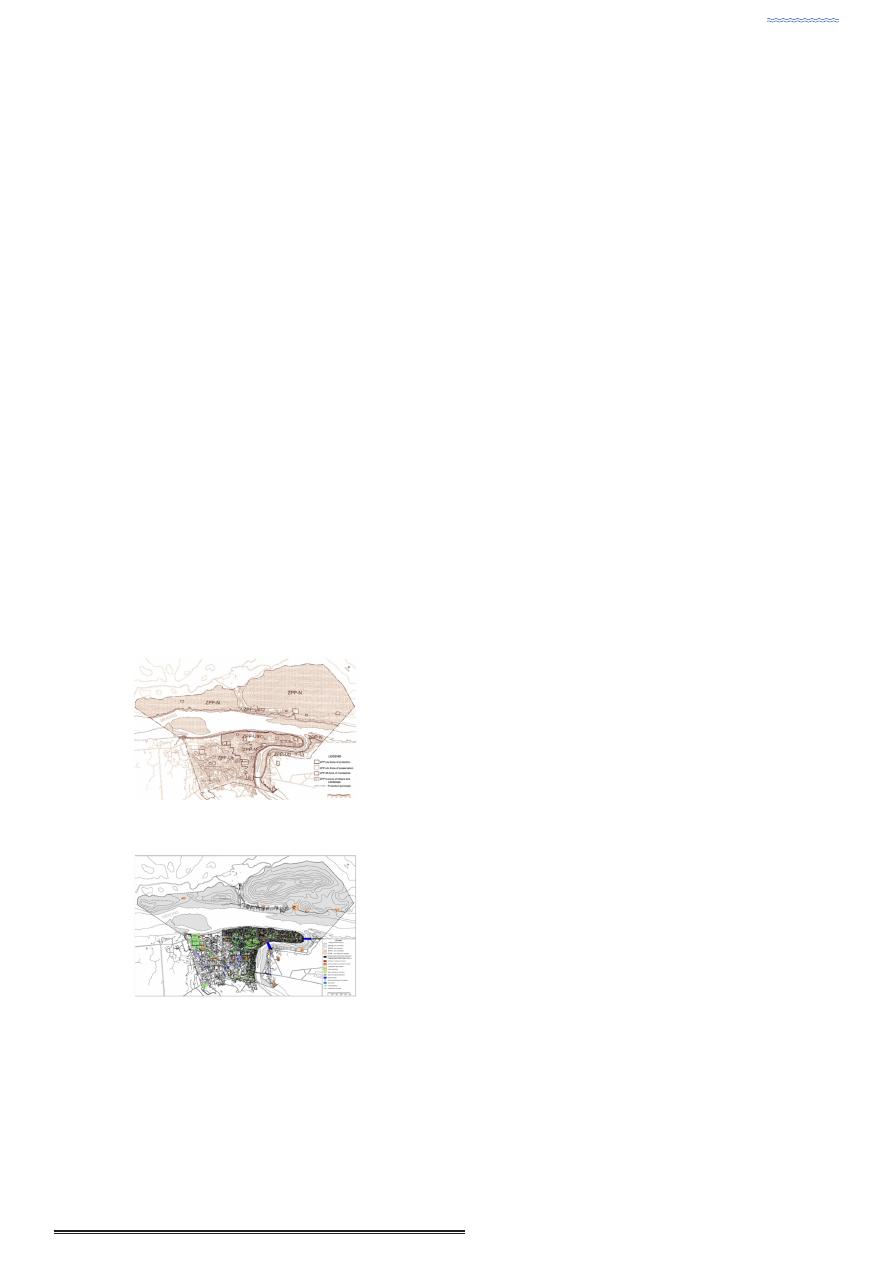
3) Research areas
① Luang Prabang Zones of preservation and
protection
Since the designation of the Old Town of Luang
Prabang as a World Heritage Site, the city of
Luang Prabang has seen continuous changes
along with urban development. The zones of
preservation and protection in Luang Prabang
includes the Mekong River and part of the
adjacent mountain as well as the downtown area.
'Heritage Preservation and Development
Master Plan' is established for the protection
and management of the cultural heritage site.
According to the 'Heritage Preservation and
Development Master Plan', the World Heritage
Site is divided into four zones for management;
Protection Zone (ZPP-Ua), Preservation Zone
(ZPP-Ub), Nature and Landscape Zone (ZPP-N),
Monasteries Zone (ZPP-M).
Picture 10. Luang Prabang Zones of preservation and protection
Picture 11. Luang Prabang ‘'Heritage Preservation
and Development Master Plan’
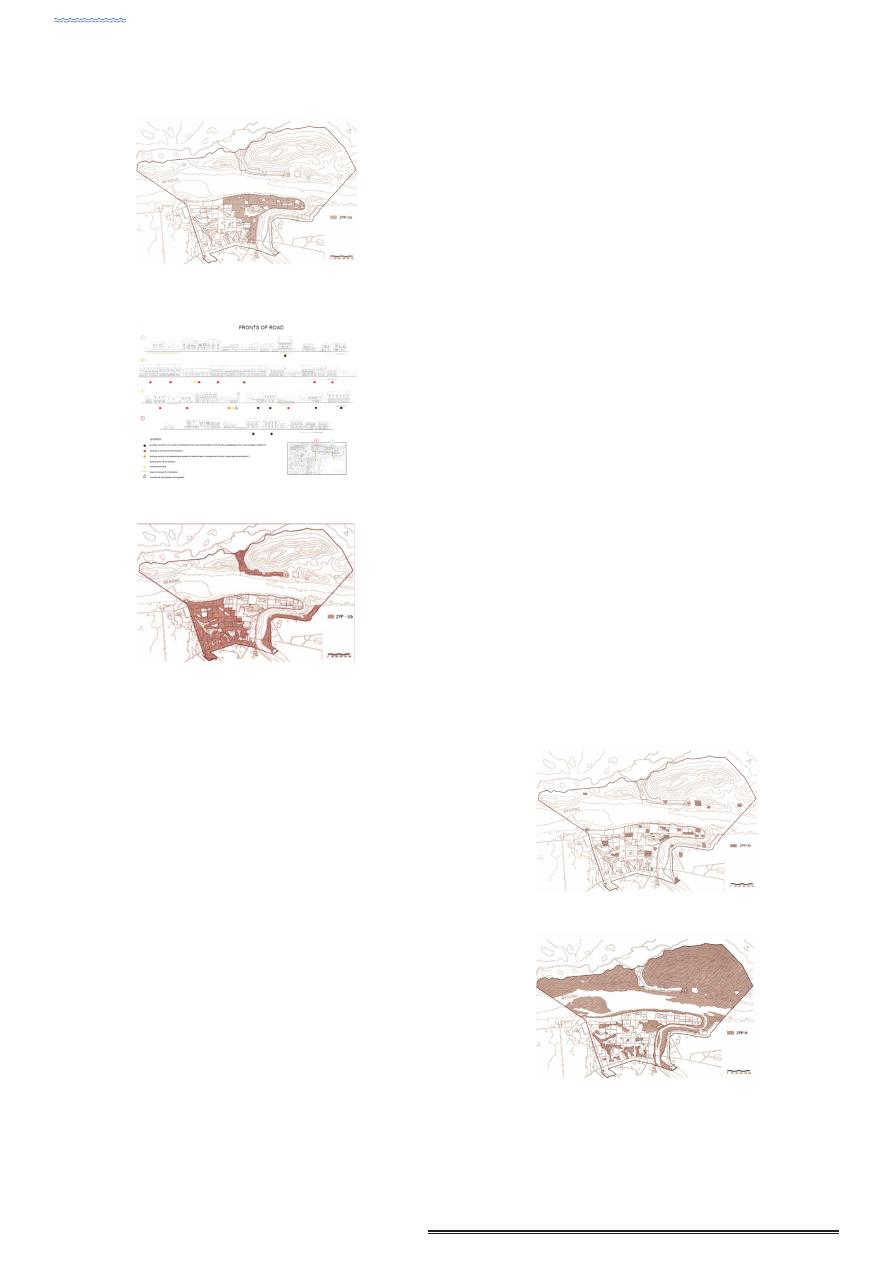
② Protection Zone /ZPP-Ua
The protection zone corresponds to the peninsula-
shaped downtown area formed between the
Mekong River and the Namkhan River. It also
includes roads that lead to the rivers but does
not include Mt. Phousi. A collection of general
architectural heritage and monuments in the
village is situated in this zone.
The zone is also the residential area consisting
of main roads and side roads where commercial
and service activities are active. These activities
are connected with tourism leading to the
development of the zone but also involves the
risks of changing the traditional buildings with
heritage value. In order to prevent such change
of traditional buildings and indiscriminate
city development, the city of Luang Prabang
implements building regulations (in terms of
shape, height, roof shape, exterior materials,
etc.) and continuously monitors buildings within
the zone.
Also, based on the monitoring results, the
buildings are classified into groups for
appropriate management: there are buildings
requiring preservation restoration, buildings
having the merits of preservation restoration,
buildings that are replaceable, and buildings that
are interfering. The monitoring result of each
main road is mapped on an elevation drawing for
effective management.
③ Preservation Zone /ZPP-Ub
The preservation zone is on the south side of the
protection zone and in the downtown area where
many indigenous cultural heritages are situated.
The zone consists of old buildings, traditional
houses and religious buildings. Similar to the
protection zone, building regulations (in terms of
shape, height, shape of roof, exterior material,
etc.) are applied to this zone.
20
INTERNATIONAL JOURNAL OF
ASIA-PACIFIC HERITAGE STUDIES
SUSTAINABLE CONSERBATION OF
ASIA-PACIFIC CULTURAL HERITAGE FOR THE UNESCO CHAIR
Picture 12. Protection Zone / ZPP-Ua
Picture 13. Elevation drawing of classified buildings on
main roads
Picture 14. Preservation Zone / ZPP-Ub
④ Nature and Landscape Zone /ZPP-N
The nature and landscape zone consist of natural
forest areas made up of two hills located near
Mekong River, the wetland areas, the banks
along Mekong and Namkhan rivers, and Mt.
Phousi area. The zone is restricted to protect
the wetland areas, the bank along Mekong and
Namkhan rivers and the natural forest around the
Mekong River.
The wetland areas are connected with numerous
ponds and their owners use them to grow fish
or as gardens to plant vegetables. They are
connected to the branches of the whole basin,
and this complex system is associated with the
streams formed in the city. The banks correspond
to the whole plant area formed around the village.
The banks along the Mekong River, as well as the
Namkhan River, are used for agricultural
activities.
The natural forest areas covering the hills along
the Mekong River play an important historical
role. The hills are related to the mythical origin
of the village and to the local legends. The Mt.
Phousi area is located in the city center and is
prominent by the temple built on the slope of the
mountain and the tower covering the mountain.
⑤ Monasteries Zone /ZPP-M
The monasteries zone is composed of areas near
monasteries and is managed by designating a
set area around a monastery as a protected zone.
Extension of building is not allowed within 3m
around a protected structure and new buildings
within 4.5m around a protected structure must be
equal to or lower than the height of the adjacent
protected structure.
Buildings adjacent to a monastery must be built at
least 3 m from the public road boundary. Besides
these regulations, other restrictions such as the
exterior materials of a building and management
of the surrounding trees also implemented for
this zone.
Picture 15. Monasteries Zone/ZPP-M
Picture 16. Nature and Landscape Zone/ZPP-N
21
INTERNATIONAL JOURNAL OF
ASIA-PACIFIC HERITAGE STUDIES
SUSTAINABLE CONSERBATION OF
ASIA-PACIFIC CULTURAL HERITAGE FOR THE UNESCO CHAIR
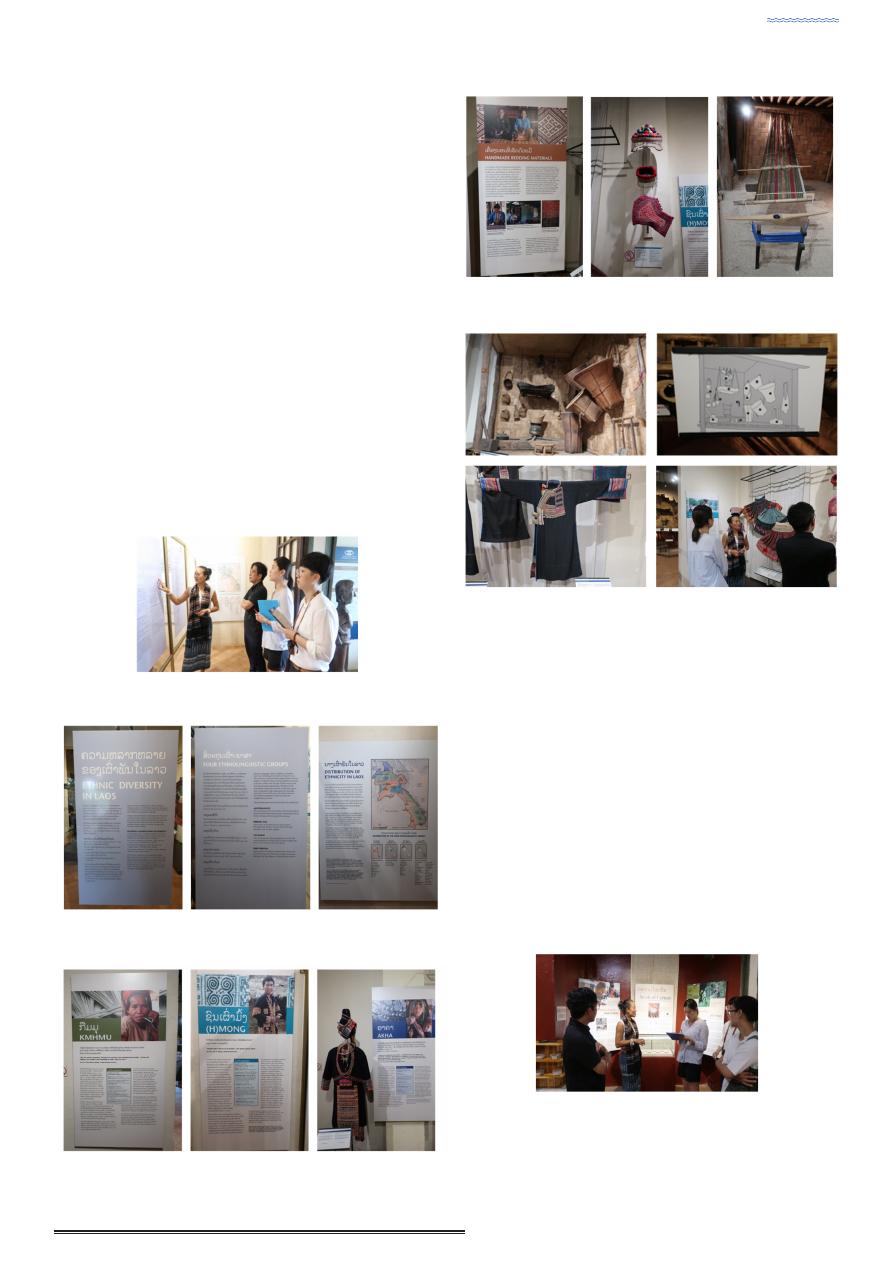
○ Traditional Arts & Ethnology Centre (TAEC)
1) Overview
The French colonial court building, built in the
1920s, was remodeled to be used as the current
TAEC Museum. (opened in 2006). It is a private
exhibition set up by an individual, exhibiting a
wide variety of textiles, crafts and daily necessi
-ties from 17 ethnic groups in Laos. TAEC main
activities include the operation of the museum,
outreach activities promoting understanding
of ethnic groups in Laos, experience programs
about craftworks, and fair trade of handicrafts.
50% of its revenue gained from these activities
are used for local development.
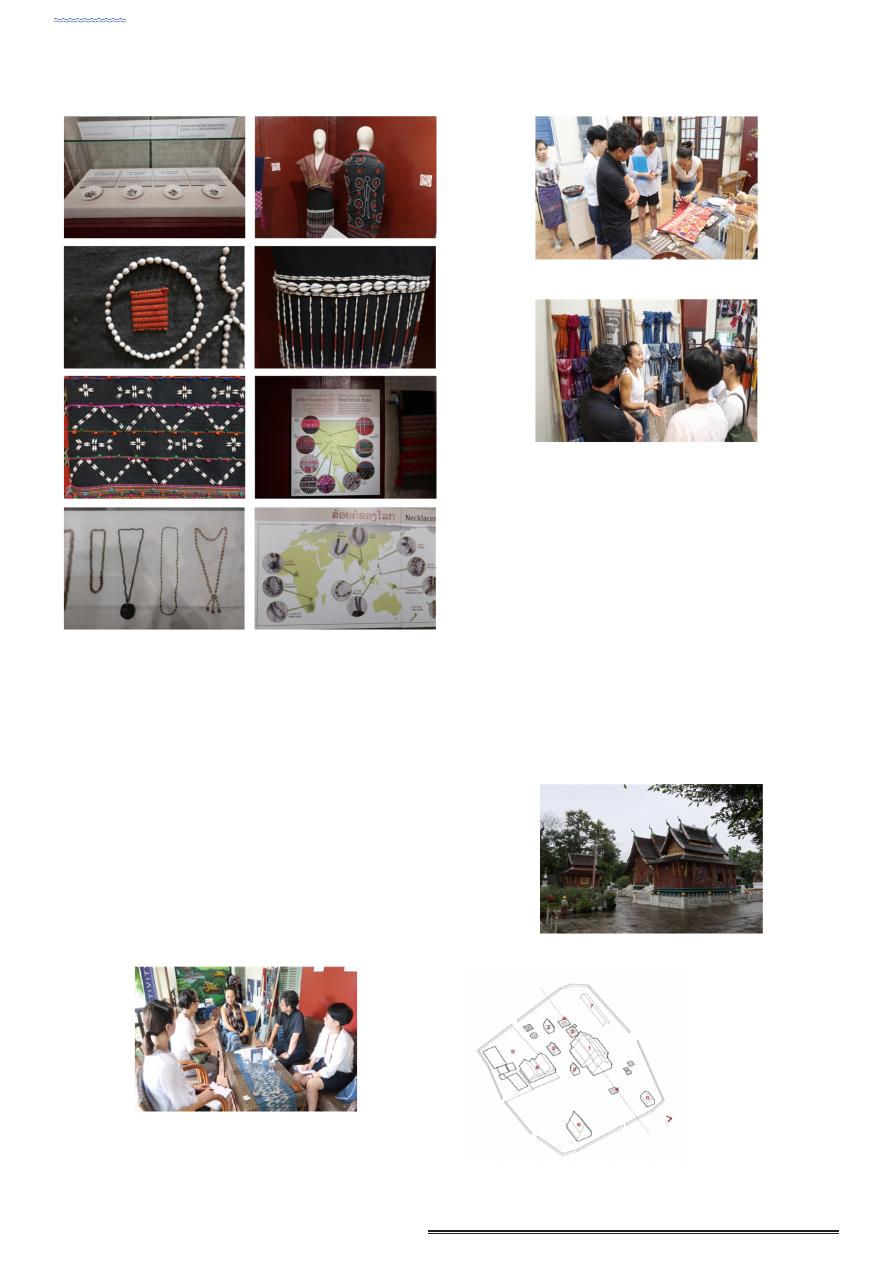
Picture 17. Introduction of TAEC Museum
Picture 18. Introduction of ethnic groups and ethnic
diversity in Laos
Picture 19. Traditional crafts and handicraft of
each ethnic group
Picture 20. Traditional craftworks and materials of
each ethnic group
2) Interview content
Special exhibitions are held every two years.
The special exhibition, "Seeds of Culture: From
Living Plants to Handicrafts", was planned by
Japanese botanists serving as a guest curator.
This special exhibition features the Job’s tears
and how the seeds are used by respective ethnic
groups in different ways to make ornaments and
decorate fabrics.
Picture 21. Introduction of ‘Seeds of Culture:
From Living Plants to Handicrafts’
22
INTERNATIONAL JOURNAL OF
ASIA-PACIFIC HERITAGE STUDIES
SUSTAINABLE CONSERBATION OF
ASIA-PACIFIC CULTURAL HERITAGE FOR THE UNESCO CHAIR
Picture 22. Content of the special exhibition
The need to research and preserve traditional
materials and techniques has been discussed
in recent years (for the past 5 years). Today,
tradition and modern coexist in Laos. Because
the number of tourists increases when traditional
heritage is inherited, the government is asking
TAEC to focus on the transmission of tradition.
In particular, various craftworks using natural
dyes and fabrics are produced in each village,
and TAEC is collecting information about them.
Picture 23. Interview on TAEC activities
Picture 24. Introducing traditional fabrics and dyeing materials
Picture 25. Introducing fabrics produced at TAEC
○ Wat Xieng Thong
1) Overview
Wat Xieng Thong was built in 1559-1560 by King
Setthathirath of the Kingdom of Lan Xang in
the vicinity where Mekong River and Namkhan
River joins and was used as a royal temple until
1975. Coronations and funerals were all held at
this temple.
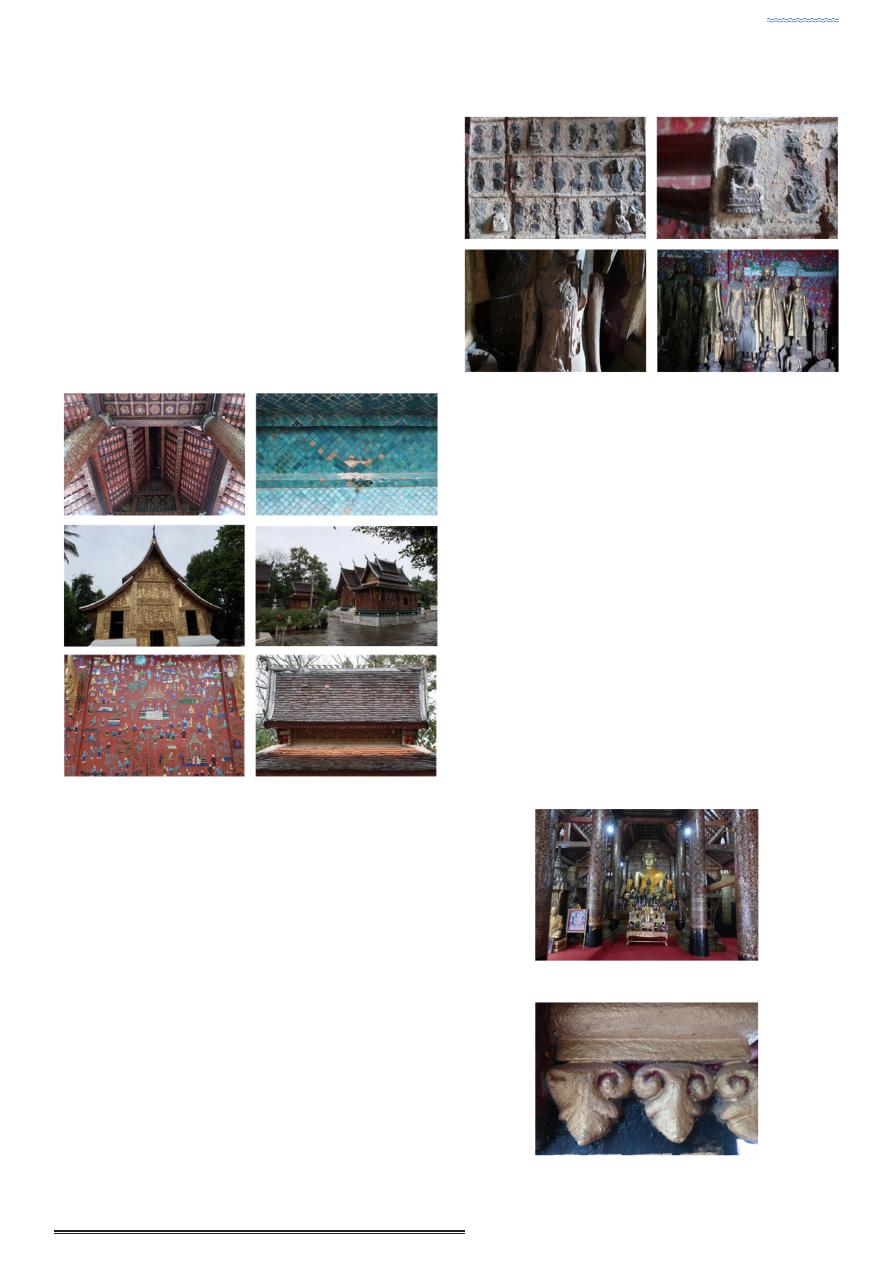
Picture 26. The Buddha chapel and the sim in Wat Xieng Thong
Picture 27. Layout-Structure of Wat Xieng Thong
1. Sim (Main temple)
2. Buddha chapel
3. Tripitaka library
4. Stupas
5. Drum tower
6. Carriage house
7. Boat shelter
8. Residence for female monks
9. Residence for monks
23
INTERNATIONAL JOURNAL OF
ASIA-PACIFIC HERITAGE STUDIES
SUSTAINABLE CONSERBATION OF
ASIA-PACIFIC CULTURAL HERITAGE FOR THE UNESCO CHAIR
The temple displays typical Laos art and craft,
and the building of the wat has carved gilded
wooden gate recording the life story of Buddha.
Dharmachakras (Dharma wheels signify law and
circle of reincarnation in Buddhism) is recorded
in the ceiling of the sim, where the principal
statue of the Buddha is enshrined. The outer
walls of the sim depict the legends of Laos, and
the rear gable has a colorful mosaic depicting the
‘Tree of Life’ on a red background.
Picture 28. Interior and exterior decorations in Wat Xeing Thong
In 1880, the Tripitaka library was built. In 1961,
the Drum tower of King Sisavangvong was
erected. A number of restorations were carried
out in the 20th century, including the one by
France.
In 1928, when the French Governor General
visited Luang Prabang, King Sisavangvong
successfully demanded part of the restoration
cost to France. Major projects took place in the
1950s and 1960s, including the construction of
storage space for the funerary carriages and
restorations to repair the damage caused by war
and looting.
Picture 29. Relics inside Wat Xing Thong
2) Research on materials and production
techniques
The sim, where the gilded wooden door and the
Tree of Life mosaic can be found, the outer wall
is decorated with glass mosaic while the interior
is adorned splendidly with gilding decoration.
Seeing with the naked eye, it was confirmed
that the gold-plating on the decorative parts is
done by using mortar for shaping the decoration
followed by the coloring of the surface. As for
the gold-colored outer layer, it appears that the
beneath layer is painted in red to enhance the
color development of gold.
Picture 30. Interior of the sim
Picture 31. Gold-plating on the decorative part
24
INTERNATIONAL JOURNAL OF
ASIA-PACIFIC HERITAGE STUDIES
SUSTAINABLE CONSERBATION OF
ASIA-PACIFIC CULTURAL HERITAGE FOR THE UNESCO CHAIR
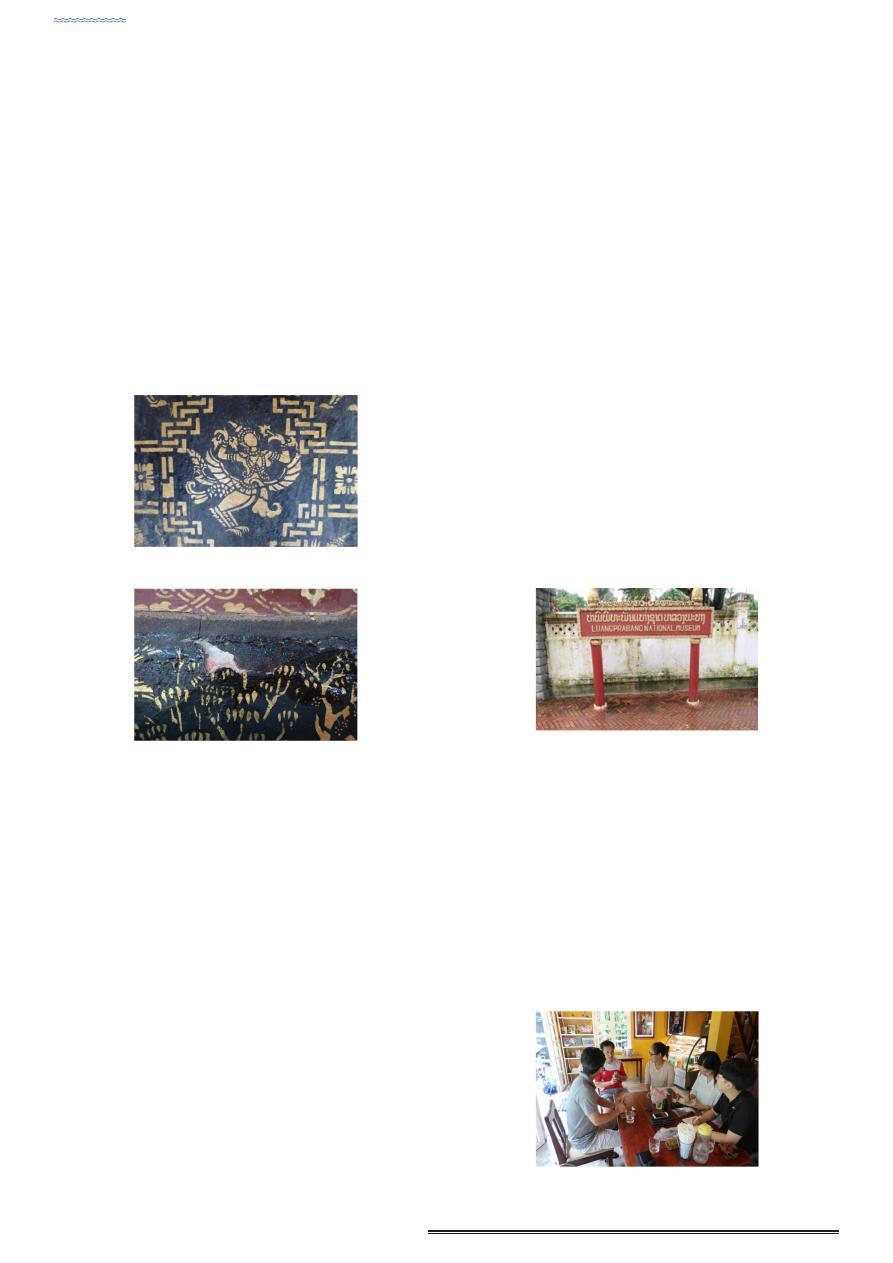
Also, it was confirmed that the patterns using gold
coloring on the black background are produced
by adopting the stencil technique. Stenciling is
a technique for printing or decorating patterns
with ink or dye using cut out pattern or picture. It
was judged that decorations are made by making
designs and using gilt over them. The same
technique was also used by the US restoration
team that participated in the restoration of the
sim from 2011 to 2014.
Picture 32. Decoration using stencil technique
Picture 33. Damage on mural decoration
○ Royal Palace Museum in Luang Prabang
The Royal Palace originally built in wood during
the Lan Xang era was completely destroyed in
1887 by foreign invasion. The current Royal
Palace Museum was constructed in 1904 by
King Sisavangvong and was used as the Royal
Palace for the royal family until 1975, when the
monarchy was abolished due to communization.
Since then, the palace was converted into a
national museum. Built at the time of French
occupation of Laos, the palace features a
combination of Lao traditional style and French
style.
Upon entering the royal palace, there is the
Entrance Hall, where the royal religious events
were held. The room at the right of the Entrance
Hall is the King's Reception Hall, and the room
at the left is the Secretary's Reception Room.
The room on the left exhibits gifts from various
foreign delegations to the Lao monarchy such
as paintings, ceramics, and silver artifacts. The
Throne Room is in the middle of the royal palace.
As the most important space in the palace, the
Throne Room is splendidly decorated with glass
mosaics on red walls similar to those found in
Wat Xieng Thong.
Wat Ho Pha Bang is located within the complex
of the Royal Palace Museum. This temple was
built to enshrine the Phra Bang Buddha, the most
sacred golden Buddha image in the country. It
was difficult to obtain data since photographs
were prohibited in the museum and the space
with the Phra Bang Buddha.
Picture 34. Royal Palace Museum in Luang Prabang
○ Interview with an expert from Luang Prabang
Fine Arts School
1) Overview
- Name of institute : Luang Prabang Fine Arts
School
- Interview : Mr. Thaviphone Phengsavat(45)
(Tel 020 55672156)
Figure 35. Interview
25
INTERNATIONAL JOURNAL OF
ASIA-PACIFIC HERITAGE STUDIES
SUSTAINABLE CONSERBATION OF
ASIA-PACIFIC CULTURAL HERITAGE FOR THE UNESCO CHAIR
2) Content of Visitation
The interviewee is affiliated with Luang Prabang
Fine Arts School and teaches traditional wood
craft and painting. There are four art schools in
Laos, each established in different major city
(Vientiane, Luang Prabang, Pakse, Sagannakhet).
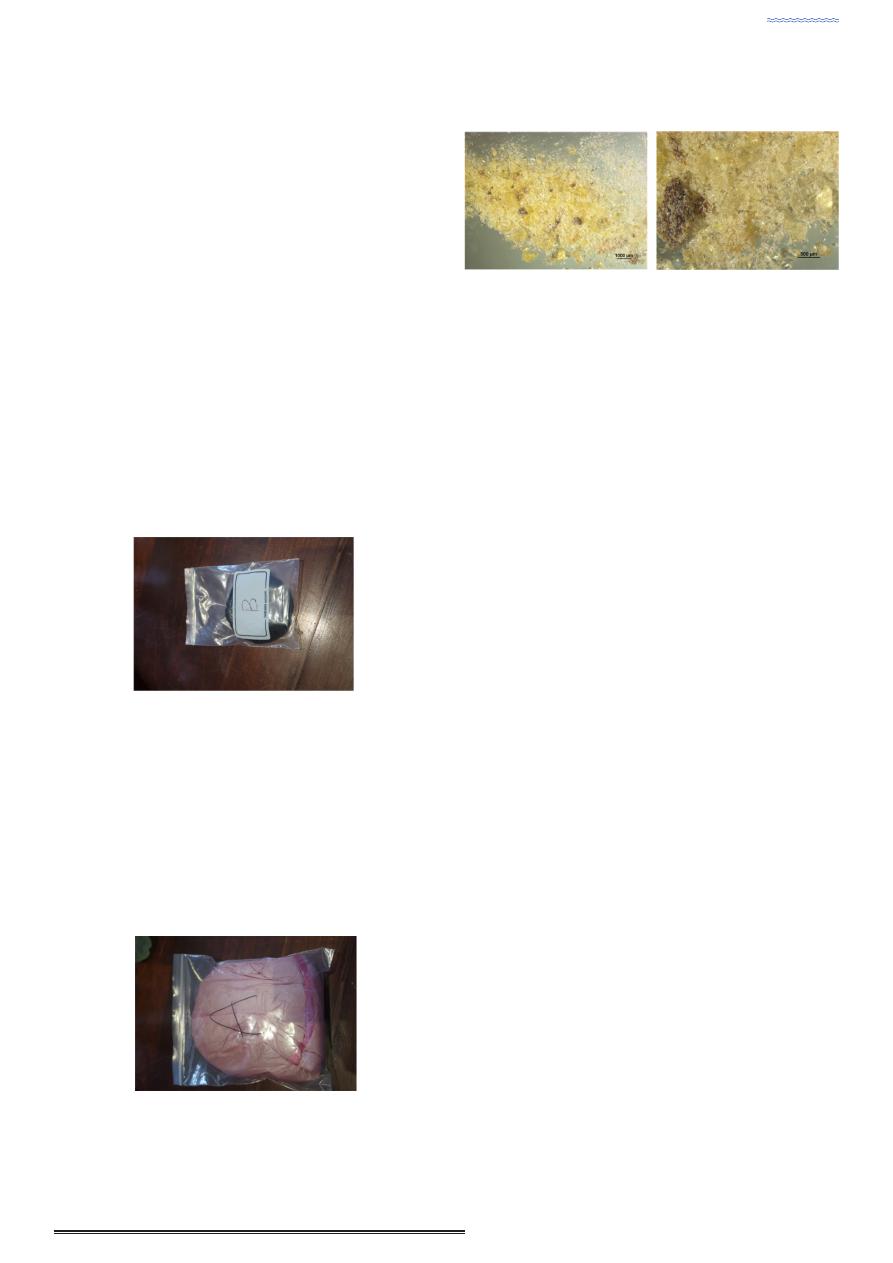
① Tree sap clot (Keekang)
Tree saps are collected and roasted on a large
cooking pan, then cooled into a clot. The clot
melts when lit with fire and hardens again when
the temperature drops. It is also used for fixing a
wooden handle firmly on a metal blade to make
tools such as a hoe and a knife.
Picture 36. Tree sap clot (KEEKANG)
② Pine tree resin powder (Keesee)
Mainly collected from pine trees in March or April
Resin, the resin is mainly mixed with oil for use
as a finishing material, which is applied on wood
surface when making boats for waterproofing
Picture 37. Pine tree resin (KEESEE)
Picture 38. Microscope image of pine tree resin
(KEESEE) (Left : x10, Right : x30)
③ Lacquer
The tree species that produce lacquer are
distributed sparsely in Laos. The closest place
from Luang Prabang where such trees are
found is 3 hours away. There were people who
specialized in harvesting lacquer in the past, but
there are hardly any at present. Lacquer used in
Laos today are mainly imported from Thailand
and Japan. (This sample is presumed to be from
Thailand.)
Because Lao people usually made bowls out of
leaves by weaving them, there are few wooden
and porcelain bowls in Laos. The production of
crafts and articles that use lacquer are mainly for
religious purposes. The typical case is bowls or
containers used for carrying candles, flowers,
tree sprouts, water and so on and offered to
monks for prayers on lunar new year or major
days marking the seasonal change. Lacquer was
also used on Buddha statue to attach gilt.
However, paint is mainly used for this purpose
these days since the harvest of lacquer is so small.
Lacquer dries in humid and cool environment and
will not dry well on hot days. Mixed with ash, it is
poured into a sculptured mold such as a Buddha
statue. The sculptured lacquer is then pulled out
and attached to a Buddha statue. In addition, when
repairing Buddhist statues, lacquer is mixed with
pine tree resin powder.
When the mix rise, it is sanded into a desired
shape using sandpaper. the wood powder was
traditionally not used since it is susceptible to
water.

26
INTERNATIONAL JOURNAL OF
ASIA-PACIFIC HERITAGE STUDIES
SUSTAINABLE CONSERBATION OF
ASIA-PACIFIC CULTURAL HERITAGE FOR THE UNESCO CHAIR
④ Oil (Noaman pa/fish)
This sample is not found in Laos and is presumed
to be a chemical oil imported from China. In the
past, oil extracted from large fish was mainly
used. Lao people also mixed sesame oil with
earth colors (ochre, umbers, etc.) found across
the Luang Prabang River to paint. It is said that
this kind of mineral pigment reveals a natural
and beautiful color after the initial colored layer
peels off over time.
⑤ Oil (Noaman yang/rubber)
This is oil obtained from the rubber tree. The
viscosity of this liquid is higher than noaman
pa. Unlike the white latex extracted from rubber
tree, this liquid is black. Sometime the branches
are burnt to obtain the tree sap, which is the
method used in Cambodia. However, this sample
is presumably not natural.
Picture 39. Lacquer and a variety of oil
3. Research findings and plans for their
application
3.1. Research findings
It was confirmed through the field research
on natural materials in Luang Prabang that a
variety of materials are used in traditional craft
techniques. However, as in other countries where
traditional and natural materials are disappearing,
not many artisans in Laos can are capable of
using natural materials in traditional ways. In
addition, relevant institutions and experts such
as artisans and the DPL recognize the need
for preserving and restoring natural materials
andtraditional techniques involved in craft
production, they are experiencing great difficul-
ties in inheriting and transmitting them.
Through this research, the following expected
effects were confirmed.
ㅇConducted primary archiving of materials and techniques
used in the production of cultural heritages in the
Asia-Pacific region, especially Laos.
ㅇPromoted exchanges between Korea and Laos for
cultural heritage preservation by exchanging
research status and activities of the DPL.
ㅇInvestigated the current status of traditional materials
and master artisans and materials for cultural
heritage preservation in Laos and thereby expanded
the understanding of local materials and techniques.
ㅇIdentified what training contents are necessary for
the local cultural heritage professionals and thereby
onfirmed the possibility of developing practical
curriculum
ㅇConfirmed the prospect of our program’s contribution
to the realization of the ideal of UNESCO as a
UNESCO chief organization for the preservation
and restoration of cultural heritage
3.2. Future plans for application
The natural materials collected from the
field research will be analyzed in terms of its
components, structure and so on through various
physicochemical analyses, and the analysis
results will be reported to each country again.
In addition, we will collect a wider range of
natural materials from different Asian countries
and document the methods of using them by
conducting interviews with artisans and experts.
Thus, compiling a database of Asian natural
materials, we should be able to build an archive
of natural materials disappearing in each country.
The archive is expected to be used as research
data for researchers who are conducting studies
on the material properties, physicochemical
analysis and construction method of natural

27
INTERNATIONAL JOURNAL OF
ASIA-PACIFIC HERITAGE STUDIES
SUSTAINABLE CONSERBATION OF
ASIA-PACIFIC CULTURAL HERITAGE FOR THE UNESCO CHAIR
materials.
Picture 40. Build database of natural material analysis
Picture 41. Future plans in the field of natural materials
-References-
1. Handbook for Adhesives, Japan Adhesive Association,
translated by Lee Hyeonggyun, Sehwa, 1991
2. Chemistry Dictionary, by Sehwa Editorial Department,
Sehwa, 2001
3. Lacquer Chemistry and Applications,
Rong Lu, Elsevier, 2015
4. Lao lacquer culture and history-Analysis of Lao lacquer
wares, Masako Miyazato et el., Journal of Analytical and
Applied Pyrolysis, 103, 17-20, 2013
5. https://www.kotra.or.kr
6. http://www.doopedia.co.kr/
7. https://ko.wikipedia.org


Survey of
Uzbekistan
Traditional
Ikat
GROUP
| Korea National University of Cultural Heritage
NAME
| Yeonok Sim / Sunyong Lee
| Geunil Park / Sohee Shin

31
INTERNATIONAL JOURNAL OF
ASIA-PACIFIC HERITAGE STUDIES
SUSTAINABLE CONSERBATION OF
ASIA-PACIFIC CULTURAL HERITAGE FOR THE UNESCO CHAIR
3It is the goals of this survey that making a
database and secure information of the Ikat.
3 | 우즈베키스탄의 이캇은 아드라스와 아틀라스, 그리고 바흐말
(Bachmal)이 전승되고 있으나 종류를 구분하지 않을 경우 모두
이캇으로 통칭하겠다.
Ⅱ Survey of Uzbekistan
Traditional Ikat
GROUP
| Korea National University of Cultural Heritage
NAME
| Yeonok Sim / Sunyong Lee
| Geunil Park / Sohee Shin
1. Summary of the Ikat
1.1 Purpose of the Survey
Ikat is the textile which is weaved with a weft
threads dyed a pattern with tieing technique. Ikat
is the one of traditional textile which is used in
central and south-east Asian region and all over
the world is focusing it .
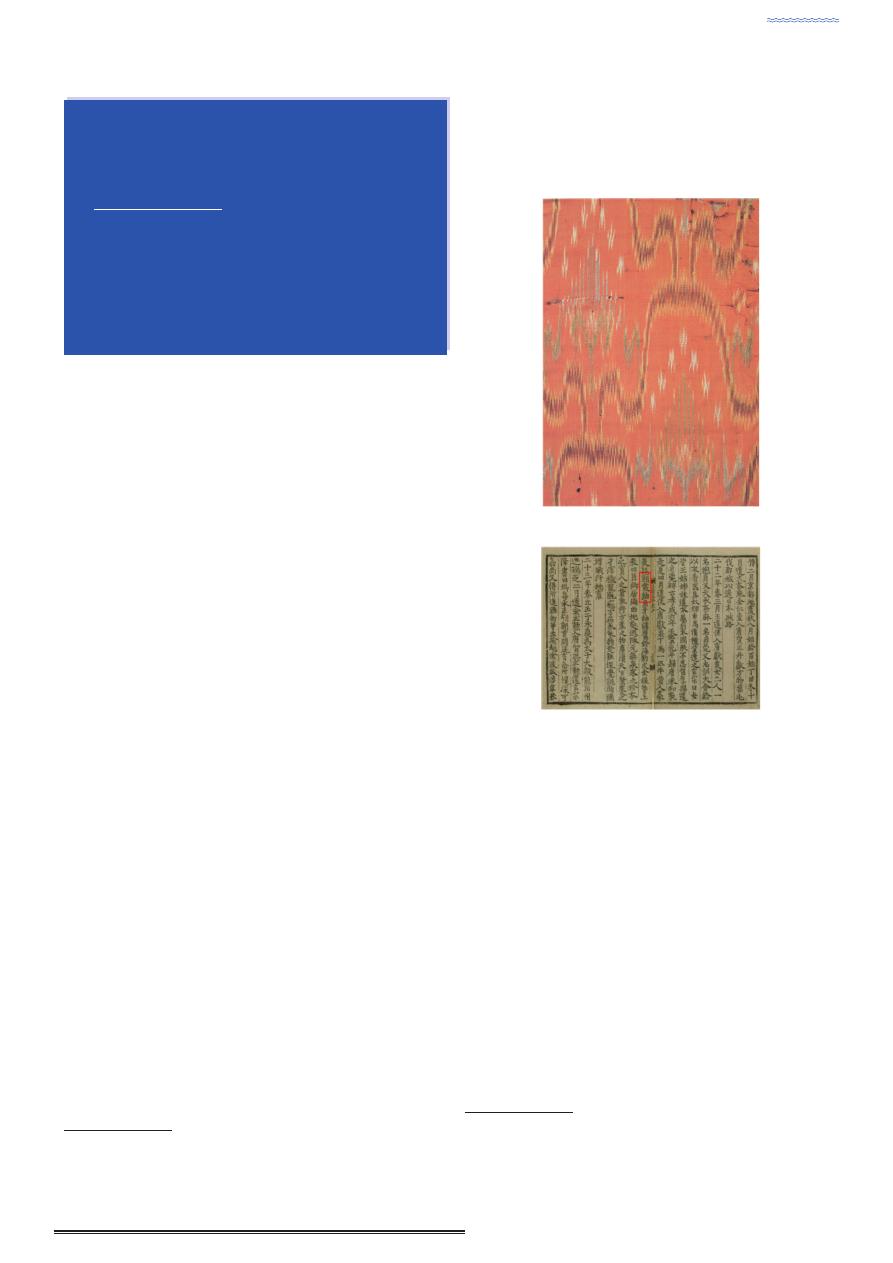
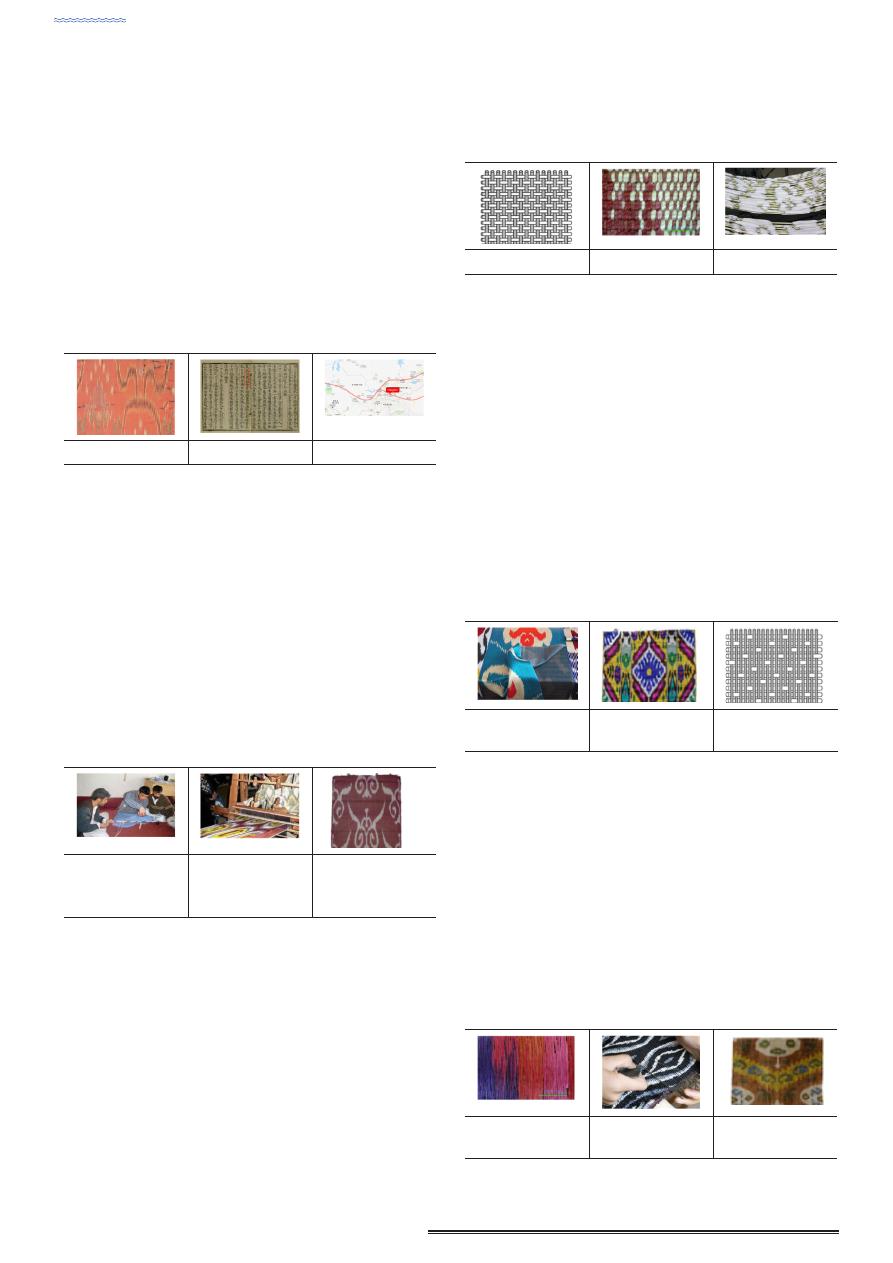
Records of Johaju(朝霞紬) which is assumed to
Ikat is found on the 『Samguksagi(三國史記)』 in
Korea. <Taejagando(太子間道)>, the treasure of
Horyuji(法隆寺, Japan) is well known to Johaju
which is presented to Shotokutaisi(
聖德太子)
from the Silla(新羅)1 And in the 『Nipponshoki
(日本書紀)』, there is a record of Hageum(霞錦,
Ikat) which was presented to japan from Silla
(新羅) at A.D 6872 According to these records, It
is possible to assume that Johaju was the textile
represented the Silla(新羅) on A.D 8 century.
But nowadays, the technology of Johaju weaving
is discontinued in Korea.
On the other hands, the Adras and Atlas, Ikat
of the Uzbekistan was designated as “Margilan
Crafts Development Centre, safeguarding of the
Atlas and Adras making traditional technologies”.
Therefore there is a need to a survey of the
traditional technologies and tools.
1 | 松本包夫 著, 『正倉院裂と飛鳥平安の染織』, 紫紅社, 1984, p. 128.
2 | 심연옥, 『한국직물오천년』, 고대직물연구소, 2002, p. 302.
Picture 1. Taejagando(太子間道)
Picture 2. Samguksagi(三國史記) Johaju
1.2 Methods of Survey
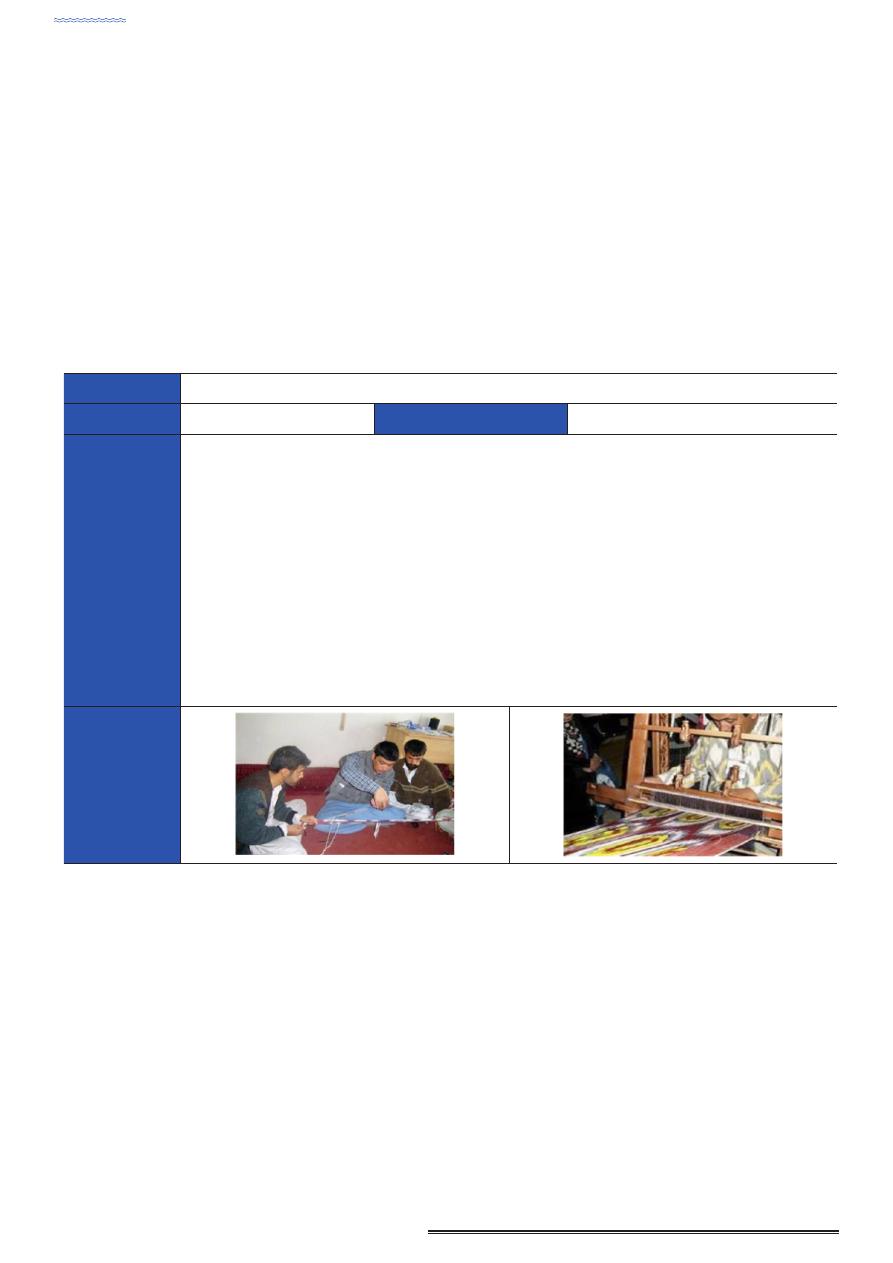
In Uzbekistan, ’Atlas bayrami(Ikat festival)’ is
held on every september since the 2014. The
many peoples concerned from the internal and
external attend this festival. And participants can
understand not only traditional technology but
also transmission and application of Uzbekistan
Ikat.
Therefore the survey team researched the Ikat
almost 10 days including ‘Atlas bayrami‘ on
cooperation of Unesco Tashkent. This survey is
focused on the kinds of Margilan traditional Ikat,
technology of the Ikat weaving and transmission

32
INTERNATIONAL JOURNAL OF
ASIA-PACIFIC HERITAGE STUDIES
SUSTAINABLE CONSERBATION OF
ASIA-PACIFIC CULTURAL HERITAGE FOR THE UNESCO CHAIR
and application of the Ikat.
Because Ikat making process is the collage
industry, survey team visited the workshop of the
workers and interview them, take a photo of their
work. Through these works, survey team tried
to figure out a materials, tools and traditional
technology. Whole survey is progressed on
the cooperations of MCDC(Margilan Craft
Development Center), Rasuljon Mirzaakhmedov,
and workers of their own workshops.
Table 1. Sumary of the Survey
ㅇObject : Uzbekistna Ikat (Adras, Atlas) Textile
ㅇDate : 2018. 09. 12(Wed) ~ 2018. 09. 21(Fri)
Atlas Bayrami (2018. 09. 11 ~ 2018. 09. 15)
ㅇCooperation : UNESCO Tashkent & MCDC
ㅇSubject : Major of traditional textiles, General Graduate
School, KNUCH
Sim Yeon Ok(Professor of KNUCH) , Lee Sun
Yong, Shin So Hee, Park Geun Il(KNUCH)
Table 2. Contents of the Survey
Contents of the Survey
Object and Measure
1
The kind of
the Ikat
ㅇ Adras
ㅇ Atlas
ㅇ Bachmal
ㅇObject
- Atlas Bayrami
- MCDC
- Workshop
- Market
ㅇ Measure
- Interview
- Taking a Photo
2
Traditional
Weaving
Technique
of the Ikat
ㅇ MCDC
ㅇ Materials
and Tools
ㅇ Weaving
Technique
3
Measure to
prevent a
techniques
and culture
of the Ikat
ㅇ Measure
to prevent a
techniques
and culture
of the Ikat
ㅇ Education
System of
the Ikat
ㅇ Policy and
Support
Date Region Organization
Content
9.12
(Wed)
Incheon
Tashkent
-
ㅇDeparture
from Incheon
ㅇArrival to
Tashkent
9. 13
(Thu)
Tashkent
Margilan
-
ㅇDeparture
from Tashkent
ㅇArrival to
Margilan
9. 14
(Fri)
Margilan
MCDC
ㅇAtlas
Bayrami
9. 15
(Sat)
Margilan
9. 16
(Sun)
Margilan
MCDC / Workshop
ㅇSurvey of
Ikat Weaving
Process and
Tools
9. 17
(Mon)
Margilan
9. 18
(Tue)
Margilan
9. 19
(Wed)
Margilan
9. 20
(Thu)
Margilan
9. 21
(Fri)
Margilan
Tashkent
-
ㅇDeparture
from Margilan
ㅇArrival to
Tashkent
9. 22
(Sat)
Incheon
-
ㅇArrival to
Incheon
Table 3. Plan of the Survey
2. Contents
2.1 Survey Range
2.1.1. Country and Region of the Survey
Traditional textile survey team of the project
of traditional materials and techniques on asia-
pacific region choose the Uzbekistan to this
survey. In 2017, Uzbekistan Ikat is designated
on the safeguarding of intangible heritage by
UNESCO. Uzbekistan Ikat is passed down
on the Margilan city, Ferghana Valley under
the cooperation of UNESCO Tashkent and
government. Therefore survey team researched
the Ikat in this region.

33
INTERNATIONAL JOURNAL OF
ASIA-PACIFIC HERITAGE STUDIES
SUSTAINABLE CONSERBATION OF
ASIA-PACIFIC CULTURAL HERITAGE FOR THE UNESCO CHAIR
2.1.2. Summary of the Country and Region
The formal title of Uzbekistan is Republic of
Uzbekistan. 1It is a multiracial nation of 125
tribes. And name of this nation means nation of
Uzbekistan peoples on Persian
4 .
Because Uzbekistan was center of the Silk Road
trade, This nation constantly suffered aggression
by foreign powers. From the 8 century, After
central asia was conquered by Arabs, The islam
is flowed into Uzbekistan and mixed with native
culture. It makes a unique culture of the central
asia. Islam is a main religion of this region until
now.
After Mongol is divided, Timurid dynasty is
founded in this region at the end of 14th Century.
After Tamerlane’s death, a group of Turkish
tribes that were already present in these lands,
the Uzbeks, came into their own.
In 19th Century, This region was conquered by
the Soviet Union after competition of the UK and
Soviet Union. After the Soviet Union collapsed
at 1990, Uzbekistan was independent from the
Soviet Union at 1th, September, 1991.
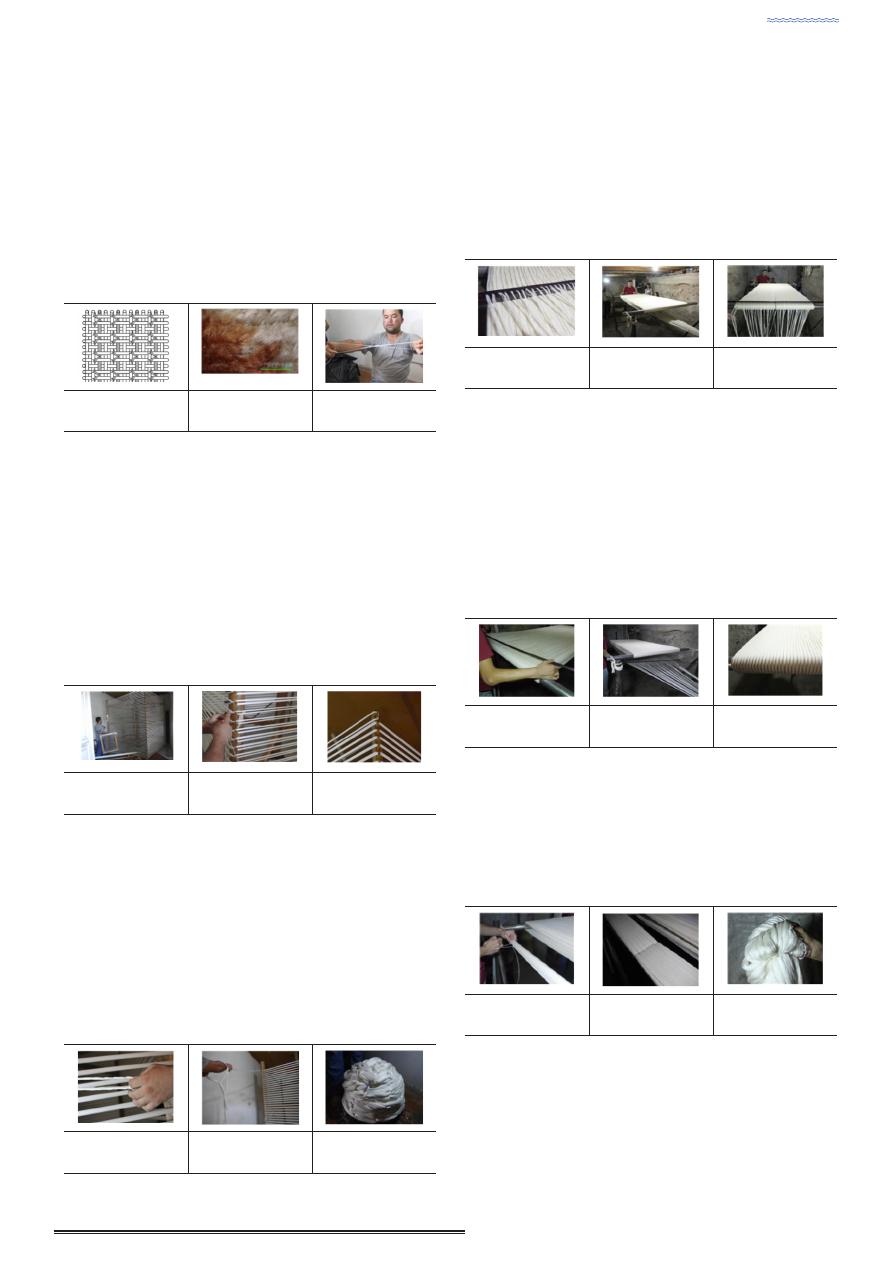
Margilan is located in the oasis of South-west
Ferghana valley, This city is far 10km from
the North of Ferghana City. Margilan was one
of the important bases of Silk Road, Actually
it was regarded to the base of Silk Road trade
which connect from the Tengri(天山) mountain
to Kashgar at the 9th Century. Merchant of
Margilan was outstanding to dominate business
on the commerce. Especially Margilan was
famous as the center of the sericulture and silk.
And it is the Ikat called Adras and Atlas. It is only
Mariglan that region where is passed down this
traditional technology even in the Uzbekistan.
4 | 우즈베키스탄 [Uzbekistan] (두산백과)
https://terms.naver.com/entry.nhn?docId=1176238&cid=40942
&categoryId=40086
Picture 3. Silk Road and Location of the Margilan
34
INTERNATIONAL JOURNAL OF
ASIA-PACIFIC HERITAGE STUDIES
SUSTAINABLE CONSERBATION OF
ASIA-PACIFIC CULTURAL HERITAGE FOR THE UNESCO CHAIR
2.2 Contents of the Survey
2.2.1 Pre-Survey
The research of the Uzbekistan Ikat is almost a part of history and culture. And it is very simple and
hard to find textile-focused research. The research of the Uzbekistan Ikat in Korea is dealing with
journal articles and textile books briefly. And there is a report of Uzbekistan intangible heritage from
UNESCO. Western nations like UK was published as books based on records of the travelers of the
19th century.
Table 4. Safe Guarding of UESCO
Name Margilan Crafts Development Centre, safeguarding of the atlas and adras making traditional technologies
Country
Uzbekistan
Classification
Safe Guarding
Substance
The history of Ikat atlas and adras-making technologies in the territory of modern-day Uzbekistan dates
back to the Late Antique Period. Historically, Margilan was the centre for making atlas and adras - vivid and
fine traditional fabrics. Traditional crafts went through turbulent times during the Soviet period, jeopardizing
some ancient handmade production technologies. Due to the acute need to revive and safeguard traditions
at risk of disappearing, the local community came up with an initiative to launch the Crafts Development
Centre (CDC) in 2007.
The CDC’s goal is to safeguard, develop and promote the method of Uzbek traditional atlas and adras
making through innovative training sessions, exhibitions and craft fairs, traditional textile festivals, and the
publication of safeguarding materials and manuals. The CDC also promotes the use of natural materials, and
supports the transmission of knowledge and skills about nature and the universe and their role in ensuring
people’s health and wellbeing. The CDC’s success stems from its focus on a spirit of partnership, and the
local communities play a key role in its initiatives since there is a common understanding that atlas and
adras fabrics are central to their identity.
Picture
35
INTERNATIONAL JOURNAL OF
ASIA-PACIFIC HERITAGE STUDIES
SUSTAINABLE CONSERBATION OF
ASIA-PACIFIC CULTURAL HERITAGE FOR THE UNESCO CHAIR
Name Year
Writer
Name
Category Publication
1
1997
Robert D. Biggs Uzbekistan: Heirs to the Silk Road by Johannes Kalter
Book
Thames &
Hudson
2
2002
Sim Yeon Ok
5,000 years of the Korean Textile
Book
ISAT
3
2007
Ruby Clark
Central Asian Ikat
Book
V&A
Publications
4
2014
Choi Jeong
Yeon
Consideration of the Uzbekistan Ikat
Article
KSDS
5
2015
Rasuljon
Mirzaakhmedov
Technologies of Natural Dyeing
Book
MCDC
6
2017
ICHCAP
Intangible Cultural Heritage in Uzbekistan
Book
ICHCAP
Table . Procedent Research of the Uzbekistan Ikat
2.2.2. Field Survey
2.2.2.1. Kinds of the Uzbekistan Ikat
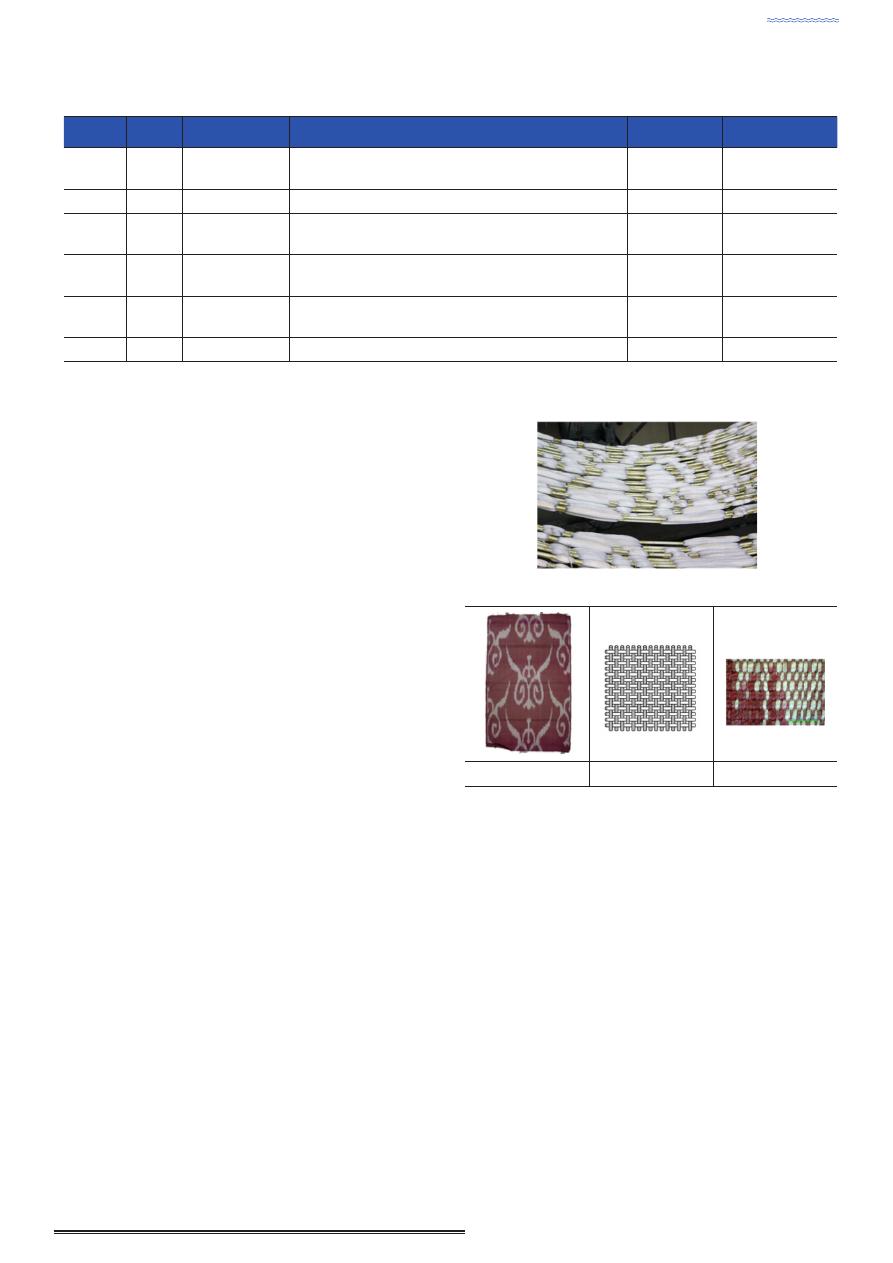
There is a way how to make patterns on textile
called ‘regist dyeing’. Traditional resist dyeing
of Uzbekistan is called ‘abrband’. It means
‘tieng clouds’ on Persian. ‘Abr’ means cloud
on Uzbekistan and Ikat also. It is assumed that
shape of tieing threads to make pattern looks like
a cloud.
A kind of Uzbekistan is Adras, Atlas, Bachmal.
This is classified by weaving technique.
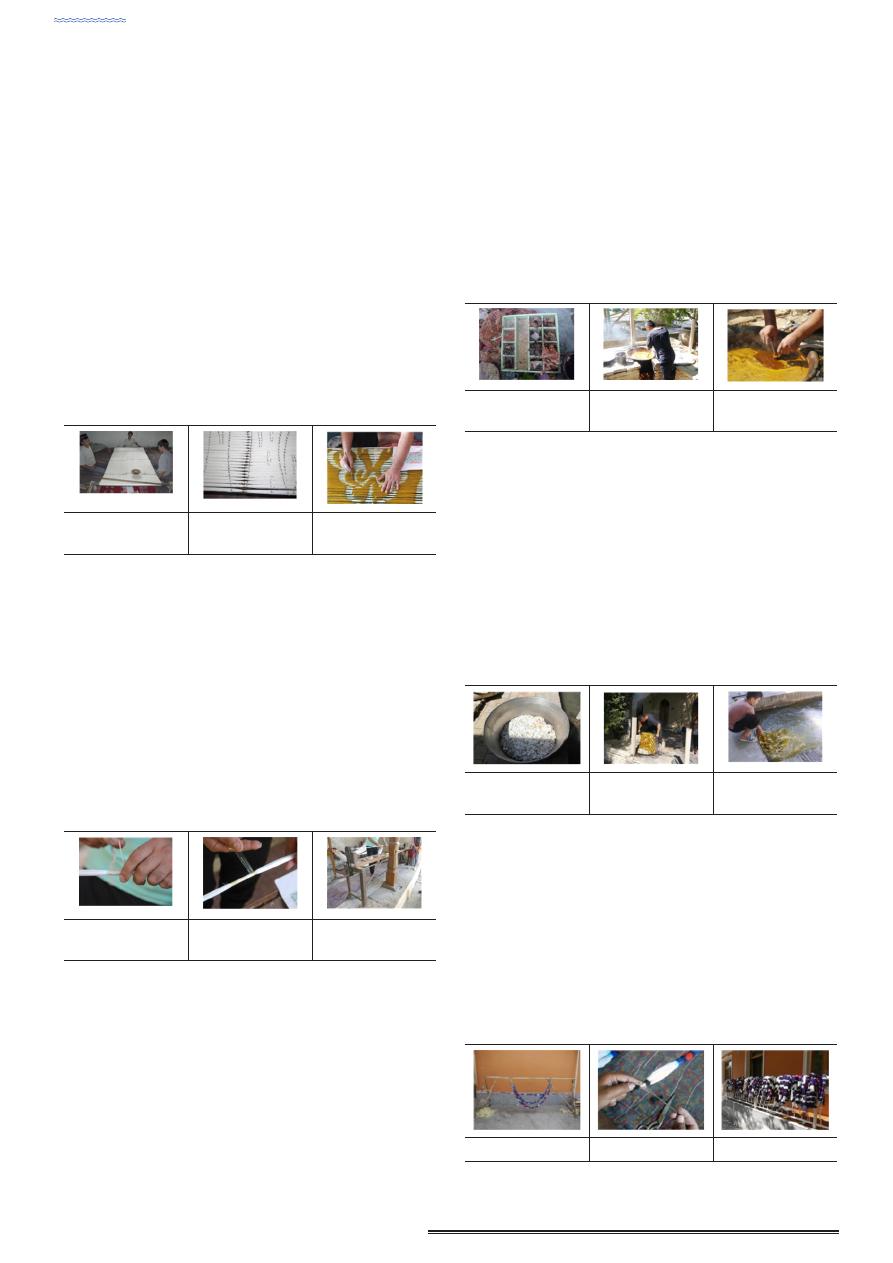
Adras is traditional Ikat of Uzbekistan and it
has a longer history than Atlas and Bachmal.
Traditionally adras is made by cotton for weft
and silk for warp. And it is most traditional
textile weaved on the plain by using 2 pedals.
Because adras is made by cotton on weft is not
only convenience of cultivation but also Islamic
doctrine what man can’t use 100% silk. In case
of women, they can use adras which is mixed
cotton and silk and they can sue a textile which
is made by 100% silk also. Adras which is made
by 100% silk is distinguished with cotton mixed
adras by shoir naming it in front of adras.
Adras
Structure : Plain
Detail(30times)
Picture 4. Abr
Table 6. Structure and Details of Adras
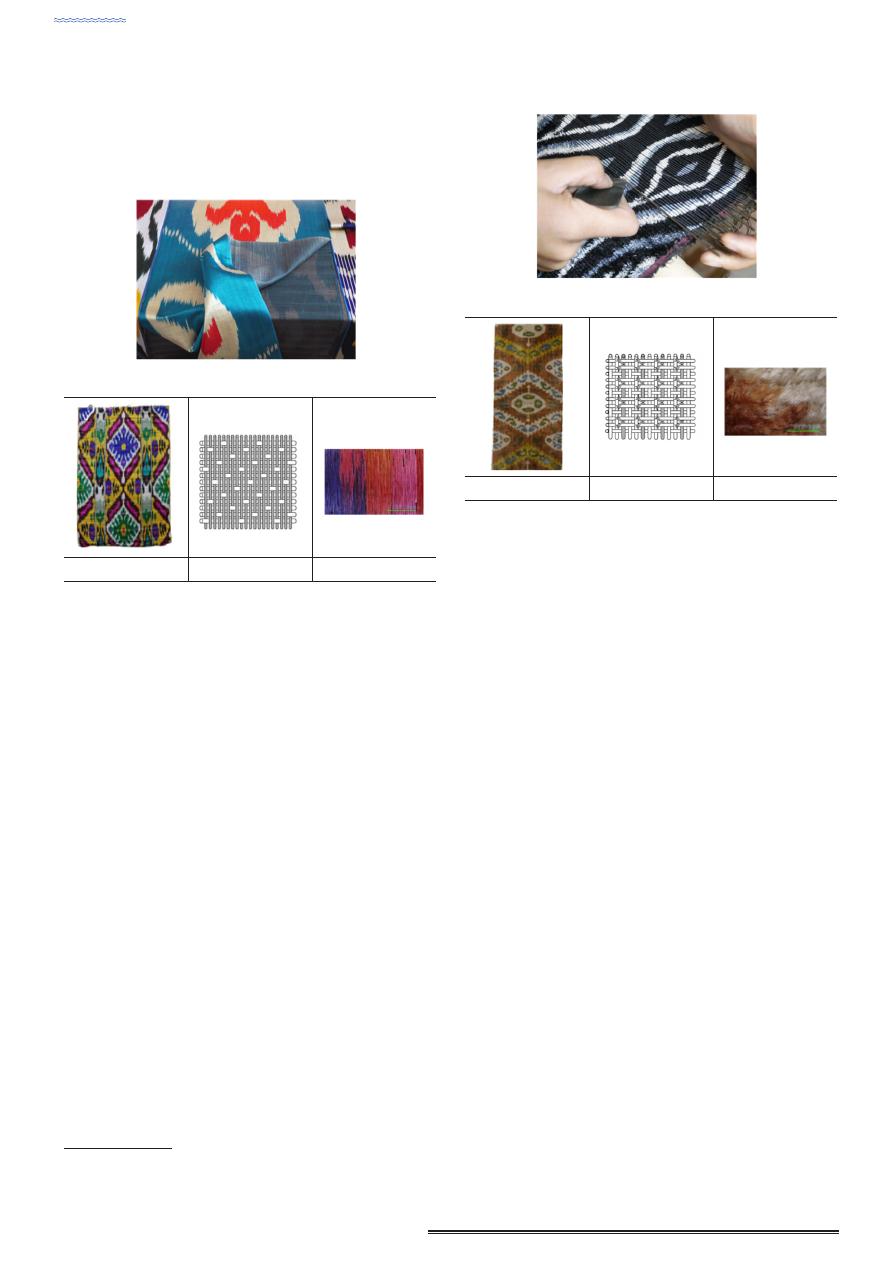
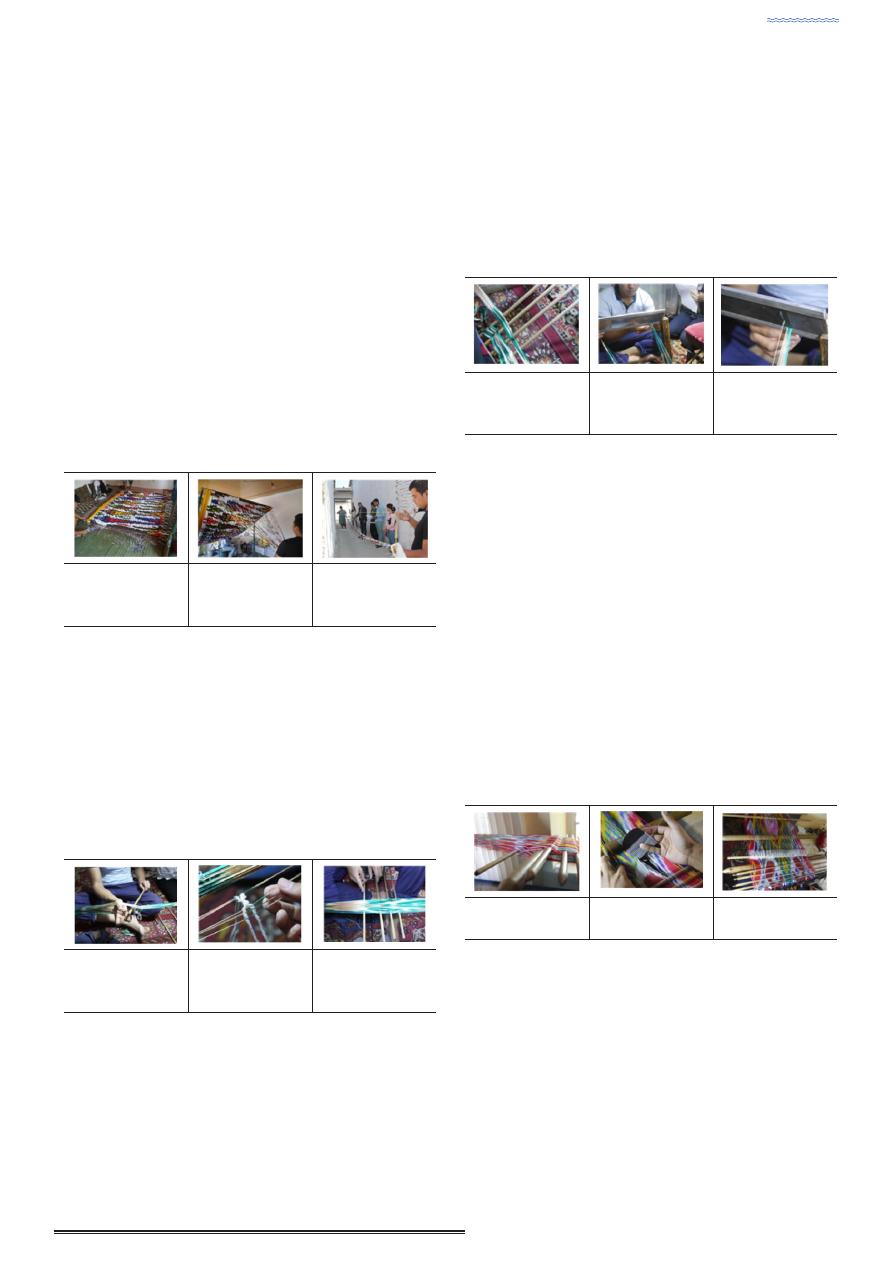
Atlas is the textile weaved on satin by using 8
pedals. Atlas was shown on the 1930s when the
Soviet was in Uzbekistan. Textile factory was
built in Uzbekistan by russian capitals. In russian
factories, atlas which has vivid and various
patterns is weaved by using 100% silk. After it,
production of atlas which is satin Ikat have been
massification and popularization. Because atlas
is weaved on satin, the pattern is only one side
and surface of textile is shining. and It’s more
thicker than adras.
Because atlas is weaved a lot, Uzbekistan peoples
recognizes that atlas is more typical Ikat than
adras. For this reason, the name of Ikat festival
36
INTERNATIONAL JOURNAL OF
ASIA-PACIFIC HERITAGE STUDIES
SUSTAINABLE CONSERBATION OF
ASIA-PACIFIC CULTURAL HERITAGE FOR THE UNESCO CHAIR
is ‘Atlas Bayrami’ not adras which is traditional
textile for popularization.
Picture 5. Front and Back of the Atlas
Atlas
Structure : Satin
Detail(30times)
Table 6. Structure and Details of Adras
Bachmal is a velvet Ikat which is weaved to warp
pile velvet by using silk. The warp pile weaved
velvet is three-dimensional textile which is made
by the pile on surface of textile
5 .
The Bachmal was precious textile only for
Buchara royal family. However royal family who
can wear bachmal disappeared after the defeat of
the war between Buchara and Russia.
The demands of expensive textile, bachmal
was disappeared also. For this reason, Weaving
technique of bachmal was disappeared. In 1998,
Rasulzon who is master of Ikat found a relic which
is made by bachmal in Buchara. Through research
for long period, Rasulzon restored weaving
technique of bachmal and took a certification of
this technique by UNESCO in 2005. The bachmal
is reproducing in margilan after technological
training of Rasuljon Mirzaakhmedov.
5 | 심연옥, 『한국직물오천년』, 고대직물연구소, 2002, p. 271.
Picture 6. Pile Cut
Bachmal
Structure : Plain
Detail(30times)
Table 6. Structure and Details of Adras
2.2.2.2. Traditional Weaving Technique and Tools
of the Ikat
Ikat weaving process is fractionized to 32
processes from making thread to finishing in
Margilan. There is a crafters for each processes.
Therefore Ikat is completed by several crafters.
Among these techniques, dying which is for
making pattern is most important process to make
Ikat, and it needs long times to expert. Usually
the primary color(white, yellow, red, blue, etc.) is
used for making Ikat. and it can also use to mixed
color looks like orange, green, black. Although
the natural dying is basic, but chemical dying is
used also by the orders.

37
INTERNATIONAL JOURNAL OF
ASIA-PACIFIC HERITAGE STUDIES
SUSTAINABLE CONSERBATION OF
ASIA-PACIFIC CULTURAL HERITAGE FOR THE UNESCO CHAIR
No.
Name
No.
Name
1
Eng
Breeding Cocoons
17
Eng
Measuring colors for dyes
Uzb
Pilla yetishtirish
Uzb
Rang tayyorlash
2
Eng
Making Thread
18
Eng
Dyeing
Uzb
Yigiruv
Uzb
Bo’yoqlash
3
Eng
Degumming
19
Eng
Drying
Uzb
Qavatlash
Uzb
Quritish
4
Eng
Refining
20
Eng
Unbinding
Uzb
Ishqorlash
Uzb
Yechish
5
Eng
Squeezing
21
Eng
Preparation for opening
Uzb
Quritish
Uzb
Ochishga tayyorlash
6
Eng
Making Corn
22
Eng
Opening
Uzb
G’altakka olish
Uzb
Ochish
7
Eng
Making a lease
23
Eng
Stretching to pipe
Uzb
Qumxonaga tikish
Uzb
Tanaga tortish
8
Eng
Warping
24
Eng
Dividing the Shed
Uzb
Davraga qo’yish
Uzb
Toqa juftavot
9
Eng
Finishing of the Warping
25
Eng
Fitting Yarn Guide
Uzb
Qumxonaga tikish
Uzb
Tig’dan olish
10
Eng
Putting a Thread into the Rod
26
Eng
Koin Preparation
Uzb
Taxtakachdan o’tkazish
Uzb
Asbob solish
11
Eng
Layering
27
Eng
Lifting
Uzb
Qatlash
Uzb
Gula ko’tarish
12
Eng
Tie them together
28
Eng
Setting up pedals, hanging on the weight
Uzb
Qatdan tushirish
Uzb
Tepki boglash, Gula osish
13
Eng
Wrapping with threads, tearing the thread
29
Eng
Preparing weft thread for the shuttle
Uzb
Ish tortish, ip uzish
Uzb
Naychakash
14
Eng
Drawing
30
Eng
Weaving
Uzb
Nusxa chizish
Uzb
To’qish
15
Eng
Binding or tieing
31
Eng
Washing the fabric
Uzb
Bog’lash
Uzb
Mato tozalash
16
Eng
Dyeing preparation
32
Eng
Designing
Uzb
Rangga tayyorlash
Uzb
Pardozlash
Table 9. 32 Processes of the Uzbekistan Ikat
38
INTERNATIONAL JOURNAL OF
ASIA-PACIFIC HERITAGE STUDIES
SUSTAINABLE CONSERBATION OF
ASIA-PACIFIC CULTURAL HERITAGE FOR THE UNESCO CHAIR
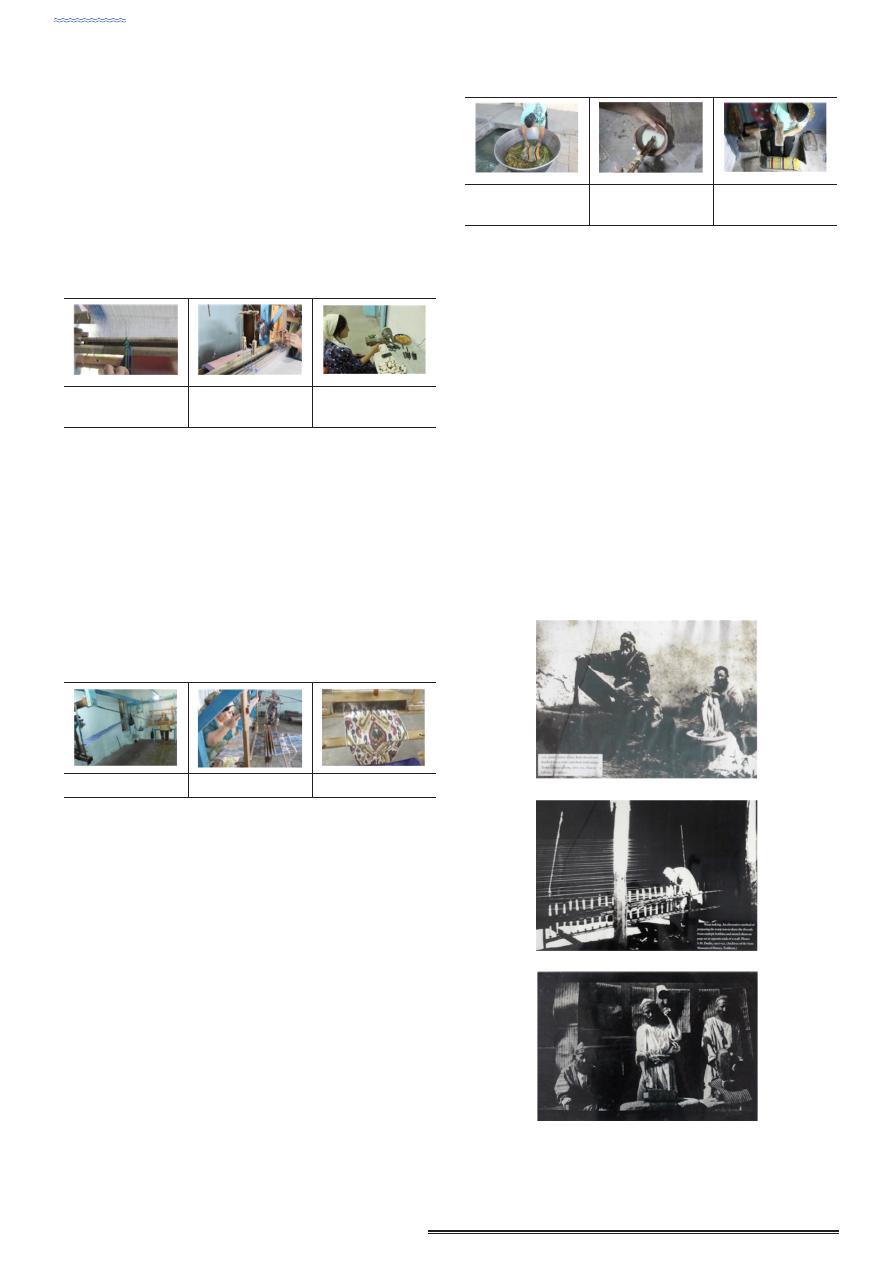
○ 32 processes of Uzbekistan Ikat, tools and
materials
1) Breeding Cocoons (Pilla yetishtirish)
In Uzbekistan, the cocoon is bred at Toshloq and
Yozyovon where has a lot of mulberry trees. The
cocoon is bred at 3 times, April-May, June-July,
August-September for 40 days and it is stored
after drying for 90 days.
Breeding Cocoon
Cocoon
Drying Cocoon
2) Making Thread (Yigiruv)
Nowadays, the thread is made by machine from
factory and the Silk Wats is the biggest factory
in Margilan. Annual production of this factory is
70 tons. All of the silk thread which is used in
MCDC is from this factory. Floss of the surface
of the cocoon is removed by putting it to boiled
water and obtain the thread. It is made to skein
by the machine.
Putting to boiled
water
Winding the
threads in front of
the body
The back up
3) Degumming (Qavatlash)
This is the process to make strength of thread
for convenience to weave. First, the thread
is coated by the O-10 which is made by the
refining factory for 12 hours into the plastic bag
to remove the impurities and sericin. The thread
is passed through of the process of braiding and
degumming after making the corn from the
skein. after that, the thread is steamed to fix the
twist and make the skein again.
Braiding
Degumming
Making Skein
4-5) Refining (Ishqorlash) / Squeezing (Quritish)
This is the process to make boiled silk
thread(Pishgan) from the skein of raw silk(Xom).
The thread is put in 130ℓ boiled water that alkali
which is made by CaCo3 and laundry soap.
After that, the threads are rinsed in the hot water
quickly. The thread is neutralized by putting in
the acid water 70ℓ added vinegar 200ml. The
thread is dried after squeezing of the thread by
twisting it on the T word-pole and shaking to
prevent binding of the thread.
The thread in the
alkali water
before and after
of refining
The Shaking on
the T word-pole
6) Making Corn (G’altakka olish)
This is the process to make convenience to warp by
making corn from the refined skein. The amount
of winding thread is not fixed. First, the thread is
shaken by using a pole to prevent binding of the
thread. After that, the skein of thread is hanged
on a machine. The thread is winding from skein
to corn by working the machine.
Shaking a thread
by using a pole
Hanging a thread
to machine
Completion of
the corn
39
INTERNATIONAL JOURNAL OF
ASIA-PACIFIC HERITAGE STUDIES
SUSTAINABLE CONSERBATION OF
ASIA-PACIFIC CULTURAL HERITAGE FOR THE UNESCO CHAIR
7) Making a lease (Qumxonaga tikish)
After each thread of the corn is passed on the
hole of bar, One thread is passed on the hole
of the heald and next thread is passed on the
between of a healds in regular sequence. The
threads which is passed is pulled to up and down
to make the lease.
Shed Machine
Taking a Thread
Completion of
the Shed
8) Warping (Davraga qo’yish)
It fixes to warping machine that thread which is
completed leasing process. The thread is warped
by a repeating process which is up and down
the threads by winding the warping machine. It
makes a fake shed on the one side of the machine
by hanging like ‘X’ word.
Winding a Warping
Machine
Details of
Fake Shed
Figure of the Top
9) Finishing of the Warping (Qumxonaga tikish)
It ties a shed on the end of threads. It prevents to
tangle the thread by winding a top of the thread
before making a loop. It piles up on the floor by
winding the thread to loop. It marks the end of
the thread by tieing both sides of the loop.
Winding of
the First
Making Loop
Completion
10) Putting a Thread into the Rod
(Taxtakachdan o’tkazish)
It puts on each hole of the rod. The holes of rods
which is used in this factory are 110. And it is
regulated by the width of the textiles.
Putting Thread
into the Rod
Workshop
Completion
11) Layering (Qatlash)
It places the rods at both ends at intervals of 2m,
that lift the thread bundle up and down. It repeats
the previous step adjusting the spacing of the
holes in the bar. When piled up, pull it from the
end of the thread to make it taut.
Set the spacing
up and down
stacking up warp
stacking up warp
or warp layering
12) Tie them together (Qatdan tushirish)
After finish layering process, the layered warp
yarn is dissevered by bundle tied to both side end.
Set the spacing
up and down
stacking up warp
stacking up warp
or warp layering
40
INTERNATIONAL JOURNAL OF
ASIA-PACIFIC HERITAGE STUDIES
SUSTAINABLE CONSERBATION OF
ASIA-PACIFIC CULTURAL HERITAGE FOR THE UNESCO CHAIR
13-14) Wrapping with threads, tearing the thread
(Ish tortish/Ip uzish)
Drawing (Nusxa chizish)
It is the warp prepare process for drawing and
the process of drawing pattern. After it put the
warp on the frame, then put the iron rod on the
top and it adjusts the tension of the thread by
weight. it mixes the soot of the surface of the
pot into the water then which is using to drawing
pattern by a wooden rod. it repeats the process of
drawing the corresponding pattern according to
the color while dyeing.
Adjusting
the tension
Drawing pattern
Drawing pattern
for 2nd dyeing
15) Binding or tieing (Bog’lash)
In the past, they used to use cotton, but nowadays
they mainly use tapes. It ties the thread by the
outer surface of tapes from to prevent the sticky
side touching the thread and that ties to the
adhesive side when coming back. It is a form of
spinning when you step on a footboard of the
binding machine.
Adjusting
the tension
Drawing pattern
Drawing pattern
for 2nd dyeing
16-17) Dyeing preparation (Rangga tayyorlash)
Measuring colors for dyes
(Rang tayyorlash)
It is a color matching process that prepares the
dyes and matches the colors. It put alum in water
then boil, and let it ripen for a day. it makes a
dyeing solution according to the color to be dyed.
Dyes
To boil dyeing
soultion
Check the colors
18) Dyeing preparation (Rangga tayyorlash)
Measuring colors for dyes (Rang tayyorlash)
It is a color matching process that prepares the
dyes and matches the colors. It put alum in water
then boil, and let it ripen for a day. it makes a
dyeing solution according to the color to be dyed.
The thread put
in water
Put into dyeing
solution
Washing
19-20) Drying (Quritish) / Unbinding (Yechish)
It is the process of drying the dyed yarn and
loosening the tied yarn. When sunlight reached
in the color of the yarn surface can be faded out,
so it should dry at the place of windy without
sunny.
Dry before untie
Binding
Dry
41
INTERNATIONAL JOURNAL OF
ASIA-PACIFIC HERITAGE STUDIES
SUSTAINABLE CONSERBATION OF
ASIA-PACIFIC CULTURAL HERITAGE FOR THE UNESCO CHAIR
21-23) Preparation for opening
(Ochishga tayyorlash)
Opening (Ochish)
Stretching to pipe[tanda] (Tanaga tortish)
Steps 21-23 are the process of adjusting the
pattern as a whole. Hang both sides of the
dried thread on the stick match the pattern. The
regulated yarn is fixed on the machine. Then
which is rotating the machine and matching the
pattern with every 8m in a base on the white
line and release the thread. After loosening the
thread, the two people pull both ends of every
8m tied together to make it taut. And, the yarn
is shaken and arranged then finished by a knot.
Put on the stice
for matching
pattern
Untieing
Pulling and
matching pattern
24) Dividing the Shed (Toqa juftavot)
It is holding the tension by tying the beginning
with the warp controller to the bar and the other
side to the weight. Then which insert the warp
controller and loose threads. It Inserts the warp
controller into the X-shaped section of the yarn.
The warp
controller to
the bar
Into the X-shaped
Completion
25) Fitting Yarn Guide (Tig’dan olish)
The warp controller set on the diagonal then that
the thread floats from the floor to create space
and secure it. The leasing reed is fixed to the
frame and insert the thread using leasing reed
knife.
Divide each one
play by The warp
controller
Put in the leasing
reed
Using leasing reed
knife
26-27) Koin Preparation (Asbob solish)
Lifting (Gula ko’tarish)
It is tying the beginning of the thread passed the
leasing reed to the frame in making the heddles,
and hang the weights on the opposite side to
adjust the tension. which replaces two of the
warp controllers used in the previous procedure
with a thick wooden rod, then raise the slope. It
makes heddles by hanging warp thread which is
dragged and the heddles made is hanged in heald
bar. The heddle is installed in up and down both
sides.
Division warp
controller
Heddles hang up
the warp
Pass through
heddles bar
28-29) Setting up pedals, hanging on the weight
(Tepki boglash/Gula osish)
Preparing weft thread for the shuttle
(Naychakash)
It is tying the beginning of the thread passed the
leasing reed to the frame in making the heddles,
42
INTERNATIONAL JOURNAL OF
ASIA-PACIFIC HERITAGE STUDIES
SUSTAINABLE CONSERBATION OF
ASIA-PACIFIC CULTURAL HERITAGE FOR THE UNESCO CHAIR
and hang the weights on the opposite side to
adjust the tension. which replaces two of the
warp controllers used in the previous procedure
with a thick wooden rod, then raise the slope. It
makes heddles by hanging warp thread which is
dragged and the heddles made is hanged in heald
bar. The heddle is installed in up and down both
sides.
Connect string
with down side
Connect string
with the pulley
Bobbin winding
30) Weaving (To’qish)
When it is stepping on the footboard, the heddles
comes down and opens.
And it put the weft between the opened warp
threads, press the footpath in the next step,
and hitting the body to fix the weft thread. this
process is repeated to weave.
Figure of room
Weaving
Finish
31-32) Washing the fabric (Mato tozalash)
Designing (Pardozlash)
Finished fabric, it removes seams on the fabric
surface and washes. It makes egg whites bubbles
and apply them to the surface of the fabric, then
knock them with a wooden hammer. Then it put
between the wooden boards and hold it for a day.
Put in the water
Beating the egg
white
Scutch the fabric
2.2.2.3. The transmission of traditional Ikat and
utilization plan
2.2.2.3.1. Traditional of Ikat and Preservation of
skills through tradition and education
Margillan was built in Fergana before BC.
Margliran has the rich history, also Ikat had used
a long time in this area that the same history
with the city. Ikat in Uzbekistan already had
introduced to western in the 19~20th century.
It was used for the material of clothing in Europe.
Picture 11. 19th - 20th century Margilan Ikat

43
INTERNATIONAL JOURNAL OF
ASIA-PACIFIC HERITAGE STUDIES
SUSTAINABLE CONSERBATION OF
ASIA-PACIFIC CULTURAL HERITAGE FOR THE UNESCO CHAIR
Ikat in Margilan the process of weaving is
working each step in the different house.
However, that is working all process in one place
in Korea. Therefore Ikat weaving skill has passed
on to family or citizen through education of
apprentices. Rasuljon who is master in the ninth
generation in MCDC also was starting to study
the Ikat through education of apprentices.
MCDC has education system for leaning to Ikat
weaving process. Therefore MCDC is main in
Margilan craft education system.
There has variaty project with roction school
student due to development of Ikat and region
culture. Also, one of project support to young
student for hand paasd and given opportunities
to join events. they try to allow has loving and
pride to Ikat thought hand passed on craft skill
education.
Picture 12. The apprenticeship curriculum
Uzbekistan government republished organization
for Atlas and Adras in UNESCO When they have
resulted from themselves trying.
was designated “Margilan Crafts Development
Centre, safeguarding of the atlas and adras
making traditional technologies” in 2017.
2.2.2.3.2. Domestic and overseas activities for
Ikat invigoration
Uzbekistan runs off the variety program to
promote for Ikat of traditional textile in domestic.
Also, there has propelled with the cooperated
project with several institutes in abroad. Atlas
Bayrami is which the 4th festival in 2018, is
an event for promoting to Ikat of Uzbekistan
traditional textile. There has the various program
as a flea market, fashion shows, exhibitions,
seminars and workshops during this festival.
A flea market has given the opportunity to Ikat
craftsman of Uzbekistan for sale and publicize,
and the customer is possible to buy various
products.
They were invited designers and artists who
are from home and foreign, to supported Ikat
fabrics during the Atlas Bayrami festival. And it
held a fashion show and exhibition for the newly
designed artwork that used Ikat.
Picture 13. The Central Asian textile crafts exhibition
44
INTERNATIONAL JOURNAL OF
ASIA-PACIFIC HERITAGE STUDIES
SUSTAINABLE CONSERBATION OF
ASIA-PACIFIC CULTURAL HERITAGE FOR THE UNESCO CHAIR
Picture 14. Fashion show
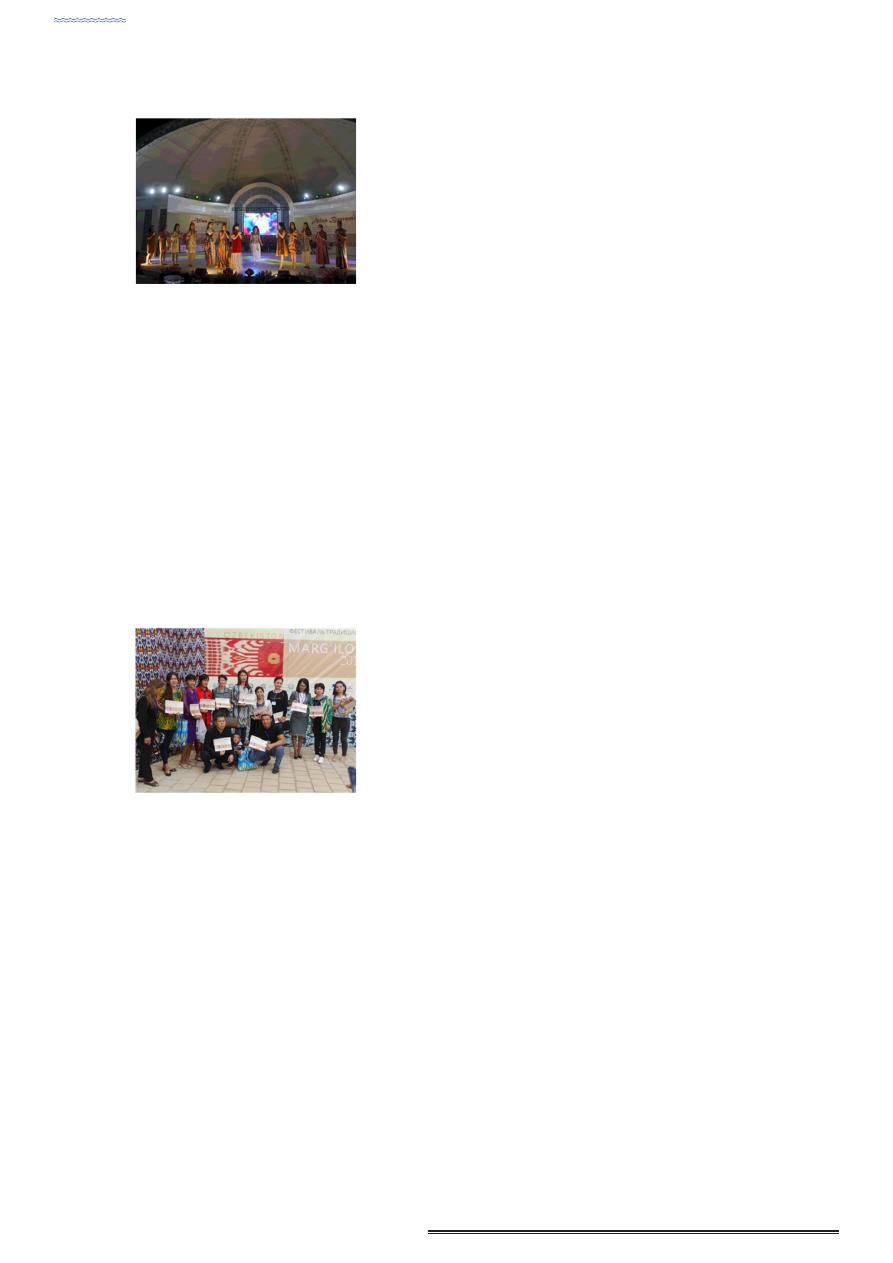
The local residents and students were participated
to make a festival.
Furthermore, it gave certificates of completion to
participants who worked at a festival. This was
opportunities who to strengthen the capacity of
local residents and students and promote pride in
Ikat. They are also collaborating with research
with other countries such as China and Spain.
During the festival, they held seminars to invited
who scholars from around the world.
Picture 15. Certificates of Completion to Participants
Through this, they strengthened domestic and
international academic solidarity and provided
opportunities to cooperate with other countries.
This effort is being made not only in Margiran
region but also on the national level.
A representative example is implemented the
Craft Activation Policy by the Foundation. They
will hold an exhibition to promote Ikat master
tradition by the father pattern sketch of the ninth
artist Rasuljon Mirzaakhmedov in 2019 in Paris.
On the other hand, in 2014 and 2016, Uzbekistan
carried out the 'Sustainable Craft Design' project
by supported jointly with the Korean National
Commission for UNESCO, the Ministry of
Culture, Sports and Tourism of Korea, the
Korea Craft Design Foundation, the National
Commission of the Republic of Uzbekistan
UNESCO, the MCDC and the Hunarmand
Association. Through this, they had planned
organized cooperation with Korean cultural
and artistic organizations, also held seminars
and exhibitions and workshops. As part of the
project, a workshop was held with a total of 36
young designers participated who from Margilan
Professional College of National Handicrafts,
Margilan Professional College of Light Industry
and Pedagogy, Kokand Professional College of
Arts, MCDC.
They learn traditional textile dyeing techniques
and have created over 50 new pieces that
combine traditional techniques with modern
design. It was published in two languages
"natural dyeing technology" for young craftsmen
and distributed to universities, universities and
educational institutions. This handbook covers
the establishment of the MCDC, along with
comprehensive information on the natural dyeing
of silk, cotton and wool, as well as materials and
tools for embroidery and carpet weaving, from
the preparation of raw materials and yarn.
3. Findings and application plan
3.1. Findings
It selected Margilan, Which has been handed
down traditional craft techniques of Uzbekistan
and conducted a field survey focusing on the
production process and tools, tradition and
utilization methods of traditional Ikat.
According to the research, three types of Ikat were
weaved in Margilan: Adras, Atlas, and Bachmal.
Ikat was divided into 32 processes according to
traditional weaving methods. Among them, the
process of expressing the pattern is the most
important part and the technique has been passed
on by a skilled master.
As the 32 processes were made by the respective
professional craftsmen, the cooperation system
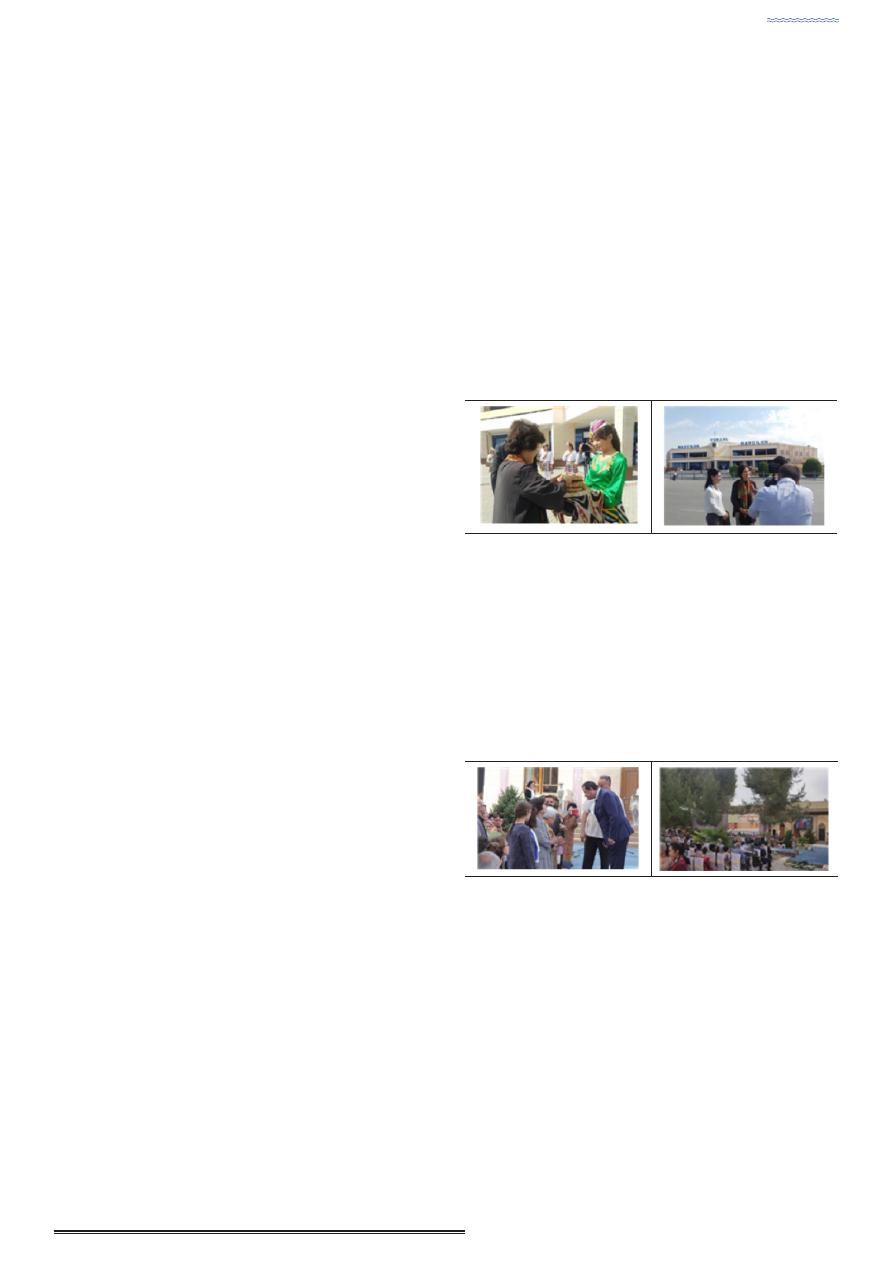
45
INTERNATIONAL JOURNAL OF
ASIA-PACIFIC HERITAGE STUDIES
SUSTAINABLE CONSERBATION OF
ASIA-PACIFIC CULTURAL HERITAGE FOR THE UNESCO CHAIR
4. Appendix (Field Survey)
4.1. Detailed itinerary
4.1.1. The welcoming ceremony at Margilan
station (09/13)
Many domestic and international participant
visit during the festival to participate in Atlas
Bayrami, the Ikat festival in Margilan. Especially,
a welcome event for the research team from
Korea was prepared at Margilan station.
4.1.2. Opening Ceremony (09/14)
It is an opening ceremony to announce the start
of the Atlas festival. The event was attended by
scholars and designers from around the world,
governors of Fergana, officials from UNESCO in
Uzbekistan and ministries in Margilan.
4.1.3. Flea Market (09/14)
It is an opening ceremony to announce the start
of the Atlas festival. The event was attended by
scholars and designers from around the world,
governors of Fergana, officials from UNESCO in
Uzbekistan and ministries in Margilan.
among the craftsmen was emphasized. Ikat's
traditional weaving techniques have passed
on as apprenticeship training. All activities
such as tradition and utilization of traditional
weaving techniques, public relations, and foreign
negotiations play a leading role in MCDC under
the control of master Rasuljon Mirzaakhmedov.
In addition to education and preservation of Ikat's
traditional skills, students and local residents
participated in a variety of programs and
experienced the skills of Ikat to improve their
awareness. It is also continuing to cooperate with
many other countries through close cooperation
with the UNESCO Tashkent branch.
Uzbekistan's craftsmen, local residents and
professionals are involved in a wide range
of activities both at home and abroad based
on national support for the preservation,
transmission, utilization and promotion of
traditional Ikat.
3.2. Plan for future use
Ikat has been designated as “Margilan Crafts
Development Centre, safeguarding of the Atlas
and Adras making traditional technologies”, is
one of the most well-known traditional textile
crafts in Korea, but no professional research or
research results have been presented. Based on
the field survey, it conducted the research on
Uzbekistan 's Ikat Weaving Technology. Based
on this, we obtained basic data on 32 processes
and tools. The basic data will be utilized not
only as future educational materials, but also
to restore the technology of traditional Korean
textile crafts, which are reported only as ancient
records. In the future, the mutual continued
exchange with Uzbekistan will lead to the
acquisition of materials for cultural cooperation
and propagation of human cultural heritage.
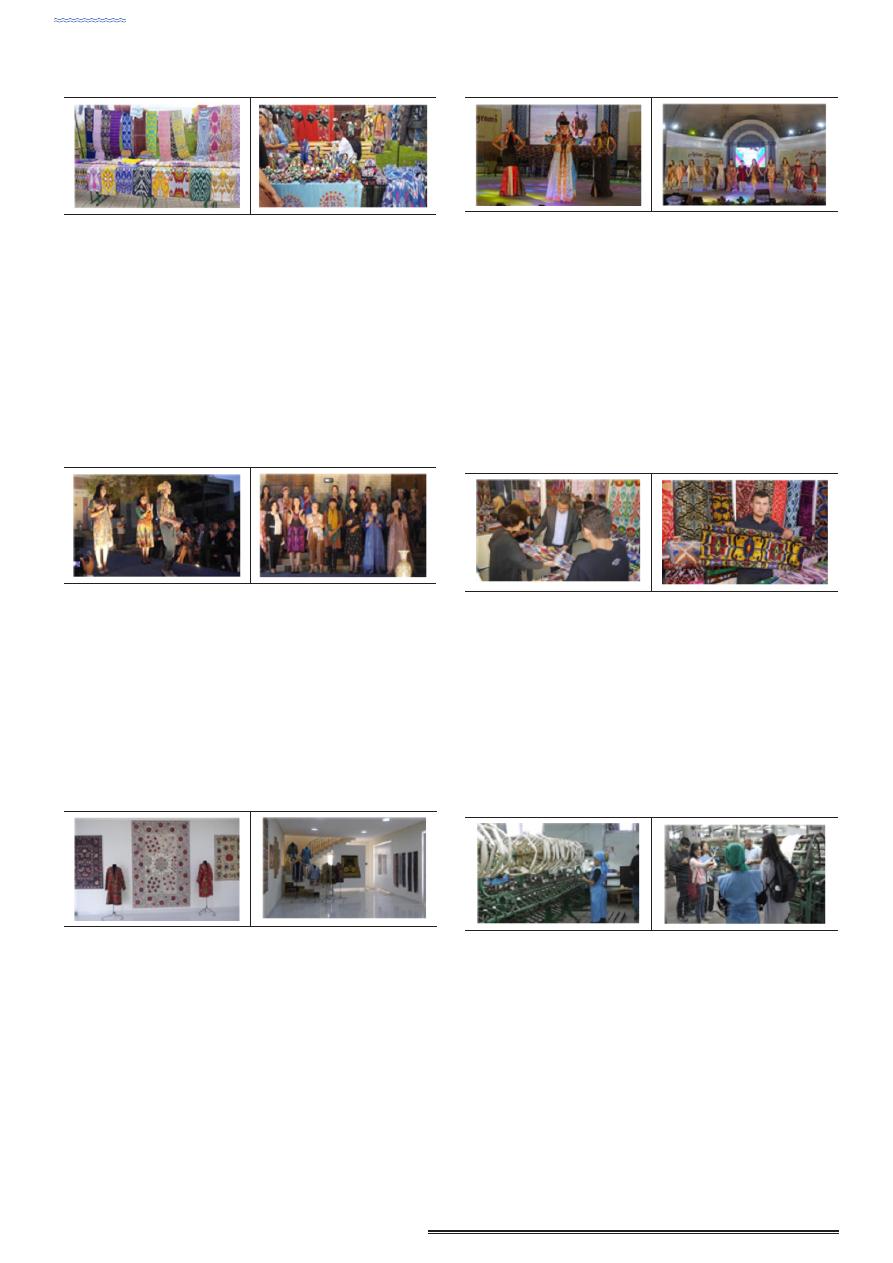
46
INTERNATIONAL JOURNAL OF
ASIA-PACIFIC HERITAGE STUDIES
SUSTAINABLE CONSERBATION OF
ASIA-PACIFIC CULTURAL HERITAGE FOR THE UNESCO CHAIR
4.1.4. Fashion Show (09/14)
Bangladesh designer Bibi Russell has trained
young designers selected from various regions
of Uzbekistan with the support of Margilan Craft
Center MCDC. As a result, a fashion show was
held to show costumes made of Ikat. All Ikats
used were provided by the MCDC.
4.1.5. Exhibition (09/15)
The theme "The Silk Roads: continuing traditions",
Designers who are from Uzbekistan and the
marginal state had an exhibition to works which
made by using the Ikat and traditional techniques.
All used Ikat was provided by the MCDC.
4.1.6. Gala Show (09/15)
It is a fashion show that showcases costumes
which were using the Ikat famous designers
from Uzbekistan and neighboring countries. The
gala show is the last event of the festival with
the closing ceremony of Atlas Bairamy. All Ikats
used were provided by the MCDC.
4.1.7. Margilan Market (09/16)
Margilan has a big market every Thursday and
Sunday. Especially in this market, there is an
area where Ikat sells separately. It is available to
buy at a low price of hand-woven Margilan Ikat
in a market. Also, Ikat-related products such as
clothes, shoes, and bags are also sold.
4.1.8. Filature factory (09/18)
It is operated by a second generation Goryeo
and is the largest filature factory in Margilan.
All yarn used in MCDC are produced here. The
produced yarn is exported not only to neighboring
countries but also to Korea.

47
INTERNATIONAL JOURNAL OF
ASIA-PACIFIC HERITAGE STUDIES
SUSTAINABLE CONSERBATION OF
ASIA-PACIFIC CULTURAL HERITAGE FOR THE UNESCO CHAIR
-Reference-
1. Intangible Cultural Heritage in Uzbekistan,
ICHCAP, 2017
2. Research Reports : A Study on the Traditional
Textiles of Uzbekistan, Choi Jung Yeon, The Korean
Society of Design Culture, Vol.20, No.3, 2014
3. http://www.Ikat.com
4. http://www2.ichcap.org
5. http://ich.unesco.org
6. https://terms.naver.com/entry.nhn?docId=1176238
&cid=40942&categoryId=40086
7. http://www.mofa.go.kr
8. Uzbekistan : Heirs to the Silk Road by Johannes
Kalter, Robert D. Biggs, Thames&Hudson, 1997
9. Central Asian Ikat, Ruby Clark,
V&A Publications, 2007
10. Technologies of Natural Dyeing, Rasuljon
Mirzaakhmedov, MCDC, 2015
11. The Chronicles of the Three States
[삼국사기(三國史記)]
12. 5,000 years of Korean textile, Sim Yeon OK,
ISAT, 2002
13. 正倉院裂と飛鳥平安の染織, 松本包夫 著, 紫紅社, 1984
14. 2015 Craft Trand Fair:Future in hands, Korea
Craft & Design Foundation , 2015
15. 2016 Craft Trand Fair:Heritage to Originality,
Korea Craft & Design Foundation, 2016


Research on
Construction
Method and
Materials
for Brick
Construction
in Khmer,
Cambodia
GROUP
| Korea National University of Cultural Heritage
NAME
| Heondeok Jang / Hyeonok Yoo / Soyoung Kim
| Hyojeong Kim / Sangok Lee / Dohyeon Nam

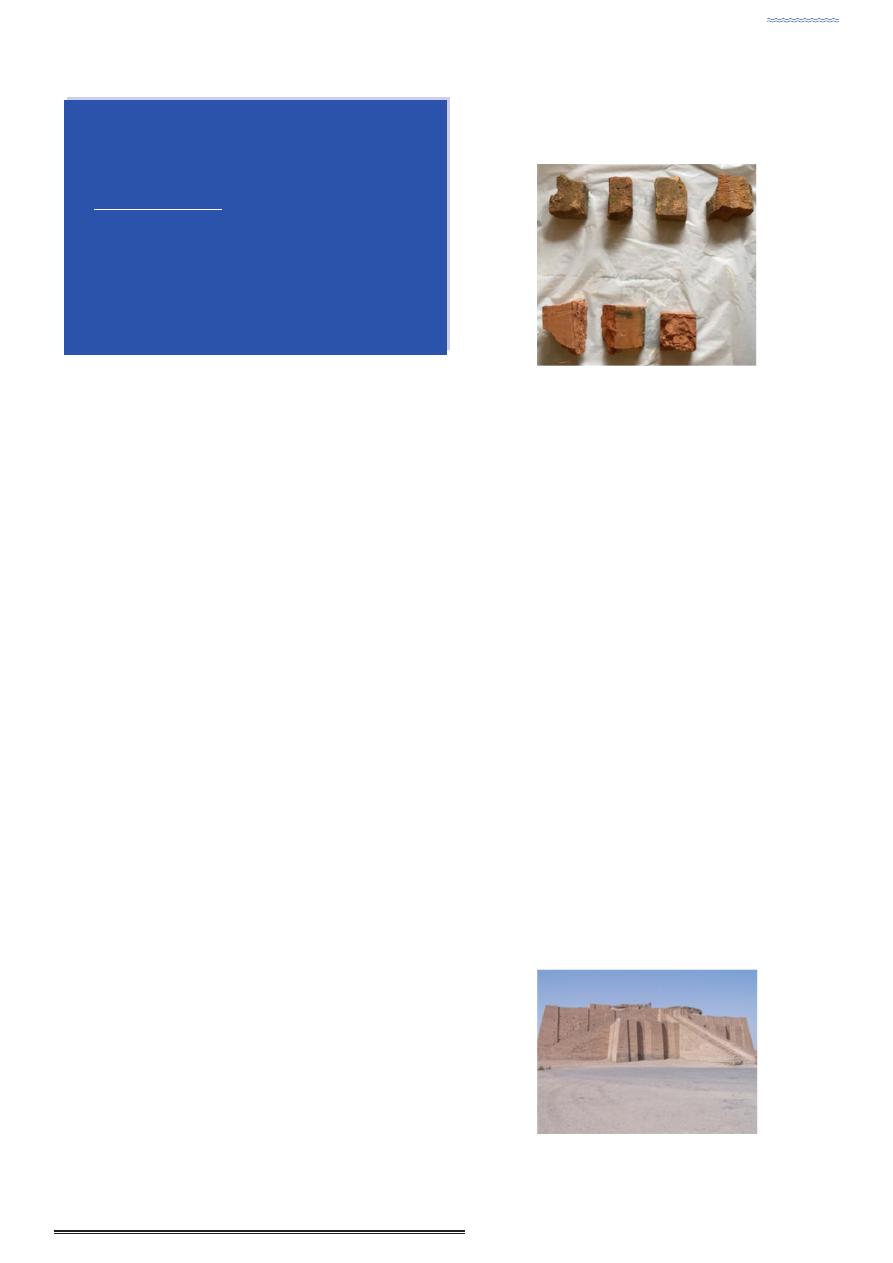
51
INTERNATIONAL JOURNAL OF
ASIA-PACIFIC HERITAGE STUDIES
SUSTAINABLE CONSERBATION OF
ASIA-PACIFIC CULTURAL HERITAGE FOR THE UNESCO CHAIR
Ⅲ Investigation on Construction Method
and Materials for Brick Construction
in Khmer, Cambodia
GROUP
| Korea National University of Cultural Heritage
NAME
| Heondeok Jang / Hyeonok Yoo / Soyoung Kim
| Hyojeong Kim / Sangok Lee / Dohyeon Nam
1. Site Survey
1.1. Survey Schedule
A site survey was carried out for 6 days, from
August 23, 2018 to August 28, 2018, at Roluos
Archeological Complex (Lolei, Preah Ko, and
Bakong) for the early architectural style of Khmer
and Banteay Srei, royal palace, Bapuon, Bayon,
Ankor Wat for the middle and late architectural
style, collecting the base line data like photos and
local brick samples. Details of the site survey in
Cambodia are as follows.
1.2. Survey Contents
1) Site Survey for Khmer Brick Remains and
Representative Remains by Khmer Styles
2) Current/Old Brick Sample Collection
- Dimension: Approx. 300 × 300 × 400
- Types and quantity: 3 samples currently
used for brick building repair, 4 brick
samples from 10thCentury
2. Brick Construction Method of Khmer
2.1. Outline of Brick Construction
Brick construction, which lays bricks for main
structural parts, has been applied to buildings all
over the world from ancient times. The very first
brick, which was made about 9,000 years B.C.,
was found in Jericho, an ancient city in present
Turkey, and the early form of brick vaults and
domes from about 4 thousand years B.C. were
discovered in Mesopotamian region.
In about 2,100 years B.C. in a Ziggurat, Ur, large
scale brick structures were built, and then that
style was extended and widely used all over the
world, to Mediterranean in the west and India
in the east. Famous Great Stupa-Sanchi in India
was made between 3rd-1st Century B.C. and the
oldest Chinese brick pagoda was made in 520
A.D. at Songyue Monastery. Korea has many
brick pagodas as built in the era of the unified
Silla.
Picture 2. Ziggurat, Ur (source: Wikipedia.org)
Picture 1. Collected Brick Samples (up-bricks from 10thCentury/
down-currentlyusedbricks)
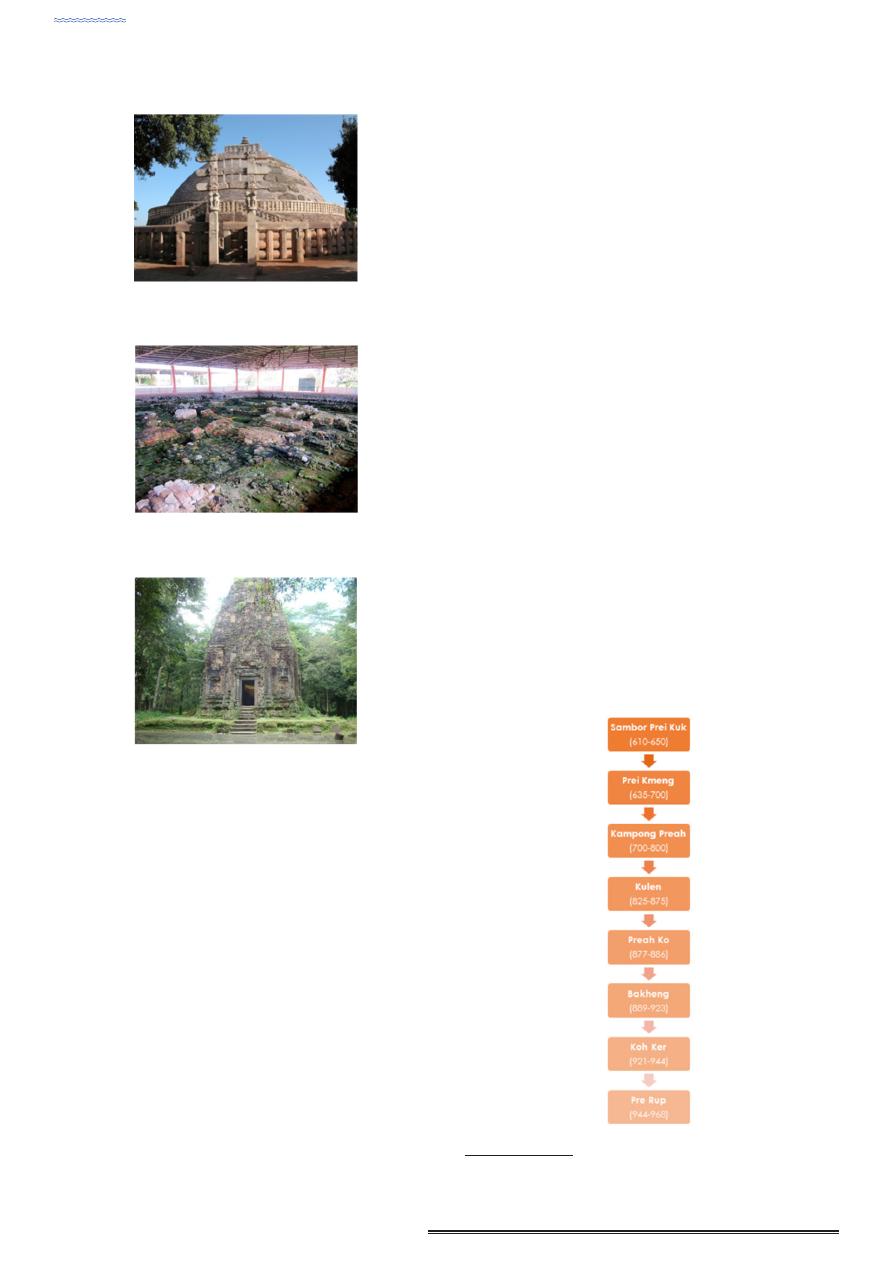
52
INTERNATIONAL JOURNAL OF
ASIA-PACIFIC HERITAGE STUDIES
SUSTAINABLE CONSERBATION OF
ASIA-PACIFIC CULTURAL HERITAGE FOR THE UNESCO CHAIR
Picture 3. Great Stupa-Sanchi
Picture 4. Oc-Eo Archeological Site (source: Wikipedia.org)
Picture 5. Sambor Prei Kuk (source: UNESCO)
2.2. Methods of Khmer Brick Construction
It is not very specific when brick construction
began in Cambodia but the oldest trace of
brick construction found so far is the Oc-Eo
archeological site which was allegedly built
around the 0 A.D. It has been known that Brick
construction began in earnest from Sambor Prei
Kuk which was built in 7th Century.
Sambor Prei Kuk stands for ‘monastery in
abundance of forests’ in Khmer language is in
Ishanapura, the capital of Chenla Empire in thr
6th Century. It consists of about 100 temples built
between late 6th Century and early 7th Century,
and was registered on the UNESCO World
Heritage in 20171.
Most Khmer brick constructions, emerging
from the 7th Century, have laterite foundation
in square or octagon plane with the gate on east
side. Roofs are structured by combination of
concave part inside the tower and arch shaped
part, and sandstone was partially used for the
doorframe of the gate.
Khmer brick construction later was laid in oval
shape on tall stereobates of pyramid-shaped
mountain temples with mixture of sandstone as
found in Bakong and East Mebon. In the late 9th
and early 10th Century, there coexisted brick
temples and sandstone temples, so the transition
of construction materials does not show a clear-
cut borderline. After construction of Preah
Ko, usage of brick gradually decreased while
sandstone dominated Khmer construction in 11th
Century. Although bricks were small enough
to transport, but it is considered that sandstone
was more appropriate as the scale of temples
increased and architectural system changed.
1 | Registration conditions (ii), (iii), and (vi) were met
Picture 6. History of Khmer Brick Construction
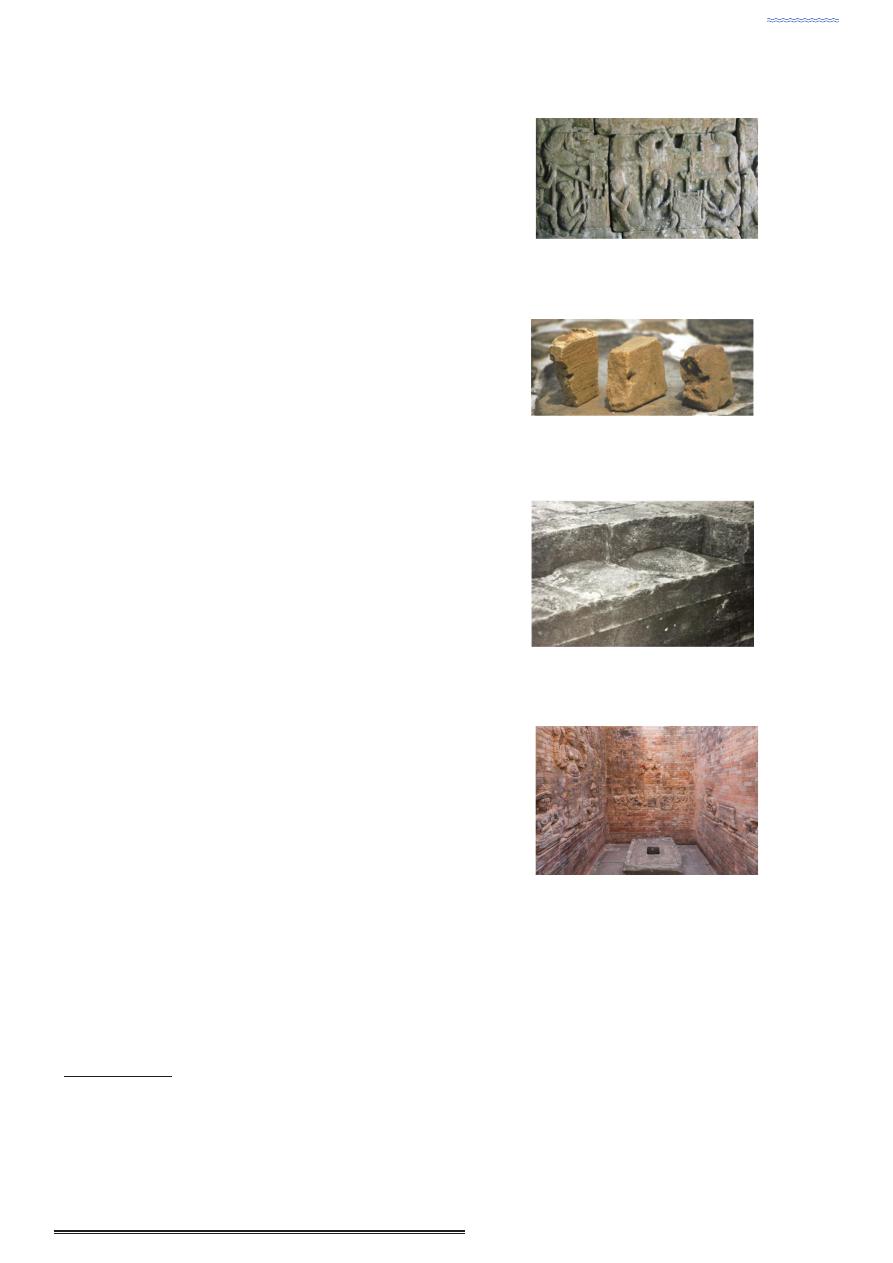
53
INTERNATIONAL JOURNAL OF
ASIA-PACIFIC HERITAGE STUDIES
SUSTAINABLE CONSERBATION OF
ASIA-PACIFIC CULTURAL HERITAGE FOR THE UNESCO CHAIR
2.2.1. Brick Masonry Methods
Khmer bricks vary in shapes and dimensions are
typically around 300×150×70mm.
In terms of brick masonry methods in Khmer
brick construction, they used grinding masonry,
mortar masonry, and mixture of grinding and
mortar masonry methods were used for bonding
of upper and lower bricks. Grinding masonry
method
2 used friction between bricks for fine
contact without masonry joint.
Mortar masonry used mixture of slaked lime
mortar and tree resin for masonry, and, lastly,
they also used both grinding method and small
amount of mortar.
Preah Ko was built by grinding masonry method
using small amount of mortar. In the case of Preah
Ko, the bricks have longitudinal concave with a
hole of 1cm for diameter and 1.5~3cm for depth
in the middle of the top, which is considered to
provide better adhesion between bricks holding
mortar in the hole while laying grinded bricks.
Mortar in the hole improved vertical adhesive
strength, and masonry joints or junctures are not
see on the outside of the wall. Similar cases are
found in Prasat Kravanh
3 .
Lower bricks of Prasat Kravanh have bulged
top and upper ones have dented bottom to hold
mortar in-between while showing no mortar
masonry joint on outside. The walls built in this
method could have fancy sculpture applications.
2 | Grinding masonry method were used not only for bricks but for
sandstone temples. The details can be found wall relievos of
Bayon temple
3 | This temple of 10thCentury consists of 5 red brick pagodas
enshrining Vishnu
Picture 7. Relievo on Grinding Masonry Wall of Bayon Temple
Picture 8. Holes on Preah Ko Brick (source : The
Pre-Angkorian Temple of Preah Ko)
Picture 9. Masonry method of Prasat Kravanh (source: The
Pre-Angkorian Temple of Preah Ko)
Picture 10. Relievo side Prasat Kravanh
(source: Wikipedia.org)
Masonry methods for Khmer brick construction
include 4 methods: wedge brick masonry,
masonry after leveling, masonry with surface
fitting, and mixture of bricks and stones.
Since bricks for Khmer brick construction
were not uniform in size, when a brick does not
perfectly fit, it was cut in a trapezoid shape. It is
called wedge brick in a trapezoid shape, which
was used to finish masonry starting from both
corners. In case of grinding masonry, the ground
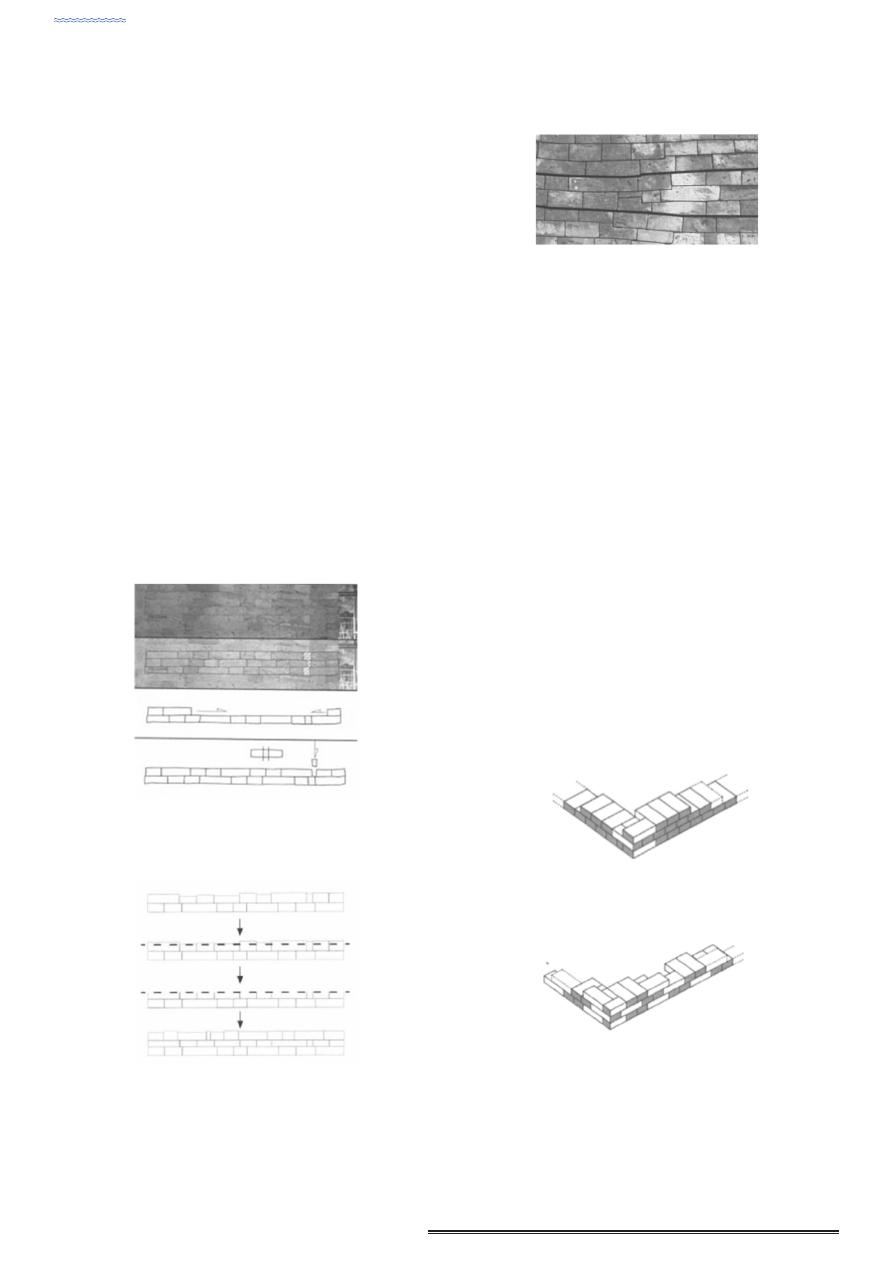
54
INTERNATIONAL JOURNAL OF
ASIA-PACIFIC HERITAGE STUDIES
SUSTAINABLE CONSERBATION OF
ASIA-PACIFIC CULTURAL HERITAGE FOR THE UNESCO CHAIR
surface may be so uneven that brick might not
be laid on a perfectly horizontal line. In such
case, the top of the bricks was processed to make
them lined up, and then bricks were laid again
on the leveled surface. Masonry with surface
fitting made surfaces of bricks fit together by
chiseling without leveling. It is often applied
to wall masonry with sandstone or laterite, but
it was also used for brick walls in Khmer brick
construction.
The last method is a mixture of brick and
stone. It uses masonry of bricks and stones
together, using stones at openings or corners to
supplement brick's lack of tensile strength. It has
an advantage in that the rigidity of walls improves
and openings can be extended employing lintels
even without any arch.
Picture 11. Masonry with Wedge Bricks
(source: Park, Doonghee, 2015)
Picture 12. Masonry after Leveling
(source: Park, Doonghee, 2015)
Picture 13. Masonry with Surface Fitting
(source: Park, Doonghee, 2015)
Masonry patterns of Khmer brick construction
include header bond, length1+end header2
masonry, longitudinal masonry, English bond,
and longitudinal rowlock.
Header bond lays bricks showing the end grain
on the finished sides, and length1+end header
2 puts 1 brick showing its length side on the
finished side and 2 bricks showing end grains on
the finished side. Longitudinal masonry shows
its length side on the finished side, exposing
lengthwise sides only except both corners.
English bond, which makes the strongest walls,
alternates the length side and end grain on the
surface and it can be found in Khmer brick
construction. The longitudinal rowlock lays 2
levels of bricks in the lengthwise side and inserts
a brick with the lengthwise side vertically.
PIcture 14. Header Bond
PIcture 15. Length1+End Header2
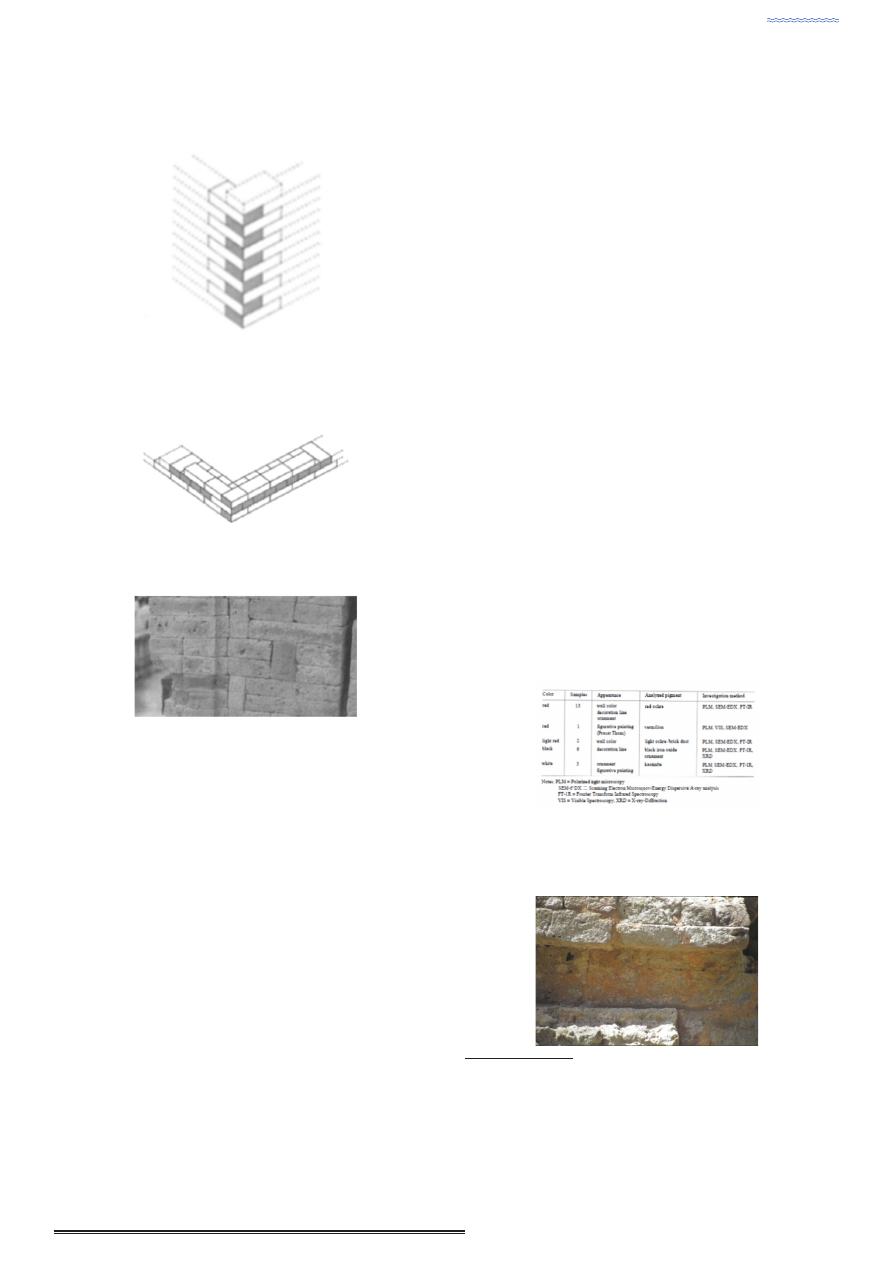
55
INTERNATIONAL JOURNAL OF
ASIA-PACIFIC HERITAGE STUDIES
SUSTAINABLE CONSERBATION OF
ASIA-PACIFIC CULTURAL HERITAGE FOR THE UNESCO CHAIR
PIcture 16. Longitudinal Masonry
Picture 17. English Bond
Picture 18. Longitudinal Rowlock
Thanks to masonry methods as above, Khmer
brick construction seldom expose masonry
joint to the outside. The most important factor
in masonry structure is to maintain structural
integrity altogether. Although mortar is attributed
such integrity as a bonding material, Khmer
brick construction hardly shows masonry joint,
which is unlike modern brick construction. This
characteristic is often found in neighboring
regions such as Myanmar, Thailand, and Vietnam.
Preah Ko has very thin mortar layer between
bricks, which is assumed as a mixture of lime
and brick dust which is supplemented by palm
sugar or vegetable gum as traditional materials.
The monolithic walls were constructed by those
construction methods to lay bricks one by one,
and they were so strong that fancy relievos could
be applied on the brick surfaces.
2.2.2. Brick Masonry Surface Treatment
Surface treatments for Khmer brick constructions
include 3 methods: plaster application, plaster
application after wall surface processing
4 , and
coloring on plaster. Although uneven sides were
adjusted and surface was cut and process for
decoration, the walls of Khmer brick construction
were coated with lime-based material for
protection against weathering.
The brick surfaces are now exposed because
plaster has been worn out due to long-term
weathering. Coloring on brick surface is still
found on some Khmer brick construction. The
pigments have red, bright red, black, and white
colors and they were analyzed by Susanne
Runkel and Hans Leisen
5 . However, no study
has been carried out for adhesive material in
such pigments.
4 | Plaster application after wall surface processing was a method
to make a hole or process the surface to get rough in order for
better application of plaster on brick surface
5 | Susanne Runkel, Hans Leisen, ‘Interior Polychromy and Wall
Paintings in Khmer Brick Temples of the 9th and 10th century in
Cambodia’, Connecting Emmpires 22, 2012
Picture 19. Pigment Analysis Result by Sussanne
Runkel and Hans Leisen
Picture 20. Trace of Coloring (source: The Pre-
Angkorian Temple of Preah Ko)
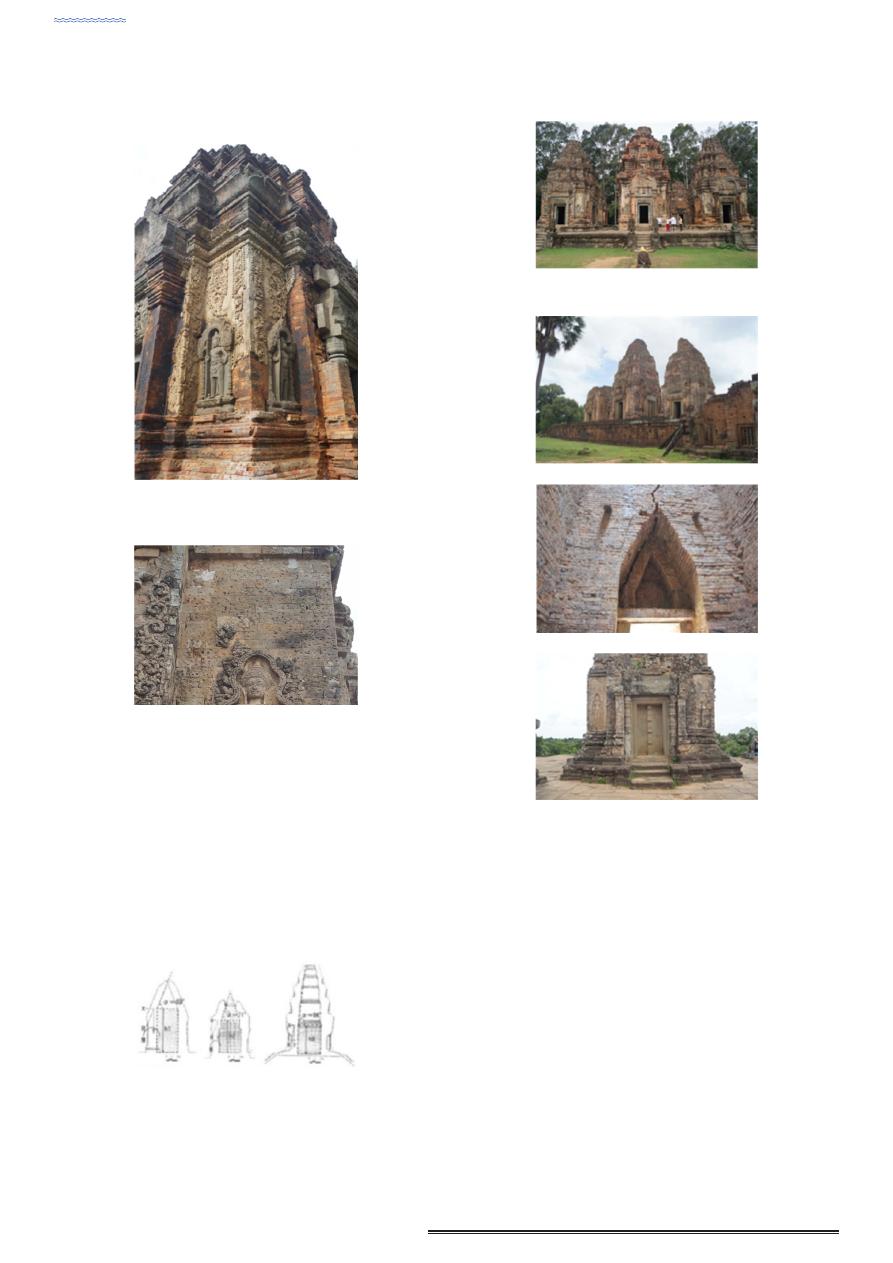
56
INTERNATIONAL JOURNAL OF
ASIA-PACIFIC HERITAGE STUDIES
SUSTAINABLE CONSERBATION OF
ASIA-PACIFIC CULTURAL HERITAGE FOR THE UNESCO CHAIR
Picture 21. Wall Surface Treatment of Khmer Brick
Construction - Plaster Application
Picture 23. Changes in Khmer Brick Construction
2.2.3. Changes in Brick Construction by Ages
Characteristics of Khmer brick construction by
age are categorized into changes in wall and
roof and changes in openings in accordance with
Chenn Ratha, 2008.
Picture 23. Changes in Khmer Brick Construction
Picture 24. Preah Ko
Picture 25-27. Pre Rup
To summarize the process of changes above,
Khmer brick construction developed to expand
the internal space and improve reinforcement
method for openings.
3. Materials for Khmer Brick Construction
3.1. Features of Materials for Khmer Brick
Construction
Khmer brick construction is known so far to have
used various construction materials and building
methods. It used laterite for the foundation and
bricks and sandstone were laid using the lime
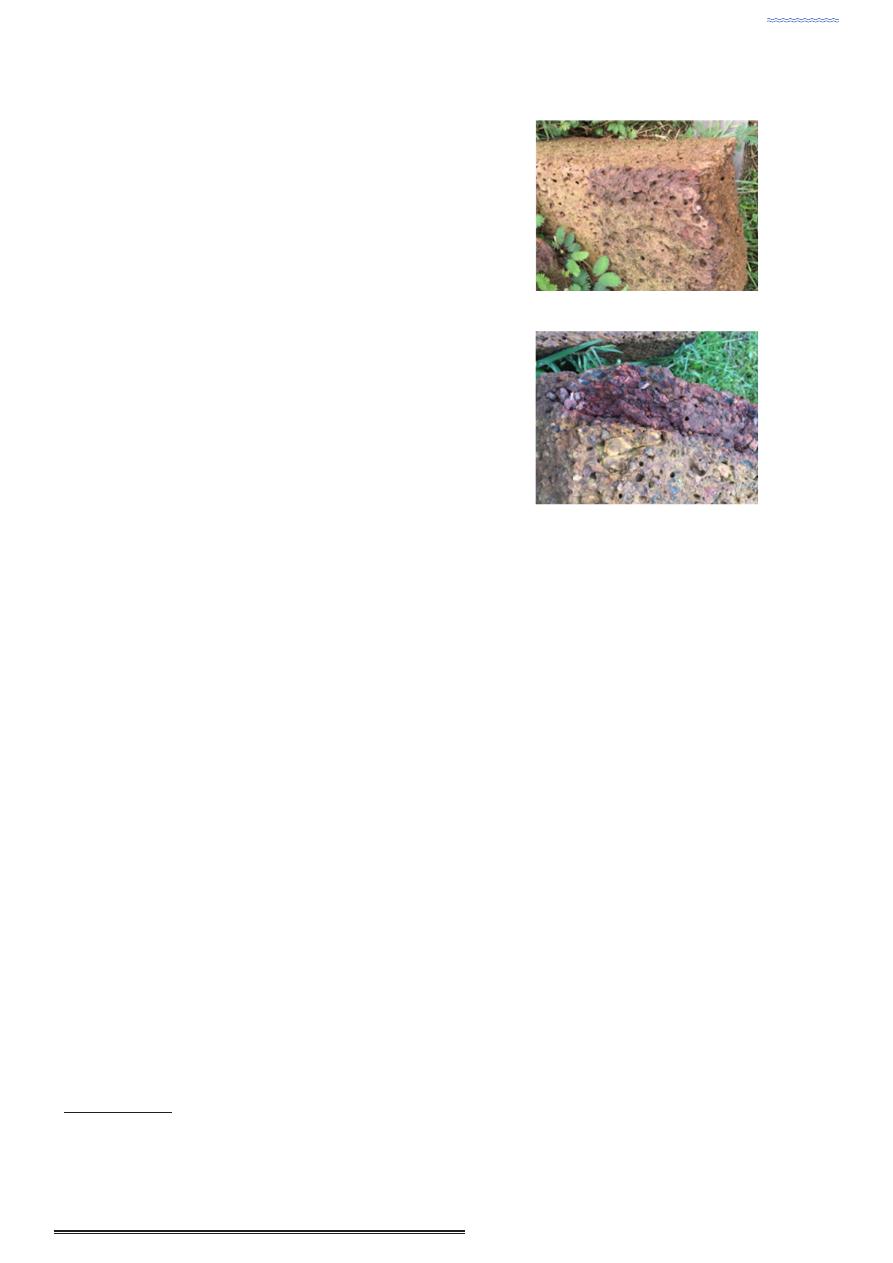
57
INTERNATIONAL JOURNAL OF
ASIA-PACIFIC HERITAGE STUDIES
SUSTAINABLE CONSERBATION OF
ASIA-PACIFIC CULTURAL HERITAGE FOR THE UNESCO CHAIR
mortar and organic adhesives for its masonry
in most cases. From the view of preservation
and restoration, each material for Khmer brick
construction shows damages from the influence
of particular weather environment due to
dry and wet seasons, earthquake, biological
damage from lichens and microorganisms, and
structural damage from property differences
between materials. In particular, for Khmer
brick construction with composite materials
requires comprehensive investigation of damage
conditions and restoration plan based on property
evaluation of each material.
Laterite, which is natural stone used for
foundation of Khmer brick construction and
comprised of hydroxide of iron and aluminum
as main components, is created by efflorescence
of accumulated surface soil and it is commonly
found in tropical climate with dry and wet
seasons(Gidigasu,1976).
It is necessary to analyze in diverse aspects
because it has various characteristics by regions
due to sedimentation, leaching of silicic acid
or base, ionic dissociation due to movement of
underground water between wet and dry seasons,
and, furthermore, it also varies by the depth.
In reality, weathering of laterite shows not only
pulverization and exfoliation by oxidation of
accumulated iron oxide, but also change into
porous structure due to the continuous rise of
internal soil elements in laterite. In a workshop by
Apsara
6 , it is suggested that caution is required
for newly restored laterite because it has better-
reserved condition and enhanced strength, which
may lead to concentrated weight on the old,
weathered laterite part and selective damage.
Since preservation of materials receives more
value in the principle of preservation and
restoration, it is necessary to select and use new
laterite from the same origin whose strength is
similar or weaker compared to the weathered
existing one.
6 | APSARA, 2010, “PHNOM BAKHENG BRICK SHRINE
CONSERVATION AND STABILIZATION WORKSHOP”, workshop,
pp.3~110.
Picture 28. Discoloration of Laterite
Picture 29. Deteriorated Condition by Iron Oxide
The bricks used for Khmer brick construction
were burnt at relatively low temperature
compared to those used in Korea. Bricks burnt at
low temperature feature higher absorptivity and
porosity and many of the bricks used in Khmer
brick construction have carvings. When carving
on the surface of burnt brick, rather than on that
of brick in mold, the hardened surface is easily
damaged.
This may lead to accelerated weathering when
exposed to external environment. For such
weakened bricks, reinforcing agent is applied in
Korea to enhance the strength and waterproofing,
but the same application to Khmer brick
construction may cause adverse effects such as
deterioration of the reinforced parts by the high
amount of insolation in the region or inhibition of
internal water flow.
Sandstone was used mostly in stereobates,
stairs, entrance, lintel, and pillar where strength
is necessary. Sandstone of Cambodia varies in
the content of clay mineral by the location of
quarrying, and major damages are from cracks,
separation/exfoliation, salt injury, and lichens or
biological factors. Although sandstone has lower
strength than granite that accounts for most of

58
INTERNATIONAL JOURNAL OF
ASIA-PACIFIC HERITAGE STUDIES
SUSTAINABLE CONSERBATION OF
ASIA-PACIFIC CULTURAL HERITAGE FOR THE UNESCO CHAIR
Korea, it is relatively stronger than bricks for
Khmer construction in Cambodia and laterite, so it
shows less weathering and damage. Since plaster
mortar and organic glue other than sandstone are
not yet clearly investigated for their properties, it
is currently necessary to research more on how
each material affects the composite structure of
masonry.
3.2. Methods to Analyze Materials for Khmer
Brick Construction
As physical properties and durability of bricks
and laterite used for Khmer brick construction
change by the chemical composition and
microstructure, each material's physical property
and deterioration property were investigated.
Brick samples that are estimated to be used in
the 10th Century and bricks currently used for
preservation and restoration were selected as
subjects of analysis, and laterite samples were
collected from the stereobate of Vat Phou and
Hong Nang Sida temples, which are fruits of
Khmer architecture, and nearby quarry. Methods
of analysis for Khmer construction materials are
as below:
1) Microscopy for microstructure
2) Water absorptivity, measurement of specific
gravity and porosity
3) X-Ray Diffraction (XRD) analysis and
Thermo Gravimetric Analysis (TG-DTA)
4) Principal component analysis (XRF),
Microelement and rare earth element
analysis (ICP-MS/AES)
5) Compression Strength Test
For physical property evaluation, absorptivity,
bulk specific gravity, and porosity were measured
and compression strength was assessed. For
compression strength, KS L 5105 (experiment
for compression strength of mortar) was carried
out and samples were cut into a dimension of
50mm×50mm×50mm for evaluation.
In addition, in order to find out properties of
each microstructure, stereoscopic microscopy
and polarizing microscopy were carried out for
observation of microstructures.
For chemical property analysis, principal
component analysis with WD-XRF (XRF: SiO2,
Al2O3, Fe2O3, MgO, CaO, Na2O, K2O, TiO2,
MnO, P2O5) and microelement analysis for rare
earth elements (ICP-MS) were carried out. For
crystal phase analysis of bricks and laterite,
X-Ray Diffraction (XRD) analysis was made and
different thermogravimetric analysis (TG-DTA)
was conducted to analyze weight changes and
crystal phase changes by burning temperature.
3.3. Result of Analysis on Materials for
Khmer Brick Construction
3.3.1. Result of Microscopy for Microstructure
Since the temperature in Cambodia and Laos,
where Khmer buildings are located, is very
high, and rainy and dry season alternate, loss of
silicic acid in laterite frequently occurs. Laterite
used for stereobates of Hong Nang Sida and Vat
Phou temples did not elute alumina or iron, but
those components deposited in the cracks and
pores. As a result, laterite in red, brown, or black
color contains little amount of silicic acid while
aluminum hydroxide and iron hydroxide are
abundant.
Red discoloration at pores of laterite at Hong
Nang Sida and Vat Phou temples is presumed
to be caused by iron oxide and the surrounding
area consists of yellow clay. Yellow soil
substance deposited around the pores. Some
white concentrate is also observed and small and
round crystalline structures with high roundness
were seen. Laterite at Vat Phou temple had black
affected zones at some pores and cracks, and
glossy structures were also observed. Such black
microstructure is presumed to be a result from
loss of silicic acid component and concentration
of iron oxide condensation.
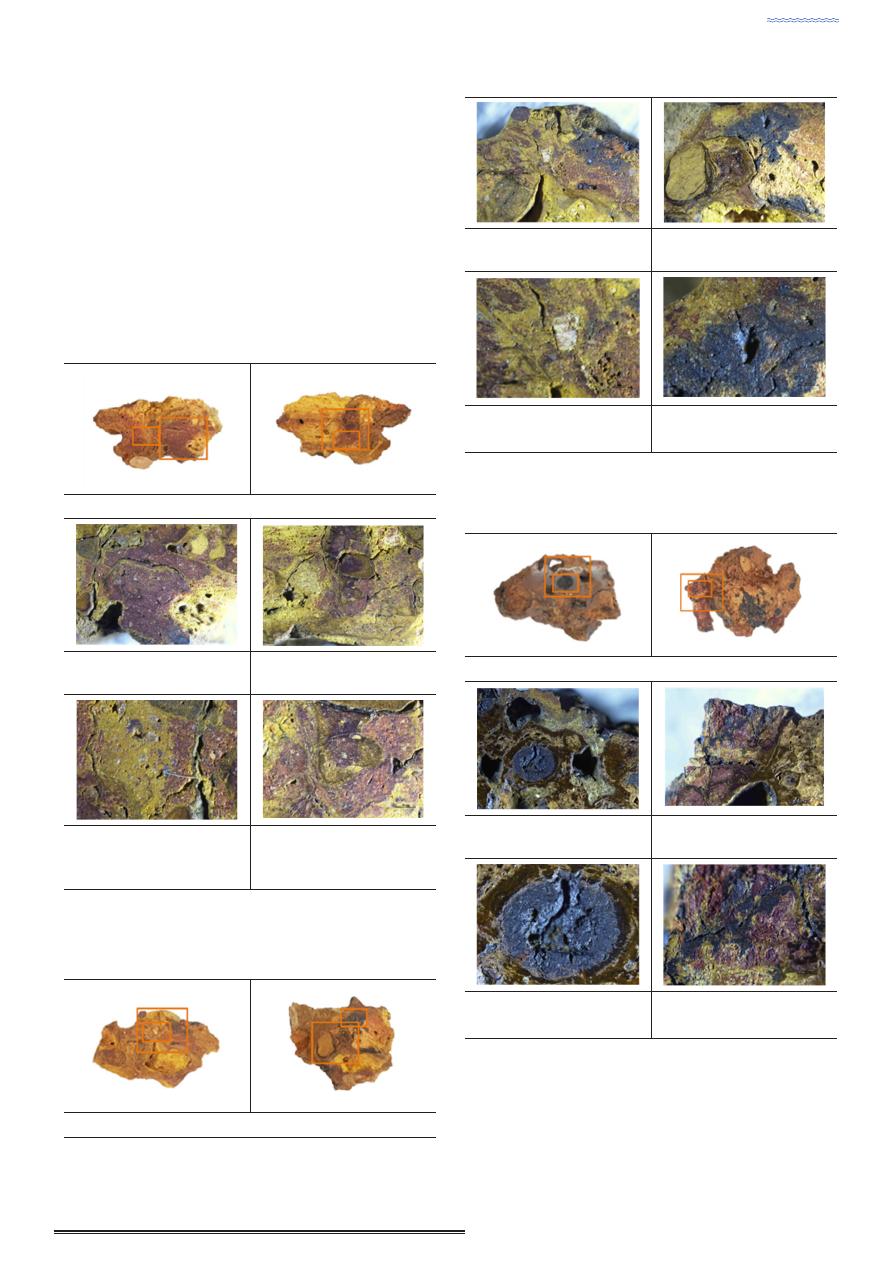
59
INTERNATIONAL JOURNAL OF
ASIA-PACIFIC HERITAGE STUDIES
SUSTAINABLE CONSERBATION OF
ASIA-PACIFIC CULTURAL HERITAGE FOR THE UNESCO CHAIR
Laterite from nearby quarry showed a similar
structure with laterite at the temples, but surface
degeneration aspect changed as quarrying depth
increases. Samples from sheer depth particularly
showed accelerated loss of soil components and
silicic acid components, and, because of the
condensation of iron oxide, its color turned from
yellow to red and black or brown.
Laterite at Stereobate of Hong Nang Sida Temple
Red Discoloration (X7.5)
Cracks, Pores, and White
Condensation
High Roundness Crystal
Grain in Substrate (X20)
Condensation and
Discolored Part in Different
Colors (X20)
Table 1. Microstructure Observation for
Laterite from Hong Nang Sida
Table 2. Observation of Laterite Microstructure
at Vat Phou Temple Stereobate
Laterite at Vat Phou Temple Stereobate
Red, Black, and Brown
Discoloration (X7.5)
Cracks, Pores, and Black
Degeneration (X7.5)
White Condensation (X20)
Glossy Black Microstructure
by Degeneration (X20)
Laterite at Nearby Quarry
Black Discoloration and
Pores (X7.5)
Light Green, Red, Yellow,
and Black Structure (X7.5)
Round Glossy Black
Degeneration (X20)
Degeneration Developed
from Crack (X20)
Table 3. Observation of Laterite Microstructure
at Nearby Quarry
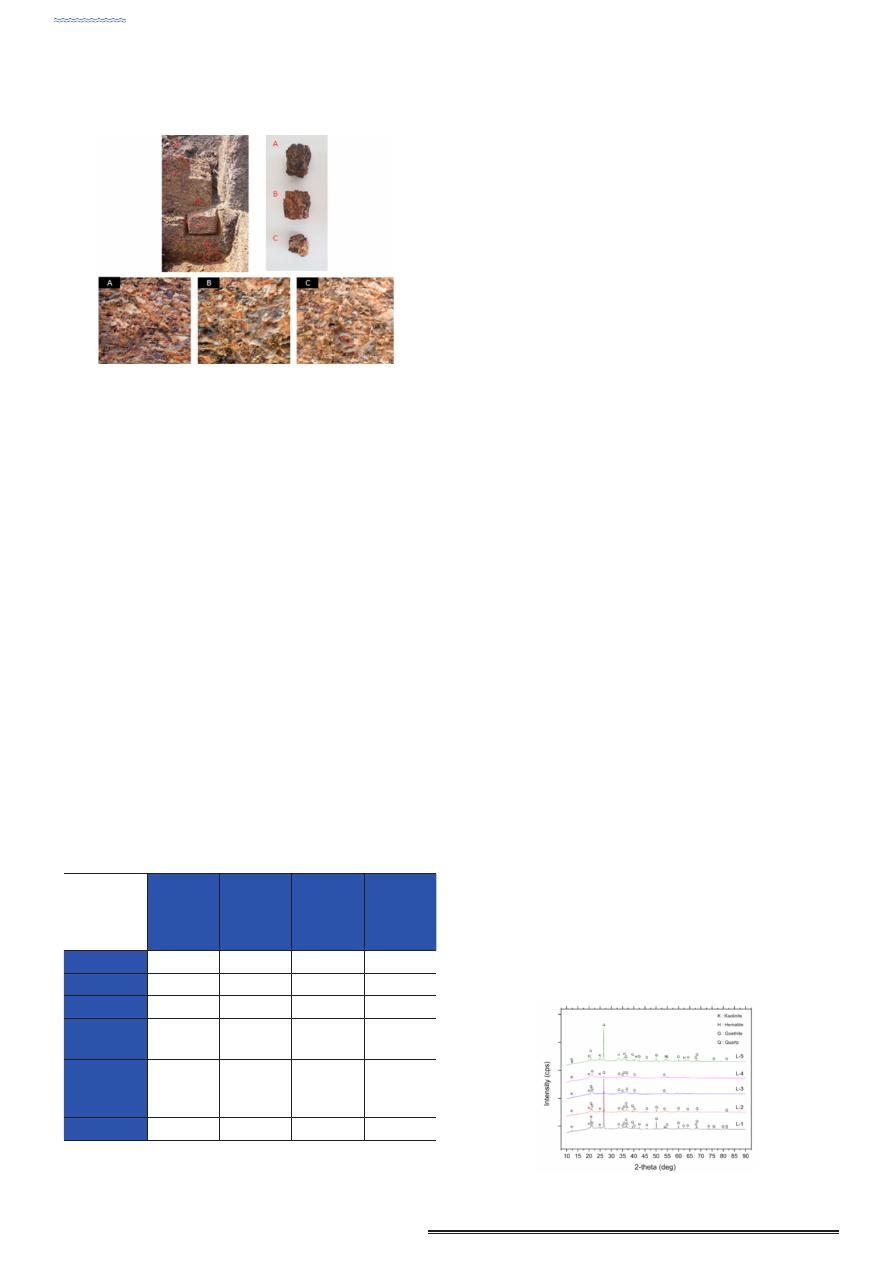
60
INTERNATIONAL JOURNAL OF
ASIA-PACIFIC HERITAGE STUDIES
SUSTAINABLE CONSERBATION OF
ASIA-PACIFIC CULTURAL HERITAGE FOR THE UNESCO CHAIR
Picture 48. Aspects of Laterite Surface Structure
by Depth of Quarrying
3.3.2 Measurement of Water Absorptivity,
Specific Gravity, and Porosity
Laterite samples from Vat Phou temple and
Hong Nang Sida temple shoed similar values
for bulk specific gravity, which is 2.07~2.41
showing relatively wide range, while differences
in absorptivity and porosity with 8.8~14.4% and
22.2~29.8% respectively. Such characteristics
can be accounted for by changes by location and
depth of quarrying and uneven quality of laterite.
Bulk specific gravity of laterite from quarries
ranged from 2.4 to 2.6, which is higher than
those of Vat Phou temple and Hong Nang Sida
temple because specific gravity increased due to
elution of silicic acid and condensation of iron
oxide.
Hong
Nang
Sida
Temple
Vat
Phou
Temple
Quarry
1
Quarry
2
Dry Mass
919.1
152.3
138.2
117.7
Wsusp
591
100.7
97.6
83.4
Wsat
1012.6
174.2
150.4
132.2
Absorp-
tivity
10.2
14.4
8.8
12.3
Bulk
Specific
Gravity
2.18
2.07
2.62
2.41
Porosity
22.2
29.8
23.1
29.7
Table 4. Physical Properties of Laterite
3.3.3 X-Ray Diffraction (XRD) and Thermo
Gravimetric Analysis (TB-DTA)
Laterite samples of Laos shared Kaolinite, a
clayed crystal phase, Quartz, and Goethite, a type
of iron oxide. For Hong Nang Sida laterite, Quartz
appears to be the highest while decreasing in
the order of Vat Phou temple laterite and quarry
laterite. Black discolored part low in Quartz while
Goethite as the major phase. The red discolored
part showed high in Quartz, low in Goethite, and
high in Hematite. It can be found that the content
of Quartz and Goethite affects color and bulk
specific gravity. In the case of red discoloration
as laterite deterioration phase, it is considered
that Hematite is created as Goethite is oxidized
by the atmosphere.
All laterite samples commonly showed weight
reduction and endothermic reaction around 320℃
and 520℃, which are considered as results of
deoxidation of oxides. Rate of weight reduction
was the highest in quarry laterite, and it is followed
by Vat Phou temple laterite and Hong Nang
Sida laterite. It is assumed that bigger weight
reduction is brought about when more Goethite,
an iron oxide, is included because it undergoes
dehydration around 320℃. Red discolored area of
lay mineral has low weight loss with 7%, showing
very little weight reduction and endothermic
reaction around 300℃ but more weight reduction
and endothermic reaction occurs around 510℃
and 550℃, which is assumed to be attributed to
Hematite. Black discolored part showed similar
tendency as quarry laterite.
Picture 49. Result of Laterite XRD Analysis
(L-1: Hong Nang Sida, L-2: Vat Phou, L-3: Quarry,
L-4: Black Discoloration, L-5L: Red Discoloration)

61
INTERNATIONAL JOURNAL OF
ASIA-PACIFIC HERITAGE STUDIES
SUSTAINABLE CONSERBATION OF
ASIA-PACIFIC CULTURAL HERITAGE FOR THE UNESCO CHAIR
PIcture 50. Result of Laterite TG-DTA Analysis
3.3.4. Principal component analysis (XRF),
Microelement and rare earth element
analysis (ICP-MS/AES)
Laterite samples shared Si, Al, and Fe as principle
components. Each sample showed difference in
Si and Fe content and the more iron content, the
higher ignition loss occurs.
Quarry laterite showed the lowest content of
SiO2 by 12.79% and the highest of Fe2O3 by
59.64%. The more iron (Fe) component, the
higher the ignition loss occurs, while rather
low in red discolored area. This phenomenon is
a characteristic of red discolored area created
by atmospheric degradation, which primarily
affected by dehydration during burning Goethite,
an iron oxide. The red discolored area is
considered as a result of less ignition loss due to
degeneration of Goethite into Hematite despite
of higher iron content.
It has been suggested that Laterite in sheer depth
of soil is the result of transferred rare earth
elements by organic acid on the surface of the
earth (Huang& Keller, 1970; Oliva et al., 1999;
Ma et al., 2007). Laterite at Hong Nang Sida and
Vat Phou temples has the yellowish brown color
and is assumed to have been taken from deeper
part.
Origins comparison by rare earth elements
content were carried out, Ce showed differences
in its ratio but overall proportions of rear earth
elements were similar. Principle components of
laterite samples suggested big gaps in Si and Fe,
but, as ratios of rare earth elements are similar,
they are assumed to have used laterite from
nearby quarries.
L-1
L-2
L-3
L-4
L-5
SiO2
40.08
24.92
12.79
15.79
34.13
Al2O3
11.92
11.93
9.24
13.38
13.12
Fe2O3
37.59
48.98
59.64
51.84
45.13
CaO
0.06
0.04
0.04
0.04
0.03
MgO
0.34
0.33
0.33
0.37
0.31
K2O
0.41
0.38
0.10
0.09
0.38
Na2O
0.07
0.06
0.03
0.03
0.06
TiO2
0.79
0.72
1.88
2.00
0.80
MnO
0.10
1.04
2.32
2.50
0.43
P2O5
0.15
0.29
1.40
0.89
0.31
Igloss
8.46
11.05
12.41
12.76
5.73
Table 5. Principle Component Analysis with XRF for Laterite
Figure 51. Result of Analysis for Ratio of
Rare Earth Elements in Laterite
(ICP-REE patterns, L-1: Hong Nang Sida,
L-2: Vat Phou, L-3: Quarry)

62
INTERNATIONAL JOURNAL OF
ASIA-PACIFIC HERITAGE STUDIES
SUSTAINABLE CONSERBATION OF
ASIA-PACIFIC CULTURAL HERITAGE FOR THE UNESCO CHAIR

Basic
Survey for
the
Construction
of Database
GROUP
| Korea National University of Cultural Heritage
NAME
| Youngjae Kim / Hyeseon Park / Donghyeon Lee
| Soyoung Kim / Hyojeong Kim /


65
INTERNATIONAL JOURNAL OF
ASIA-PACIFIC HERITAGE STUDIES
SUSTAINABLE CONSERBATION OF
ASIA-PACIFIC CULTURAL HERITAGE FOR THE UNESCO CHAIR
1. Research Overview
1.1. Purpose
Cultural Heritage is the public asset that we
inherit from our ancestors and live in today's and
should be inherited from our descendants in the
future.
The concept of this heritage is gradually
being embodied and extended from past great
monuments to present day-to-day products, and
from the tangible to the intangible. Awareness of
the importance of cultural heritage is spreading
amid international attention, and efforts are being
made to protect it.
The traditional materials and techniques that
are now recognized as objects of conservation
have led to the traditional transfer method, and
contributed to cultural development based on
new discoveries and continuous progress.
While some traditional materials and technology
technologies have a constant demand in these
days, they are generally separate from modern
life, mostly those of traditional society.
In addition, as a technology related to the
authentic repair and preservation of tangible
cultural properties, the disappearance is
accelerating due to the development of modern
materials and methods that can be replaced with
new technology.
This change in the name of progress is inevitable
to the concept of technology, and it is ironic that
the name of traditional technology stays in the
traditional society of the past.
This traditional material and technology techni
-que also has historical and cultural values in
itself in the recognition of modern cultural
heritages and should not be neglected in a crisis
that will be destroyed or destroyed in time.
However, regardless of the importance of these
cultural heritages and the will to preserve them,
all preservation of the cultural heritage requires
considerable effort and cost.
Therefore, it is hard to expect full responsibility
for the cultural heritage in question only for
certain regions, countries and ethnicities.
Since cultural heritage is a common asset and
opportunity for mankind, it should be approached
from the point of view that human beings should
be jointly managed and preserved.
Based on this purpose, the 2018 UNESCO CHAIR
Programme plans to investigate the disconnected
traditional materials and technologies of Asia-
Pacific and build a database based on the collected
data. The database aims to store and manage data,
and later open it to the academic and public to
create a foundation for use in a variety of fields,
including preservation and restoration of cultural
heritages.
Ⅳ Basic Survey for
the Construction of Database
GROUP
| Korea National University of Cultural Heritage
NAME
| Youngjae Kim / Hyeseon Park / Donghyeon Lee
| Soyoung Kim / Hyojeong Kim

66
INTERNATIONAL JOURNAL OF
ASIA-PACIFIC HERITAGE STUDIES
SUSTAINABLE CONSERBATION OF
ASIA-PACIFIC CULTURAL HERITAGE FOR THE UNESCO CHAIR
1.2. Research Method
Basic data research for the construction of
a database for the 2018 UNESCO CHAIR
Programme is underway based on the research
of Asia-Pacific Traditional Materials and
Technique. Further, the details of the future use
plan discussion are as follows.
Table 1. Summary of Basic Survey for
the Construction of Database
ㅇ Basic research on the archiving process
ㅇ Research on the classification system for the expected
data collection and discussion of the preliminary
checklist for collecting and classifying data for the
research of Asia-Pacific Traditional Materials and
Technique
ㅇ Case study and Pre-research on archiving cultural
heritage and related records
ㅇ Discussion on the management and use of the research
results and the operation of the website
2. Contents
2.1. Definition of Database
A database is a set of public data that stores and
operates integrated information from multiple
applications as a group of structured data.
These databases are a collection of one or more
logically related data and are highly structured
to increase the efficiency of search and renewal.
Databases are easy to access in real time and
seek constant change.
It also enables multiple users to share information
at the same time, maintaining up-to-date data, and
maintaining consistency, integrity and security.
These data are divided into structured and
unstructured data, where structured data is
data made up of words such as numbers and
letters, and unstructured data is data that is not
implemented in a text, such as pictures and so
on.
2.2. Functions of the database
The most important function of a database is to
find the data you want and it is a search function.
The database is meaningless if you cannot extract
the desired data from a database that retains the
vast amount of data and the search target must
be extracted from keywords. Therefore, the
key to data manipulation is improved search
performance, such as the format of data formats
or efficient search, renewal, and fast processing.
In addition to searching, the database must be
able to update the data, which in addition to
modifying the existing data, refers to the function
of registering and removing the data. The
database should be able to control concurrency
If multiple users share a database and the data is
updated at the same time, there is a problem with
ensuring the integrity of the data.
Therefore, the database uses a function called
concurrency control to control the access of a
single user when multiple users access at the
same time, and to guarantee the integrity of data
by reflecting only one update.
2.3. Data-Base Management System
While a database is an abstract concept that
represents a function or structure, Database
Management Systems are software presented to
address data redundancy and data dependency
problems that file systems have while being
responsible for basic processing of databases,
which is an abstract concept.
DBMS is responsible for integrating and storing
the data required by the organization into the
database. This allows all applications to share the
database with the ability to search, insert, delete,
and modify the data that exists in the database.
Although the aforementioned language of the
DBMS is 'SQL', in fact, DBMS has a variety of
commands for use other than SQL.
This is called the "management command" and it
is used to monitor whether the DBMS is operating
normally or to collect information for problem
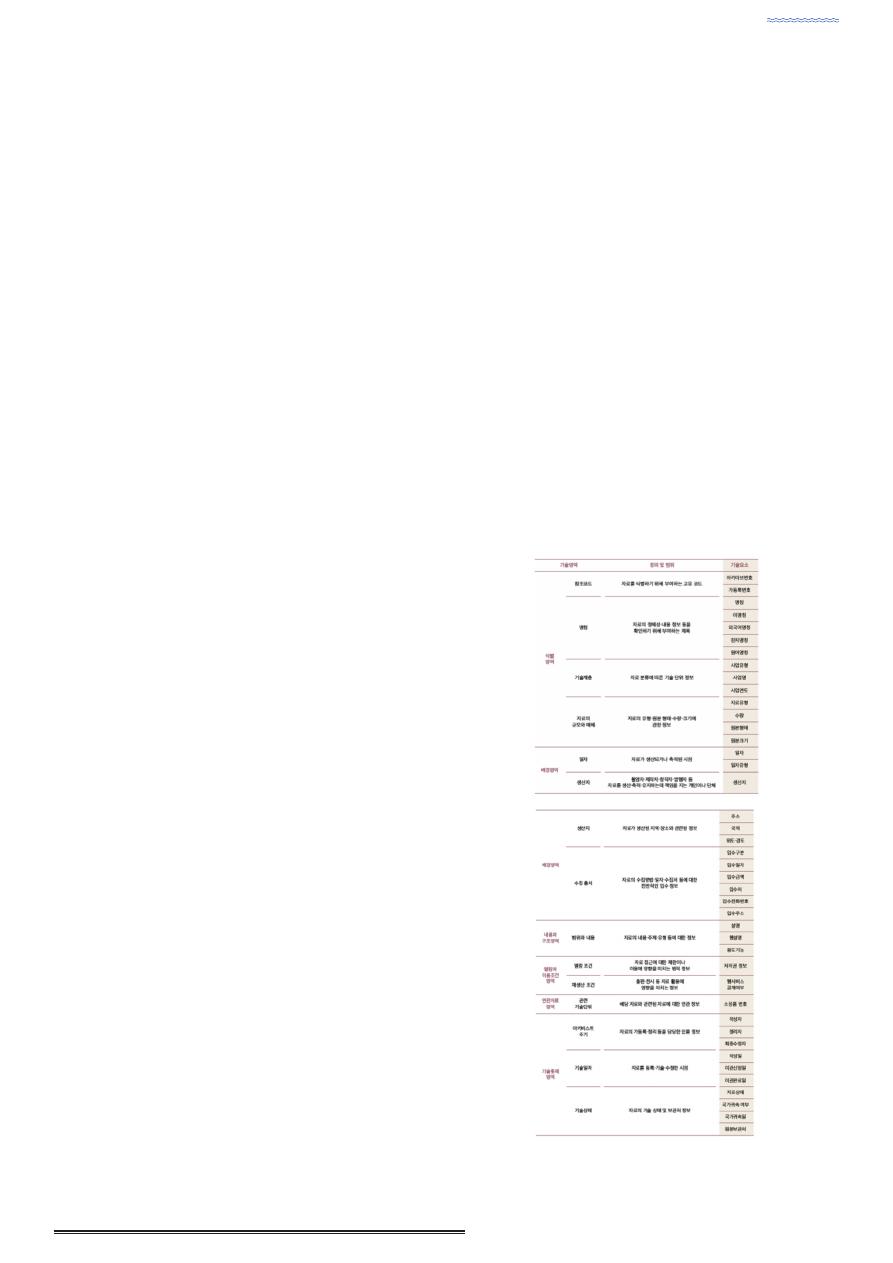
67
INTERNATIONAL JOURNAL OF
ASIA-PACIFIC HERITAGE STUDIES
SUSTAINABLE CONSERBATION OF
ASIA-PACIFIC CULTURAL HERITAGE FOR THE UNESCO CHAIR
resolution when it shows abnormal behavior.
In addition, the type or grammar of the
administrative command depends on the type
of DBMS, not on all DBMS's common use. SQL
statements must begin with one of the words
'SELECT, INSERT, DELETE, UPDATE' while
administrative commands begin with another.
3. Examples of Database Construction
and Research Status in Cultural
Heritage Field
In the field of cultural heritage, the related
database, metadata, and ontologize are used to
build a database, implement a search system, and
provide Web services to users.
We conducted a case study on the construction of
the database of cultural property and investigated
the current state of the research.
3.1. Related Research Status
According to Lim Hee-joo's research on
'Development of Ontology Design and the
Retrieval System for Important Intangible
Cultural Heritage,' in this study, the online
community of important intangible cultural
properties is designed to inform users of various
information and functions of cultural assets.
Eight classes were defined, including cultural
heritage, people, geographical names, institutions/
organizations, and each class consisted of a
common class attribute and a separate property
list with only that class.
Afterward, eight classes of terminology were
selected, the terms could be linked to other
classes in terms of hierarchy, agreement, and
related relationships, and the use of visual
interfaces enabled the search and use of material
of important intangible cultural properties in the
digital environment.
Kang Soo-na's 'A Study on Archiving of
Preserving Records of Architectural Cultural
Properties' studied ways to efficiently utilize the
records of architectural cultural properties that
are different from the general record by
identifying the management methods and status
of the records of architectural cultural properties.
3.2. Folklife Archives (www.archive.nfm.go.kr)
Folklife Archive of National Folk Museum of
Korea organized the data and built a database
using metadata. The database was modified in
accordance with ISAD(International Standard
Archival Description), an international archive
standard.
The collected data is organized and constructed,
where the organization of the intellectual
and physical processes is organized by layer
according to the record management principle.
Picture 1. Folklife Archives Elements of Metadata
(Folklife Archives Data Management Manual)
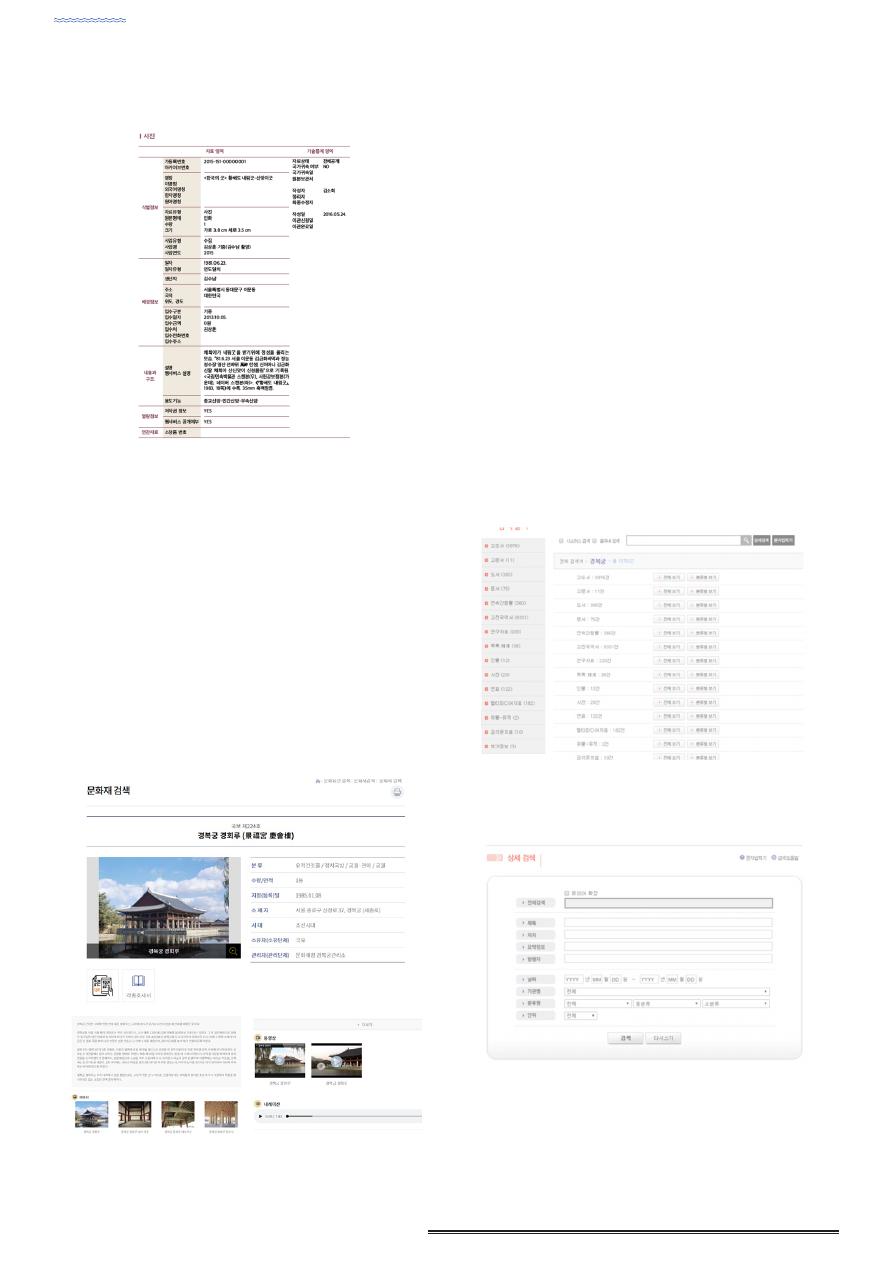
68
INTERNATIONAL JOURNAL OF
ASIA-PACIFIC HERITAGE STUDIES
SUSTAINABLE CONSERBATION OF
ASIA-PACIFIC CULTURAL HERITAGE FOR THE UNESCO CHAIR
Picture 2. Folklife Archives Example of Metadata Technology
(Folklife Archives Data Management Manual)
3.3. Cultural Heritage Administration
The Cultural Heritage Administration provides
information about cultural heritage by dividing
the attributes of cultural heritage into the
name of cultural heritage, designated items,
designation number, designated year, cultural
asset description, classification, quantity/ area,
location, period, owner, manager, image, cultural
asset description, video and narration.
Picture 3. Search Servic of Cultural Heritage Administration
3.4. Korea's History Information Integration
System (www.koreanhistory.or.kr)
The Korea's History Information Integration
System is divided into integrated search and
detailed search. In case of integrated search, the
data can be retrieved by dividing it into ancient
books, old documents, books, serial publications,
figures, dictionaries, chronology, and multimedia
data.
The detailed search is divided into title, author,
summary information, publisher, date, institution
name, and so on, and provides more detailed
search service by inputting necessary values for
each property.
Picture 4. Integrated Search Service of Korean's History
Information Integration System
Picture 5. Detailed Search Service of Korean's History
Information Integration System
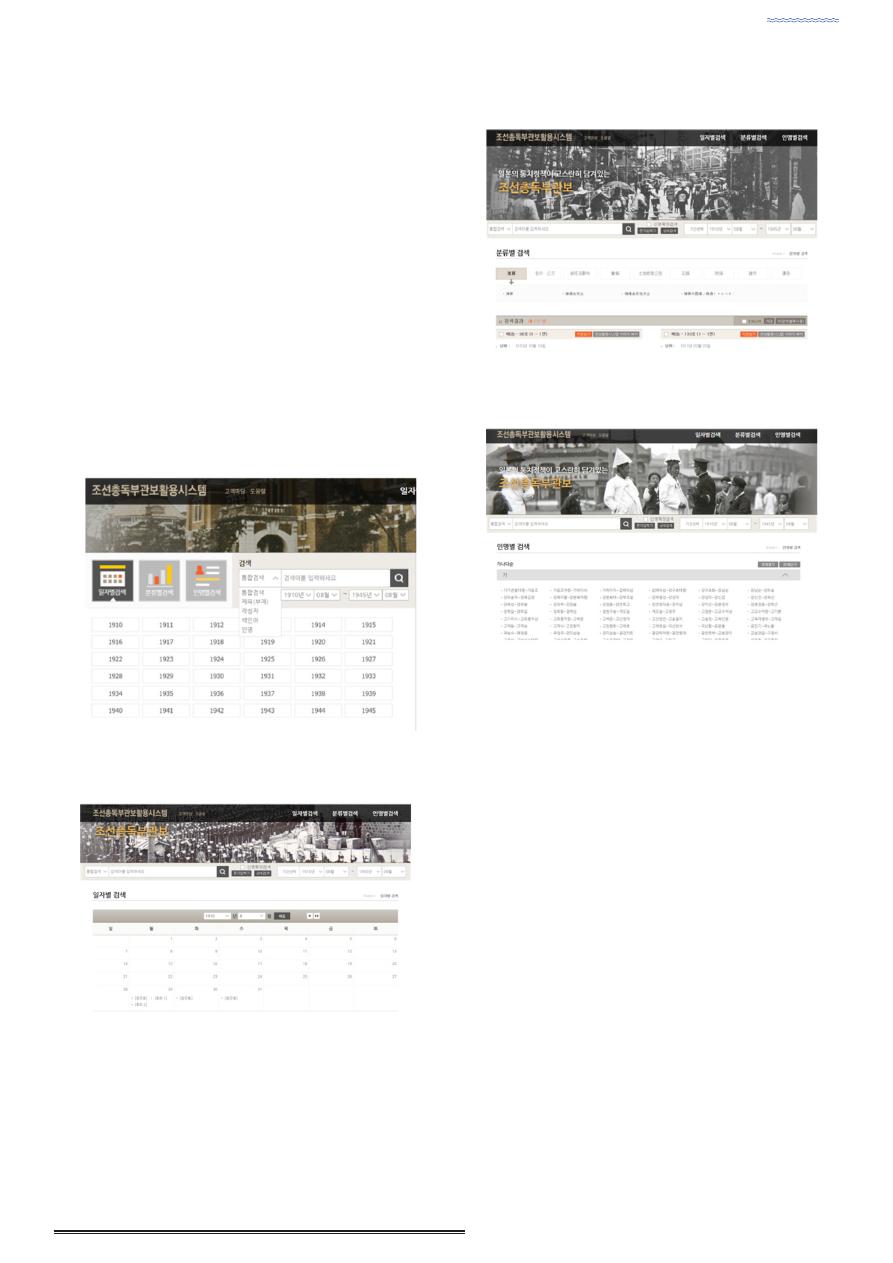
69
INTERNATIONAL JOURNAL OF
ASIA-PACIFIC HERITAGE STUDIES
SUSTAINABLE CONSERBATION OF
ASIA-PACIFIC CULTURAL HERITAGE FOR THE UNESCO CHAIR
3.5. Government Information System of the
Governor-General of Korea
The Government Information Service of the
Government-General of Korea provides a search
service by classifying the characteristics of an
integrated search, title, author, index, and person.
In addition, the search service is provided by
classifying government records by class and by
person who can search information by person.
Additional images of texts and government
beams are provided through the image viewer of
the government-sponsored system.
Picture 6. Government Information System of the Governor-
General of Korea Surch Service(Integrated Surch)
Picture 7. Government Information System of the Governor-
General of Korea Surch Service(Serch by Date)
Picture 8. Government Information System of the Governor-
General of Korea Surch Service(Serch by Category)
Picture 9. Government Information System of the Governor-
General of Korea Surch Service(Serch by Person)
4. Research results and utilization plan
4.1. Research results
In this study, the basic concepts and examples
of data utilization related to cultural heritage
were investigated, and the applicability of DBMS
(relational Database Management System)
products such as MYSQL was evaluated.
The UNESCO CHAIR Programme have various
plans to utilize the cultural heritage data collected
through an on-site survey in the future, including
the operation of a website (planned by 2020).
Data collected and accumulated through the first
year's on-site survey should precede the process
of assigning and listing metadata for database
construction and utilization in various fields.
Research on the construction and utilization
of the database on cultural heritage data and
information needs to be continued in the future,

70
INTERNATIONAL JOURNAL OF
ASIA-PACIFIC HERITAGE STUDIES
SUSTAINABLE CONSERBATION OF
ASIA-PACIFIC CULTURAL HERITAGE FOR THE UNESCO CHAIR
and in parallel, the database server needs to be
established and managed. Also, database-based
services need to be planned for the demand of
expert personnel.
4.2. Plan for Future Use
The data collected and accumulated through a
field survey are expected to be used as an open
source to provide the database to various users
through applications such as websites, and will
be able to provide online service implementation
and online education courses based on the
database.
The database will act as a cultural heritage
hub in Asia, sharing the latest research trends
on Asia-Pacific heritage conservation and
restoration, and supporting research activities
in related fields. We hope that it will contribute
to international cooperation in cultural heritage
fields such as preparing communication facilities
for cultural heritage experts at home and abroad,
and establishing a network.
-Reference-
1. Resource Description and Metadata, 남태우·이승민,
한국도서관 협회(the Korea Library Association), 2014
2. Database First Steps, 기무라 베이지, 한빛미디어
(Hanbit Media), 2016
3. Development of Ontology Design and the Retrieval
System for Important Intangible Cultural Heritage,
임희주, 2008
4. A Study on Archiving of Preserving Records of
Architectural Cultural Properties 강수나, 2008
5. A Study on Application of Classification Scheme for
Architectural Cultural Heritage, 최연규, 2012
6. www.archive.nfm.go.kr
7. www.cha.go.kr
8. www.koreanhistory.or.kr
9. gb.nl.go.kr
10. http://heritage.unesco.or.kr

THE 2018 INTERNA
TIONAL CONFERENCE FOR THE UNESCO CHAIR
Ⅰ | Hosting the 2018 UNESCO CHAIR International Conference
Ⅱ | International Journal of Asia- Pacific Heritage Studies
· Modernization of Traditional Architecture in Japan :
Sustainable Utilization through Diverse Cultural Values of Sukiya
· Discussing Cultural Heritages from East Asian History in The 20th Story
· Our Heritage & The Sustainable Development Goals : Sustainable Cities and Heritage
· Integrating Sustainability into Local Context : Needs and Challenges


GROUP
| Korea National University of Cultural Heritage
Hosting
the 2018
UNESCO
CHAIR
International
Conference


75
INTERNATIONAL JOURNAL OF
ASIA-PACIFIC HERITAGE STUDIES
SUSTAINABLE CONSERBATION OF
ASIA-PACIFIC CULTURAL HERITAGE FOR THE UNESCO CHAIR
1. Overview
The International Conference <Sustainable
Conservation of Asia-Pacific Cultural Heritage>,
hosted by Korea National University of Cultural
Heritage(KNUCH) and sponsored by Korean
National Commission for UNESCO, Cultural
Heritage Administration of Korea and Korea
Cultural Heritage Foundation, aims to enhance
international and domestic interest in conservation
and restoration for cultural heritage.
The main purpose of the project is to share the
latest research trends on the conservation and
restoration of cultural heritage in Asia, to provide
a place of communication for international
and domestic cultural heritage experts and to
establish a cultural heritage network in Asia-
Pacific region.
2. Contents
The international conference <Sustainable
Conservation of Asia-Pacific Cultural Heritage>
was held on Wednesday, October 24, 2018 at
the auditorium of the National Palace Museum
of Korea. Operation and management of this
program were managed by staffs from the
KNUCH.
The conference began with the opening speech
from the dean of Graduate School of Cultural
Heritage(Hunduk JANG), and welcoming speech
from Jinseong JEON, the director of bureau of
Sciences & Culture, Korean National Commision
of UNESCO.
Following the introduction of the UNESCO
CHAIR Programme(Youngjae KIM, professor of
KNUCH), there were final result presentations
from research team for Asia-Pacific Traditional
Methods and Techniques. They shared the results
of a field survey on Laos's natural materials,
Uzbekistan's traditional fabric, Cambodia's
construction methods and materials. After that,
there were the final results presentation of the
4th mid-term invitational training program,
who studied in the Korea National University of
Cultural Heritage.
The afternoon session consisted of five
courses. The announcement by Korean experts
includes the goal of sustainable development of
cultural heritages (Jihon KIM, Korean National
Commission for UNESCO), and the need and task
of forming a regional discourse on sustainability
(Sujeong LEE, Cultural Heritage Administration
of Korea).
The lecture by foreign experts are the
characteristics of Japanese cultural heritage
and its potential for sustainable conservation
(Masaki KOIWA, Waseda University), Japanese
Traditional Architecture Modernization:
Sustainable Utilization through Various Cultural
Values of Sukiya (Yasutaka MATSUMOTO,
Nanjing Tech University) and 20th Century East
Asian History (Ryuichi TANIGAWA, Kanazawa
University). They showed the current state of
conservation and future prospects for cultural
heritage based on regional characteristics.
Ⅰ Hosting the 2018 UNESCO
CHAIR International Conference
The 2018 International Conference
for the UNESCO CHAIR

76
INTERNATIONAL JOURNAL OF
ASIA-PACIFIC HERITAGE STUDIES
SUSTAINABLE CONSERBATION OF
ASIA-PACIFIC CULTURAL HERITAGE FOR THE UNESCO CHAIR
Category
Name
Group
Field
Survey
Jia
YU
Korea National University
of Cultural Heritage
Sunyong
LEE
Korea National University
of Cultural Heritage
Hyeonok
YOO
Korea National University
of Cultural Heritage
Mid-term
Training
Course
(Cambodia)
Basith
SY
APSARA Authority
Visaradaputra
SYTHA
APSARA Authority
Panhavontey
KEAN
APSARA Authority
Sovanlylin
MENG
APSARA Authority
Table 1. List of Speakers
Category
Name
Group
Organizer
Youngjae
KIM
Korea National University of
Cultural Heritage
Assistant
Staff
Hyeseon
Park
Korea National University of
Cultural Heritage
Donghyeon
LEE
Korea National University of
Cultural Heritage
Soyoung
KIM
Korea National University of
Cultural Heritage
Hyojeong
KIM
Korea National University of
Cultural Heritage
Table 2. Staff Members in KNUCH
Table 3. Detailed Program of the 2018 UNESCO CHAIR International Conference
Time
Contents
Speaker/Lecturer
10:00-10:10
Opening Speech
Hunduk JANG /
Dean of Graduate School of Cultural Heritage
10:10-10:20
Welcoming Speech
Jinseong JEON /
Korean National Commision of UNESCO
10:20-10:30
Introduction of UNESCO Chair Programme in KNUCH
Youngjae KIM / KNUCH
10:30-11:00
Field Surveys of
Traditional Methods
and Techniques
Natural Materials
Jia YU / KNUCH
Traditional Textile
Sunyong LEE / KNUCH
Building Materials and Methods
Hyeonok YOO / KNUCH
11:00-11:20
BREAK TIME
11:20-12:00
The Final Results
of the 4th Mid-term
Training Course
The History Site of Angkor and Its
Conservation Principles
Basith SY /
APSARA
The Application of Ultrasonic Wave
Test in Cultural Heritage
Visaradaputra SYTHA /
APSARA
The Comparison between Angkor
Thom and Hwaseong Fortress
Panhavontey KEAN /
APSARA
The Fourth Industrial Revolution and
Cultural Heritage
Sovanlylin MENG /
APSARA
12:00-12:15
Completion Ceremony
Hunduk JANG /
Dean of Graduate School of Cultural Heritage
12:15-14:00
LUNCH
14:00-14:30
Lecture Session ①
The Characteristics and Potentialities
of the Japanese Cultural Properties
Masaki KOIWA /
Waseda University
14:30-15:00
Modernization of Traditional
Architecture on Japan
Yasutaka MATSUMOTO /
Nanjing Tech University
15:00-15:30
Discussing Cultural Heritage from
East Asian History in the 20th century
Ryuichi TANIGAWA /
Kanazawa University
15:30-16:00
COFFEE BREAK

77
INTERNATIONAL JOURNAL OF
ASIA-PACIFIC HERITAGE STUDIES
SUSTAINABLE CONSERBATION OF
ASIA-PACIFIC CULTURAL HERITAGE FOR THE UNESCO CHAIR
16:00-16:20
Lecture Session ②
Our Heritage & the Sustainable
Development Goals : Sustainable
Cities and Heritage
Jihon KIM /
Korean National Commision for UNESCO
16:20-16:40
Integrating Sustainability into Local
Context : Needs and Challenges
Sujeong LEE /
Cultural Heritage Administraction of Korea
16:40-16:50
BREAK TIME
16:50-17:50 Discussion
Sustainable Conservation of Asia-
Pacific Cultural Heritage
Masaki KOIWA / Yasutaka MATSUMOTO
Ryuichi TANIGAWA / Jihon KIM
Sujeong LEE / Dongchun SEO
17:50-18:00
Closing Ceremony
Hunduk JANG /
Dean of Graduate School of Cultural Heritage
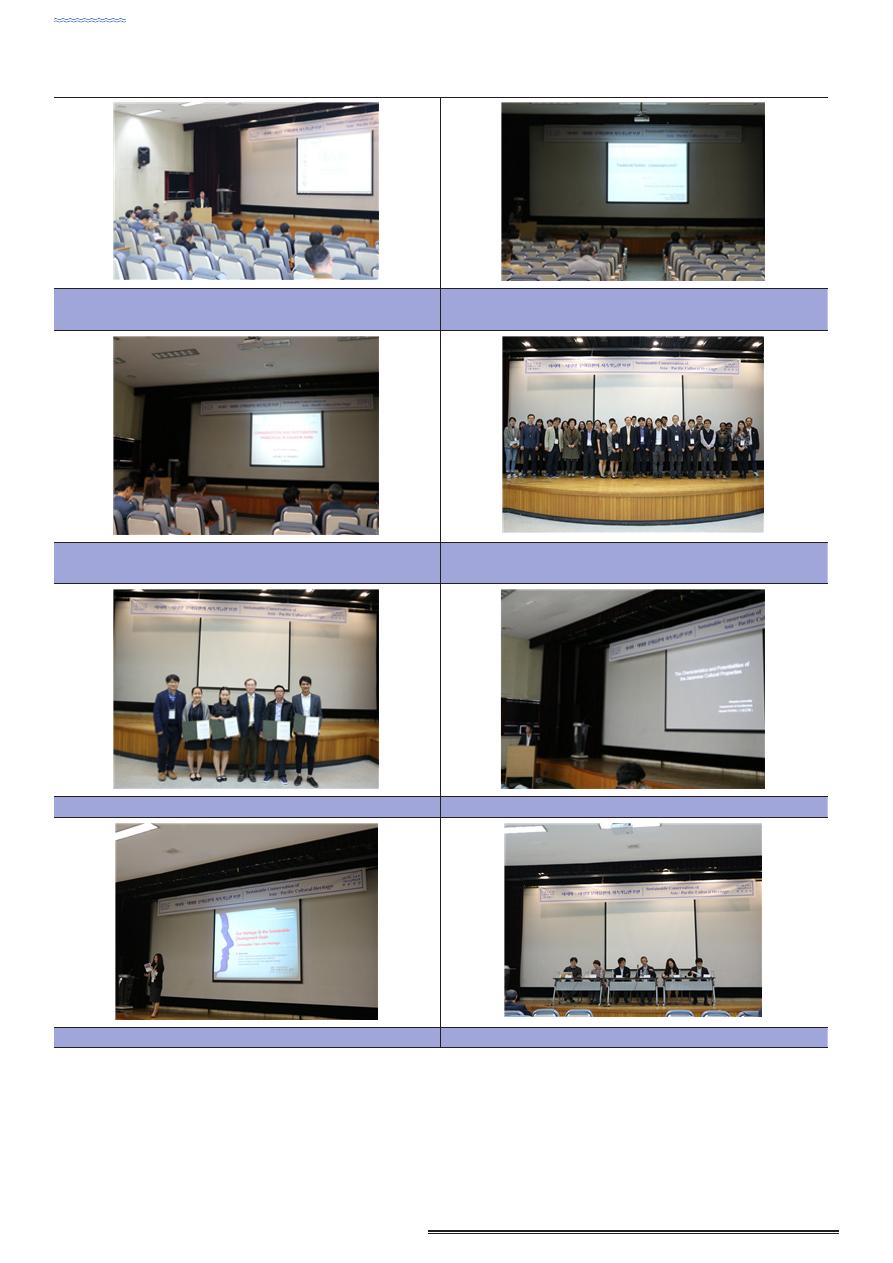
78
INTERNATIONAL JOURNAL OF
ASIA-PACIFIC HERITAGE STUDIES
SUSTAINABLE CONSERBATION OF
ASIA-PACIFIC CULTURAL HERITAGE FOR THE UNESCO CHAIR
Picture 1. Opening Speech
Picture 2. Presentation of research of Asia-Pacific Traditional
Materials and Technique
Picture 3. Presentation of the Fourth Mid-term Invitational
Training Program for Cambodian experts
Picture 4. Group Photo
Picture 5. Completion Ceremony
Picture 6. Lecture①
Picture 7. Lecture②
Picture 8. Discussion

GROUP
| Nanjing Tech University Dept. Architecture
NAME
| Yasutaka Matsumoto
Modernization
of Traditional
Architecture
in Japan :
Sustainable
Utilization through
Diverse Cultural
Values of Sukiya


81
INTERNATIONAL JOURNAL OF
ASIA-PACIFIC HERITAGE STUDIES
SUSTAINABLE CONSERBATION OF
ASIA-PACIFIC CULTURAL HERITAGE FOR THE UNESCO CHAIR
Modernization of Traditional Architecture
in Japan -Possibility of
Cultural Value through Sukiya
Yasutaka Matsumoto
Nanjing Tech University
Dept. Architecture
1. Introduction
This paper tries to clarify how the concept of ‘traditional architecture’ which
is representative of the present country was created in modern times, and
how the actual spatial culture was transformed in the process of creation,
and to show the wider cultural value of traditional architecture. Concretely,
we pay attention to “Sukiya,” a typical Japanese traditional building. For
the first time, we explain what a concept is regarding the Sukiya. Next, this
research will look at the process in which the Sukiya culture acquires the
modernity in terms of both physical and conceptual aspects and becomes a
traditional Japanese culture, sharing its history in the procedure of sharing
physical space. Finally, the thesis summarizes these changes and offers
some observations.
2. What is the Sukiya?
First, this article confirms the position of Sukiya in the history of Japanese
architecture. The housing architecture of Japanese traditional architecture
is divided into two folds: the ruling class and the public people houses.
Among them, the ruling class houses are developed from Shinden zukuri
to Sukiya zukuri via Shoin zukuri. The Sukiya, as the main attention in this
article, had a great influence on the formation of the Sukiya house, was
called the Sukiya at that time, now commonly referred to as a tea room.
So, what is this tea room like? It is not well known in Japan, but in fact, the
tea ceremony has two types: Matcha Tea and Sencha Tea. The Matcha Tea is
widely known to the general public, and the tea, generally-speaking, means
the Matcha Tea. On the other hand, the Sencha Tea has been growing since
the Matcha Tea, and the negative tendency for criticizing the Matcha Tea
was strong, and its heyday was in the 18th and 19th century.
To simply list the spatial features of the Matcha Tea, the garden is not open

82
INTERNATIONAL JOURNAL OF
ASIA-PACIFIC HERITAGE STUDIES
SUSTAINABLE CONSERBATION OF
ASIA-PACIFIC CULTURAL HERITAGE FOR THE UNESCO CHAIR
and the building is mainly surrounded by earth walls with small windows
but the garden and building are closed. In addition, there are a lot of
linear configurations, the curves are limited only in the doorway called
Nakabashira (
中柱) and Katoguchi (火灯口).
On the other hand, the space of the Sencha Tea is very open, respecting
various designs and materials and pursuing a lot of curves. The influence
of the Chinese park during the Ming-Qing period is much-felt thanks to
the importance of the garden stone and the flow of the stream. The effects
of both the Matcha Tea and the Sencha Tea on the Sukiya zukuri are
summarized as follows. The Sukiya zukuri was born under the influence
of the Matcha Tea’s room, and continues to affect the development of the
ceremony room for the Matcha Tea. Afterward, further, the later influence
of the tea ceremony from the Sencha Tea was also received at the same
time and then developed into a form of their fusion.
3. Acquisition of Modern Publicity
Next, the author is going to look at the process of the introduction of
the Sukiya style during the modern age and acquires publicness. This is
remarkable in the park. In this article, Shiba (
芝) Park and Goyokan (紅葉
館) are re-created as guest facilities of the national capital in consideration
of the oversea sights in the modern age of Japan. In order to improve the
Japanese customs, proposed a tea ceremony for Kojimachi Park as an
example of traditional culture spreading around the dynasty culture.
The Sukiya culture gains conceptual publicness as well. Among the modern
bourgeoisie, those who enjoyed tea ceremony are called ‘modern Sukiya.’
Takahashi Yoshio (
高橋箒庵) was popular as a funny and delightful depiction
of how he enjoyed tea ceremony with these Sukisha (
数寄者). Another
representative of Sukisha is Takatani Sohan, and along with Takahashi, he
discussed the enthusiastic theory of tea ceremony (
茶道論) in the magazine
about whether the tea ceremony is a hobby or morality.
In this way, the tea ceremony information was shared through public media
such as newspapers and magazines, and the literary public spaces of tea
ceremony centered on the modern bourgeoisie were formed.
In this way, the Sukisha has appeared in the physical public space of the
modern city called park, and at the same time has gained publicity as a
traditional culture conceptually through the media. In other words, it can
be said that the Sukiya became a public traditional culture by acquiring
publicity both physically and conceptually.

83
INTERNATIONAL JOURNAL OF
ASIA-PACIFIC HERITAGE STUDIES
SUSTAINABLE CONSERBATION OF
ASIA-PACIFIC CULTURAL HERITAGE FOR THE UNESCO CHAIR
4. Changes in Physical Space
As Sukiya culture acquired publicness, there was a huge change in actual
space. First, it is the introduction of Western culture, modern building
materials, and equipment. In general, it has been basic to sit on a tatami
mat in Japan, but it was planned to introduce a chair so that Westerners can
enjoy it without resistance.
In addition, in order to realize a “very clean house” conscious of the
foreigner's gaze, the direction of emphasis on brightness and openness
is sought, and improvements in various aspects such as the introduction
of glass and electric lighting, and ventilation planning are scientifically
pursued.
This variation in physical space has also had a great influence on the change
of the builder. In the modern period, when the modernization of the Sukiya
was demanded, it follows the subsequent process. First, in order to improve
it for the first time, the tea ceremony master who has expertise in tea
ceremony showed his strength. Next, the modern bourgeoisie, who learned
the knowledge of tea ceremony, made a bolder transformation. Finally, the
chief carpenters show the power to organize the traditional architecture. On
the other hand, the participation of architects during modern times greatly
influenced the performance of chief carpenters.
5. Change in Conceptual Positioning
The Sencha Tea was originally the culture of the Emperor and nobility.
After the establishment of the Emperor-centered Meiji Restoration, the
Matcha culture centered by the Shogunate lost its main supporter according
to their fall. However, the masters of the Matcha ceremony approached
the Emperor, and in 1880, they began to perform tea ceremony at various
shrines starting from Kitano Shrine, and in 1887, they acquired a position
as an official culture.
On the contrary, as modern Japan’s invasion of the continent progressed,
the Sencha Tea ceremony which had a strong tendency of Chinese culture
worship declined at the same time. In 1931, the Mukden Incident occurred,
and in 1937, the Lugou Bridge Incident and the continental invasion
proceeded, and the culture of reverence for China was not overturned.
In the post-war period, the tea ceremony was introduced around the world.
In particular, Ura Senke (
裹千家), who has received a disciple from all over
the world with his slogan “Peacefulness through a bowl of tea,” introduced
tea ceremony throughout the United States as a young tea ceremony teacher

84
INTERNATIONAL JOURNAL OF
ASIA-PACIFIC HERITAGE STUDIES
SUSTAINABLE CONSERBATION OF
ASIA-PACIFIC CULTURAL HERITAGE FOR THE UNESCO CHAIR
in 1946.
Lastly, public rooms for tea ceremony have been installed in various places,
but these spaces became meaningless. The postwar democracy is closely
related to this. The Matcha Tea has many schools, but it was a way of
thinking that all schools can use it.
Moreover, it is required to be used for indoor entertainment other than a tea
room, and the personality of the tea room is greatly reduced. On the other
hand, it has a good relationship with the modernism of architecture in this
regard. As a result, this adds to the budget constraints as a public building,
which led to the development of a simpler and less decorative space as a
result.
6. Conclusion
To sum up, the Sukiya culture became a traditional culture of Japan through
the park and the modern bourgeoisie. In this process of culturalisation, the
Westernization and modernization of Sukiya were carried out. This was
influenced by the regime change of the Meiji Restoration, war, nationalism,
and postwar democracy. At present, there is no Chinese element or Korean
element in the Sukiya architecture, but this is the result of developing
the modernist architecture, eliminating the Matcha’s element with strong
Chinese color. In other words, when we consider the cultural heritage
value of Sukiya, we can grasp various values such as the Chinese Matcha’s
culture at the Middle Ages, the culture of the modern middle class, the
literary culture of Joseon, and modern Western modernism movement. It is
necessary to pay attention to the extension of cultural heritage and to link
divided existing heritage. These are necessary to share heritages in the
future and to communicate them continuously.
The organizer translated my article into Korean version
and then summarized it in Korean.
Professor Kim Young-Jae made an English summary
based on the Korean summary.
If you would like to learn more about my thesis,
please refer to my original text.

85
INTERNATIONAL JOURNAL OF
ASIA-PACIFIC HERITAGE STUDIES
SUSTAINABLE CONSERBATION OF
ASIA-PACIFIC CULTURAL HERITAGE FOR THE UNESCO CHAIR
日本における伝統建築の近代化
松本康隆
南京工业大学
1. はじめに
本稿では、現在国を代表する「伝統建築」という概念が近現代においてどのよ
うに創られたのか、そしてその創出の過程で実際の空間文化がどのように変
容したのかを明らかにし、伝統建築が持つより広い文化的価値を明らかにした
い。
具体的には日本の代表的な伝統建築として「数寄屋」に注目する。まず最初
に、数寄屋とはどのような概念なのかを説明する。次に近代に入って数寄屋の
文化が物理的にも概念的にも近代的な公共性を獲得し、日本の伝統文化となっ
ていく過程を見ていく。そして、物理的な空間の共有が進行する過程で、よく
見るとその形態が変化している様子を確認した上で、概念的な数寄屋文化の位
置づけも、実は変化していることを明らかにする。最後に、これらの変化をま
とめて若干の考察を行いたい。
2. 数寄屋とは?
1.2.1. 日本建築史における数寄屋
まず、日本建築史の中における数寄屋の位置を確認したい。日本の伝統建築
をごく簡単に分類すれば図1(Japanese traditional architecture)のようにな
る。そのメインは宗教建築と住宅建築で、宗教建築の中では在来宗教である神
社建築、外来宗教である仏教寺院がある。住宅建築は支配階級の住宅と、一般
民衆の住宅に分かれ、支配階級のものは、寝殿造から、書院造、数寄屋造へと
発展していく。一般民衆のものでは都市型住居である町家、農村エリアの農家
に分けられる。本稿で注目する数寄屋は数寄屋造成立に大きな影響を与えたも
ので、当時数寄屋と呼ばれ、現在は一般的に茶室と呼ばれるものである。

86
INTERNATIONAL JOURNAL OF
ASIA-PACIFIC HERITAGE STUDIES
SUSTAINABLE CONSERBATION OF
ASIA-PACIFIC CULTURAL HERITAGE FOR THE UNESCO CHAIR
図 1
Japanese
traditional
architecture
2.2. 抹茶と煎茶
では、その茶室とはどのようなものなのか。日本でもあまり知られていない
が、実は茶道には抹茶道と煎茶道がある。抹茶道は一般に広く知られているも
ので、普通茶道といえばこの抹茶道を指す。千利休がその大成者としてよく知
られ、その全盛期はおおよそ天正から寛永(1573-1643)である。その歴史
を遡ると、中国宋代禅院の茶礼が日本に伝わり、日本の連歌を代表とする文化
と融合する中で茶道が成立し1 、「侘」「寂」といった美意識が生まれた2 。ま
た、朝鮮の陶器を通じた美的思想の影響も柳宗悦によって指摘されている3 。
一方、煎茶は抹茶の後から興ったもので、抹茶批判の要素が強く、その全盛期
は18-19世紀である。その起源は中国明末の禅僧隠元隆琦が日本へ渡り、京都
の宇治で開いた黄檗山萬福寺で明の茶文化をもたらしたことから始まる4 。そし
て、この萬福寺で修行した日本の禅僧である売茶翁が、当時の廃れた禅を批判
し、宇治で永谷宗円が新しく開発した煎茶を京都の街中で売り歩く5。この売茶
翁が京都の文人たちと交わり、中国明清の文人文化と日本の貴族たちの王朝文
化が更に交わり、抹茶道に対抗した形で煎茶道が形作られていくこととなった
。この煎茶道の発展には、長崎に住む中国人や、朝鮮通信使との文人的交流の
影響も考えられるが、まだ不明な部分が多い。
2.3. 抹茶空間と煎茶空間
抹茶空間の特徴を簡単に言うと、庭は見通しが開けず、建築は主に土壁に囲わ
1 | 歌道や連歌の重要性を述べているのは例えば以下がある。倉澤行洋『増補藝道の哲学 宗教と藝の相即』東方出版、1993。谷晃「珠光か
ら紹鷗へ」『講座 日本茶の湯全史 第一巻 中世』思文閣出版、2013。
2 | ただし、「わび」「さび」という言葉が頻繁に用いられたのは、時代により強弱があり、主に元禄期(1688-1704)と昭和に入ってか
ら(1926-)であるらしい。(岩井茂樹「『日本的』美的概念の成立(二):茶道はいつから『わび』『さび』になったのか?」日本研
究(33)、pp.29-53、2006.10)
3 | 柳宗悦『茶と美』牧野書店、1941
4 | 大槻幹郎『煎茶文化考―文人茶の系譜―』思文閣出版、2004
5 | 主婦の友社『煎茶全書』主婦の友社、1973。小川後楽『茶の文化史』文一総合出版、1980。講談社『図説・煎茶Ⅰ―伝統と美』講談
社、1982。
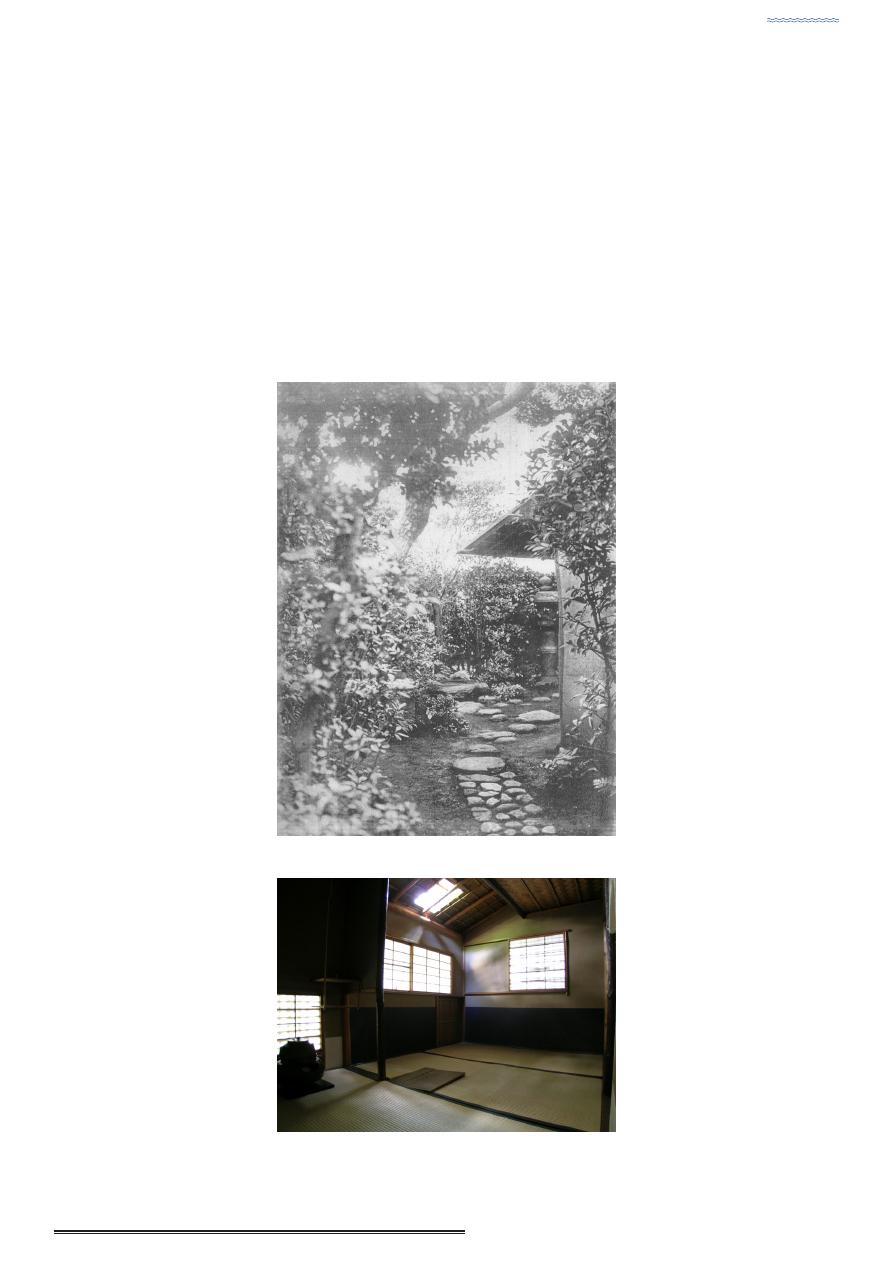
87
INTERNATIONAL JOURNAL OF
ASIA-PACIFIC HERITAGE STUDIES
SUSTAINABLE CONSERBATION OF
ASIA-PACIFIC CULTURAL HERITAGE FOR THE UNESCO CHAIR
図 2
Matcha`s
garden:
川上邦基『茶式建
築及庭園』光琳
社、1925より
図 3
Matcha`s room:
筆者撮影
れ、小さな窓がいくつか開けられるが、庭も建築も閉鎖的であると言える
(図2 Matcha`s garden:川上邦基『茶式建築及庭園』光琳社、1925より。図
3Matcha`s room:筆者撮影) 。また、直線的な構成が多く、曲線は中柱と火灯
口と言われる出入口などに限られ、極めて限定的である。
一方、煎茶の空間はとても開放的で、様々な意匠や珍奇な材料を尊び、曲線
も多用する。庭園の奇石や小川の流れの重視など、中国明清園林の影響も感じ
させる(図4Sencha`s space:籬島軒秋里『築山庭造伝 後編』浪華書肆文金
堂、1828より)。
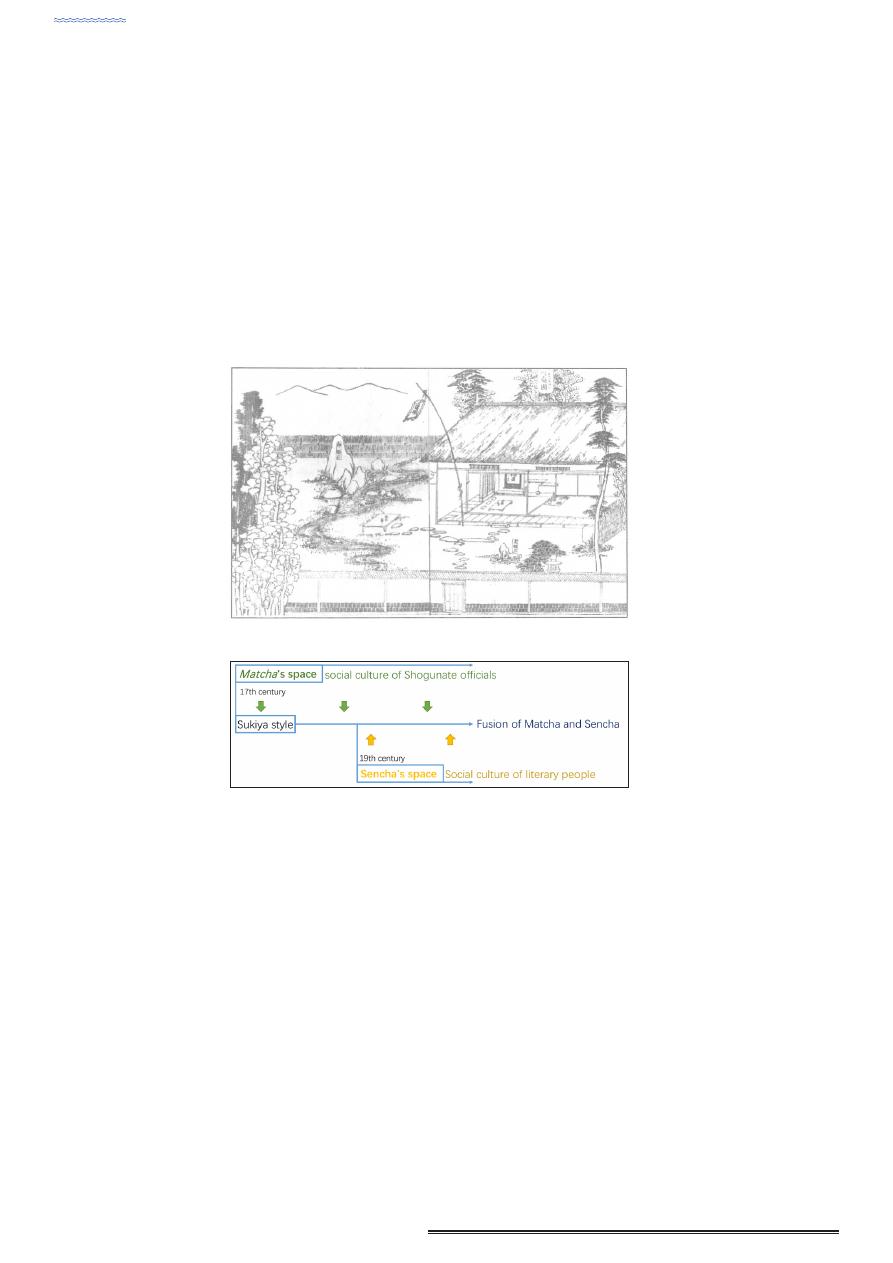
88
INTERNATIONAL JOURNAL OF
ASIA-PACIFIC HERITAGE STUDIES
SUSTAINABLE CONSERBATION OF
ASIA-PACIFIC CULTURAL HERITAGE FOR THE UNESCO CHAIR
図 4
Sencha`s
space:
籬島軒秋里『築
山庭造伝 後編』
図 5
Influence on
Sukiya style
たとえば図6(Fusion of Matchaand Sencha:筆者撮影)は、抹茶の空間だ
が煎茶の要素が見られる例である。本来抹茶室は閉鎖的なものだが、南側の壁
面(図は東から撮影)は三枚障子で大きく開けることができ、深い庇が庭を室
内に取り込んでいる。そして、庭は南東隅から水が湧き出し、茶室を取り巻く
ようにゆるやかな小川の流れを形成している。更には、この場所は高台にある
が、外壁を低く抑え、遠景の山や田園風景が茶室内から眺められるようになっ
ている。以上のように、この茶室は抹茶室であるが、抹茶室と煎茶室の両方の
要素が融合していることがよくわかる。
一方、煎茶の空間はとても開放的で、様々な意匠や珍奇な材料を尊び、曲線
も多用する。庭園の奇石や小川の流れの重視など、中国明清園林の影響も感じ
させる(図4Sencha`s space:籬島軒秋里『築山庭造伝 後編』浪華書肆文金
堂、1828より)。
この抹茶空間と煎茶空間の数寄屋造への影響は図5(Influence
on
Sukiya
style)のように、抹茶室の影響を受けて数寄屋造が誕生し、その後も抹茶室
の展開の影響をうけ続ける。更に、遅れて現れた煎茶室の影響も同時に受け続
け、その後はこれらが融合する形で、発展していくこととなる。

89
INTERNATIONAL JOURNAL OF
ASIA-PACIFIC HERITAGE STUDIES
SUSTAINABLE CONSERBATION OF
ASIA-PACIFIC CULTURAL HERITAGE FOR THE UNESCO CHAIR
3. 近代的公共性の獲得
3.1. 芝公園
では次に数寄屋が近代に入って公共性を獲得していく過程を見ていきたい。そ
れは、公園において顕著にみられる。
日本の公園は、以下の明治6年(1873)の太政官布達によって誕生する
6 。
正院達第拾六号 府県ヘ
三府ヲ始、人民輻輳ノ地ニシテ、古来ノ勝区名人ノ致跡地等是迄群集遊観ノ場所(東
京ニ於テハ金竜山浅草寺、東叡山寛永寺境内ノ類、京都ニ於テハ八坂神社境内嵐山ノ
類、然テ此等境内除地或ハ公有地ノ類)従前高外除地ニ属セル分ハ永ク万人偕楽ノ地
トシ、公園ト可被相定ニ付、府県ニ於テ右地所ヲ撰シ其景況巨細取調、図面相添大蔵
省ヘ可伺出事
太政官
明治六年一月十五日
(出典:日本公園百年史刊行会『日本公園百年史―総論・各論―』第一法規出版株式
會社、1978)
上記布達に「古来ノ勝区名人ノ致跡地等」、「永ク万人偕楽ノ地トシ」等とあ
るように、その目的は古来の名勝旧跡を守るためであった。首都東京では、最
初に上野、浅草、芝、深川、飛鳥山の5か所の公園を設定したが、ここでは現在
東京タワーの立つ、芝公園に注目したい。
6 | 内容は以下「正院達第拾六号 府県ヘ 三府ヲ始、人民輻輳ノ地ニシテ、古来ノ勝区名人ノ致跡地等是迄群集遊観ノ場所(東京ニ於テハ
金竜山浅草寺、東叡山寛永寺境内ノ類、京都ニ於テハ八坂神社境内嵐山ノ類、然テ此等境内除地或ハ公有地ノ類)従前高外除地ニ属セル
分ハ永ク万人偕楽ノ地トシ、公園ト可被相定ニ付、府県ニ於テ右地所ヲ撰シ其景況巨細取調、図面相添大蔵省ヘ可伺出事 明治六年一月
十五日 太政官」
図 6
Fusion of
Matchaand
Sencha:
筆者撮影

90
INTERNATIONAL JOURNAL OF
ASIA-PACIFIC HERITAGE STUDIES
SUSTAINABLE CONSERBATION OF
ASIA-PACIFIC CULTURAL HERITAGE FOR THE UNESCO CHAIR
公園指定後、明治13年に開発方針「芝公園地元金地院境内楓山、及近傍着手ニ
付、大略見込書」
7 が作成された。その中で、「楓山ハ芝公園地中最モ勝景ナル
故ニ、(中略)外国公使等ノ接待ニ充ツヘキ伽藍ヲ建築シ」との記述が確認で
きる。近世からの景勝地を近代国家の首都の迎賓施設として造り替えているこ
と、そしてそれには外国人の目が意識されていることがわかる。この政府の方
針にそって、民間人が借用申請書「芝公園地内字楓山地所拝借願」
8 を提出して
いるが、特に建設予定の建築の描写には「頗る清潔な家屋」との表現が使用さ
れ、日本の建築の近代化の一つの方向性が示唆されている。つまり、芝公園に
建てられるべき建築は、外国人を意識した、「頗る清潔な」公共社交施設であ
ったと言える。
建物は1881年(明治14)2月に落成・開館したが、その時既に食事をする建物
の他、能舞台が計画段階で加わっていた。更に落成と同年7月及び1883年にそ
れぞれ茶室の増築が実施されている
9 。結果的に、食事をする座敷、能舞台、茶
室といったこのような施設構成は、近代以前の武家屋敷における御成りを中心
とした数寄屋の接待空間と同様の形であると言える。
3.2. 芝公園麹町公園
公園への数寄屋の設置は、外国人のみならず、日本人へも向けてさらに発展し
ていく。芝公園紅葉館の落成後する同年6月に公園設置が決定された麹町公園
では、民間から以下のような茶寮建設願いが提出された。
方今世運開明ニ進ミ、高尚風雅之思想ヲ抱候者不少、然ルニ各公園地ニ有之候茶亭休
憇所之類ハ、未タ尋常之體裁ヲ免カレス、高尚風雅之趣ニ適當候者見請不申、甚遺憾
之儀ト奉存候、麹町區山王公園地之儀ハ幽靜之場所ニテ眺望モ宜敷、就而者他所ニ有
之候著名之茶寮ヲ模擬構造シ、同所江取設候ハヽ高尚風雅之人ハ勿論、公園來遊之輩
モ自然高尚閑雅ノ思想ヲ感動候様立至リ、風俗改良ノ一端トモ相成可申哉ニ奉存候、
就テハ右地所若干私共江拝借、茶寮築造ノ儀御許客ヲ蒙候ハヽ、自費ヲ以テ取設申度
奉存候、右御許可可被仰付候上ハ、工事等之儀ハ時々相伺、請御指圖着手可仕候、此
段至急御聞届之程奉仰願候也。
明治十五年五月十九日
深川區西大工町十八番地
三野村利助
赤坂區裏一丁目廿番地
奥八郎兵衛
7 | 桐浴邦夫『近代数寄屋建築の黎明 : 公に設置された明治期の数寄屋建築』東京大学博士論文、2000
8 | 桐浴邦夫『近代数寄屋建築の黎明 : 公に設置された明治期の数寄屋建築』東京大学博士論文、2000
9 | 桐浴邦夫『近代数寄屋建築の黎明 : 公に設置された明治期の数寄屋建築』東京大学博士論文、2000
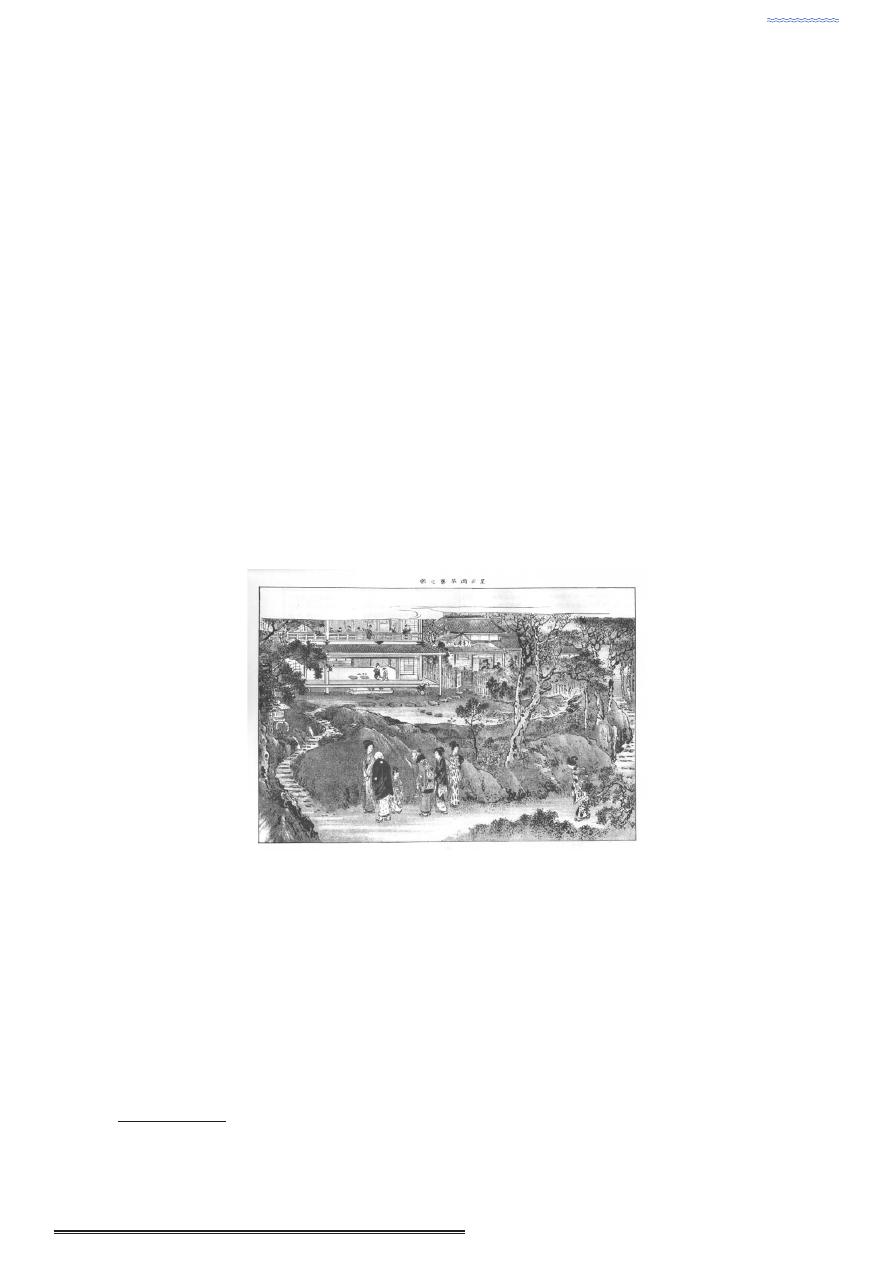
91
INTERNATIONAL JOURNAL OF
ASIA-PACIFIC HERITAGE STUDIES
SUSTAINABLE CONSERBATION OF
ASIA-PACIFIC CULTURAL HERITAGE FOR THE UNESCO CHAIR
日本橋區本両替町十一番地
小野善右衛門
東京府知事松田道之殿
(出典:桐浴邦夫『近代数寄屋建築の黎明 : 公に設置された明治期の数寄屋建築』東京
大学博士論文、2000)
上記開発計画には「高尚風雅」の思想をひろげて「風俗改良」を行う意図が読
み取られる。そして、申請者の一人奥八郎兵衛は禁裏御用達商人であり、棟梁
は宮寮の今井源兵衛、その他職人も京都より呼び寄せ、材料も京都より仕入れ
ているらしい
10 。つまり、関係者には古来からの王朝文化の担い手である宮廷
ゆかりの人々が散見される。そして、落成後には「詩歌を吟詠し、書畫を揮灑
し、文を論し、禪を談し、香を聞き、琴を撫し、棋を闘し、鞠を蹴す」
11 とい
った様々な伝統的な遊びが楽しまれる一方、施設全体は抹茶道の宗匠が厳しく
管理していた(図7Koyo-kan:『新選東京名所圖會』(風俗画報 臨時増刊第
151号)、東陽堂、1897より)。
施設は十二畳、五畳、下座敷十二畳を続き間として能舞台を仕込み、他に四畳
半、三畳、三畳台目、二階は2つの十畳を続き間としている 。つまり、全ての
室が茶室として使用可能で、能舞台も仕込まれている
12 。つまり、座敷、能舞
台、茶室という施設構成は芝公園紅葉館と同様であるが、ここでは日本人の風
俗改良を意図して、茶道を核とし、王朝文化を中心とした伝統的な文化の普及
が図られている、と言うことが出来る。
10 | 桐浴邦夫『近代数寄屋建築の黎明 : 公に設置された明治期の数寄屋建築』東京大学博士論文、2000
11 | 『新選東京名所圖會』(風俗画報 臨時増刊第151号)、東陽堂、1897
12 | 『新選東京名所圖會』(風俗画報 臨時増刊第151号)、東陽堂、1897
図 7
Koyo-kan:『新選
東京名所圖會』
(風俗画報 臨時増
刊第151号)、
東陽堂、1897より

92
INTERNATIONAL JOURNAL OF
ASIA-PACIFIC HERITAGE STUDIES
SUSTAINABLE CONSERBATION OF
ASIA-PACIFIC CULTURAL HERITAGE FOR THE UNESCO CHAIR
3.3. 公共メディアに載る茶道
数寄屋の文化は概念的にも公共性を獲得していく。それは、茶会記が新聞で連
載されることによって、大きく推進される。高橋箒庵(1861-1937)が彼ら近
代ブルジョワジー達がどのように茶道を楽しんでいるかを面白おかしく描写し
て人気を呼び、その連載を更にまとめて出版した。高橋は慶應義塾を卒業し、
三井財閥で働いた典型的な近代ブルジョワジーである。彼らの中でも茶道を楽
しんだ彼らを特に「近代数寄者」と呼ぶ
13 。
近代数寄者はただ遊びとして茶道を楽しんだだけではない。日本人が日本人ら
しい礼儀道徳を身に着けるためのかけがえのない文化としても位置付けてい
た。その代表が高谷宗範(1851-1933)であるが、高谷と高橋の二人は茶道は趣
味か道徳かといったその位置づけについて、熱い茶道論を雑誌上で戦わせた
14 。
このように、新聞、雑誌といった公共メディアを通して、茶会や茶道の情報が
共有されることにより、近代ブルジョワジーを中心とした茶道の文芸的公共圏
が形成されていったと言える。
3.4. 数寄屋と茶道の伝統文化化
以上、数寄屋が公園といった近代都市の物理的な公共空間に出現すると同時
に、メディアを通して概念的にも数寄屋が伝統的な文化としての公共性を獲得
していった。つまり、数寄屋が物理的にも概念的にも公共性を獲得し、公共的
な伝統文化になった、と言うことが出来よう。
4. 物理的空間の変化
4.1. 西洋文化の導入
数寄屋文化が公共性を獲得していくと同時に、実際の空間には大きな変化が起
こっていた。まずは、西洋文化、近代的建築材料、設備の導入である。日本
では畳に正座をして座るのが基本だが、これには慣れ、或いは訓練が必要であ
る。そこで、西洋人にも抵抗なく楽しんでもらえるように、椅子の導入が図ら
れた(図8Chair style tearoom)。
13 | 熊倉功夫『近代茶道史の研究』日本放送出版協会、1980
14 | 大阪幽玄社茶道研究会『高谷宗範高橋箒庵両先生茶道論戦公開状』大阪幽玄社茶道研究会、1932(日本国立国会図書館デジタルコレク
ション)
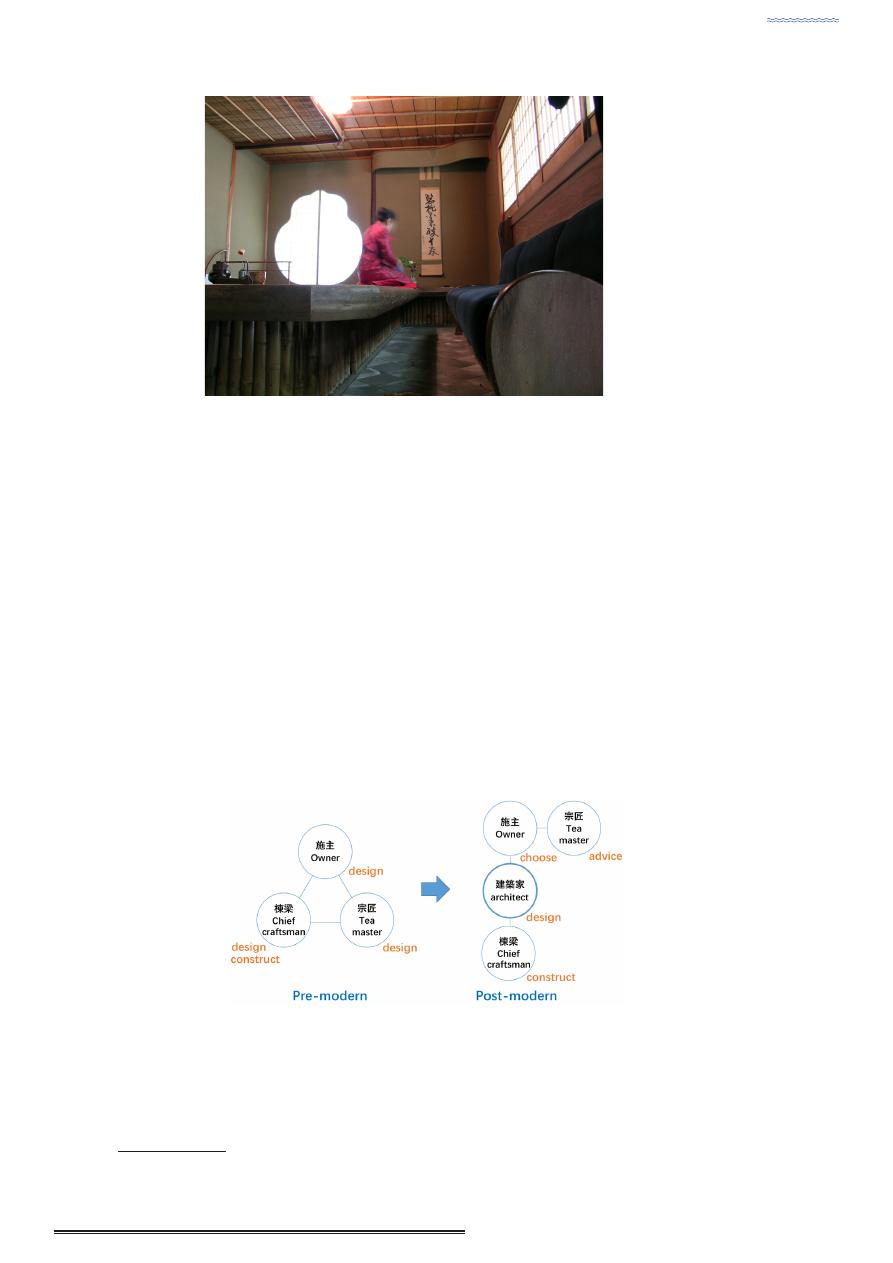
93
INTERNATIONAL JOURNAL OF
ASIA-PACIFIC HERITAGE STUDIES
SUSTAINABLE CONSERBATION OF
ASIA-PACIFIC CULTURAL HERITAGE FOR THE UNESCO CHAIR
図 8
Chair style tea
room
また、先に見た「頗る清潔な家屋」の実現にも沿った、明るさや開放性を重視
した方向も追及され、ガラスや電気照明の導入、また、換気計画を科学的に追
及するなど、多方面の改良が試みられた
15 。
4.2. 担い手の変化
これら物理空間の変化はその建設者の変化も大きく影響している。近代以前
では、施主の要望を宗匠に相談しながら大工棟梁がそれを実現させる形で、
施主主導、宗匠主導、棟梁主導といった、その影響力は時と場合によって、或
いはその能力に応じて異なり、三者の関係は図9(Changes of the person in
charge)の左(Pre-modern)のように表すことが出来る。
15 | 矢ケ崎善太郎「建築家・藤井厚二の茶室と茶の湯」『建築史論聚』思文閣出版、 2004
図 9
Changes of the
person in charge

94
INTERNATIONAL JOURNAL OF
ASIA-PACIFIC HERITAGE STUDIES
SUSTAINABLE CONSERBATION OF
ASIA-PACIFIC CULTURAL HERITAGE FOR THE UNESCO CHAIR
近代に入って、数寄屋の近代化が求められた時は、おおよそ以下のような経緯
を辿った。まず、最初に改良を行うには、茶道の専門知識を有する宗匠が力を
発揮した。その代表として三代木津宗詮(1862-1939)を挙げることが出来る
16
。木津は茶道宗匠としての知識を発揮しながら、「茶室建築家」として「時代
に順應する構法に改造」すべきことを主張している
17 。次に、茶道の知識を身
に着けた、近代ブルジョワジーが更に大胆に改造を行っていった。しかし小林
一三(1873-1957)の茶室「古彩庵」に見られるように、その大胆な改造によ
って過去との連続性が危うい茶室も出てくることとなった
18 。そこで、最後に
棟梁が伝統建築としてまとめる力を発揮する。その代表的な棟梁として笛吹嘉
一郎(1898-1969)を挙げることが出来る
19 。笛吹は「お茶特有の者の見方、
わび、さび、に通ずる審美は何に一つ外国の模倣の入込ない厳しさに大きな魅
力がある」とした上で、「近代建築の進化とともにその厳しさのない自由な意
図のもとに設計されているのが多い」と批判し、時代の新しい要請を受け入れ
ながらも、茶室としての風格を毀さないように努めた
20 。
一方で、棟梁のこのような力の発揮には、近代の新たな担い手である建築家の
参入が大きく影響していた。近代以降、図9の右(Post-modern)のような建
築家中心の関係に移行していくが、笛吹はその流れに逆らう方向で、自己改造
を行った結果であった。彼は近代的な設計技術を、書籍を通じて独習し、一方
で茶道の修行に通い、茶会を開いて宗匠並みに茶道の専門的知識を高めていっ
た。このような自己改造によって、施主と宗匠の信頼を勝ち取っていったので
ある。
しかし、このようなことが出来たのはごく一部の棟梁のみで、近代化の大きな
流れを変えることまではできなかった。そのような棟梁は次第に消滅してい
き、建築家が数寄屋を担っていくことになる。そして吉田五十八(1894-1974
)や堀口捨己(1895-1984)等の建築家が数寄屋をモダニズム建築として脱皮
させていくことになるのである。
5.概念的位置づけの変化
5.1. 抹茶道の没落
ではこのような実際の空間をとりまく変化の背景で、数寄屋の概念的な位置づ
16 | 松本康隆「3代木津宗詮の職能と茶室の全体的把握のための基礎的研究」『日本建築学会計画系論文集』日本建築学会、No.602
、pp191-198、2006
17 | 木津宗泉「茶室の設計」『茶道全集 巻の三』創元社、1936
18 | 松本康隆「近代の茶室評価のための一試論 小林一三の茶室を通して」『建築史学』建築史学会、第四十七号、pp31-56、2006
19 | 松本康隆「笛吹嘉一郎の職能と茶室の全体的把握のための基礎的研究」『日本建築学会計画系論文集』日本建築学会、No.610、
pp.169-176、2006
20 | 笛吹嘉一郎「ご同慶の至り」『建設写真新聞』建設写真新聞社、1959

95
INTERNATIONAL JOURNAL OF
ASIA-PACIFIC HERITAGE STUDIES
SUSTAINABLE CONSERBATION OF
ASIA-PACIFIC CULTURAL HERITAGE FOR THE UNESCO CHAIR
けはどのような変遷をたどったのであろうか。先に抹茶と煎茶の歴史を見て確
確認したように、煎茶は本来天皇、貴族側の文化であった。そのため、天皇中
天皇中心の明治維新政府成立後もある時期まで安定的に楽しまれていくことと
なる。一方、幕府側の文化であった抹茶はその主要な支持者を失い、復興を模
索することになった。
5.2. 抹茶道の復興
まず、抹茶道の宗匠が行ったのは、天皇への接近である。従来、禅の思想から
始まった抹茶道は仏教寺院との結びつきが強いが、1880年(明治13)の北野神
社献茶を皮切りに各地の神社で献茶式を大々的に行い、1887年(明治20)には
天皇への直接の献茶も実現させ、公式の文化としての地位を獲得していく
21 。
また、国の方策に迎合する形で、茶道に関する人物を盛り立てる活動も行う。
その代表的なイベントとして、1898年(明治31)に開催された豊太閤三百年
祭大茶会が挙げられる
22 。秀吉は大陸侵略を目的に朝鮮出兵を行っていた。当
時は日清戦争から日露戦争の間で、大陸進出を軸とするナショナリズムの台頭
が、秀吉を回顧させ、秀吉を顕彰する大茶会の企てに結びついたのである
23 。
5.3. 煎茶道の衰退
大陸侵略が進展していくと同時に、中国文化崇拝の傾向が強い煎茶道が廃れて
いく。近代における煎茶の実態について、不明な部分がまだまだ多いが、1920
年代まではある程度盛んに行われていたと考えられる。例えば、1902年から
大阪で定期的に開催された著名な茶会である十八会は煎茶も抹茶も行ったし
24
、1921年に京都で開催された大規模なイベントである東山大茶会では、開かれ
た42席中煎茶席は14席あった
25 。また1928年には黄檗山萬福寺境内に売茶堂を
記念する堂が建てられ、その落慶煎茶会が大々的に開催された
26 。一方、この
売茶堂落慶煎茶会は、煎茶の「復興」を企図して開催されたもので、当時煎茶
が衰退していたことを裏付けるものでもある。しかし、煎茶人の努力もむなし
く、1931年には満州事変が勃発し、1937年には盧溝橋事件と大陸侵略が進む
中、中国を慕う文化は劣勢を覆すことができなかった。
21 | 熊倉功夫『近代茶道史の研究』日本放送出版協会、1980
22 | 『豊太閤三百年祭大茶会記』豊国会茶事部、1898
23 | 熊倉功夫『近代茶道史の研究』日本放送出版協会、1980
24 | 管宗次「近代大阪の茶会『十八会』」『大阪春秋』106号、pp.54-57、2002.3
25 | 矢ケ崎善太郎『近代京都の東山地域における別邸・邸宅群の形成と数寄空間に関する研究』京都工芸繊維大学博士論文、1998
26 | 「社団法人全日本煎茶道連盟について」『煎茶全書』主婦の友社、p.308、1973

96
INTERNATIONAL JOURNAL OF
ASIA-PACIFIC HERITAGE STUDIES
SUSTAINABLE CONSERBATION OF
ASIA-PACIFIC CULTURAL HERITAGE FOR THE UNESCO CHAIR
5.4. 戦後利休の飛躍
戦後は、千利休の伝統を継ぐ千家家元を中心に茶道が世界に紹介されていく。
その背景には3つの理由が挙げられる。一つは、千利休は豊臣秀吉の朝鮮出兵に
反対したとも理解されており、平和の象徴として都合がいい点が挙げられる。2
つ目は、当時日本はアメリカに対して、平和な文化国家建設のアピールが必要
であったこと。3つ目は、茶道の担い手が近代数寄者から大衆に移っていった
が、その大衆が指導者としての家元を必要としたことである。
特に「一碗からピースフルネスを(Peacefulness through a Bowl of Tea)」と
いうスローガンを掲げて世界中に弟子を獲得していった裏千家家元(現:千玄
室)は、1946年当時、将来家元を担う若宗匠として、アメリカ各地に赴き茶道
の紹介、普及活動を行った。彼はその最初の訪問先ハワイにおいて「茶道の精
神により日本国民が如何に平和文化を愛するものであることを理解せしめると
いう大きな役割」
27 を自覚している。
5.5. 戦後民主主義がもたらす「平等」
最後に、大衆が利用できる茶室として、公共茶室が各地に建設されていった
が、その空間は味気のないものになっていった。それには、戦後民主主義の徹
底とも関係していると思われる。抹茶道には多くの流派があるが、どのような
流派でも利用できるようにという考え方である。そして更に茶室以外の室内芸
能にも使用できることも求められ、茶室空間の個性が極力そぎ落とされていっ
た
28 。一方で、それが建築のモダニズム化とも極めて相性が良かったことも指
摘できる。これらに公共建築特有の予算の制約が加わり、結果として、茶室は
よりシンプルで飾り気のない空間に進展していったのである。
6. まとめ
以上をまとめると、先ずは数寄屋の文化が公園と近代ブルジョワジーを媒介と
して、日本の伝統文化となった。その伝統文化化の過程で、数寄屋の西洋化、
近代化が進められていた。その背景には、明治維新の政権交代、戦争、国粋主
義の台頭、戦後の民主主義などが影響していた。現在の数寄屋建築には中国的
要素、或いは朝鮮的要素が希薄であるが、それは中国的色彩の強い煎茶的要素
を削除し、モダニズム建築として発展してきた結果である。
27 | 千宗興「夢のハワイ」『淡交』淡交社、p.4、1951.4
28 | 中村昌生『公共茶室:中村昌生の仕事』建築資料研究社、1994

97
INTERNATIONAL JOURNAL OF
ASIA-PACIFIC HERITAGE STUDIES
SUSTAINABLE CONSERBATION OF
ASIA-PACIFIC CULTURAL HERITAGE FOR THE UNESCO CHAIR
つまり、西洋との関係のみならず、東アジア内の関係性も近現代の伝統的空間
の変化に大きく影響を与えている、と言うことが出来る。数寄屋の文化遺産的
価値を見るとき、中世においては中国禅茶文化、近世においては中国明清文人
文化と朝鮮文人文化、近現代においては西洋のモダニズム運動の文化遺産、と
いったように、様々な価値を捉えることが出来る。
文化遺産の拡がりに注目すること、そして、分断された既存の遺産を繋げてい
くこと、これらが今後、遺産を皆で共有し、持続的に伝えていくために必要だ
と思う。
<付記>
今回、シンポジウムの発表者は大学に籍を置く研究者と政府の行政機関に籍を置く行政官に分
けられる。この両者と文化財との関わりを単純に言うと、文化財の価値を明確化するのが研究
者であり、その価値を守るために処置を下すのが行政官だと言えよう。
その行政側から「コアな価値とは何か」「何がそれを文化財たらしめているのか」「コアな価
値を残すことが大事なんだ」といった内容が印象的であった。例えば私の研究に即して述べる
と、数寄屋の文化的な価値は、各時代、時期によって異なる。一方で、数寄屋を数寄屋たらし
めているものは確かに存在する。一言でいえば、それは茶会に使用できるかどうか、或いは、
茶人(宗匠、数寄者、茶を楽しむ人々)が茶室と認める空間であるかどうかが重要であると言
える。数寄屋は現在もその文化が生きているという意味で特異なようにも思われるかも知れな
いが、それは無形文化財と有形文化財がそこに同時に存在して「生きている」文化遺産という
一つの文化遺産のタイプであると思う。

98
INTERNATIONAL JOURNAL OF
ASIA-PACIFIC HERITAGE STUDIES
SUSTAINABLE CONSERBATION OF
ASIA-PACIFIC CULTURAL HERITAGE FOR THE UNESCO CHAIR
일본 전통 건축의 근대화
야스타카 마츠모토
난징공업대학교
1. 들어가며
본고에서는 현재 국가를 대표하는 ‘전통 건축’이라는 개념이 근현대에 있어 어떻
게 만들어졌는지, 그리고 그 창출 과정에서 실제 공간 문화가 어떻게 변용되었는
지를 밝히고, 전통 건축이 가진 보다 넓은 문화적 가치를 밝히고자 한다.
구체적으로는 일본의 대표적인 전통건축인 ‘스키야(
数寄屋)’에 주목한다. 먼저
처음으로 스키야란 어떤 개념인지 설명한다. 다음으로 근대에 들어와 스키야 문
화가 물리적으로도 개념적으로도 근대적인 공공성을 획득하고, 일본 전통문화
가 되어 가는 과정을 살펴본다. 그리고 물리적인 공간의 공유가 진행되는 과정
에서 잘 살펴보면 그 형태가 변화하고 있다는 모습을 확인하고, 개념적인 스키
야 문화의 자리매김이 실제로는 변화하고 있다는 것을 밝힌다. 마지막으로, 이
들 변화를 정리하며 약간의 고찰을 하고자 한다.
2. 스키야란?
2.1. 일본 건축사에서의 스키야
먼저 일본 건축사에서의 스키야의 위치를 확인하고자 한다. 일본 전통 건축을 매
우 단순하게 분류하면 그림 1 (Japanese traditional architecture)과 같다. 메인
은 종교 건축과 주택 건축으로, 종교 건축에는 전래 종교인 신사 건축과 외래 종
교인 불교 사원이 있다. 주택 건축은 지배 계급의 주택과 일반 민중의 주택으로
나뉘어, 지배 계급의 주택은 신덴즈쿠리(
寝殿造)부터 쇼인즈쿠리(書院造), 스
키야즈쿠리(
数寄屋造)로 발전해 간다. 일반 민중의 주택에서는 도시형 주거인
조카(
町家), 농촌 지역의 노카(農家)로 나뉜다. 본고에서 주목하는 스키야는 스
키야즈쿠리 성립에 큰 영향을 미쳤으므로, 당시 스키야라고 불리웠으며 현재는
일반적으로 다실(
茶室)로 불린다.

99
INTERNATIONAL JOURNAL OF
ASIA-PACIFIC HERITAGE STUDIES
SUSTAINABLE CONSERBATION OF
ASIA-PACIFIC CULTURAL HERITAGE FOR THE UNESCO CHAIR
2.2. 말차(
抹茶)와 전차(煎茶)
그렇다면 이 다실이란 어떤 것일까. 일본에서도 잘 알려져 있지 않으나, 사실 다
도에는 말차 다도와 전차 다도가 있다. 말차 다도는 일반에 널리 알려져 있으며,
보통 다도라고 하면 이 말차 다도를 가리킨다. 센노 리큐(
千利休)가 이를 정립
한 인물로 잘 알려져, 전성기는 대략 덴쇼(
天正) 부터 간에이(寛永)(1573-1643)
다. 이 역사를 거슬러 올라가면 중국 송대 선원의 다도 예식이 일본에 전해져, 일
본 렌가(
連歌)를 대표하는 문화와 융합하며 다도가 성립되어1 , ‘와비(侘)’, ‘사비
(
寂)’라는 미의식이 생겨났다2. 또한 조선 도자기를 통한 미적 사상의 영향도 야
나기 무네요시(
柳宗悦)에 의해 지적되었다3.
한편, 전차는 말차 이후부터 흥했으며, 말차를 비판하는 요소가 강했고 그 전성
기는 18-19세기였다. 그 기원은 중국 명대 말 선승 인겐 류키(
隠元隆琦)가 일본
에 건너와 교토(
京都) 우지(宇治)에 창건한 오바쿠산 만푸쿠지(黄檗山萬福寺)
에 명나라의 차 문화를 가져온 것에서 시작한다4. 또한 만푸쿠지에서 수행한 일
본의 선승인 바이사오(
売茶翁)가 당시 쇠퇴한 선(禅)을 비판하고, 우지에서 나
가타니 소엔(
永谷宗円)이 새롭게 개발한 전차를 교토 거리에서 걸어다니며 팔
았다. 바이사오가 교토의 문인들과 어울리며, 중국 명청의 문인 문화와 일본 귀
족들의 왕조 문화를 더욱 어우르고, 말차 다도에 대항하는 형태로 전차 다도의
형태를 만들어 가게 되었다5.
1 | 구라사와 유키히로(倉澤行洋) 『증보예도의 철학 종교와 예의 상즉(増補藝道の哲学 宗教と藝の相即)』 도호출판(東方出
版), 1993. 다니 아키라(谷晃) 「주코에서 조오로 (珠光から紹鷗へ)」 『강좌 일본차의 유전사 제1권 중세(講座 日本茶の湯全
史 第一巻 中世)』 시분가쿠출판(思文閣出版), 2013.
2 | 단, ‘와비’, ‘사비’라는 말이 빈번히 사용된 것은 시대에 따라 강약이 있으며, 주로 겐로쿠(元禄) 시대(1688-1704)와 쇼와(昭
和)가 시작되고 부터(1926-)인 것으로 보인다. (이와이 시게키(岩井茂樹) 「『일본적』미적 개념의 성립(2):다도는 언제부터 『
와비』『사비』가 되었는가?(『日本的』美的概念の成立(二):茶道はいつから『わび』『さび』になったのか?)」 일본연구
(日本研究)(33), pp.29-53, 2006.10)
3 | 야나기 무네요시(柳宗悦) 『차와 미(茶と美)』 마키노서점(牧野書店), 1941
4 | 오쓰키 미키오(大槻幹郎) 『전차문화고-문인차의 계보-(煎茶文化考―文人茶の系譜―)』 시분가쿠출판(思文閣出版), 2004
5 | 슈후노도모사(主婦の友社) 『전차전서(煎茶全書)』 슈후노도모사(主婦の友社),1973. 오가와 고라쿠(小川後楽) 『차의 문화사
(茶の文化史)』 분이치종합출판(文一総合出版), 1980. 고단사(講談社) 『도설·전차Ⅰ-전통과 미(図説・煎茶Ⅰ―伝統と美)』
고단사(講談社), 1982.
그림 1
일본의
전통건축
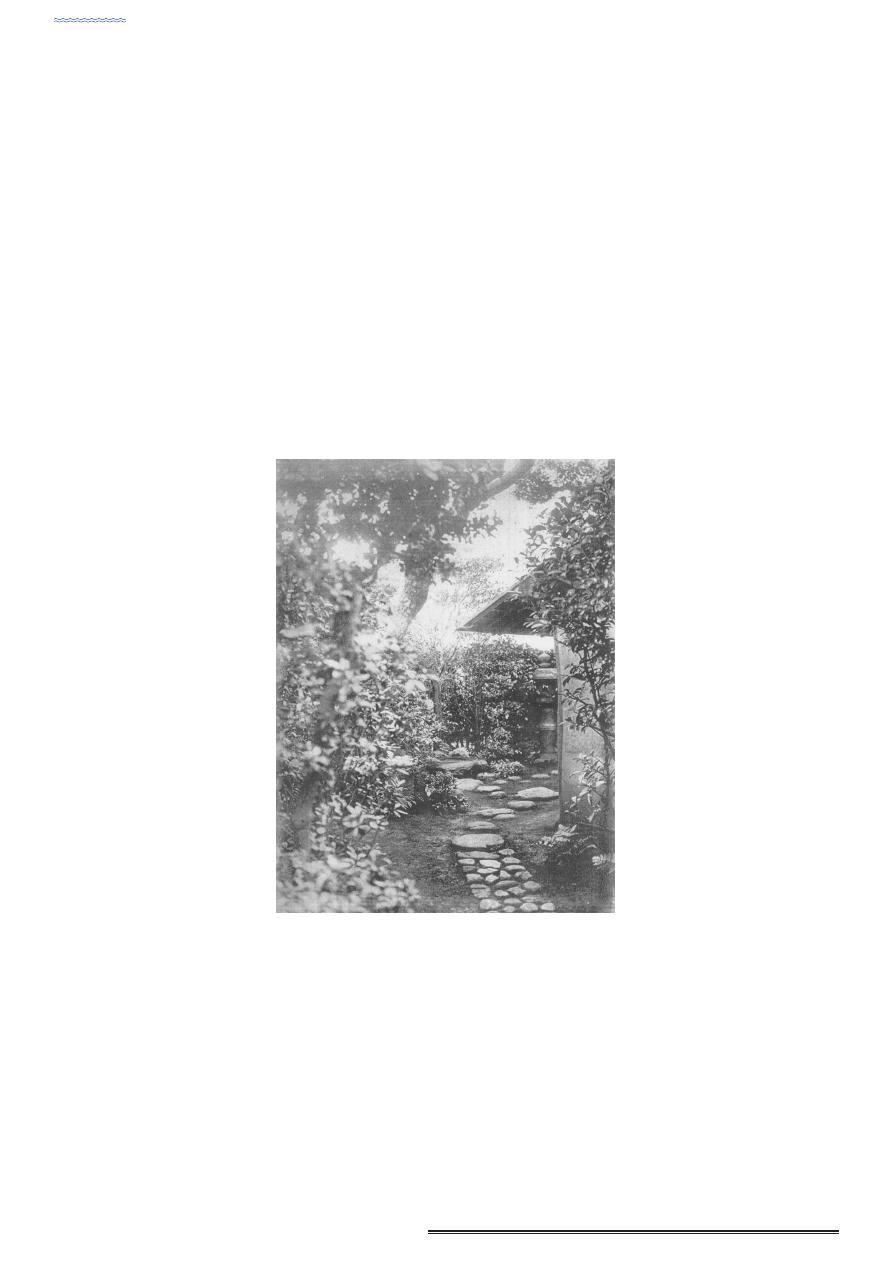
100
INTERNATIONAL JOURNAL OF
ASIA-PACIFIC HERITAGE STUDIES
SUSTAINABLE CONSERBATION OF
ASIA-PACIFIC CULTURAL HERITAGE FOR THE UNESCO CHAIR
전차 다도의 발전에는 나가사키(
長崎)에 사는 중국인과 조선통신사의 문인적 교
류가 영향을 미쳤다고 생각할 수 있으나, 아직 불명한 부분이 많다.
2.3. 말차 공간과 전차 공간
말차 공간의 특징을 단순히 나열하면 정원은 트여있지 않고, 건축은 주로 토벽
으로 둘러싸여 작은 창문이 몇 개 있으나, 정원도 건축도 폐쇄적이라고 말할 수
있다(그림 2 Matcha’s garden:가와카미 구니모토(
川上邦基) 『차식 건축 및 정
원(
茶式建築及庭園)』 고린사(光琳社), 1925에서. 그림 3 Matcha’s room:필자
촬영). 또한 직선적인 구성이 많고, 곡선은 나카바시라(
中柱)와 가토구치(火灯
口)로 불리는 출입구 등에만 있어, 매우 한정적이다.
그림 2
차식 건축 및
정원, 고린사
1925
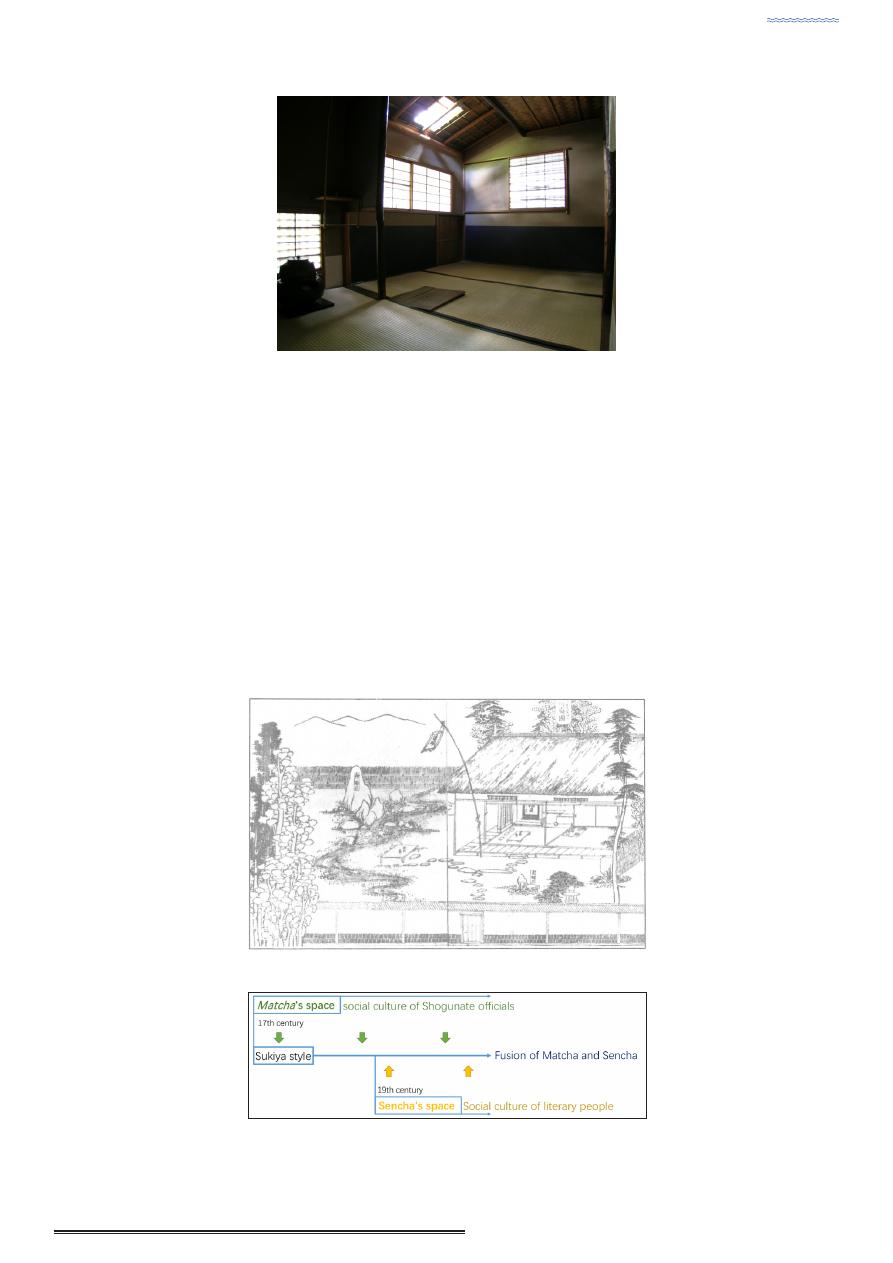
101
INTERNATIONAL JOURNAL OF
ASIA-PACIFIC HERITAGE STUDIES
SUSTAINABLE CONSERBATION OF
ASIA-PACIFIC CULTURAL HERITAGE FOR THE UNESCO CHAIR
한편 전차 공간은 매우 개방적이며 다양한 의장과 진기한 재료를 존중하고, 곡
선도 많이 사용한다. 정원의 기석과 냇물의 흐름을 중시하는 등, 중국 명청 원
림(
園林)의 영향도 느껴진다(그림 4 Sencha’s space:리토켄 슈리(籬島軒秋里)
『쓰키야마니와즈쿠리덴 후편(
築山庭造伝 後編)』 나니와쇼시분킨도(浪華書肆
文金堂), 1828에서).
말차 공간과 전차 공간이 스키야즈쿠리에 미친 영향은 그림 5 (Influence on
Sukiya style)와 같다. 말차 다실의 영향을 받아 스키야즈쿠리가 탄생했고, 그
후에도 말차 다실의 전개에 영향을 계속 받는다. 더욱이 후에 나타난 전차 다실
의 영향도 동시에 받으며, 그 후 이들을 융합하는 형태로 발전해 나가게 된다.
그림 4
Sencha`s
space:
리토겐슈리
『쓰키야마니와즈
쿠리덴후편』
그림 5
Influence on
Sukiya style
그림 3
Matcha`s room
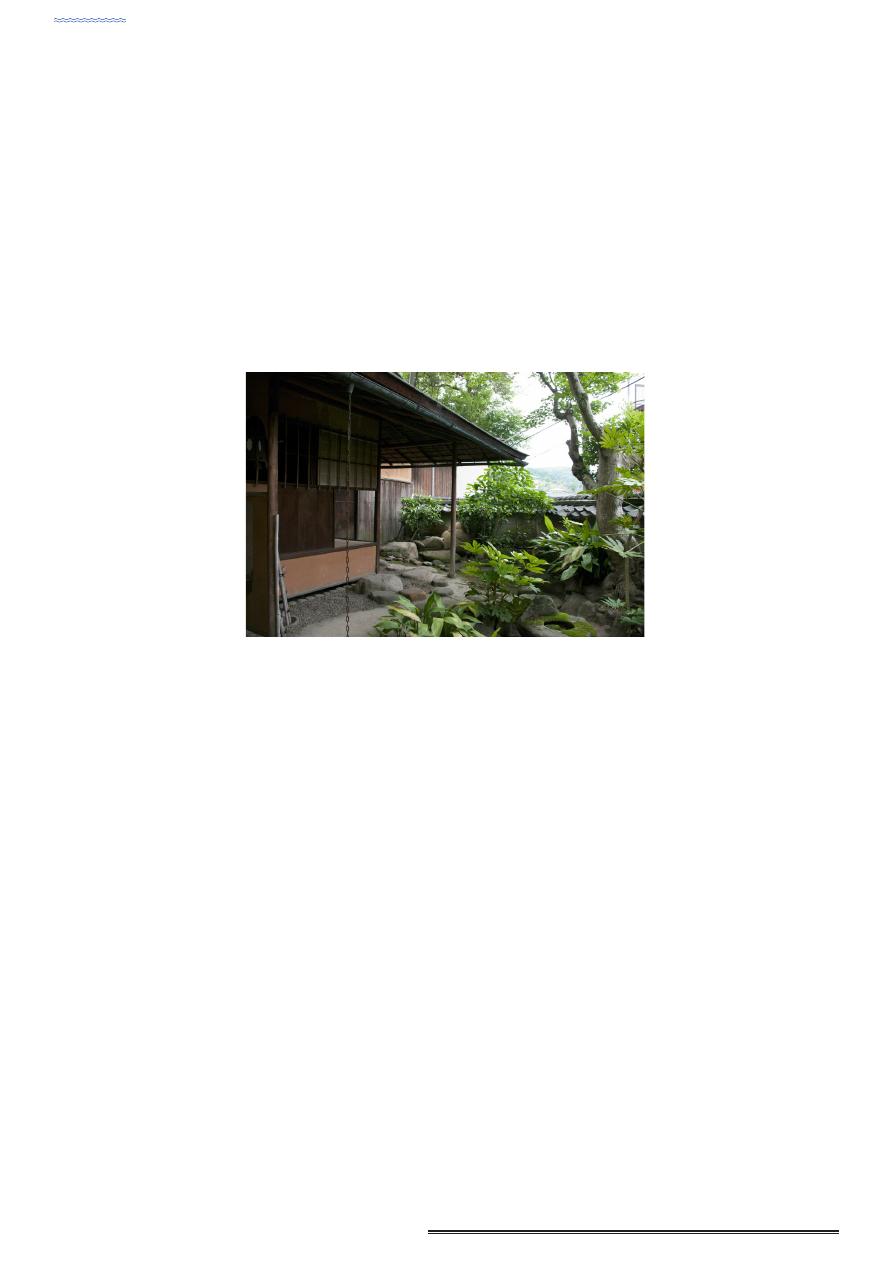
102
INTERNATIONAL JOURNAL OF
ASIA-PACIFIC HERITAGE STUDIES
SUSTAINABLE CONSERBATION OF
ASIA-PACIFIC CULTURAL HERITAGE FOR THE UNESCO CHAIR
예를 들면 그림 6 (Fusion of Matchaand Sencha:필자 촬영)은 말차 공간이지
만 전차의 요소를 볼 수 있는 예시이다. 본래 말차 다실은 폐쇄적이었으나, 남쪽
의 벽면(그림은 동쪽에서 촬영)은 3장의 미닫이로 크게 열 수 있으며, 깊은 처마
가 정원을 실내로 들여오고 있다. 그리고 정원 남동쪽 모퉁이에서 물이 솟아 나
와, 다실을 둘러싸는 완만한 냇물의 흐름을 형성하고 있다. 더욱이 이 장소는 높
은 건물에 있으나, 외벽을 낮게 하여 원경의 산과 전원 풍경을 다실 안에서 바라
볼 수 있도록 되어 있다. 위와 같이 이 다실은 말차 다실이나, 말차 다실과 전차
다실 쌍방의 요소를 융합하고 있다는 것을 잘 알 수 있다.
그림 6
Fusion of
Matcha and
Sencha
3. 근대적 공공성의 획득
3.1. 시바(
芝) 공원
그럼 다음으로 스키야가 근대에 들어와 공공성을 획득해 가는 과정을 살펴보고자 한다.
이는 공원에 있어서 현저히 드러난다. 일본 공원은 아래 메이지 6년(1873년) 다이조칸후
다쓰(
太政官布達)에 의해 탄생한다. 내용은 다음과 같다.
세이인다쓰(
正院達) 제16호 부현(府県)에 도쿄, 교토, 오사카를 시작으로,
각지 대도시에 있어 명승고적 등 예전부터 사람들이 오락을 위해 이용하던 장소(예를 들면 도쿄
에서는 센소지(
浅草寺), 간에이지(寛永寺), 교토에서는 야사카진자(八坂神社), 아라시야마(嵐
山) 등) 은 개인과 신사, 절이 독점하여 사용하는 것이 아니라,
여러 사람이 함께 즐기는 공원으로 사용하는 것이 바람직하다고 생각한다.
이와 같이 적절한 땅이 있다면, 다시 서민의 오락을 위한 공원으로 제정하므로,
오쿠라쇼(
大蔵省)에 신청하기 바란다. 메이지6년 1월 15일
다이조칸
메이지 6년 1월 15일
(출처:일본 공원 백년사 간행회(
日本公園百年史刊行会) 『일본 공원 백년사-총론·각론-)
日本公園百年史―総論・各論―』 다이치호키 출판 주식회사(第一法規出版株式會社), 1978)

103
INTERNATIONAL JOURNAL OF
ASIA-PACIFIC HERITAGE STUDIES
SUSTAINABLE CONSERBATION OF
ASIA-PACIFIC CULTURAL HERITAGE FOR THE UNESCO CHAIR
위의 후다쓰에 ‘고래의 명승고적 등’, ‘여러 사람이 즐기는 공원’ 등에서 나타나
있는 것처럼 그 목적이 고래의 명승고적을 지키기 위함이었다. 수도 도쿄에서는
제일 처음에 우에노(
上野), 아사쿠사(浅草), 시바(芝), 후카가와(深川), 아스카
야마(
飛鳥山)의 5개소에 공원을 설정했으나, 여기에서는 현재 도쿄 타워가 세워
진 시바 공원에 주목하고자 한다.
공원 지정 후, 메이지 13년에 개발 방침 「시바공원 부지내의 모미지야마(
楓山)
개발착수에 대한 대략적인 견적서」
6 가 작성되었다. 여기에서 ’모미지야마(
楓
山)는 시바공원 안에서도 가장 경치가 예쁜 곳(중략)외국 공사 등의 접대를
충실히 하기 위하여 가람을 건축’이라는 기술을 확인할 수 있다. 근세부터 외국
인의 시선을 의식하여 경승지를 근대 국가 수도의 영빈 시설로 다시 만들었던 것
을 알 수 있다. 이 정부 방침에 의해 민간인이 차용 신청서 「시바공원 부지내의
모미지야마 부지 차용 신청서」
7 를 제출하였으며, 특히 건설 예정인 건축 묘사
에는 ‘매우 청결한 가옥’이라는 표현이 사용되어 일본 건축 근대화의 한 가지 방
향성이 시사되어 있다. 즉, 시바 공원에 세워져야 할 건축은, 외국인을 의식한 ‘
매우 청결한’ 공공 사교 시설이라 할 수 있겠다.
건물은 1881년(메이지 14) 2월에 낙성·개관했으나, 당시 이미 식사를 하는 건물
외에도 노가쿠(
能楽) 무대가 계획 단계에 더해져 있었다. 게다가 낙성과 같은 해
7월 및 1883년에는 각각 다실의 증축이 실시되었다
8 . 결과적으로, 식사를 하는
자시키(
座敷), 노가쿠 무대, 다실과 같은 시설 구성은 근대 이전의 부케야시키(
武家屋敷)의 오나리(御成り)를 중심으로 하는 스키야의 접대 공간과 같은 형태
라고 말할 수 있다.
3.2. 시바 공원 고지마치(
麹町) 공원
공원에 설치하는 스키야는 외국인뿐 아니라 일본인을 대상으로 더욱 발전해 간
다. 시바 공원 고요칸(
紅葉館) 낙성 후 같은 해 6월에 공원 설치가 결정된 고지
마치 공원에는 민간에서 아래와 같은 차료(
茶寮) 건설 신청이 제출되었다.
6 | 기리사코 구니오(桐浴邦夫) 『근대 스키야 건축의 여명:공공에 설치된 메이지기의 스키야 건축
(近代数寄屋建築の黎明 : 公に設置された明治期の数寄屋建築)』 도쿄대학 박사논문, 2000
7 | 기리사코 구니오(桐浴邦夫) 『근대 스키야 건축의 여명:공공에 설치된 메이지기의 스키야 건축
(近代数寄屋建築の黎明 : 公に設置された明治期の数寄屋建築)』 도쿄대학 박사논문, 2000
8 | 기리사코 구니오(桐浴邦夫) 『근대 스키야 건축의 여명:공공에 설치된 메이지기의 스키야 건축
(近代数寄屋建築の黎明 : 公に設置された明治期の数寄屋建築)』 도쿄대학 박사논문, 2000

104
INTERNATIONAL JOURNAL OF
ASIA-PACIFIC HERITAGE STUDIES
SUSTAINABLE CONSERBATION OF
ASIA-PACIFIC CULTURAL HERITAGE FOR THE UNESCO CHAIR
현재, 세상의 운수를 넓히기 위해, 고상하고도 우아한 사상을 가진 자가 적지 아니하며,
그에 상응하는 각 공원부지의 차정(
茶亭) 휴게소는 고상하고도
우아한 취미를 탐구할 줄 아는 분들이 있다.
고지마치구 산노공원 부지는 그윽하고 조용하면서도 조망도 좋기에,
다른 곳에 있는 유명한 다실
(茶寮)을 시범삼아 건조하고 동일한 장소에 설치하였으며,
고상하고도 우아한 분들은 물론, 공원에 놀러 온 자들 또한 자연의 고상함과 우아한 사상에
감동하기에, 풍속개량의 일환과 또한 일부 차용하여 자비로 다실 건조를 진행 원하옵고,
지도 및 착수를 위해 가급적 빠르게 해당 건을 처리하여 주십시오.
메이지 15년 5월 19일
후카가와구 니시다이쿠 마치18번지 (
深川區西大工町十八番地)
미노무라 리스케 (
三野村利助)
아카사카구 우라1쵸메 20번지 (
赤坂區裏一丁目廿番地)
오쿠 하치로베 (
奥八郎兵衛)
니혼바시구 혼료가에쵸 11번지 (
日本橋區本両替町十一番地)
오노 젠에몽 (
小野善右衛門)
도쿄부지사 마쓰다 미치유키(
松田道之) 귀하
(출전: 기리사코 구니오(
桐浴邦夫) 『근대 스키야 건축의 여명:공공에 설치된 메이지기의 스키야 건축(近代数寄屋建築の黎明 : 公
に設置された明治期の数寄屋建築)』 도쿄대학(東京大学) 박사논문, 2000)
위의 개발 계획에서는 ‘고상하고 우아한’ 사상을 퍼트려 ‘풍속 개량’을 하고자 하
는 의도를 읽을 수 있다. 그리고 신청자의 한 사람인 오쿠 하치베(
奥八郎兵衛)
는 긴리고요(
禁裏御用達) 상인이며, 도편수는 궁료(宮寮)인 이마이 겐베(今井
源兵衛)였다. 그 외의 장인도 교토에서 불러왔으며, 재료도 교토에서 가져온 것
으로 보인다1. 즉, 관계자 중에는 예전부터 왕조 문화를 담당해 온 궁정 연고자
들이 여기저기 보인다. 그리고, 낙성 후에는 ‘시가를 음영하고, 서화를 그리고,
글을 논하고, 선(
禪)을 이야기하고, 향을 피우고, 거문고를 연주하고, 바둑을 두
고, 공을 찬다2’ 고 하며 다양한 전통 놀이를 즐겼다. 한편, 시설 전체는 말차 다
도 스승이 엄격하게 관리했다(그림 7 Koyo-kan:『신선 도쿄 명소 도회(
新選東
京名所圖會)』풍속 화보 임시 증간 제 151호(風俗画報 臨時増刊第151号), 도요
도(
東陽堂), 1897에서).
9 | 기리사코 구니오(桐浴邦夫) 『근대 스키야 건축의 여명:공공에 설치된 메이지기의 스키야 건축
(近代数寄屋建築の黎明 : 公に設置された明治期の数寄屋建築)』 도쿄대학 박사논문, 2000
10 | 『신선 도쿄 명소 도회(新選東京名所圖會)』 풍속 화보 임시 증간 제 151호(風俗画報 臨時増刊第151号),
도요도(東陽堂), 1897

105
INTERNATIONAL JOURNAL OF
ASIA-PACIFIC HERITAGE STUDIES
SUSTAINABLE CONSERBATION OF
ASIA-PACIFIC CULTURAL HERITAGE FOR THE UNESCO CHAIR
그림 7
Koyo-kan:『신선
도쿄 명소 도회
(新選東京名所圖
會)』풍속 화보 임시
증간 제 151호(風
俗画報 臨時増刊第
151号), 도요도(東
陽堂), 1897
시설은 12조(
畳), 5조, 시모자시키(下座敷) 12조를 이어지는 공간으로 노가쿠
무대를 준비했으며, 그 외에도 4조 반, 3조, 3조 다이메(
台目), 2층은 두 개의 10
조를 이어지는 공간으로 하고 있다
11 . 즉, 모든 방이 다실로 사용 가능했고, 노가
쿠 무대도 준비되어 있다. 즉, 자시키, 노가쿠 무대, 다실이라는 시설 구성은 시
바 공원의 고요칸과 같으나, 이곳에서는 일본인의 풍속 개량을 위해 다실을 핵
심으로 하고, 왕조 문화를 중심으로 한 전통적인 문화 보급을 계획하고 있었다
할 수 있겠다.
3.3. 공공 미디어에 실린 다도
스키야 문화는 개념적으로도 공공성을 획득해 간다. 이는 사카이기(
茶会記)가
신문에 연재되며 크게 추진되었다. 다카하시 요시오(
高橋箒庵, 1861-1937)가
근대 부르주아지들과 어떻게 다도를 즐기고 있는지를 재미있고 유쾌하게 묘사
하여 인기를 얻어, 연재된 내용을 정리하여 출판했다. 다카하시는 게이오기주
쿠(
慶應義塾) 대학을 졸업하고, 미쓰이(三井) 재벌에서 일한 전형적인 근대 부
르주아지다. 그들 중에서도 다도를 즐긴 사람들을 특별히 ‘근대 스키샤(
数寄者)’
라고 부른다
12 . 근대 스키샤는 단순히 오락으로만 다도를 즐긴 것은 아니다. 일
본인이 일본인다운 예의와 도덕을 익히기 위한 소중한 문화로 자리매김 시켰다.
대표적인 인물이 다카타니 소한(
高谷宗範, 1851-1933)이며, 다카타니와 다카하
시 두 사람은 다도가 취미인지 도덕인지 그 자리매김에 대한 열정적인 다도론(
茶道論)을 잡지 상에서 논의했다13 .
11 | 『신선 도쿄 명소 도회(新選東京名所圖會)』 풍속 화보 임시 증간 제 151호(風俗画報 臨時増刊第151号),
도요도(東陽堂), 1897
12 | 구마쿠라 이사오(熊倉功夫) 『근대 다도사 연구(近代茶道史の研究)』 일본 방송출판협회(日本放送出版協会), 1980
13 | 오사카유겐사 다도연구회(大阪幽玄社茶道研究会) 『다카타니 소한 다카하시 요시오 두 선생의 다도 논쟁 공개장
(高谷宗範高橋箒庵両先生茶道論戦公開状)』 오사카유겐사 다도연구회(大阪幽玄社茶道研究会), 1932 일본 국립
국회도서관 디지털 콜렉션(日本国立国会図書館デジタルコレクション)
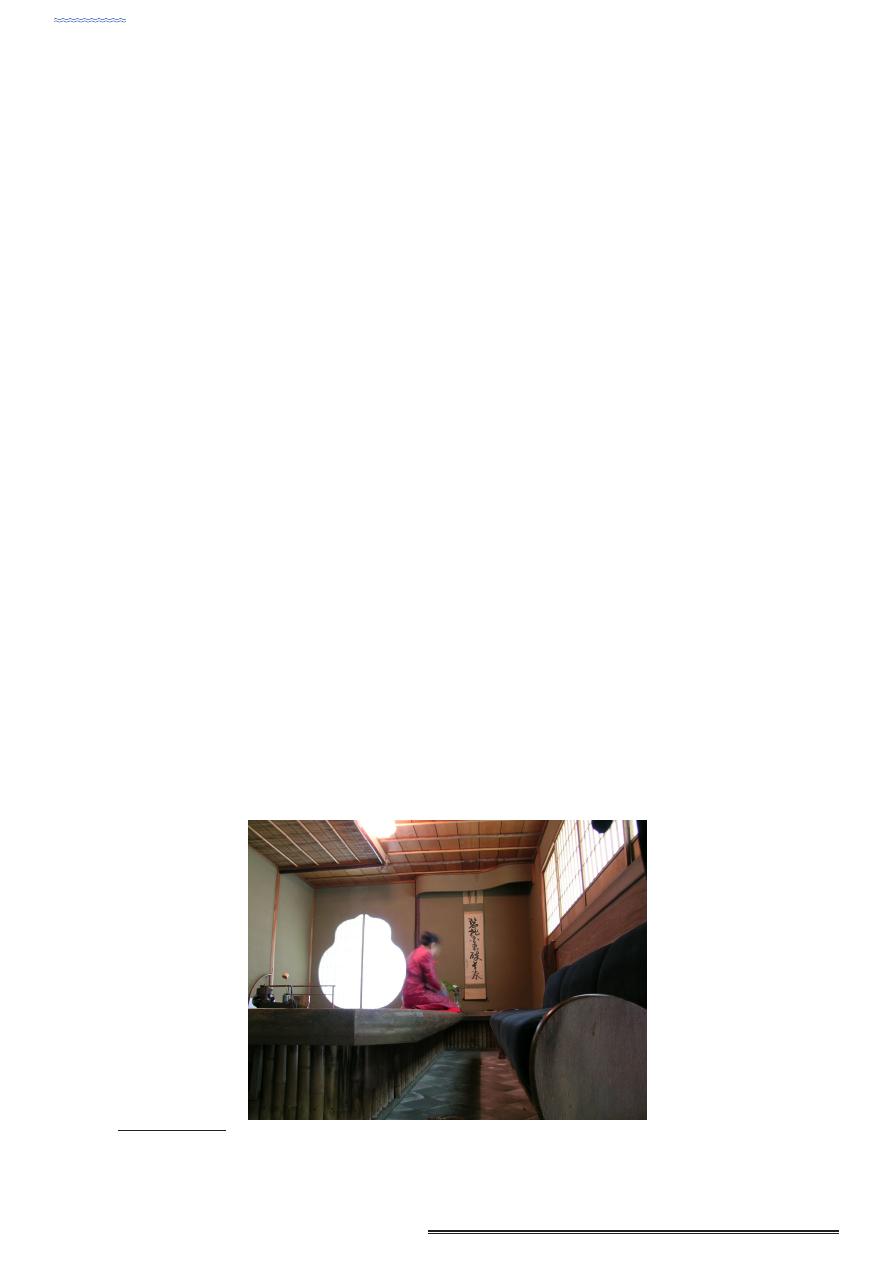
106
INTERNATIONAL JOURNAL OF
ASIA-PACIFIC HERITAGE STUDIES
SUSTAINABLE CONSERBATION OF
ASIA-PACIFIC CULTURAL HERITAGE FOR THE UNESCO CHAIR
이처럼 신문, 잡지라는 공공 미디어를 통해 다화회와 다도 정보가 공유되어, 근
대 부르주아지를 중심으로 하는 다도의 문예적 공공권이 형성되었다고 말할 수
있다.
3.4. 스키야와 다도의 전통 문화화
이상, 스키야는 공원이라고 하는 근대 도시의 물리적인 공공 공간에 출현하게 됨
과 동시에 미디어를 통해 개념적으로도 전통적인 문화로서의 공공성을 획득해
갔다. 즉, 스키야는 물리적으로도 개념적으로도 공공성을 획득하여 공공적인 전
통문화가 되었다고 말할 수 있겠다.
4. 물리적 공간의 변화
4.1. 서양 문화의 도입
스키야 문화가 공공성을 획득해 감과 동시에 실제 공간에는 커다란 변화가 일어
나고 있었다. 먼저, 서양 문화, 근대적인 건축 재료, 설비의 도입이다. 일본에서
는 다다미에 정좌하여 앉는 것이 기본이나, 이를 위해서는 익숙해지는 것이나 훈
련이 필요하다. 그리하여 서양인도 저항감 없이 즐길 수 있도록 의자를 도입하는
것이 계획되었다(그림 8 Chair style tearoom).
또한 앞을 내다본 ‘매우 청결한 가옥’을 실현하기 위해 밝기와 개방성을 중시하
는 방향도 추구되며, 유리와 전기 조명 도입, 또한 환기 계획을 과학적으로 추구
하는 등 다방면에서의 개량이 시험되었다
14 .
14 | 야가사키 젠타로(矢ケ崎善太郎) 「건축가·후지이 고지의 다실과 다도(建築家・藤井厚二の茶室と茶の湯)」
『건축사논취(建築史論聚)』 시분가쿠출판(思文閣出版), 2004
그림 8
Chair style tea
room
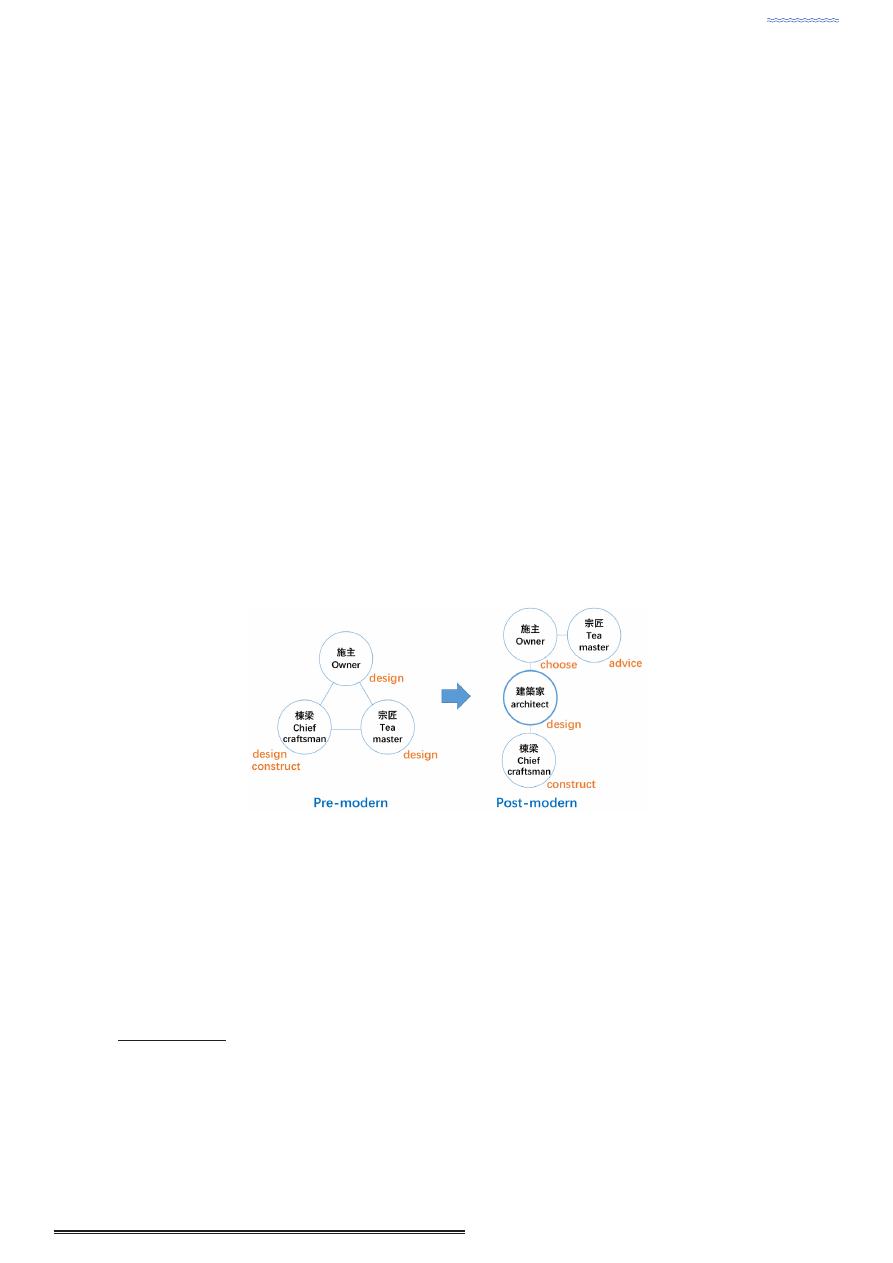
107
INTERNATIONAL JOURNAL OF
ASIA-PACIFIC HERITAGE STUDIES
SUSTAINABLE CONSERBATION OF
ASIA-PACIFIC CULTURAL HERITAGE FOR THE UNESCO CHAIR
4.2. 담당자의 변화
이 물리 공간의 변화는 그 건설자의 변화에도 큰 영향을 미쳤다. 근대 이전에는
시공주의 요망을 다도 스승에게 상담을 받으며 도편수가 이를 실현하는 형식으
로, 시공주 주도, 다도 스승 주도, 도편수 주도로 이루어졌다. 영향력이 때와 상황
에 따라 혹은 그 능력에 맞추어 달라지며, 3자의 관계는 그림 9(Changes of the
person in charge)의 좌측(Pre-modern)과 같이 표현할 수 있다.
근대에 들어와 스키야의 근대화가 요구되던 시기에 대략적으로 아래와 같은 경
위를 따르게 된다. 먼저, 최초로 개량을 하기 위해서는 다도에 대한 전문 지식
을 가진 다도 스승이 힘을 발휘했다. 그 대표로 3대 기즈 소센(
三代木津宗詮,
1862-1939)를 들 수 있다
15 . 기즈는 다도 스승으로서의 지식을 발휘하며 ‘다실
건축가’로서 ‘시대에 순응하는 구법으로 개조’해야 한다는 것을 주장했다
16 . 다
음으로, 다도 지식을 몸에 익힌 근대 부르주아지가 더욱 대담하게 개조해 나아갔
다. 그러나 고바야시 이치조(
小林一三, 1873-1957)의 다실 ‘고사이안(古彩庵)’
에서 볼 수 있는 것처럼, 그 대담한 개조에 의해 과거와의 연속성이 위태로운 다
실도 나타나게 되었다
17 .
15 | 마쓰모토 야스타카(
松本康隆) 「3대 기즈 소센의 직능과 다실의 전체적 파악을 위한 기초적 연구(3代木津宗詮の職能と茶
室の全体的把握のための基礎的研究)」 『일본 건축학회 계획계 문집(日本建築学会計画系論文集)』 일본건축학회(日本建築
学会), No.602, pp191-198, 2006
16 | 기즈 소센(木津宗泉) 「다실의 설계(茶室の設計)」 『다도 전집 권 3(茶道全集 巻の三)』 소겐사(創元社), 1936
17 | 마쓰모토 야스타카(松本康隆) 「근대 다실 평가를 위한 일시론 고바야시 이치조의 다실을 통해
(近代の茶室評価のための一試論 小林一三の茶室を通して)」 『건축사학(建築史学)』
건축사학회(建築史学会), 제 47호, pp31-56, 2006
그림 9
Changes of the
person in charge

108
INTERNATIONAL JOURNAL OF
ASIA-PACIFIC HERITAGE STUDIES
SUSTAINABLE CONSERBATION OF
ASIA-PACIFIC CULTURAL HERITAGE FOR THE UNESCO CHAIR
그리하여 마지막으로 도편수가 전통 건축으로 정리하는 힘을 발휘한다. 그 대표
적인 도편수로 우스이 가이치로(
笛吹嘉一郎, 1898-1969)를 들 수 있다1. 우스
이는 ‘차 특유의 사물을 보는 방법, 와비, 사비와 통하는 심미는 무엇 하나도 외
국을 모방하는 것이 허용되지 않는 엄격함이 있다는 점이 매력적이다’라고 하
며, ‘근대 건축의 진화와 함께 이 엄격함이 없는 자유로운 의도를 바탕으로 설계
된 것이 많다’고 비판하며 시대의 새로운 요청을 받아들이면서도 다실로서의 풍
격을 파괴하지 않도록 노력했다2.
한편으로 도편수가 이러한 힘을 발휘한 데에는 근대의 새로운 담당자인 건축가
의 참여가 크게 영향을 미쳤다. 근대 이후 그림 9의 좌측(Post-modern)과 같은
건축가 중심의 관계로 이행해 가나, 우스이는 그 흐름을 거스르는 방향으로 자
기 개조를 실현한 결과였다. 그는 근대적인 설계 기술을 서적을 통해 독학하는
한편 다도 수행을 통해, 다화회를 열어 다도 스승만큼 다도에 대한 전문적인 지
식을 쌓아갔다. 이렇게 자기 개조에 의해 시공주와 다도 스승의 신뢰를 차지한
것이다.
그러나 이런 것이 가능했던 도편수는 극히 일부로, 근대화라는 커다란 흐름을
바꾸지는 못했다. 이러한 도편수는 점차 사라져갔고, 건축가가 스키야를 담당하
게 되었다. 그리고 요시다 이소야(
吉田五十八, 1894-1974)와 호리구치 스테미
(
堀口捨己, 1895-1984) 등의 건축가가 스키야를 모더니즘 건축으로 탈피시켜
나아가게 된다.
5. 개념적 자리매김의 변화
5.1. 말차 다도의 몰락
그렇다면 이러한 실제 공간을 둘러싼 변화의 배경으로, 스키야의 개념적인 자리
매김이 어떻게 변천을 했을까. 앞서 말차와 전차의 역사를 보고 확인한 것처럼,
전차는 본래 천황, 귀족의 문화였다. 이 때문에 천황 중심의 메이지 유신 정부가
성립한 후에도 일정 시기까지 안정적으로 즐겨왔던 것이다. 한편, 막부의 문화였
던 말차는 그 주요한 지지자를 잃고 부흥을 모색하게 되었다.
18 | 마쓰모토 야스타카(松本康隆) 「우스이 가이치로의 직능과 다실의 전체적 파악을 위한 기초적 연구(笛吹嘉一郎の職能と茶
室の全体的把握のための基礎的研究)」 『일본 건축학회 계획계 문집(日本建築学会計画系論文集)』 일본건축학회(日本建築学
会), No.610, pp.169-176, 2006
19 | 우스이 가이치로(笛吹嘉一郎) 「기쁨의 극치(ご同慶の至り)」 『건설사진신문(建設写真新聞)』 건설사진신문사(建設写真新
聞社), 1959

109
INTERNATIONAL JOURNAL OF
ASIA-PACIFIC HERITAGE STUDIES
SUSTAINABLE CONSERBATION OF
ASIA-PACIFIC CULTURAL HERITAGE FOR THE UNESCO CHAIR
5.2. 말차 다도의 부흥
먼저, 말차 다도의 스승은 천황에게 접근했다. 종래 선 사상에서 시작된 말차 다
도는 불교 사원과의 연계가 강하나, 1880년(메이지 13)의 기타노신사(
北野神
社) 헌다(献茶)를 시작으로 각지의 신사에서 헌다식을 대대적으로 행하며 1887
년(메이지 20)에는 천황에게 직접 헌다하는 것을 실현시키며, 공식 문화로서의
위치를 획득해 간다
21 .
또한 국가 방책에 영합하는 형태로, 다도에 관련된 인물을 부흥시키는 활동도
한다. 이 대표적인 이벤트로 1898년(메이지 31)에 개최된 호타이코쿠 삼백년제
대다화회(
豊太閤三百年祭大茶会)를 들 수 있다22 . 도요토미 히데요시(秀吉)는
대륙 침략을 목적으로 조선에 출병했다. 당시는 청일전쟁과 러일전쟁 사이로, 대
륙 진출을 축으로 하는 내셔널리즘의 대두가 히데요시를 회고하게 했으며, 히데
요시를 현창하는 대다화회의 기획과 연결시킨 것이다
23 .
5.3. 전차 다도의 쇠퇴
대륙 침략이 진전함과 동시에 중국 문화 숭배 경향이 강한 전차 다도가 쇠퇴되
어 갔다. 근대 전차의 실태에 대해서는 불명한 부분이 아직 많으나, 1920년대까
지 어느 정도 성대하게 행해졌다고 생각된다. 예를 들면, 1902년부터 오사카에
서 정기적으로 개최된 저명한 다화회인 18회(
十八会)는 전차도 말차도 사용했
으며
24 , 1921년에 교토에서 개최된 대규모 이벤트인 히가시야마대다화회(
東山
大茶会)에서 준비된 42석 중, 전차석은 14석이었다25 . 또한 1928년에는 오바쿠
산 만푸쿠지(
黄檗山萬福寺) 경내에 바사도(売茶堂)를 기념하는 건물이 세워져,
그 낙성 전차 다화회가 대대적으로 개최되었다
26 . 한편, 이 바사도 낙성 전차 다
화회는 전차 ‘부흥’을 도모하며 개최된 것으로, 당시 전차가 쇠퇴해 있던 것을 뒷
받침하는 것이기도 하다. 그러나, 전차와 관련된 사람들의 노력이 허망하게도,
1931년에는 만주사변이 발발하고, 1937년에는 루거우차오(
盧溝橋) 사건과 대
륙 침략이 진행되며 중국을 숭상하는 문화는 열세를 뒤집지 못했다.
20 | 구마쿠라 이사오(熊倉功夫) 『근대 다도사 연구(近代茶道史の研究)』 일본 방송출판협회(日本放送出版協会), 1980
21 | 『호타이코쿠 삼백년제 대다화회기(豊太閤三百年祭大茶会記)』 호코쿠회다사부(豊国会茶事部), 1898
22 | 구마쿠라 이사오(熊倉功夫) 『근대 다도사 연구(近代茶道史の研究)』 일본 방송출판협회(日本放送出版協会), 1980
23 | 스가 슈지(管宗次) 「근대 오사카의 다화회『18회』(近代大阪の茶会『十八会』)」 『오사카 춘추(大阪春秋)』
106호, pp.54-57, 2002.3
24 | 야가사키 젠타로(矢ケ崎善太郎) 『근대 교토 히가시야마 지역의 별저·주택군의 형성과 풍류 공간에 관한 연구 (近代京都の
東山地域における別邸・邸宅群の形成と数寄空間に関する研究)』 교토공예섬유대학(京都工芸繊維大学) 박사논문, 1998
25 | 「사단법인 전일본전차연맹에 대해(社団法人全日本煎茶道連盟について)」 『전차전서(煎茶全書)』
슈후노토모사(主婦の友社), p.308, 1973

110
INTERNATIONAL JOURNAL OF
ASIA-PACIFIC HERITAGE STUDIES
SUSTAINABLE CONSERBATION OF
ASIA-PACIFIC CULTURAL HERITAGE FOR THE UNESCO CHAIR
5.4. 전후(
戰後) 리큐의 비약
전후에는 센노 리큐의 전통을 잇는 센노 가문을 중심으로 다도가 세계적으로 소
개되었다. 그 배경으로는 3가지의 이유를 들 수 있다. 첫째로는, 센노 리큐는 도
요토미 히데요시의 조선 출병에 반대했다고 이해되어, 평화의 상징으로 적절했
던 점을 들 수 있다. 두 번째로, 당시 일본은 미국에 대해 평화로운 문화 국가 건
설을 어필할 필요가 있었다는 점이 있다. 세 번째로, 다도의 담당자가 근대 스키
샤에서 대중으로 옮겨갔으나, 대중이 지도자로서의 가문을 필요로 했기 때문이
다.
특히 ‘한 잔로부터의 평화로움(Peacefulness through a Bowl of Tea)’이라는
슬로건을 내세워 전 세계에서 제자를 받고 있던 우라센케(
裏千家) 가문(현: 센
소시쓰(
千玄室))는 1946년 당시 원래 가문을 책임지는 젊은 다도 스승으로 미
국 각지에서 다도를 소개하고 보급 활동을 하고 있었다. 그는 최초로 방문한 하
와이에서 ‘다도의 정신으로 일본 국민이 어떻게 평화 문화를 사랑하는지를 이해
시킬 수 있다는 크나큰 역할’
26 을 자각하고 있었다.
5.5. 전후 민주주의가 가져온 ‘평등’
마지막으로, 대중이 이용할 수 있는 다실로 공공 다실이 각지에 설치되었으나,
이 공간은 무의미하게 되었다. 여기에는 전후 민주주의가 철저하게 관계되었다
고 생각된다. 말차 다도에는 많은 유파가 있으나, 모든 유파가 이용할 수 있도록
한다는 사고방식이었다. 그리고 더욱이 다실 이외의 실내 예능에도 사용할 수 있
도록 요구돼, 다실 공간의 개성이 크게 깎아내려졌다
27 . 한편으로는 이 점에서
건축의 모더니즘화와 상성이 매우 좋았던 것도 지적할 수 있겠다. 이에 공공 건
축 특유의 예산 제약이 더해져, 결과적으로 다실은 보다 단순하고 장식이 없는
공간으로 진전해 나아갔던 것이다.
26 | 센 소코(千宗興) 「꿈의 하와이(夢のハワイ)」 『담교(淡交)』 단코사(淡交社), p.4, 1951.4
27 | 나카무라 마사오(中村昌生) 『공공다실:나카무라 마사오의 작업(公共茶室:中村昌生の仕事)』
건축자료연구사(建築資料研究社), 1994

111
INTERNATIONAL JOURNAL OF
ASIA-PACIFIC HERITAGE STUDIES
SUSTAINABLE CONSERBATION OF
ASIA-PACIFIC CULTURAL HERITAGE FOR THE UNESCO CHAIR
6.정리
위를 정리하면, 우선 스키야 문화가 공원과 근대 부르주아지를 매개로 일본의 전
통문화가 되었다. 이 전통 문화화 과정에서 스키야의 서양화, 근대화가 진행되었
다. 이 배경에는 메이지유신의 정권 교체, 전쟁, 국수주의의 대두, 전후 민주주의
등이 영향을 미쳤다. 현재 스키야 건축에는 중국적인 요소, 혹은 한국적인 요소
가 희박하지만 이는 중국적인 색채가 강한 전차적인 요소를 삭제하고, 모더니즘
건축으로 발전해 온 결과이다.
즉, 서양과의 관계뿐만 아니라, 동아시아 내에서의 관계성도 근현대의 전통적 공
간 변화에 크게 영향을 주고 있다고 말할 수 있다. 스키야의 문화유산적 가치를
볼 때, 중세의 중국 선차 문화, 근세의 중국 명청 문인 문화와 조선 문인 문화, 현
대의 서양 모더니즘 운동의 문화유산처럼 다양한 가치를 파악할 수 있다.
문화유산의 확장에 주목하는 것, 그리고 분단된 기존의 유산을 연결해 가는 것,
이것들이 향후 유산을 함께 공유하고, 지속적으로 전해 나아가기 위해 필요하다
고 생각된다.
<부기>
이번 심포지엄 발표자는 대학에 소속된 연구자와
정부의 행정기관에 소속된 행정관으로 나누어진다.
양자와 문화재와의 관계를 단순하게 말하면,
문화재의 가치를 명확히 하는 사람이 연구자이며,
그 가치를 지키기 위한 조치를 내리는 사람이 행정관이라고 할 수 있겠다.
행정관 측에서 ‘핵심적인 가치란 무엇인가’, ‘무엇이 이를 문화재답게 하고 있는가’,
‘핵심적인 가치를 남기는 것이 중요하다’고 말한 내용이 인상적이었다.
예를 들어 나 자신의 연구에 기반하여 말하면, 스키야의 문화적인 가치는
각 시대와 시기에 따라 달라진다. 한편 스키야를 스키야답게 하는 것은 분명히 존재한다.
한마디로 말하자면, 이는 다화회에 사용할 수 있는가 없는가,
혹은 차와 관련된 사람(다도 스승, 스키샤, 차를 즐기는 사람들)이
다실이라고 인정하는 공간인지 아닌지가 중요하다고 할 수 있겠다.
스키야는 현재에도 그 문화가 살아있다는 의미에서 특이하다고 생각될지도 모르겠으나,
이는 무형문화재와 유형문화재가 함께 존재하며
‘살아 있는’ 문화유산이라는 하나의 문화유산의 유형이라고 생각된다.


GROUP
| Kanazawa University
NAME
| Ryuichi Tanigawa
Discussing
Cultural
Heritages
from
East Asian
History in
The 20th
Story


115
INTERNATIONAL JOURNAL OF
ASIA-PACIFIC HERITAGE STUDIES
SUSTAINABLE CONSERBATION OF
ASIA-PACIFIC CULTURAL HERITAGE FOR THE UNESCO CHAIR
Thinking about cultural heritage from
East Asian history of the 20th century
Ryuichi Tanigawa
Kanazawa University
1. Introduction
East Asian modern history cannot be discussed except the history of
colonization by Japan. I think that such a past history should be criticized,
and I feel deeply responsible for the problem in the in-depth discussion of
modernity in East Asia. In this paper, I would like to talk about the modernity
of East Asia and its cultural heritage through the history of two symbolic
buildings built in the first half of the 20th century. One is the Yalu River
Bridge (completed in 1911), which was known as the Congregation Bridge
in 1911. Another one was Supun g Dam (a hydroelectric power plant) led by
Japan Nitrogen Fertilizer Co., Ltd., an emerging conglomerate in Japan. The
two buildings on the Yalu River are indispensable for thinking about East
Asian history in the 20th century, especially Northeast Asia, and the author
thinks the research will be an international cultural heritage in the long run.
This article intends to approach the essential meaning of cultural heritage.
2. Rotation Bridge at Amnok River
In general, the Japanese colonial rule in Korea tends to start after the Korean
annexation in 1910. However, in practice, it began with the establishment
of the Government-General after 1905, when construction projects, such
as large-scale reclamation and dredging, were undertaken at that time. The
construction projects are apparently seen as preparations for the Japanese
colonial rule of the Korean Peninsula, they are a more meaningful procedure.
From the perspective of the East Asian region, it had the aspect of a
massive infrastructure construction project to transport Japanese soldiers
and supplies to the northeast of China. The important point of this project
is a huge bridge of 1,000m length on the Amnok River which is planned to
link the Gyeongui Line and the Andong Line.

116
INTERNATIONAL JOURNAL OF
ASIA-PACIFIC HERITAGE STUDIES
SUSTAINABLE CONSERBATION OF
ASIA-PACIFIC CULTURAL HERITAGE FOR THE UNESCO CHAIR
However, the British Kingdom and the United States, which were reluctant
to expand Japan's influence in northeast China, raised objections to
construction. However, Japan avoided objection by revising the design of
the bridge into a rotating bridge and promoting the project with the slogan
'Euro-Asia Trans-Siberian Through Traffic'. Needless to say, however, this
rosy slogan included Japan's economic and military ambitions.
However, , the rotating bridge at Amnok River has provided many ordinary
persons for fresh experiences after its completion. It is the experience
that the time zone changes when you cross the bridge immediately. People
would have known about the expansion of the Japanese Empire through time
differences, and at the same time, strongly recognized the internationality of
'Euro-Asia Trans-Siberian Through Traffic'. However, this rotating bridge
at Amnok River was destroyed by the fierce air bombing of the US military
during the Korean War after the Japanese defeat. Half of the Chinese
remains that have not collapsed now become heritage sites currently. The
rotating bridge was not a legacy of Japanese imperialism, but rather it was
appropriated as a place to commemorate the efforts of China in supporting
the North Korea during the Korean War, and the atrocities of US troops in
the midst of an aerial bombardment.
3. Supung Dam
The Supung Dam was the largest hydroelectric power plant in the world
at that time. The construction plan was carried out by civil engineers from
Nikitsu, who developed a mountain in North Korea since the late 1920s. They
felt limited in the economic development in Japan and went to colonial Korea
in the 1920s. The idea of the Supung Dam was in line with the guidelines of
the Japanese empire to integrate the entire empire of 'Korea and Manchuria
are Inseparable' and 'Japan and Korea as one body'. The Supung Dam was
the largest and last great development in Japanese colonial developments
and symbolized the expansion of the Japanese Empire during the Asia
Pacific War.
The history of the Supung Dam after the Japanese defeat is also very
interesting. At first, the Supung Dam lost its generator to the Soviet Union.
The floods and the Korean War that began on 25 June 1950 when North
Korea invaded the South Korea, caused great damage on the Supung Dam,
but in the course of reconstruction, the high-ranking officials of the North
seemed strongly aware of its importance about the economic value. The
symbol of the Japanese Empire was reborn as a symbol of the North Korea.
The investigations about the reconstruction records led by North Korea

117
INTERNATIONAL JOURNAL OF
ASIA-PACIFIC HERITAGE STUDIES
SUSTAINABLE CONSERBATION OF
ASIA-PACIFIC CULTURAL HERITAGE FOR THE UNESCO CHAIR
after the Korean War showed that the Korean engineers who learned the
Japanese technology in the colonial period were denied and the engineers
with the Soviet technology were welcomed for the "reincarnation" of the
Supung Dam. Though the Supung Dam is still operating, it seems that it
does not have been a historical heritage of North Korea. The Supung Dam
was a symbol of the Japanese empire, but currently, it is an infrastructure
that has supported the ordinary lives of people as well as the industry of
North Korea since the Korean Independence. We would like to confirm that
the method of interpreting this dam has been done in various contexts.
4. Multiplicity in the Interpretation of Cultural Heritage
The huge structures, in this case, are historical buildings that exist along
the river border between China and North Korea called the Amnok River.
The Amnok River Bridge is a product of Japanese imperialism, which was
constructed by emphasizing the modernization of Northeast Asia. The
Supung Dam can be said to be a building that embodies the desires of
Japanese engineers and the ideology of the Asia-Pacific War. Therefore, it
is an important resource to record the Japanese imperialism and colonialism
and to think about its essence in the future.
However, as we have seen, this perception is not enough. This implies that the
meaning and value of the structure, and the interpretation of pluralities seem
to be contradictory. The more important social infrastructures that support
modern society, the more likely it is that these multiple interpretations will
arise. A huge structure cannot have such a complex meaning. These two
constructions are one of the typical examples.
5. Conclusion
According to Inaba Nobuko, who has long been involved in World Heritage
sites, the meetings to discuss world heritages have recently become more
politicized. At this time, the value of the cultural heritage is closed to the
local values of the country and the region. Cultural heritages show a strong
affinity with nationalism. What I would like to think about is to respect
local values and building up some global value there. One direction to deal
with this nationalism is to imagine a remote future.
The outstanding universal value, which is one of the world cultural heritage
value standards, is the value to endure the stream of time. In other words,
the outstanding universal value of cultural heritage is a value that we must
think with our future.

118
INTERNATIONAL JOURNAL OF
ASIA-PACIFIC HERITAGE STUDIES
SUSTAINABLE CONSERBATION OF
ASIA-PACIFIC CULTURAL HERITAGE FOR THE UNESCO CHAIR
Another way to cope with this is to carefully select the numerous historical
meanings of the building. It is important not to organize the meaning of the
building in one interpretation to understand heritages but to attach a lot of
interpretations that are the basis of the fact while grasping the fundamental
facts. What is important here cannot take control of hegemony through
this interpretation. It is natural that the interpretation of cultural heritage
is different, and the attitude of taking a flexible and long-term view of its
viability is to develop a cooperative attitude. In other words, looking at
cultural heritage is a democratic development of our own. It is natural that
the interpretation of the cultural heritage is obvious, and it is to cultivate
the attitude of coping jointly with the flexible and long-term perspective on
the pluralism. In other words, we view our cultural heritage as democratic
maturity. At the core of UNESCO's goal is the emphasis on international
peace and the promotion of human welfare. Cultural Heritage In the history
of nationalism, we need to reconfirm UNESCO's ideology of international
peace and human welfare.
We think that there are an essential meaning and a role of the cultural
heritage in this ideology of UNESCO which operates the World Heritage
site. It is a valuable ideology that always needs to be conscious.
The organizer translated my article into Korean version
and then summarized it in Korean.
Professor Kim Young-Jae made an English summary
based on the Korean summary.
If you would like to learn more about my thesis,
please refer to my original text.

119
INTERNATIONAL JOURNAL OF
ASIA-PACIFIC HERITAGE STUDIES
SUSTAINABLE CONSERBATION OF
ASIA-PACIFIC CULTURAL HERITAGE FOR THE UNESCO CHAIR
20世紀の東アジア史から文化遺産を考える
谷川 竜一
金沢大学
1. はじめに
東アジアの近代史は、日本による植民地化の歴史を抜きにしては、議論するこ
とができない。私自身は、そうした日本の過去は批判せねばならないと考えて
いるし、日本人が東アジアの近代を語るときには、そうした責務があると考え
ている。このことを最初に確認した上で、本稿では20世紀前半に建設された二
つの象徴的な建造物の歴史を通して、東アジアの近代とその文化遺産を考えた
い1 。
一つは1911年に竣工した鴨緑江橋梁――戦前の日本においては鴨緑江の回転橋
としてよく知られた橋――である。もう一つは、実質的には日本の新興財閥で
ある日本窒素肥料株式会社の主導で計画が始まり、1941年に稼働を始めた水豊
水力発電所だ。『図01 地図』
1 | 鴨緑江橋梁については次の論文を参照。谷川竜一「境界を操る/境界に操られる建造物-鴨緑江の回転橋」(荒川歩、川喜田敦子、谷川
竜一、内藤順子、柴田晃芳編『<境界>の今をたどる』東信堂、2009年、pp.170~185)。
水豊ダムについては次の論文を参照。谷川竜一「流転する人々、転生する建造物 ―朝鮮半島北部における水豊ダムの建設とその再生―」
(『思想』No.1005、岩波書店、2008年、pp.61~81)。
図 1
「Google Map
2018」
現在それらは両方とも朝鮮民主主義人民共和国(以下、北朝鮮)と中華人民共
和国(以下、中国)の国境にあるために、韓国の人々には馴染みのないものだ
ろう。鴨緑江の橋梁は中国国内では文化遺産になっているとはいえ、その主な
対象は中国人だ。また、水豊ダムは文化遺産として認識されておらず、文化遺

120
INTERNATIONAL JOURNAL OF
ASIA-PACIFIC HERITAGE STUDIES
SUSTAINABLE CONSERBATION OF
ASIA-PACIFIC CULTURAL HERITAGE FOR THE UNESCO CHAIR
文化遺産未満の建造物と言える。しかしこれら鴨緑江にまたがる二つの建造物
は、20世紀の東アジア――特に北東アジアの歴史を考えるには不可欠なもので
あり、将来的には国際的な文化遺産となり得ると私は考えている。今日の発表
では、それらを対象にして、文化遺産の本質的な意味に接近したい。なお、そ
れぞれの建造物の名称は時代や地域により異なるが、詳細に論じると複雑にな
りすぎるため、概ね現在の英語表記に従い、歴史的な文脈からそれらを論じる
際には当時の日本植民地における呼び方で統一することとする。
2. 鴨緑江の回転橋
一般に、日本による韓国の植民地化は1910年の韓国併合以降に始まるとみなさ
れる傾向がある。しかし、実質的には1905年以降の統監府の設置に始まる。
例えば釜山や仁川の港湾整備などはその時期の大規模建設プロジェクトであっ
た。釜山や仁川の税関庁舎、港湾の大規模な埋立てや浚渫などがこの時期に行
われた。
これらの建設プロジェクトは、日本と韓国という二国間の関係から見ると、確
かに日本による朝鮮の植民地支配のための事前準備のように見えるが、それ以
上の意味がある。東アジア大の広い視野でみると、そのことは次のように、よ
り明確になるだろう。例えば、日本は1904年~1905年の日露戦争を契機にし
て朝鮮半島沿岸に灯台を多く建設し、釜山と京城(現・ソウル)を結ぶ京釜線
や、京城と義州を結ぶ京義線などを引いた。しかしそれだけにとどまらず、日
本は同じ時期に京義線の向こう側の中国の安東と奉天(現在の丹東と瀋陽)を
結ぶ安奉線の建設を行っていた。日露戦争は、実は日本から中国東北地方に日
本の兵士や物資を輸送するための巨大インフラ建設プロジェクトとしての側面
を持っていたのだ。
そのプロジェクトにおいて重要な要(かなめ)となったのが、京義線と安奉線
を繋ぐために計画された鴨緑江に架かる長さ1000mの巨大な橋だ。この橋も日
本軍によって日露戦争中に計画が始まったもので、戦争が終わってもその計画
と建設は継続された。
橋は、興味深いことに、当初の計画では回転橋ではなかった。しかし中国東
北地方における日本の影響力拡大を嫌がったイギリスやアメリカが建設に反対
するクレームをつけた。当時は帆船が多く、この橋の下を中国のジャンク船や
その他の船が通れなくなるのは問題だという苦情であった。日本政府はそれを
無視できず、結局ジャンク船を通すことができるように橋を回転橋に設計し直
し、イギリスやアメリカのクレームをかわしたのであった。完成したのは1911
年10月である。
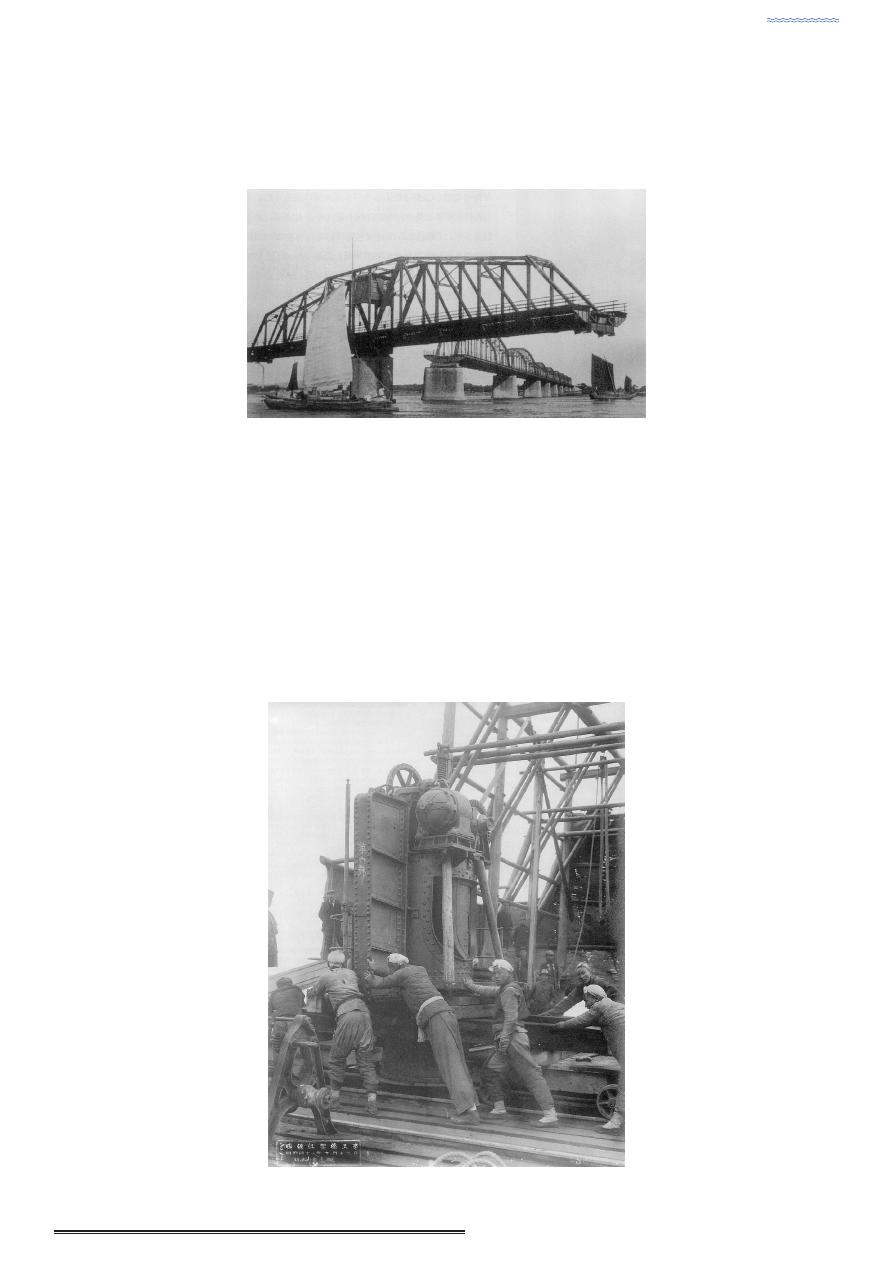
121
INTERNATIONAL JOURNAL OF
ASIA-PACIFIC HERITAGE STUDIES
SUSTAINABLE CONSERBATION OF
ASIA-PACIFIC CULTURAL HERITAGE FOR THE UNESCO CHAIR
(図02 Rotating Amrok(Yalu) River bridge completed in 1911(間組百年史編纂
委員会『間組百年史』1889-1945、株式会社間組、1989年、168頁))
図 2
Rotating Amrok
(Yalu) River bridg
-e completed in
1911(間組百年史
編纂委員会『間組
百年史』
1889-1945、株
式会社間組、1989
年、168頁)
この橋は当時も今も、日本が建設したものとして知られているが、実は日本だ
けの力で建設できたわけではない。橋の建設は20世紀初頭の日本の未熟な工
学技術では難しく、日本の技術者たちは橋梁の設計だけでなく材料となる鉄骨
まで、アメリカに外注していたのだ。そして施工労働は主に中国人たち――い
わゆる苦力――が担った。(図03 Chinese led by 揚国棟 and their caisson
construction work(間組百年史編纂委員会『間組百年史』1889-1945、株式会
社間組、1989年、174頁))
図 3
Chinese led
by 揚国棟 and
their caisson
construction
work(間組百年史
編纂委員会『間組
百年史』
1889-1945、株
式会社間組、1989
年、174頁))
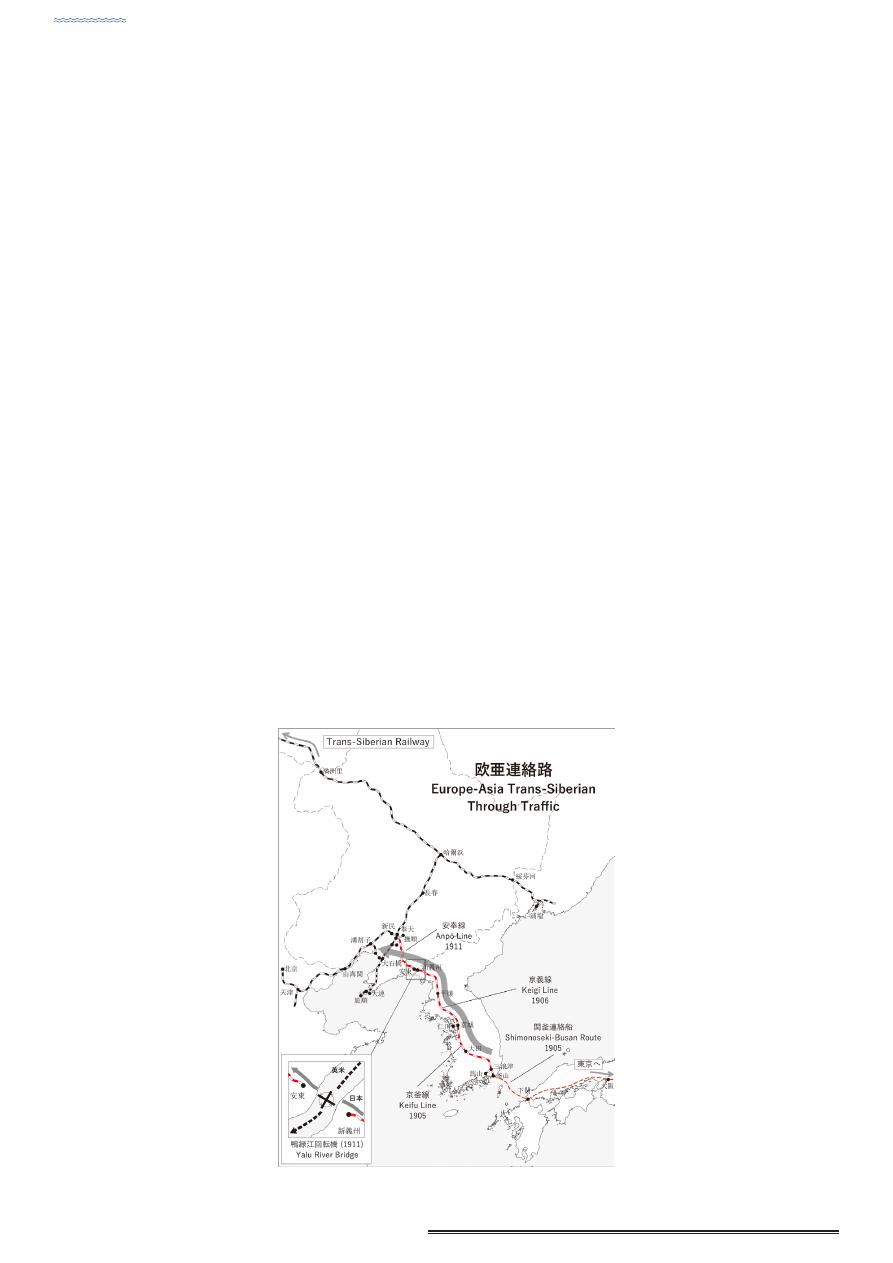
122
INTERNATIONAL JOURNAL OF
ASIA-PACIFIC HERITAGE STUDIES
SUSTAINABLE CONSERBATION OF
ASIA-PACIFIC CULTURAL HERITAGE FOR THE UNESCO CHAIR
このように記すと、多くの人はすぐに、「中国人たちを雇ったのは、彼らが安
い植民地労働力だからだ。日本による植民地的な搾取だ」という風に判断を急
ぐかもしれない。もちろんその側面もあったが、この点においても、それだけ
で話を終わらせると、当時の北東アジアの興味深い状況を見逃してしまう。こ
の施工の重要部分を担当したのは楊国棟という中国人であった。彼は、苦力を
率いた請負業者の親分で、イギリス人の建設技術者のもと、長く中国で鉄道建
設を担ってきた人物である。よく知られているように、中国においては19世紀
半ば以降、列強の進出下で多くの開発プロジェクトが進められていた。そうし
た状況で、一部の中国人たちは、日本人たちが持っていない技術を欧米人たち
から学んでいた。楊国棟もこの一人であったと考えられる。そうすると鴨緑江
橋梁の建設工事を担った楊国棟を、苦力という単純労働者の親分として見るだ
けでは不十分だ。彼は祖国と欧米との間に立って高度な建設技術を蓄積してい
たのであり、鴨緑江橋梁はそうした人々の経験があってこそ完成したと、後世
の私たちは考えるべきだろう。
次に興味深いことは、日本政府がこの橋を建設するときに国内外で使った宣伝
文句である。日本はこの橋を単なる鴨緑江に架かる巨大な橋として国内外で
宣伝したわけではなかった。当時、報道などでよく用いられたのは「欧亜連絡
路」(Euro-Asia Trans-Siberian Through Traffic)というかけ声である。この
「欧亜連絡路」とは何だろうか。(図04 Euro-Asia Trans-Siberian Through
Traffic)
図 4
Euro-Asia
Trans-Siberian
Through Traffic

123
INTERNATIONAL JOURNAL OF
ASIA-PACIFIC HERITAGE STUDIES
SUSTAINABLE CONSERBATION OF
ASIA-PACIFIC CULTURAL HERITAGE FOR THE UNESCO CHAIR
ここで目を日本国内に向けてみたい。日本国内では、1889年に東海道本線が完
成するなど、幹線鉄道の整備が進んでいた。そうした幹線鉄道を使うと、東京
の新橋から下関まで簡単にいくことができる。そしてそこから船に乗れば朝鮮
半島の南の入り口・釜山はすぐだ。そして釜山から列車に乗って京城、平壌、
そして新義州まで行くことができる。新義州からは鴨緑江を渡って安奉線に入
り、瀋陽まで出た後、中国東北地方を北上すれば、どこに繋がるだろうか。そ
れはロシアが建設したシベリア鉄道につながり、その遠方にはモスクワやパリ
に繋がるのだ。つまり、欧亜連絡路とは、このように鉄道や船舶ネットワーク
を建設し、ヨーロッパ(欧)に、日本を中心とする北東アジア(亜)を繋げる
という意味であった。そして日本は、これは日本のみが利益を得る工事ではな
く、朝鮮や中国をもヨーロッパに繋げるプロジェクトなのだと喧伝(けんで
ん)したのである。
日本はこの欧亜連絡路という国際的かつ旅情を醸し出す言葉を使いながら、鴨
緑江の橋梁建設を進めたのであった。しかしそうしたバラ色のスローガンのな
かに、日本が経済的・軍事的な下心を含ませていたことは言うまでもない。例
えばこの幹線路を用いて、中国東北地方の石炭などの鉱産物と、鴨緑江上流の
大森林地帯の木材、朝鮮南部の米を結びつけようとする計画などがあった。中
国は強く反対したが、日本は欧亜連絡路というスローガンでそうした声をかき
消したり、無視したりして、鴨緑江橋梁や安奉線の建設を強行していったので
ある。
ところでこの鴨緑江の回転橋は、完成後に多くの一般の人々にある新鮮な体験
を提供することになった。それは橋を渡ることで時間帯が変わるという体験で
ある。朝鮮側の新義州から中国側の安東に渡ると、人々は時計の針を1時間分戻
した。これはおそらく近代化が進む日本や朝鮮の人々にとって、極めて印象深
い体験だったと思われる。人々は時差を通して日本帝国の広がりを知っただろ
うし、同時に「欧亜連絡路」の国際性を強く認識したことだろう
2 。鴨緑江橋
梁は、地球全体における日本帝国の時空感覚を、渡る者に意識させる建造物で
もあったのだ。
しかしこの鴨緑江の回転橋は、日本の敗戦後、朝鮮戦争の時にアメリカ軍の猛
烈な空爆を受け、落ちてしまった。すぐ隣に日本が1943年に建設していた橋は
朝鮮戦争の後も残ったので、金日成を始めとする北朝鮮の指導者たちはこの橋
を使って中国と行き来してきた。(図05 (NARA 80-G-Box1731-423495))それ
では、切れてしまった回転橋の方はどうなったのだろうか。現在、落ちずに残
った中国側半分の部分が文化遺産となっている。日本の帝国主義の遺物として
扱うだけでなく、朝鮮戦争を通じて北朝鮮を助けた中国の努力と空爆を行
2 | 例えば『読売新聞』の1913年6月17日の「鴨緑江の鉄橋」という記事などを読むと、人々の様子がよくわかる。
124
INTERNATIONAL JOURNAL OF
ASIA-PACIFIC HERITAGE STUDIES
SUSTAINABLE CONSERBATION OF
ASIA-PACIFIC CULTURAL HERITAGE FOR THE UNESCO CHAIR
ったアメリカ軍の残忍さを記念する場となっている。中国の「愛国教育」の場
所となっているわけである。(図06 橋の切断部分)
図 5
NARA
80-G-Box
1731-423495
図 6
橋の切断部分
125
INTERNATIONAL JOURNAL OF
ASIA-PACIFIC HERITAGE STUDIES
SUSTAINABLE CONSERBATION OF
ASIA-PACIFIC CULTURAL HERITAGE FOR THE UNESCO CHAIR
3. 水豊ダム
次に鴨緑江にあるもう一つの巨大建造物――水豊ダムを紹介したい。水豊ダム
は、1941年に発電を始めた施設で、ダムの長さ900m、高さ106m、発電能力
70万kW(最終的には60万kW)を誇る、当時世界最大級の水力発電所であっ
た。30年後の1973年に、韓国の国家プロジェクトとして建設された昭陽江ダム
が20万kWであったことを考えれば、水豊ダムの大きさがわかることだろう。ち
なみにこの昭陽江ダムにも、水豊ダムの技術者が関係しているが、これは別の
機会に考察したい。(図07 水豊ダム 竹林孝一氏提供)
図 7
水豊ダム
竹林孝一氏提供
さて水豊ダムの建設は、実は朝鮮総督府や「満洲国」政府の技術者が行ったも
のではない。その建設計画は、1920年代後半から北朝鮮の山々を開発してきた
日窒の土木技術者たちが進めた。日窒の技術者たちは日本内地における開発に
限界を感じ、1920年代に植民地・朝鮮へと出て来た。そして日本ではできない
ような巨大な電力開発を進めたのである1 。彼らにとって朝鮮半島は近代的な
技術を思う存分ふるうことのできる夢のような場所であった。このことは、見
方を変えれば、現地の人々に対して大変無責任な姿勢を持っていたとも言えよ
う。
しかも、この水豊ダムのアイデアは、戦争によって支配地を拡大していく日本
帝国の方針ともマッチしていた。具体的に言えば、水豊ダムは鴨緑江という「
満洲国」と植民地・朝鮮の国境河川に位置していたため、いわば「満州国」と
朝鮮の二つの間をつなぐような建造物であった。そのため水豊ダムは、当時の
鮮満一如(“Sen-Man ichinyo” (Korea and Manchuria are inseparable))や
内鮮一体(“Nai-Sen ittai” (Japan and Korea as one body))という帝国全体
3 | 谷川竜一「朝鮮巨大電源開発の系譜―大井川から赴戦江へ―」(中川理編『近代日本の空間編成史』思文閣出版、2017年、pp.369~402)

126
INTERNATIONAL JOURNAL OF
ASIA-PACIFIC HERITAGE STUDIES
SUSTAINABLE CONSERBATION OF
ASIA-PACIFIC CULTURAL HERITAGE FOR THE UNESCO CHAIR
を一体化していこうとする日本帝国の指針とも合致するものであったのだ。
しかも、水豊ダムは周辺地域に豊富な電力を配分する計画を伴っていた。具体
的には朝鮮半島北部から中国の遼東半島に至る地域に、巨大な工業地帯の建設
計画が立てられた。もちろん工業地帯は、工場だけを建てても意味がない。工
業生産を進めるための資源を必要とする。当時、資源と言えば東南アジアが注
目されていた。つまり水豊ダムが後押しした日本の植民地における工業化は、
当時東南アジア方面への進出・侵略を考えていた日本帝国の指針とももちろん
合致することになったのである。しかし、水豊ダムが発電を始めてわずか4年後
に、帝国は崩壊することとなった。
このように、水豊ダムは日本の植民地開発における最大かつ最後の巨大開発で
あり、アジア太平洋戦争時の日本帝国の拡大精神を示すシンボルでもあった。
建設に際しては、犠牲者も多く出たという。特に多くの朝鮮人や中国人などの
植民地労働力が動員され、彼らに苛酷な労働のしわよせがいったようだ
4 。しか
も多くの当時のメディアは、水豊ダムを事例にして日本の技術が欧米に負けて
いないことを誇示した。しかしながら実際は、水豊ダムの建設においてアメリ
カの建設機材やドイツの技術に多くを依存していたのである。以上のような苛
酷な労働や自国技術の不十分さなどの日本にとって都合の悪い事実は、メディ
アで語られることはほとんどなかった。
ところで、敗戦以後の水豊ダムの歴史も極めて興味深いものがある。南北が分
断された後も、水豊ダムはしばらくの間、韓国に送電していた。しかし朝鮮戦
争前に送電がストップし、韓国側は電力不足を露呈することになった。逆に北
朝鮮では電力があまったとも言われている。実際、日窒の技術者たちが開発し
た水豊ダムを含む巨大水力発電所群は、朝鮮半島北部に集中していた。そのた
め当時の北朝鮮には十分な電力があったと考えられる。そしてそうした電力の
恩恵は、独立間もない北朝鮮社会においては非常に重要だったはずだ。しか
もソ連をはじめ社会主義を掲げる国や地域において、電力開発は国家建設の前
提のようなものだった。そのため社会主義的イデオロギーに、水豊ダムのよう
な世界最大級の水力発電所が利用されないはずはなかった。具体的に見てみよ
う。
まず、水豊ダムは敗戦時にソ連に発電機を奪われた。そして洪水や朝鮮戦争で
大きな被害を受けたが、そこから復興していく過程で、北朝鮮の政府高官たち
はその重要性を強く認識したようだ。なぜなら、この時期に北朝鮮の国章に、
水豊ダムが描きこまれることになったからだ。大日本帝国のシンボルは、北朝
鮮のシンボルへと転生――生まれ変わったのである。朝鮮戦争後の北朝鮮の復
4 | 朝鮮の開発に従事した労働者の問題などは、広瀬貞三氏が長く研究をしておられる。広瀬貞三「「満州国」における水豊ダム建設(The
Construction of the Sup’ung Dam in Manchukuo)」(『新潟国際情報大学情報文化学部紀要』6、2003)など。

127
INTERNATIONAL JOURNAL OF
ASIA-PACIFIC HERITAGE STUDIES
SUSTAINABLE CONSERBATION OF
ASIA-PACIFIC CULTURAL HERITAGE FOR THE UNESCO CHAIR
復興記録を調べていると、この水豊ダムの「転生」にあたって、植民地時代に
日本的な技術を学んだ朝鮮人技術者たちが否定され、代わりにソ連的な技術を
持った技術者たちが歓迎されていく様子が記されている。単にシンボルとして
だけではなく、それに関連する技術体系も移り変わったと考えられるだろう。
現在も水豊ダムは稼働しているが、北朝鮮の歴史的遺産にはなっていないよう
だ。もちろん、北朝鮮で最も重要な水力発電所であることは間違いない。以上
の歴史を知れば、この水豊ダムを日本帝国のシンボルとして見るだけでは不十
分であることがわかるだろう。独立以後の北朝鮮の工業はもちろん、人々の暮
らしも支えてきたインフラストラクチャーであるのだ。このダムの解釈の仕方
も、様々な文脈のなかに開かれているのである。(図08 北朝鮮の国章(『조선
중앙년감
(1995)루겨48호』펑양종합인쇄공장、1995년、口絵))
図 8
北朝鮮の国章
(『조선중앙년감
(1995)루겨48
호』펑양종합인쇄
공장、
1995년、口絵)
4. 文化遺産の解釈の複数性
今回事例としてあげた巨大建造物は、いずれも鴨緑江という中国・北朝鮮の国
境河川に存在する歴史的な建造物だ。鴨緑江橋梁は北東アジアの近代化を謳い
つつ建設された日本の帝国主義の産物であり、水豊ダムは日本の技術者たちの
欲望と、アジア・太平洋戦争時のイデオロギーを体現したような建造物と言え
よう。したがって日本の帝国主義や植民地主義を記録し、その本質を今後も考
え続けていくための重要なリソースなのである。ただし本論で見たように、そ
うした認識のみでは十分ではない。
128
INTERNATIONAL JOURNAL OF
ASIA-PACIFIC HERITAGE STUDIES
SUSTAINABLE CONSERBATION OF
ASIA-PACIFIC CULTURAL HERITAGE FOR THE UNESCO CHAIR
例えば、鴨緑江橋梁には楊国棟ら、高い技術を持っていた中国人労働者が関わ
った。また、アメリカの鉄骨技術も不可欠であった。単純な日本批判に集中し
すぎると、楊国棟が中国の近代史のなかで培った高度な技術を持っていたこと
や、日本がそれほど高い工学技術を持っていなかったという当時の実際的な状
況を見失ってしまう。
さらに重要なことは、北朝鮮と韓国の独立、そして朝鮮戦争という北東アジア
の大事件が、それぞれの建造物にさらなる意味を付け加えたことだ。中国はこ
うした意味をうまく使って、「愛国教育」に鴨緑江橋梁を利用している。その
効果は次のように説明できるだろう。鴨緑江の回転橋は、切り落とされたまま
保存されているからこそ、北朝鮮と中国が昔つながっていたという過去を、そ
れを見る国民たちに想起させる。そして一方で橋の暴力的な切断面を残して国
民に見せることで、二国間の繋がりを暴力的に断ち切ったアメリカ軍の残忍さ
を示すことができるのだ。橋が切断されたまま保存されているために、橋の歴
史的意味――すなわち二国を繋げる/相互に助け合うという意味――が、より
強く示唆されているわけだ。(図09 鴨緑江橋梁)
図 9
鴨緑江橋梁
一方の水豊ダムは、もはや日本植民主義の記憶というよりは、社会主義国家の
イデオローグに沿う重要な建造物として扱われている。したがって北朝鮮の人
々に、「現在の水豊ダムは日本植民地主義を物語る歴史的建造物である」と言
っても、むしろその意味は伝わりにくいかもしれない。彼らは自分たちの国が
作った建造物だと思っている可能性が高い。この意味の転換にあたっては、北
朝鮮の人々自身の努力が大きいだろう。水豊ダムは第二次大戦や朝鮮戦争、時
々の洪水の被害を蒙ったが、北朝鮮の人々はその都度懸命に水豊ダムを修理し
て乗り越えてきた。そうした過程を経て、水豊ダムは「私たち北朝鮮の人間た
129
INTERNATIONAL JOURNAL OF
ASIA-PACIFIC HERITAGE STUDIES
SUSTAINABLE CONSERBATION OF
ASIA-PACIFIC CULTURAL HERITAGE FOR THE UNESCO CHAIR
たちが造り直したのだ」という感覚が、自然に生まれたのではないかと私は考
えている。そして実際に、技術者や技術に対する考え方も、旧東側諸国の技術
が入ってくるなかで切り替わった。つまり水豊ダムには、日本帝国のシンボル
という意味だけでなく、その上に新しい独立国家としての北朝鮮の出発とその
過程が刻み込まれているのだ。(図10 「われらのほこり―水豊発電所」と書か
れている。北朝鮮のプロパガンダ雑誌『雑誌朝鮮』1958年)
図 10
「われらのほこり―水
豊発電所」と書かれ
ている。北朝鮮のプ
ロ パ ガ ン ダ 雑誌『 雑
誌朝鮮』1958年
以上の議論は、建造物に対して、重層的な意味や価値、互いに矛盾するような
複数の解釈が付与されることを示している。近代社会を支える重要なインフラ
ストラクチャーであればあるほど、そのような複数の解釈を生む状況が生まれ
るだろう。巨大な構造物はこうした複合的な意味を持たざるを得ない。今回取
り上げた二つの建造物はそうした事例の典型的なものなのだ。
5. 結論
世界遺産に長く関わってきた稲葉信子よれば、世界文化遺産の議論の場が近
年、より政治化しているという1 。文化遺産がナショナリズムと高い親和性を示
しているのだ。そしてそれは多くの人も感じていることだろう。例えば近年は
工業施設なども文化遺産となっていて、それを見て一部の人々は高い工業技術
に国の「誇り」を感じている。
5 | 稲葉信子「世界遺産条約の今後――未来の遺産概念の構築に向けて」(『世界遺産学研究』vol.2、筑波大学大学院人間総合科学研究科世
界遺産専攻・世界文化遺産学専攻、2016年、p.1)

130
INTERNATIONAL JOURNAL OF
ASIA-PACIFIC HERITAGE STUDIES
SUSTAINABLE CONSERBATION OF
ASIA-PACIFIC CULTURAL HERITAGE FOR THE UNESCO CHAIR
その背景には、近代国家が他の国家と相互に競争しつつ科学技術を高めてきた
歴史があるからだろう。しかし近代化を一方向の進歩のレースのように捉え
ることは、単純な理解と言わざるを得ない。そして危険なことは、そうした「
誇り」がナショナリズムへとスムーズに連結してしまうことだ。その「誇り」
は、結局その国や地域の内部の人々しか共有できない。そのとき、文化遺産の
価値はその国や地域のローカルな価値として閉じてしまう。文化遺産は、他者
を都合よく忘れ、自画自賛をするためのツールなのだろうか。そんなものでは
ないだろう。
私が考えたいことは、ローカルな価値を大切にした上で、そこからどのような
ユニバーサルな価値を構築するのか、という点だ。ナショナリズムに流されず
に、連帯や共存の思想を文化遺産から導き出すこと、と言い換えてもいい。し
かしながらローカルな価値を強調すると、ナショナリズムと結びつきやすい上
に、世界文化遺産制度が求める顕著な普遍的価値と溝が生じる可能性がある。
このジレンマを乗り越える方法は、私にはすぐには思いつかない。そのなか
で、二つのことを当面の対処法として私は続けたいと考えている。
一つの対処法は、遠い将来の世界を想像してみることだ。そして、その未来社
会において、それらの建造物がどのような文化遺産となっているだろうか、と
あれこれ考えてみることだ。文化遺産は、人々に過去を強く意識させるが、未
来については多くを語らない。しかも文化遺産は、現代の制度的産物であり、
極めて即物的なメディアである。文化遺産のことを私たちが語る時、自動的に
ナショナリズムに結びつきやすい理由は、それが背景にあるのではないか。つ
まり、そうした文化遺産の特徴に私たちが無頓着であるため、現代ばかりにこ
だわって、未来の社会について責任を持って考えていないからではないか。
例えばこれから100年後に東アジア共同体のようなものができていて、ナショ
ナリズムよりも地域における生活共同体などが重視されているとしよう。その
とき、鴨緑江橋梁や水豊ダムが現在持っているような愛国教育や国民統合に役
立つ象徴的意味は、いま以上に必要とされているとは考えにくい(もちろんそ
こに至るためには、日本は過去の歴史と真摯に向き合い、近隣諸国に対して誠
意ある態度で臨まねばならないが)。
逆に未来の東アジアにファシズムなどが再度台頭したとすれば、どのように文
化遺産は機能するだろうか。文化遺産は単なる過去の遺物ではなく、未来に資
する考え方を提供するというのが、その建前(たてまえ)でもあるはずだ。鴨
緑江橋梁などは、日本植民地主義や戦争を事例にして、暴力的な支配や戦争の
恐怖・残虐さを示す文化遺産である。だとすれば、その反省はきちんと生かさ
れて、未来のファシズム体制に対しても有効に機能しているだろうか。単に日
本の過去を撃つためだけの文化遺産として認識されているのであれば、それは

131
INTERNATIONAL JOURNAL OF
ASIA-PACIFIC HERITAGE STUDIES
SUSTAINABLE CONSERBATION OF
ASIA-PACIFIC CULTURAL HERITAGE FOR THE UNESCO CHAIR
未来社会において建設的な意味をもたず、むしろ時の政権に逆利用されかねな
い。
世界文化遺産の価値基準の一つである顕著な普遍的価値とは、このような時間
の流れに耐える価値である。言い換えれば、文化遺産の顕著な普遍的価値と
は、私たちの未来像とセットで考えるべき価値なのだ。
もう一つの対処法は、建造物が持ついくつもの歴史的な意味を、丁寧に拾い上
げていくことである。鴨緑江の橋梁は日本の帝国主義のシンボルでもあった
が、実はいくつもの歴史的かつ国際的な技術が混ざり合ってできていた。欧亜
連絡という言葉も完全なウソとするには無理がある。橋が北東アジアとヨーロ
ッパを結ぶ近代的なインフラストラクチャーであったことも事実だ。また、資
料によれば、1934年の春には2万人もの人が、花見をするためにこの橋を往来
したという。したがって橋は、新義州と安東の人々の生活や娯楽のためのイン
フラストラクチャーでもあった。こうした歴史的な事実は、様々な文脈につな
がっていくことだろう。建造物の意味をわかりやすい一つの解釈にまとめてし
まうのではなく、基本的な事実を押さえつつも、その枝葉となる解釈を多くつ
けたしていくことが大切だ。
しかし、こうした多様な意味を、単に方々で好き勝手に述べるだけでは長期的
にはあまり意味がない。例えば戦前の日本の価値観をいまだ持ち、東アジアと
の協調に主体的に取り組まない人たちは、この橋を単に素晴らしい近代化の産
物としてのみ主張することだろう。したがって大切なことは、こうした多様な
意味を、東アジアの未来像に即して議論できるプラットフォームを作る/維持
することであるはずだ。
その意味で、鴨緑江橋梁や水豊ダムのような巨大な建造物が、東アジアの文化
遺産として今後注目される機会があるならば、それは東アジアが近過去の歴史
をめぐって相互に理解を深めるチャンスであると私は考える。そして当然そこ
では複数の解釈が提示され、時にその優位をめぐって対立が生じるかもしれな
い。そこで重要なことは、その解釈の場のヘゲモニーを握ることではない。文
化遺産の解釈が分かれることは当然のことであり、その複数性に対して柔軟か
つ長期的展望をもって共同で対処する姿勢を相互に養うことだ。つまり、文化
遺産に向き合うということは、私たち自身が民主的に成熟していくということ
だと私は考えている。
基本的に私は建築・都市・土木史の研究者であり、文化遺産の実際的なマネジ
メントについては多くを知らない。そのため稚拙で雑駁な議論となったが、最
後に一つ、最も基本的なことを確認しておきたい。世界遺産制度を支えている
ユネスコ本体の理念である。
そこには「(ユネスコとは)諸国民の教育、科学、文化の協力と交流を通じ

132
INTERNATIONAL JOURNAL OF
ASIA-PACIFIC HERITAGE STUDIES
SUSTAINABLE CONSERBATION OF
ASIA-PACIFIC CULTURAL HERITAGE FOR THE UNESCO CHAIR
て、国際平和と人類の福祉の促進を目的とした国際連合の専門機関(The
purpose of the Organization is to contribute to peace and security by
promoting collaboration among the nations through education, science and
culture in order to further universal respect for justice, for the rule of law and
for the human rights and fundamental freedoms which are affirmed for the
peoples of the world, without distinction of race, sex, language or religion, by
the Charter of the United Nations.)」とある
6 。ユネスコの目的の核心には、
国際平和と人類の福祉の促進が謳われているのだ。文化遺産ナショナリズムに
夢中になる昨今の風潮のなかで、このユネスコの国際平和と人類の福祉という
理念を、私たちはもう一度確認する必要があるだろう。本論で、一国や一地域
のローカルな文化遺産と、世界文化遺産を、あまり区別せずに議論してきたの
は、こうした思いが私にあったからだ。つまり、世界遺産制度を支えるユネス
コのこの理念のなかに、文化遺産一般が持つ本質的な意味と役割があると、私
には思える。それは常に意識する必要がある、大切な理念だ。
6 | http://unesdoc.unesco.org/images/0026/002617/261751e.pdf#page=6
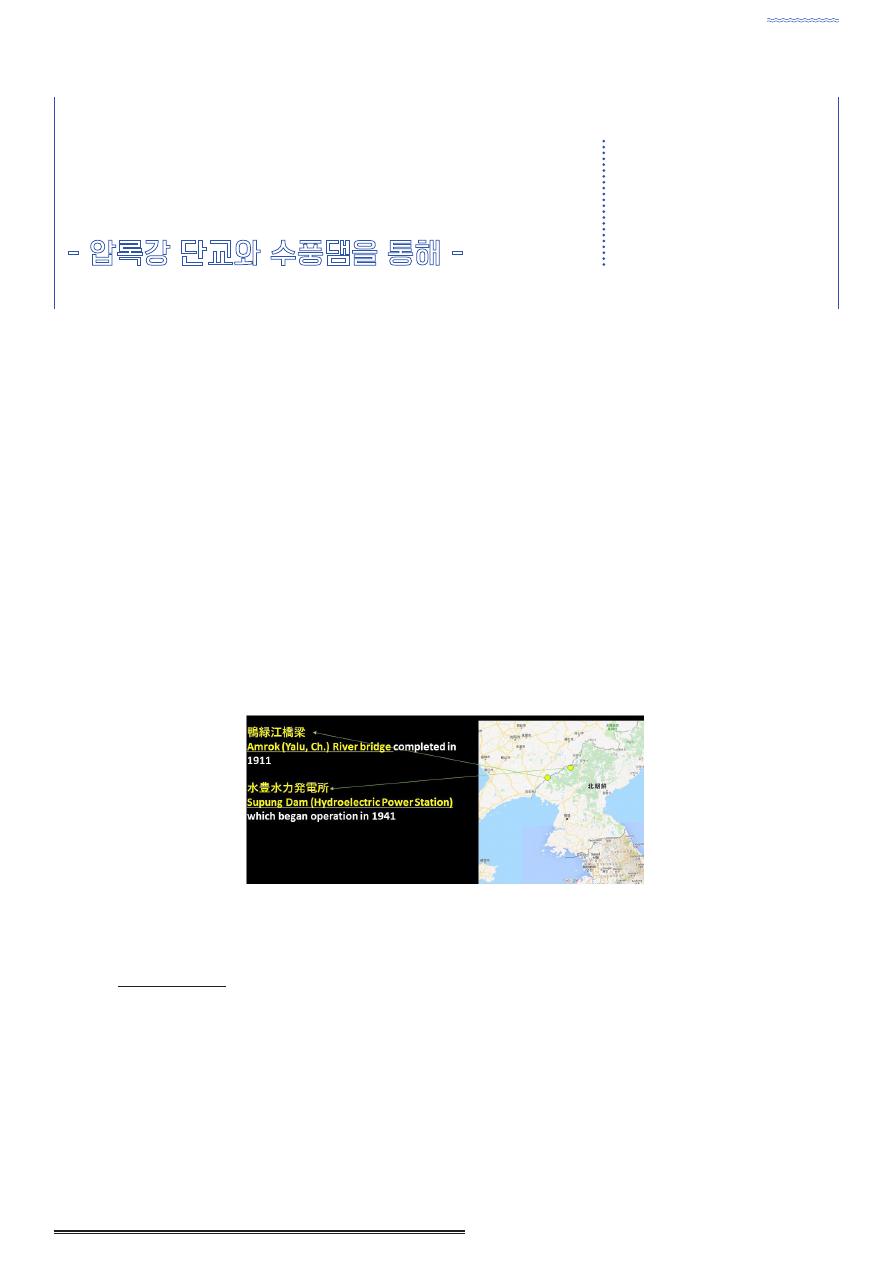
133
INTERNATIONAL JOURNAL OF
ASIA-PACIFIC HERITAGE STUDIES
SUSTAINABLE CONSERBATION OF
ASIA-PACIFIC CULTURAL HERITAGE FOR THE UNESCO CHAIR
20세기 동아시아사로부터
문화유산을 생각하다
류이치 타니가와
카나자와대학교
1. 들어가며
동아시아 근대사는 일본에 의한 식민지화의 역사를 제외하고는 논의할 수 없다.
나 자신은 이와 같은 일본의 과거는 비판하지 않으면 안된다고 생각하며, 일본
인이 동아시아의 근대를 논할 때에는 이러한 책무가 있다고 생각한다. 먼저 이를
확인한 후, 본고에서는 20세기 전반에 건설된 두 가지 상징적인 건조물의 역사
를 통해 동아시아의 근대와 그 문화유산에 대해 생각하고자 한다1. 하나는 1911
년 준공된 압록강 단교--전 전(
戰前) 일본에서는 압록강 회전교로 잘 알려져 있
던 교량--이다. 또 한 가지는 실질적으로는 일본의 신흥재벌인 일본질소비료 주
식회사의 도입으로 계획이 시작되어 1941년에 가동을 시작한 수풍 수력발전소
다. (그림 01 지도)
1 | 압록강 단교에 대해서는 다음 논문을 참조.
다니가와 류이치(谷川竜一) 「경계를 다루다/경계에 다뤄지는 건조물-압록강 회전교(境界を操る/境界に操られる建造物-
鴨緑江の回転橋)」 (아라카와 아유무(荒川歩), 가와키타 아쓰코(川喜田敦子), 다니가와 류이치(谷川竜一), 나이토 준코
(内藤順子), 시바타 데루요시(柴田晃芳) 편 『<경계>의 지금을 더듬다(<境界>の今をたどる)』 도신도(東信堂), 2009년,
pp.170~185).
수풍댐에 대해서는 다음 논문을 참조.
다니가와 류이치(谷川竜一) 「유전하는 사람들, 전생하는 건조물-조선 반도 북부의 수풍댐 건설과 그 재생-(流転する人々、
転生する建造物 ―朝鮮半島北部における水豊ダムの建設とその再生―)」 (『사상(思想)』 No.1005, 이와나미서점(岩波書
店), 2008년, pp.61~81).
그림 1
「Google Map
2018」

134
INTERNATIONAL JOURNAL OF
ASIA-PACIFIC HERITAGE STUDIES
SUSTAINABLE CONSERBATION OF
ASIA-PACIFIC CULTURAL HERITAGE FOR THE UNESCO CHAIR
현재 이 건조물은 둘 다 조선민주주의인민공화국(이하, 북한)과 중화인민공화
국(이하, 중국)의 국경에 있어, 한국 사람들에게는 친숙하지 않을 것이다. 압록
강 단교는 중국 국내에서는 문화유산이지만, 주된 대상은 중국인이다. 또한, 수
풍댐은 문화유산으로 인식되어 있지 않으며, 문화유산 미만의 건조물이라 할 수
있다. 그러나 압록강에 걸쳐진 두 개의 건조물은 20세기 동아시아--특히 동북아
시아 역사를 생각하기 위해서는 불가결하며, 장기적으로는 국제적인 문화유산
이 될 수 있으리라 생각한다. 오늘 발표에서는 이를 대상으로 문화유산의 본질
적인 의미에 접근하고자 한다.
또한 각각의 건조물 명칭은 시대와 지역에 따라 다르나, 상세한 부분을 논의하
면 지나치게 복잡해지므로 대체로 현재 영문 표기에 따르며, 역사적인 맥락에서
논의하고자 할 때는 당시 일본 식민지에서의 호칭으로 통일한다.
2. 압록강 회전교
일반적으로 일본에 의한 한국 식민지화는 1910년 한국 병합 이후에 시작되었다
고 보는 경향이 있다. 그러나 실질적으로는 1905년 이후 총독부 설치에서 시작
된다. 예를 들면 부산과 인천 항만 설비 등은 당시의 대규모 건설 프로젝트였다.
부산과 인천 세관청사, 항만의 대규모 매립과 준설 등이 이 시기에 이루어졌다.
이들 건설 프로젝트는 일본과 한국이라는 양국 간 관계에서 보면 분명 일본의 조
선 식민지 지배를 위한 사전 준비로 보이나, 그 이상의 의미가 있다. 동아시아 대
라는 넓은 시야에서 보면, 이는 다음과 같이 더 명확해질 것이다.
예를 들면 일본은 1904년~1905년 러일전쟁을 계기로 한반도 연안에 많은 등대
를 설치하고, 부산과 경성(현재 서울)을 잇는 경부선과 경성과 의주를 연결하는
경의선을 놓는다. 그러나 여기에 그치지 않고, 일본과 같은 시기에 경의선 반대
편의 중국 안둥(
安東)과 펑톈(奉天)(현재 단둥과 선양)을 연결하는 안봉선을 건
설했다. 사실 러일전쟁은 일본에서 중국 동북지방에 일본 병사와 물자를 수송하
기 위한 거대 인프라 건설 프로젝트라는 측면을 가지고 있던 것이다.
이 프로젝트에 있어 중요 요점이 된 것이 경의선과 안봉선을 연결하기 위해 계
획되어 압록강에 놓인 길이 1,000m의 거대한 교량이다. 이 교량도 일본군에 의
해 러일전쟁 중에 계획이 시작된 것으로, 전쟁이 끝나고도 계획과 건설이 계속
되었다.
흥미롭게도 교량은 당초 계획에서는 회전교가 아니었다. 그러나 중국 동북지방
에서 일본의 영향력 확대를 꺼린 영국과 미국이 건설에 반대하는 이의를 제기
했다. 당시는 범선이 많아 해당 교량 아래를 중국의 전마선과 기타 선박이 통과
하지 못하는 것이 문제라는 내용이었다. 일본 정부는 이를 무시하지 못하고, 결
국 전마선이 통과할 수 있도록 교량의 설계를 회전교로 수정하여 영국과 미국의
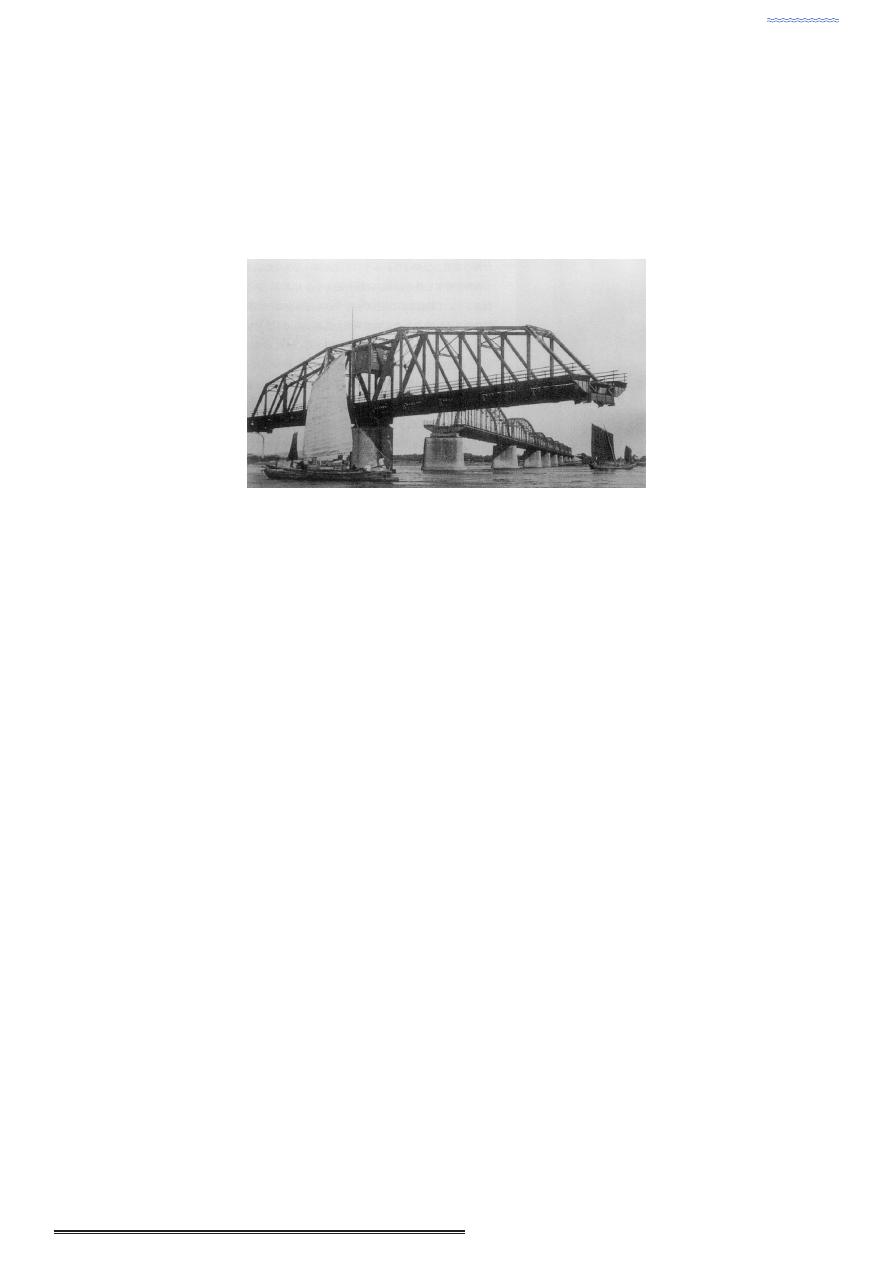
135
INTERNATIONAL JOURNAL OF
ASIA-PACIFIC HERITAGE STUDIES
SUSTAINABLE CONSERBATION OF
ASIA-PACIFIC CULTURAL HERITAGE FOR THE UNESCO CHAIR
이의를 피했다. 완성된 것은 1911년 10월이었다. (그림 02
Rotating Amrok(Yalu)
River bridge completed in 1911 (하자마구미 백년사 편찬위원회(
間組百年史
編纂委員会))『하자마구미 백년사(間組百年史)』1889-1945, 주식회사하자마구
미(
株式会社間組), 1989년, 168엽))
그림2
Rotating
Amrok(Yalu)
River bridge
completed in 1911
(하자마구미 백년
사 편찬위원회(間
組百年史編纂委員
会))『하자마구미 백
년사(間組百年史)
』1889-1945
이 교량은 당시에도 현재도 일본이 건설한 것으로 알려져 있으나, 실제로는 일
본의 힘만으로 건설된 것은 아니다. 교량 건설은 20세기 초 일본의 미숙한 공학
기술로는 어려웠으며, 일본 기술자들은 교량의 설계뿐만 아니라 재료가 된 철골
까지 미국에 외주를 주었다. 그리고 시공 노동은 주로 중국인들--이른바 쿨리(
苦
力)--이 담당했다. (그림 03 Chinese led by 양국동(揚国棟) and their caisson
construction work(하자마구미 백년사 편찬위원회(
間組百年史編纂委員会)『
하자마구미 백년사(
間組百年史)』1889-1945, 주식회사 하자마구미(株式会社
間組), 1989년, 174엽))
이렇게 말하면 많은 사람들이 바로 ‘중국인들은 값싼 식민지 노동력이었기 때문
에 고용되었다. 일본에 의한 식민지적인 착취다’라는 식으로 서둘러 판단할지도
모른다. 물론 이러한 측면도 있으나, 이 부분에 대해서만 논의를 하게 되면 당시
동북아시아의 흥미로운 상황을 놓치게 된다. 이 시공의 중요 부분을 담당한 것
은 양국동(
楊國棟)이라는 중국인이었다. 그는 쿨리를 이끈 청부업자의 우두머
리로, 영국인 건설 기술자 아래에서 오랫동안 중국의 철도 건설을 담당한 인물
이다. 잘 알려진 것처럼 중국에서는 19세기 중반 이후, 열강의 진출 아래에서 많
은 개발 프로젝트가 진행되었다. 이러한 상황에서 일부 중국인들은 일본인들이
가지고 있지 않은 기술을 서양인들로부터 배웠다. 양국동도 그중 한 사람인 것
으로 생각된다. 그렇게 되면 압록강 단교 건설 공사를 담당한 양국동을 쿨리라고
하는 단순 노동자의 우두머리로만 보기에는 충분하지 않다. 그는 조국과 서양 가
운데에서 고도의 건설 기술을 축적하고 있었으며, 압록강 단교는 이러한 사람들
의 경험이 있었기에 완성되었다고 후세 사람들은 생각해야 한다.
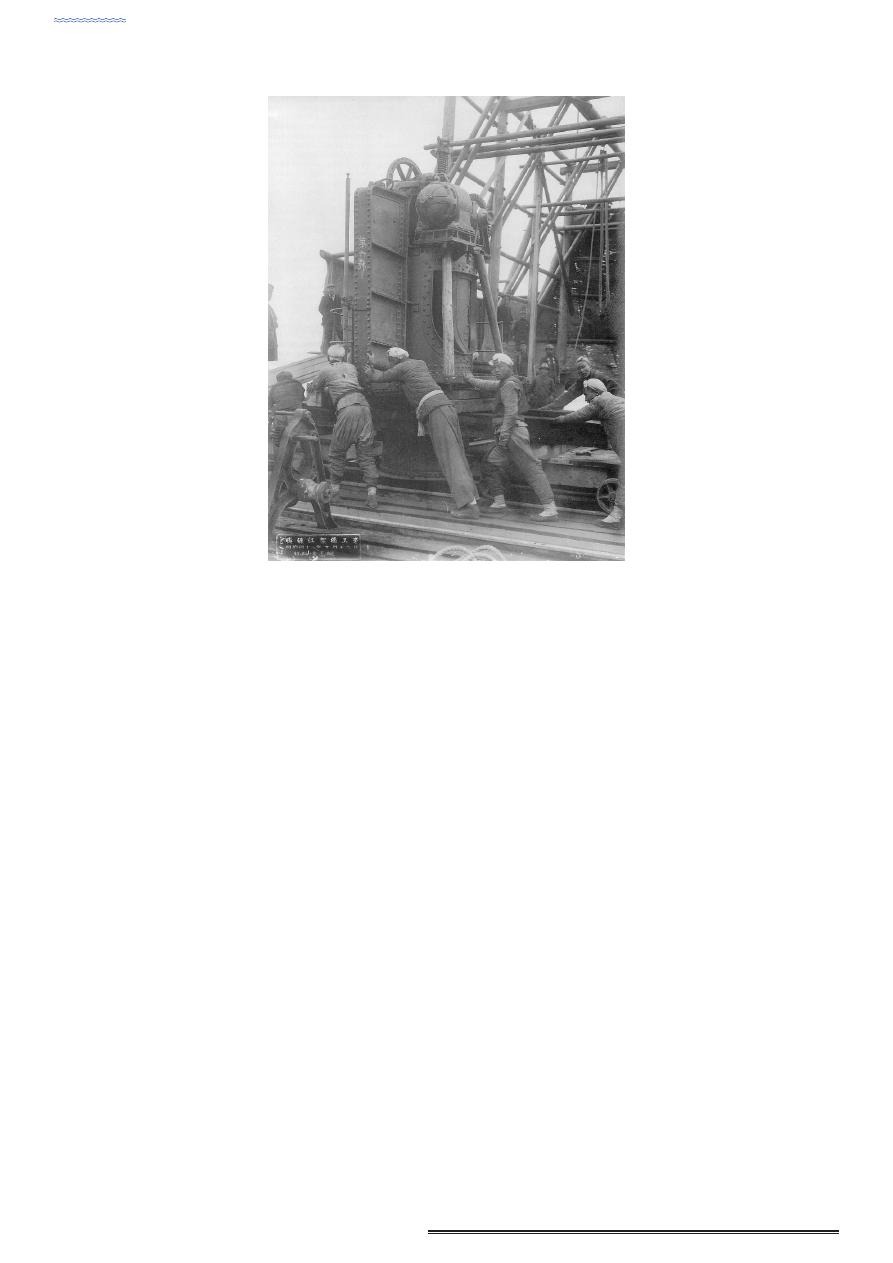
136
INTERNATIONAL JOURNAL OF
ASIA-PACIFIC HERITAGE STUDIES
SUSTAINABLE CONSERBATION OF
ASIA-PACIFIC CULTURAL HERITAGE FOR THE UNESCO CHAIR
그림 3
Chinese led by
양국동(揚国棟)
and their caisson
construction
work(하자마구미
백년사 편찬위원회
(間組百年史編纂委
員会)『하자마구미
백년사(間組百年
史)』1889-1945
다음으로 흥미로운 점은 일본 정부가 이 교량을 건설할 때 국내외에 사용한 선전
문구다. 일본은 이 교량을 단순히 압록강에 놓인 거대한 교량으로 국내외에 선
전하지 않았다. 당시 보도 등에서 자주 사용되었던 것은 ‘구아 연결로(
欧亜連絡
路)’(Euro-Asia Trans-Siberian Through Traffic)라는 구호였다. 이 ‘구아 연결
로’란 무엇일까. (그림 04 Euro-Asia Trans-Siberian Through Traffic)
여기에서 눈을 일본 국내로 돌려보자. 일본 국내에서는 1889년에 도카이도혼센(
東海道本)이 완성되는 등 간선 철도 정비가 진행되고 있었다. 이러한 간선 철도
를 사용하면 도쿄 신바시(
新橋)에서 시모노세키(下関)까지 간단히 갈 수 있다.
그리고 시모노세키에서 배를 타면 한반도 남쪽의 입구 부산까지 얼마 걸리지 않
는다. 부산에서 열차를 타고 경성, 평양, 그리고 신의주까지 갈 수 있다. 신의주
에서는 압록강을 건너 안봉선을 타고 심양까지 간 후, 중국 동북지방으로 북상하
면 어디와 이어지게 될까. 바로 러시아가 건설한 시베리아 철도와 연결되어, 멀
리 모스크바와 파리로 이어지는 것이다. 즉, 구아 연결로란 이처럼 철도와 선박
네트워크를 건설하여 유럽(구)에 일본을 중심으로 하는 동북아시아(아)를 연결
한다는 의미였다. 그리고 일본은 이 공사가 일본에만 이익이 되는 것이 아니라,
조선과 중국을 유럽과 연결하는 프로젝트라고 선전한 것이다.
일본은 이 구아 연결로라는 국제적이며 여정을 자아내는 말을 사용하여, 압록강
단교 건설을 진행하였다. 그러나 이러한 장밋빛 슬로건 속에는 일본의 경제적·
군사적인 흑심이 포함되어 있었다는 것은 말할 필요도 없다.
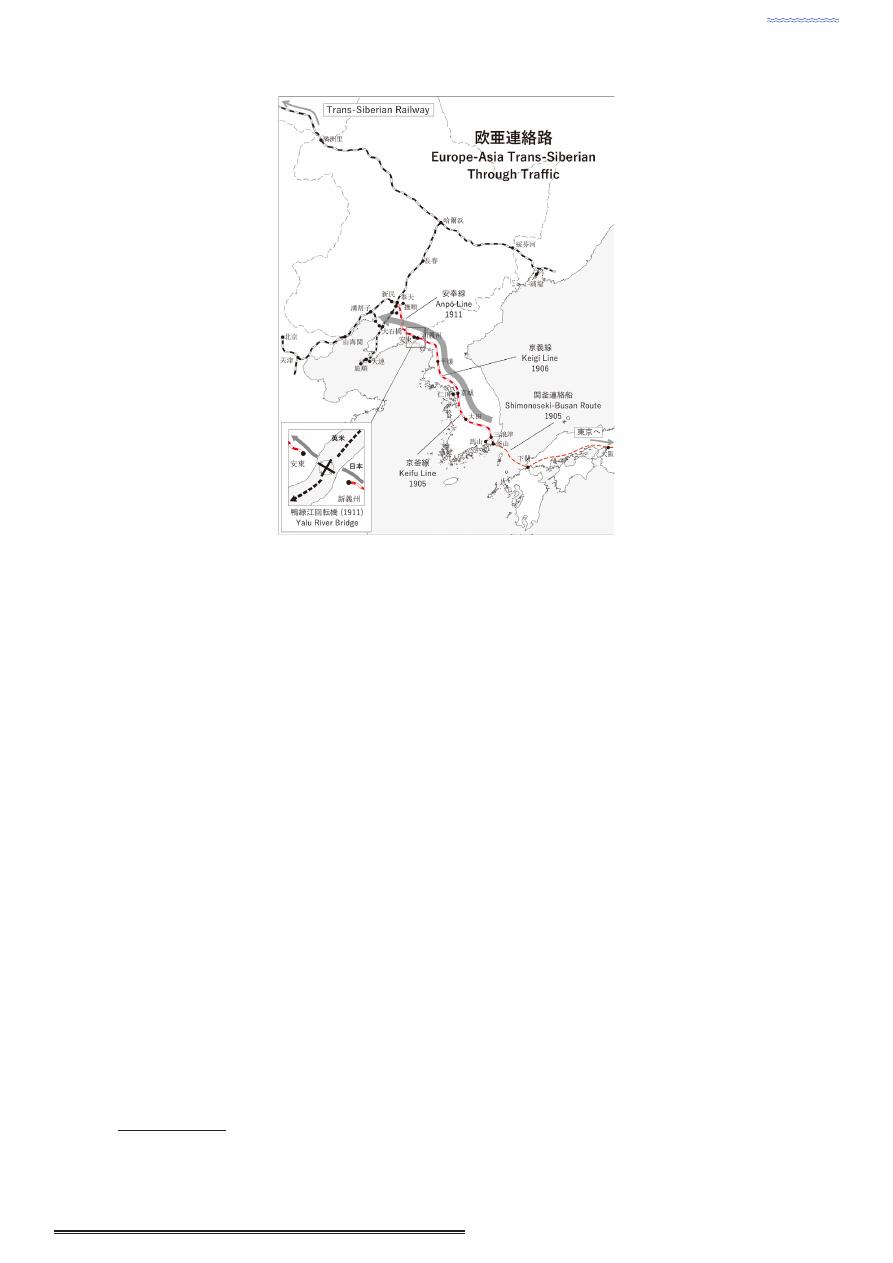
137
INTERNATIONAL JOURNAL OF
ASIA-PACIFIC HERITAGE STUDIES
SUSTAINABLE CONSERBATION OF
ASIA-PACIFIC CULTURAL HERITAGE FOR THE UNESCO CHAIR
그림 4
Euro-Asia Trans-
Siberian Through
Traffic
예를 들면 이 간선로를 사용하여 중국 동북지방 석탄 등의 광산물과 압록강 상
류 대삼림 지대의 목재, 조선 남부의 쌀을 연결하고자 하는 계획 등이 있었다.
중국은 강하게 반대했으나 일본은 구아 연결로라는 슬로건으로 이러한 목소리
를 감쪽같이 지우고 무시하여, 압록강 단교와 안봉선 건설을 강행했던 것이다.
그런데 이 압록강 회전교는 완성 후 많은 일반인들에게 신선한 경험을 제공하게
되었다. 바로 교량을 건너면 시간대가 바뀌는 경험이다. 조선 쪽의 신의주에서
중국 쪽의 안둥으로 건너가면, 사람들은 시계 바늘을 1시간만큼 되돌렸다. 이는
아마도 근대화가 진행되는 일본과 조선 사람들에게 있어, 매우 인상 깊은 경험
이었을 것이라 생각된다. 사람들은 시차를 통해 일본 제국의 확장을 알게 되었
을 것이며, 동시에 ‘구아 연결로’의 국제성을 강하게 인식했을 것이다
2 . 압록강
단교는 다리를 건너는 사람에게 지구 전체에서의 일본 제국의 시공 감각을 인식
시키는 건조물이었다.
그러나 이 압록강 회전교는 일본 패전 후, 6·25 전쟁 시 미군의 맹렬한 공중 폭격
을 받아 무너졌다. 바로 옆에 일본이 1943년에 건설한 교량은 6·25 전쟁 후에도
남아 있어, 김일성을 비롯한 북한 지도자들은 이 다리를 건너 중국과 왕래했다.
(그림 05 (NARA 80-G-Box1731-423495))
그렇다면 끊겨버린 회전교는 어떻게 되었을까. 현재 무너지지 않고 남은 중국
쪽 절반 부분이 문화유산이 되어 있다. 일본 제국주의의 유산으로 취급되는 것이
2 | 예로, 『요미우리 신문(読売新聞)』 1913년 6월 17일 ‘압록강 철교(鴨緑江の鉄橋)’라는 기사 등을 읽으면 사람들의 모습을 잘
알 수 있다.
138
INTERNATIONAL JOURNAL OF
ASIA-PACIFIC HERITAGE STUDIES
SUSTAINABLE CONSERBATION OF
ASIA-PACIFIC CULTURAL HERITAGE FOR THE UNESCO CHAIR
아닌, 6·25 전쟁을 통해 북한을 지원한 중국의 노력과 공중 폭격을 한 미군의 만
행을 기념하는 장소가 되어, 중국의 ‘애국 교육’ 장소가 된 것이다. (그림 06 교
량 절단 부분)
그림 5
NARA
80-G-Box
1731-423495
그림 6
교량 절단 부분
139
INTERNATIONAL JOURNAL OF
ASIA-PACIFIC HERITAGE STUDIES
SUSTAINABLE CONSERBATION OF
ASIA-PACIFIC CULTURAL HERITAGE FOR THE UNESCO CHAIR
3. 수풍댐
다음으로 압록강에 있는 또 하나의 거대 건조물--수풍댐을 소개하고자 한다. 수
풍댐은 1941년 발전을 시작한 시설로 댐 길이 900m, 높이 106m, 발전 능력 70
만kW(최종적으로는 60만kW)를 자랑하는 당시 세계 최대 규모의 수력 발전소
였다. 30년 후인 1973년에 한국 국가 프로젝트로 건설된 소양강댐이 20만kW였
던 것을 생각하면, 수풍댐의 크기를 짐작할 수 있다. 참고로 소양강댐에도 수풍
댐 기술자가 관련되어 있으나, 이는 다른 기회에 고찰하고자 한다.
(그림 07 수풍댐 다케바야시 고이치(
竹林孝一) 씨 제공)
그림 7
수풍댐
다케바야시 고이치
(竹林孝一) 씨 제공
사실 조선총독부와 ‘만주국’ 정부 기술자가 수풍댐을 건설한 것은 아니다. 이 건
설 계획은 1920년대 후반부터 북한의 산을 개발한 닛치쓰(
日窒)의 토목 기술자
들이 진행했다. 닛치쓰의 기술자들은 일본 본국 개발에 한계를 느끼고 1920년대
에 식민지·조선으로 나갔다. 그리고 일본에서는 할 수 없을 듯한 거대한 전력 개
발을 진행한 것이다
3 . 그들에게 있어 한반도는 근대적인 기술을 마음껏 떨칠 수
있는 꿈의 장소였다. 관점을 바꾸어 보면, 현지 사람들에게 매우 무책임한 자세
를 가지고 있었다고 말할 수도 있다.
게다가 이 수풍댐의 아이디어는 전쟁으로 지배지를 확대해 가던 일본 제국의 방
침과 일치했다. 구체적으로 말하면 수풍댐은 압록강이라는 ‘만주국’과 식민지·
조선 국경 하천에 위치하고 있어 이른바 ‘만주국’과 조선 사이를 연결하는 건조
물이었다. 이 때문에 수풍댐은 당시 센만이치뇨(
鮮満一如)(“Sen-Man ichinyo”
(Korea and Manchuria are inseparable))와 나이센잇타이(
内鮮一体)(“Nai-
3 | 다니가와 류이치(谷川 竜一) 「조선 거대 전원 개발의 계보-오이가와에서 부전강으로-(朝鮮巨大電源開発の系譜―大井川
から赴戦江へ―)」(나카가와 오사무(中川理) 편 『근대 일본의 공간편성사(近代日本の空間編成史)』 시분카쿠출판(思文閣出版),
2017년, pp.369~402)

140
INTERNATIONAL JOURNAL OF
ASIA-PACIFIC HERITAGE STUDIES
SUSTAINABLE CONSERBATION OF
ASIA-PACIFIC CULTURAL HERITAGE FOR THE UNESCO CHAIR
Sen ittai” (Japan and Korea as one body))라는 제국 전체를 일체화 하고자 하
는 일본 제국의 지침과도 일치하는 것이었다.
게다가 수풍댐은 주변 지역에 풍부한 전력을 배분하는 계획을 동반했다. 구체적
으로는 한반도 북부에서 중국 요동 반도에 이르는 지역에 거대한 공업 지대 건
설 계획이 세워졌다. 물론 공업 지대에 공장만 지어서는 의미가 없다. 공업 생산
을 진행하기 위한 자원이 필요하다. 당시 자원이라고 하면 동남아시아가 주목받
고 있었다. 즉, 수풍댐이 후원한 일본 식민지의 공업화는 당시 동남아시아 방면
으로 진출·침략을 생각하고 있던 일본 제국의 지침과도 물론 일치하게 된 것이
다. 그러나 수풍댐이 발전을 시작하고 불과 4년 후에 제국은 붕괴하게 되었다.
이처럼 수풍댐은 일본 식민지 개발에 있어 최대이자 최후의 거대 개발이며, 아
시아 태평양 전쟁 시 일본 제국의 확대 정신을 보여주는 심벌이기도 했다. 건설
즈음해서는 희생자도 많이 나왔다고 한다. 특히 많은 조선인과 중국인 등 식민
지 노동력이 동원되어, 그들에게 가혹한 노동의 여파가 미쳤다1. 그럼에도 불구
하고 많은 당시 언론이 수풍댐을 사례로 들어 일본 기술이 서양에 지지 않는다는
것을 과시했다. 그러나 실제로는 수풍댐 건설을 위해 미국 건설 기재와 독일 기
술에 많은 의존을 했다. 위와 같은 가혹한 노동과 자국 기술의 불충분함 등 일본
에 불리한 사실이 언론에서 다루어지는 경우는 거의 없었다.
그리고, 패전 이후 수풍댐의 역사도 매우 흥미롭다. 남북이 분단된 후에도 수풍
댐은 한동안 한국에 송전했다. 그러나 6·25 전쟁 전에 송전이 중지되고, 한국은
전력 부족을 드러내게 되었다. 반대로 북한에서는 전력이 남았다고 전해진다.
실제 닛치쓰 기술자들이 개발한 수풍댐을 포함하여 거대 수력 발전소들은 한반
도 북부에 집중되어 있다. 이 덕분에 당시 북한에는 충분한 전력이 있었다고 생
각된다. 그리고 이러한 전력의 은혜는 독립하고 얼마 안 된 북한 사회에 있어서
는 매우 중요했을 것이다. 게다가 소련을 시작으로 사회주의를 내세우는 국가와
지역에 있어, 전력 개발은 국가 건설의 전제와도 같은 것이었다. 사회주의적 이
데올로기에 수풍댐과 같은 세계 최대 규모의 수력발전소가 이용되지 않을 리 없
었다. 구체적으로 살펴보자.
우선, 수풍댐은 패전 시에 소련에게 발전기를 빼앗겼다. 그리고 홍수와 6·25 전
쟁으로 큰 피해를 입었으나, 그 후 부흥해 가는 과정에서 북한의 고위 관료들은
그 중요성을 강하게 인식한 듯하다. 왜냐하면 이 시기, 북한의 국장(
国章)에 수
풍댐이 들어가게 되었기 때문이다. 대일본제국의 심벌은 북한의 심벌로 환생--
다시 태어나게 된 것이다. 6·25 전쟁 후 북한 부흥 기록을 찾아보면 수풍댐의 ‘
환생’에 즈음하여 식민지 시대의 일본적인 기술을 익힌 조선인 기술자들이 부정
되고, 대신 소련적인 기술을 가진 기술자들이 환영받는 모습이 기록되어 있다.
4 | 조선 개발에 종사한 노동자 문제 등은 히로세 데이조(広瀬貞三) 씨가 장기간 연구를 하고 있다. 히로세 데이조(広瀬貞三)
「‘만주국’의 수풍댐 건설(「満州国」における水豊ダム建設(The Construction of the Sup’ung Dam in Manchukuo))」
(『니가타 국제정보대학 정보문화학부 기요(新潟国際情報大学情報文化学部紀要)』 6, 2003) 등

141
INTERNATIONAL JOURNAL OF
ASIA-PACIFIC HERITAGE STUDIES
SUSTAINABLE CONSERBATION OF
ASIA-PACIFIC CULTURAL HERITAGE FOR THE UNESCO CHAIR
단순한 심벌이라는 것뿐만 아니라, 이와 관련된 기술 체계도 변해갔다고 생각
할 수 있겠다. 현재도 수풍댐은 가동되고 있으나, 북한의 역사적 유산이 되지는
못한 듯하다. 물론 북한에서 제일 중요한 수력발전소인 것에는 틀림이 없다. 위
의 역사를 알게 된다면, 수풍댐을 일본 제국의 심벌로 보는 것만으로는 충분하
지 않다는 것을 알게 될 것이다. 독립 이후 북한의 공업은 물론, 사람들의 생활
도 지탱해 온 사회 기반 시설인 것이다. 이 댐을 해석하는 방법도 다양한 맥락에
서 이루어지고 있다.
(그림 08 북한의 국장(
北朝鮮の国章) (『조선중앙년감(1995)루겨48호』펑양
종합인쇄공장, 1995년, 권두화))
그림 8
북한의 국장(北朝
鮮の国章) (『조선중
앙년감(1995)루
겨48호』
펑양종합인쇄공장,
1995년, 권두화
4. 문화유산 해석의 복수성
이번에 사례로 든 거대 건조물은 모두 압록강이라고 하는 중국·북한 국경 하천
에 존재하는 역사적인 건조물이다. 압록강 단교는 동북아시아 근대화를 강조해
서 말하며 건설된 일본 제국주의의 산물이며, 수풍댐은 일본 기술자들의 욕망과
아시아·태평양 전쟁 시의 이데올로기를 구현한 건조물이라고 말할 수 있다. 따
라서 일본 제국주의와 식민지주의를 기록하고, 그 본질을 앞으로도 계속 생각해
나아가기 위한 중요 자원이다. 그러나 본론에서 살펴본 것처럼, 이러한 인식만
으로는 충분하지 않다.
예를 들어 압록강 단교에는 양국동 등, 뛰어난 기술을 가진 중국인 노동자가 관
련되었다. 또한 미국 철골 기술도 불가결했다. 단순히 일본 비판에만 집중하면,
142
INTERNATIONAL JOURNAL OF
ASIA-PACIFIC HERITAGE STUDIES
SUSTAINABLE CONSERBATION OF
ASIA-PACIFIC CULTURAL HERITAGE FOR THE UNESCO CHAIR
양국동이 중국 근대사 속에서 키운 고도의 기술을 가지고 있었던 것이나 일본이
그렇게 높은 공학 기술을 가지지 못했다는 당시의 실제적인 상황을 놓치게 된다.
더욱 중요한 것은 북한과 한국의 독립, 그리고 6·25 전쟁이라는 동북아시아의 큰
사건이 각각의 건조물에 한층 더 의미를 더한다는 것이다. 중국은 이러한 의미를
잘 사용하여, ‘애국 교육’에 압록강 단교를 이용하고 있다. 그 효과는 다음과 같
이 설명할 수 있을 것이다. 압록강 회전교는 끊어진 채로 보존되어 있었기 때문
에, 북한과 중국이 예전에 연결되어 있었다는 과거를 이를 보는 국민들에게 상기
시킨다. 그리고 한편으로 폭력적인 단절면을 남겨 국민에게 보여주는 것을 통해,
두 나라 사이의 연결을 폭력적으로 단절한 미군의 잔인함을 보여주는 것이 가능
하다. 교량이 절단된 채로 보존되어 있기 때문에, 교량의 역사적 의미--즉 두 나
라를 연결한다/서로 도와준다는 의미--가 보다 강하게 시사되고 있다.
(그림 09 압록강 단교)
그림 9
압록강 단교
한편 수풍댐은 더 이상 일본 식민주의의 기억이라고 하기보다는 사회주의 국가
이데올로기에 부합하는 중요한 건조물로 취급되고 있다. 따라서 북한 사람들에
게 ‘현재 수풍댐은 일본 식민지주의를 말해주는 역사적인 건조물이다’라고 말해
도, 오히려 그 의미가 전해지기 어려울지도 모른다. 그들은 자신들의 국가가 건
설한 건조물이라고 생각하고 있을 가능성이 높다. 이 의미 전환에 있어, 북한 사
람들 자신의 노력이 컸을 것이다. 수풍댐은 제2차 세계대전과 6·25 전쟁, 때때로
홍수의 피해를 입었지만 북한 사람들은 그때마다 열심히 수풍댐을 수리하며 극
복해왔다. 이러한 과정을 거쳐 수풍댐은 ‘우리 북한 사람들이 다시 만들었다’는
감각이 자연스럽게 생겨난 것이 아닐까 하고 생각한다. 그리고 실제로 기술자와
기술에 대한 생각도 구 동구권 기술이 유입되며 바뀌었다.
즉 수풍댐은 일본 제국의 심벌이라는 의미만이 아니라, 그 위에 새로운 독립 국
143
INTERNATIONAL JOURNAL OF
ASIA-PACIFIC HERITAGE STUDIES
SUSTAINABLE CONSERBATION OF
ASIA-PACIFIC CULTURAL HERITAGE FOR THE UNESCO CHAIR
가로서의 북한의 출발과 그 과정이 새겨진 것이다. (그림 10 ‘우리들의 자랑-수
풍 발전소’라고 쓰여 있다. 북한 선전 잡지『잡지 조선(
雑誌朝鮮)』1958년)
그림 10
우리들의 자랑-수
풍 발전소’라고 쓰
여 있다.
북한 선전 잡지
『잡지 조선(雑誌朝
鮮)』1958년
이상의 논의는 건조물에 대한 중층적인 의미와 가치, 상호 모순되는 듯한 복수의
해석이 부여된다는 점을 나타내고 있다. 근대사회를 지탱하는 중요한 사회 기반
시설일수록, 이러한 복수의 해석을 낳는 상황이 생길 것이다. 거대한 구조물이
이렇게 복합적인 의미를 가지지 않을 수 없을 것이다. 이번에 예로 든 두 개의 건
조물은 이러한 전형적인 사례이다.
5. 결론
세계유산에 오랫동안 관여해 온 이나바 노부코(
稲葉信子)에 의하면, 세계문화
유산 논의의 장은 최근 더욱 정치화되고 있다고 한다
5 . 문화유산이 내셔널리즘
과 높은 친화성을 보이고 있는 것이다. 그리고 이는 많은 사람도 느끼고 있을 것
이다. 예를 들면 최근 공업 시설 등도 문화유산이 되어, 이를 본 일부 사람들은
높은 공업 기술을 국가의 ‘자랑’으로 느끼고 있다. 그 배경에는 근대 국가가 다
른 국가와 상호 경쟁을 하며 과학 기술을 키워 온 역사가 있기 때문일 것이다. 그
러나 근대화를 일방적인 진보 시합으로 파악하는 것은 단순한 이해라고 말하지
않을 수 없다. 그리고 위험한 것은, 이런 ‘자랑’이 내셔널리즘으로 순조롭게 이어
5 | 이나바 노부코(稲葉信子)「세계유산조약의 이후--미래 유산 개념 구축을 향해(世界遺産条約の今後――未来の遺産概念の
構築に向けて)」(『세계유산학연구(世界遺産学研究)』vol.2, 쓰쿠바대학 대학원 인간종합과학연구과 세계유산전공·세계문화
유산학 전공_(波大学大学院人間総合科学研究科世界遺産専攻・世界文化遺産学専攻), 2016년, p.1)

144
INTERNATIONAL JOURNAL OF
ASIA-PACIFIC HERITAGE STUDIES
SUSTAINABLE CONSERBATION OF
ASIA-PACIFIC CULTURAL HERITAGE FOR THE UNESCO CHAIR
져 버리는 것이다. 이 ‘자랑’은 결국 그 국가와 지역 내부의 사람들 밖에는 공유
할 수 없다. 이 때, 문화유산의 가치는 그 국가와 지역의 지역적인 가치로 닫혀
버리게 된다. 문화유산은 타인의 경우를 쉽게 잊고, 자화자찬하기 위한 도구인
가. 그렇지는 않을 것이다.
내가 생각하고 싶은 것은 지역적인 가치를 귀중하게 여기고, 거기에서 어떠한
전 세계적인 가치를 구축하는 것에 대한 점이다. 내셔널리즘에 휩쓸리지 않고 연
대와 공존의 사상을 문화유산에서 끌어내는 것이라고 바꾸어 말해도 좋다. 그러
나 지역적인 가치를 강조하면 내셔널리즘과 연결 짓기 쉬울 뿐 더러, 세계문화
유산 제도가 요구하는 현저한 보편적 가치와는 틈새가 생길 가능성이 있다. 나
에게는 이 딜레마를 극복하는 방법이 쉽게 떠오르지 않는다. 그 속에서 두 가지
를 당면하고 있는 대처법으로 계속해 가고자 생각하고 있다.
한 가지 대처법은 먼 장래 세계를 상상해 보는 것이다. 그리고 그 미래 사회에 있
어, 이들 건조물이 어떠한 문화유산이 되어 있을지 이것저것 생각해 보는 것이
다. 문화유산은 사람들에게 과거를 강하게 인식시키나, 미래에 대해서는 많은 것
을 말하지 않는다. 게다가 문화유산은 현대의 제도적인 산물이며, 매우 즉물적인
미디어이다. 문화유산에 대해 우리가 이야기할 때, 자동적으로 내셔널리즘과 연
결시키기 쉬운 이유는 이 점이 배경에 있기 때문이 아닐까. 즉, 이러한 문화유산
의 특징에 우리가 무관심하기 때문에, 현대에만 구애되고 미래 사회에 대해 책
임을 지고 생각하지 않기 때문은 아닐까.
예를 들면 앞으로 100년 후 동아시아 공동체 같은 것이 형성되어, 내셔널리즘보
다 지역에서의 생활 공동체 등이 중시되고 있다고 치자. 그때, 압록강 단교와 수
풍댐이 현재 가지고 있는 애국 교육과 국민 통합에 도움이 되는 상징적인 의미는
지금 이상으로 필요해질 것이라 생각하기는 어렵다(물론 그에 이르기 위해 일본
은 과거 역사와 진지하게 마주하고 이웃 여러 나라에 대해 성의 있는 태도로 임
하지 않으면 안되겠지만).
거꾸로 미래 동아시아에 파시즘 등이 다시 대두한다고 하면, 문화유산은 어떤 기
능을 하게 될까. 문화유산은 단순한 과거의 유물이 아니라, 미래에 이바지하는
사고방식을 제공한다고 하는 것이 그 방침이기도 할 것이다. 압록강 단교 등은
일본 식민지주의와 전쟁을 사례로, 폭력적인 지배와 전쟁의 공포·잔학함을 보여
주는 문화유산이다. 그렇다고 하면 이에 대한 반성을 제대로 살려, 미래의 파시
즘 체제에 대해서도 유효하게 기능하고 있을 것인가. 단순히 일본의 과거를 공
격하기 위해서만의 문화유산으로 인식되고 있다면, 이는 미래 사회에 있어 건설
적인 의미를 가지 못하고, 오히려 그때의 정권에 역이용 당할 듯하다.
세계문화유산 가치 기준의 하나인 현저한 보편적 가치라는 것은, 이러한 시간의
흐름을 견뎌내는 가치이다. 바꾸어 말하면 문화유산의 현저한 보편적 가치라는
것은 우리들의 미래상과 함께 생각해야만 하는 가치이다.

145
INTERNATIONAL JOURNAL OF
ASIA-PACIFIC HERITAGE STUDIES
SUSTAINABLE CONSERBATION OF
ASIA-PACIFIC CULTURAL HERITAGE FOR THE UNESCO CHAIR
또 한 가지의 대처법은 건조물이 가진 수많은 역사적 의미를 정성껏 골라서 드는
것이다. 압록강 단교는 일본의 제국주의 심벌이기도 했지만, 사실은 수많은 역
사적이며 국제적인 기술이 섞여 완성되었다. 구아 연결이라는 말도 완벽한 거짓
말이라고 하기에는 무리가 있다. 교량이 동북아시아와 유럽을 연결하는 근대적
인 사회 기반 시설이었던 것도 사실이다. 또한 자료에 의하면, 1934년 봄에는 2
만명의 사람이 꽃놀이를 하기 위해 이 다리를 왕래했다고 한다. 따라서 교량은,
신의주와 안둥 사람들의 생활과 오락을 위한 사회 기반 시설이기도 했다. 이러한
역사적인 사실은 다양한 맥락으로 이어질 것이다. 건조물의 의미를 알기 쉽게 하
나의 해석으로 정리하는 것이 아니라, 기본적인 사실을 파악하면서도 그 지엽이
되는 해석을 많이 붙여 나가는 것이 중요하다.
그러나 이러한 다양한 의미를 그저 사방에서 제멋대로 말하는 것만으로는 장기
적인 의미가 별로 없다. 예를 들면 아직도 전(
戰前) 일본의 가치관을 가지고 동
아시와의 협조에 주체적으로 임하지 않는 사람들은 이 다리를 단순히 훌륭한 근
대화의 산물로만 주장할 것이다. 따라서 중요한 것은 이러한 다양한 의미를 동
아시아의 미래상에 입각하여 논의할 수 있는 플랫폼을 만들고/유지하는 것이다.
이 의미에서 압록강 단교와 수풍댐과 같은 거대한 건조물이 동아시아 문화유산
으로 향후 주목받을 기회가 있다면, 이는 동아시아가 가까운 과거를 둘러싸고 상
호 이해를 높이는 기회일 것이라 생각한다. 그리고 당연히 복수의 해석이 제시되
고, 때때로 그 우위를 둘러싸고 대립이 생길지도 모른다. 여기에서 중요한 것은,
이 해석의 자리에서 헤게모니를 장악하는 것이 아니다. 문화유산 해석이 갈리는
것은 당연하며, 그 복수성에 대해 유연하고도 장기적인 전망을 가지고 공동으로
대처하는 자세를 서로 키우는 것이다. 즉, 문화유산을 바라본다고 하는 것은 우
리들 자신이 민주적으로 성숙해 가는 것이라고 생각한다.
기본적으로 나는 건축·도시·토목사 연구자이며, 문화유산의 실제적인 관리에 대
해서는 잘 모른다. 따라서 치졸하고 잡박한 논의가 되었으나, 마지막으로 한 가
지, 제일 기본적인 것을 확인하고자 한다. 세계유산제도를 운영하는 유네스코의
이념이다.
여기에는 「(유네스코란) 모든 국민의 교육, 과학, 문화 협력과 교류를 통해 국제
평화와 인류 복지의 촉진을 목적으로 하는 국제연합의 전문기관(The purpose
of the Organization is to contribute to peace and security by promoting
collaboration among the nations through education, science and culture in
order to further universal respect for justice, for the rule of law and for the
human rights and fundamental freedoms which are affirmed for the peoples
of the world, without distinction of race, sex, language or religion, by the
Charter of the United Nations.)」이라고 되어 있다
6 . 유네스코 목적의 핵심에
6 | http://unesdoc.unesco.org/images/0026/002617/261751e.pdf#page=6

146
INTERNATIONAL JOURNAL OF
ASIA-PACIFIC HERITAGE STUDIES
SUSTAINABLE CONSERBATION OF
ASIA-PACIFIC CULTURAL HERITAGE FOR THE UNESCO CHAIR
는 국제 평화와 인류 복지의 촉진이 강조되어 말해지고 있다. 문화유산 내셔널
리즘에 몰두하는 작금의 풍조에서, 우리들은 유네스코의 국제평화와 인류 복지
라는 이념을 다시 한번 확인할 필요가 있을 것이다. 본론에서 한 나라나 한 지역
의 지역적인 문화유산과 세계문화유산을 그다지 구별하지 않고 논의한 것은, 이
러한 생각이 있었기 때문이다. 즉, 세계유산제도를 운영하는 유네스코의 이 이
념 속에, 문화유산 일반이 가지는 본질적인 의미와 역할이 있다고 생각한다. 그
것은 항상 의식할 필요가 있는, 소중한 이념이다.

GROUP
| Senior Programme Specialist,
Division of Int’l Relations,
Korean National Commission
for UNESCO
Adjunct Professor, Cultural Management
School, Sungkunkwan University
NAME
| Jihon Kim
Our Heritage
&
The
Sustainable
Development
Goals :
Sustainable
Cities and
Heritage


149
INTERNATIONAL JOURNAL OF
ASIA-PACIFIC HERITAGE STUDIES
SUSTAINABLE CONSERBATION OF
ASIA-PACIFIC CULTURAL HERITAGE FOR THE UNESCO CHAIR
Our Heritage & the Sustainable
Development Goals:
Jihon Kim
Senior Programme Specialist,
Division of Int’l Relations,
Korean National Commission
for UNESCO
Adjunct Professor, Cultural
Management School,
Sungkunkwan University
1. Introduction
UNESCO, which has taken a leading role in the heritage protection
movement through the establishment and promotion of international norms,
has defined heritage as follows, “Heritage is our legacy from the past, what
we live with today, and what we pass on to future generations.” There
are currently 1,073 World Heritage Sites in 167 countries listed under the
Convention on the Protection for Cultural and Natural Heritage. These sites
are considered the essence of cultural and natural heritage in each nation,
but represent the common heritage of mankind, not just local or national
heritage. Thus, inhabitants in the area where these World Heritage sites are
located have an obligation to safeguard the value of this heritage so that it
can continue to be enjoyed by future generations.
The strategic goals of the World Heritage Convention, Credibility,
Conservation, Capacity-building, Communication, and Community
(also called the ‘5Cs’) emphasize the role of the community in heritage
conservation. The role of local people in heritage protection becomes even
more important when heritage faces the threat of development and reckless
urban expansion. The Elbe Valley in Dresden is just one of many examples
where the pressure of development threatens our ability to preserve the
legacy of our heritage for future generations. We are in ever greater danger
of losing our association with our local material heritage.
2. Sustainable Cities and Heritage
The 17 Sustainable Development Goals (SDGs) adopted by the United
Nations in 2015 include concerns about heritage protection. Goal 11 aims to
“Make cities inclusive, safe, resilient and sustainable,” and the fourth of its
seven Action Targets is to “strengthen efforts to protect and preserve the
world’s cultural and natural heritage.”

150
INTERNATIONAL JOURNAL OF
ASIA-PACIFIC HERITAGE STUDIES
SUSTAINABLE CONSERBATION OF
ASIA-PACIFIC CULTURAL HERITAGE FOR THE UNESCO CHAIR
However, the heritage mentioned in this target is not limited to outstanding
heritage that has been recognized by the international community as World
Heritage. Rather, its impact is wider, concerning the identity of local
residents and the formation of local culture. The implication is not so much
that heritage should be considered important and worthy of protection
because it has been designated as World Heritage, or national heritage
or local heritage, but rather that it has significant value that should be
protected if the heritage has sufficient meaning in the area.
The kinds of heritage covered can also be thought of as more diverse than
the traditional view of a World Heritage site. Within a city, in addition to
tangible heritage, intangible heritage is a key element of local culture.
However, as new communities form within cities, particularly with increases
in immigration in the course of the development of modern cities, some
local traditions are gradually disappearing. Unlike tangible heritage, the
value of intangible heritage in a specific area is very easy to lose unless
local people, who are the subjects of the tradition, pay close attention to its
maintenance. Value recognition and attention are the key reasons for the
protection of intangible heritage.
3. Heritage and Identity
The socio-cultural meaning and value of heritage are the reasons why
international society wishes to protect its legacy through the SDGs. In
particular, heritage is closely related to the cultural identity of a region.
Cultural heritage in various forms, such as architecture, monuments, and
records, show the traces of the region’s history. They demonstrate that the
arts and customs handed down between generations of community members
are not just part of the lives of local residents but represent the collective
culture of the community. In the spaces of modern cities, in particular,
such tangible and intangible heritage are in a constant state of development
and tension. In the process of physical expansion of a city, the historical
identity of the area is negated and vulnerable to development. Without the
maintenance of a stable community to recognize, protect, and manage the
value of heritage, it is more difficult for such heritage to maintain any
meaning beyond its physical existence.
This paper presents three instances of active involvement of the local
community in the conservation of heritage. The first case is that of Yangdong
Village in Gyeongju and Hahoe Village in Andong, two traditional, rural
villages in the Republic of Korea where the efforts of the local communities
to protect their heritage have been evaluated as an example of best practice

151
INTERNATIONAL JOURNAL OF
ASIA-PACIFIC HERITAGE STUDIES
SUSTAINABLE CONSERBATION OF
ASIA-PACIFIC CULTURAL HERITAGE FOR THE UNESCO CHAIR
in the field of sustainable development, a core value of UNESCO’s World
Heritage programme. The second is the case of Kaiping Diaolou in China,
which is managed in cooperation with the local inhabitants to preserve
heritage that was on the verge of destruction. Finally, the case of Itaewon,
in Seoul, is introduced as an example of the synchronous coexistence of a
variety of cultural elements.
4. Economics of Heritage
Although heritage can act as a bridge between the past, present and future,
by forming an urban identity that enhances cultural diversity, heritage
conservation is still accepted as an opposite of development. However,
there are various cases showing that the protection of heritage has a
creative economic effect. In particular, pre-emptive measures to maintain
urban history and identity in city planning contribute to the application of
complex land use and the sustainable conservation of urban culture. Thus,
a heritage site is no longer an obstacle to development but rather increases
the value of cities as spaces that coexist with development.
Donovan Lypkema, the author of “The Economics of Historic Preservation:
A Community Leader’s Guide,” shows that development and the preservation
of cultural heritage are not contradictory, explaining the economic value of
heritage through five indicators: 1) employment and household income, 2)
property value, 3) urban revitalization, 4) fostering small-sized businesses,
and 5) heritage tourism. Using international case studies and statistics he
argues that restoration and rehabilitation projects not only create better
quality jobs, and increase the value of buildings, but also help to nurture
urban redevelopment and related small businesses.
However, in terms of heritage tourism, which is often regarded as the most
direct economic activity stimulated through heritage conservation, Lypkema
emphasizes the need to find an appropriate level of tourism development.
As he points out, excessive tourism can have a negative impact on the
benefits of heritage for future generations because the overuse of heritage
resources vulnerable to development activities damages the surrounding
landscape. Thus, when creating essential tourism infrastructure, the use
of a ‘pre-circular’ structure, which puts tourism’s economic benefits back
into conservation management so that the core value of the heritage is
not damaged, can contribute to preserving the urban heritage in a more
sustainable way.
In addition, since an excess of tourists is likely to cause trouble for local
residents, proactive measures need to be taken to ensure that such trouble

152
INTERNATIONAL JOURNAL OF
ASIA-PACIFIC HERITAGE STUDIES
SUSTAINABLE CONSERBATION OF
ASIA-PACIFIC CULTURAL HERITAGE FOR THE UNESCO CHAIR
for residents is minimized. The concept of ‘appropriate tourism’ or
‘sustainable tourism’ needs to be kept in mind at all times so that economic
value creation through tourism does not adversely affect local residents’
quality of life.
5. Conclusion: Heritage and Future
Recognition of the importance of heritage in maintaining the identity of
the local community and enhancing cultural diversity is a starting point
for the current generation’s obligation to its legacy from the past. It can
be said that the community has a responsibility to make active efforts to
find out about its heritage and hand it on to future generations. Many cities
in the Republic of Korea are making such efforts to discover and promote
local culture. The South Korean city of Icheon is an excellent example of
a city that has taken such efforts, for instance by establishing itself as an
active member of the international network called the UNESCO Creative
City Network.
However, the role of the actual users and inheritors of such heritage is most
important to ensure that the rediscovery of these regional heritages is more
than short-term. Particularly in the case of intangible heritage, the interest
and participation of local residents is essential, because the transferee is
the key to determining the sustainability of heritage. To ensure that such
heritage continues to be transmitted, it is necessary to expand education on
traditional heritage within schools and make consistent efforts to encourage
local interest in intangible cultural heritage, including the participation
of students and young people through regular educational activities and
festivals. For instance, the opening of a traditional diving school on Jeju
Island and support given to its graduates has been a major factor in ensuring
that young married women in Jeju maintain Jeju’s traditional female diving
culture for future generations. Such examples show that, for local heritage
to be sustainably protected and transmitted, the local community has to pay
attention to the needs and interests of its future generations.

153
INTERNATIONAL JOURNAL OF
ASIA-PACIFIC HERITAGE STUDIES
SUSTAINABLE CONSERBATION OF
ASIA-PACIFIC CULTURAL HERITAGE FOR THE UNESCO CHAIR
문화유산과 지속가능한 발전목표
김 지 현
유네스코한국위원회
국제협력팀 선임전문관
성균관대학교
문화융합대학원 겸임교수
동 원고는 임현묵, 강상규, 오수길, 박세훈, 김지현, 김현정, 『한국사회와 지속가능발전목표 11: 우리의 지속가능한 도시』(서울; 유네스코한국위원회, 2017)의 제 4장 「
도시와 유산」, pp. 97-122의 내용을 한국전통문화대학교가 개최한 “2018년 유네스코석좌 국제컨퍼런스”(2018.10.24, 서울 국립고궁박물관 별관) 계기에 편집, 발표
1. 서 론
1.1. 들어가며: 드레스덴 엘베 계곡
2009년 7월 스페인 세비야의 제33차 유네스코 세계유산위원회 회의장에는 팽
팽한 긴장감이 돌았다. 유산 지역 내 다리 건설 문제로 벌써 2년 전부터 세계유산
목록에서 삭제가 논의된 독일의 드레스덴 엘베 계곡 때문이었다. 엘베 강을 따라
여러 건축유산이 자연환경과 아름답게 조화를 이룬 18-19세기 문화경관으로서,
2004년 세계유산으로 등재된 이 지역은, 2006년 강 양쪽을 연결하는 약 800m
길이의 다리 건설 계획이 발표되자 위험에 처한 세계유산으로 분류되었다. 세계
유산위원회의 다리 건설 중단 요구에도 불구하고 2007년 공사는 시작되었고, 계
획 수정을 위해 더 시간을 달라는 독일 정부의 요청에도 불구하고 드레스덴 엘베
계곡은 세계유산 목록에서 삭제된 첫 번째 문화유산이 되었다.
그림 1
드레스덴 엘베
계곡의 전경(좌)
다리건설현장(우)
출처: UNESCO
세계유산으로 등재된 지 5년 만에 이런 극약처방이 내려지게 된 배경에는 도시
개발과 유산 보존의 해묵은 갈등이 존재했다. 도시가 발전하고 인구가 증가함
에 따라 교통 문제가 심각해지고, 엘베 강 양쪽 지역을 잇는 다리에 대한 필요성
역시 증대되었다. 드레스덴 시 의회는 유산 보호와 도시 개발이라는 두 가지 의
무를 다하고자 열띤 공개토론을 거치기도 했으나, 결국 법원의 결정에 따라 주

154
INTERNATIONAL JOURNAL OF
ASIA-PACIFIC HERITAGE STUDIES
SUSTAINABLE CONSERBATION OF
ASIA-PACIFIC CULTURAL HERITAGE FOR THE UNESCO CHAIR
민투표를 거쳐 다리 건설을 진행할 수밖에 없었다. 4차선의 현대식 다리가 유산
의 중심부를 관통하게 되면 유산의 핵심적 가치라고 할 수 있는 문화경관으로서
의 가치가 심각한 타격을 받는다는 국제사회의 경고를 무시하게 된 것이다. 다
리 대신 터널을 건설하거나 외곽 지역으로 다리를 옮기는 등의 수정안도 논의되
었으나, 주민들은 더 편리한 삶의 방식을 택하였고, 그 결과에 대한 판단은 미래
세대의 몫이 되었다.
1.2. 유네스코 세계유산
유네스코는 일찍이 유산을 ‘과거로부터 물려받은 것으로서, 현재 우리가 더불
어 살아가고 미래 세대에게 물려주어야 할 것(Heritage is our legacy from the
past, what we live with today, and what we pass on to future generation)’으
로 정의하고, 여러 국제협약을 통한 유산 보호 운동에 앞장서왔다. 특히 1950년
대 말, 이집트 정부의 나일강 댐 건설에 따라 침수 위기에 처한 누비아(Nubia)
유적을 보호하기 위한 캠페인으로부터 시작되어, 전 세계적 차원에서 인류의 소
중한 유산을 보호하기 위해 채택된 1972년 「세계문화 및 자연유산 보호협약」(
이하 「세계유산협약」)은 유네스코의 가장 대표적인 유산 보호 활동이다. 협약에
따라 등재된 1,073건의 세계유산은 전 세계 167개국에 분포하고 있는데, 이러한
유산들은 각국의 문화와 자연의 정수라 할 수 있다. 따라서 한 지역, 국가의 유산
이 아닌 인류 공동의 유산으로서 보호할 가치를 가지는 것이다.
그림 2
신규 개발사업으로
그 가치를 위협받
아 2012년 이래
위험에 처한 세계
유산목록에 올라가
있는 영국의 리버풀
출처: OUR
PLACE The
World Heritage
Collection
따라서 세계유산이 위치한 지역의 주민들은 이러한 유산의 가치가 미래세대에
의해 지속적으로 향유할 수 있도록 잘 보호해야할 현재적 책무를 가지게 된다.
세계유산협약의 전략목표인 ‘5C(Credibility, Conservation, Capacity-building

155
INTERNATIONAL JOURNAL OF
ASIA-PACIFIC HERITAGE STUDIES
SUSTAINABLE CONSERBATION OF
ASIA-PACIFIC CULTURAL HERITAGE FOR THE UNESCO CHAIR
, Communication, and Community)' 는 유산 보호를 위한 지역사회(Community)
의 역할을 강조하고 있는데, 이는 세계유산의 가치를 온전히 지켜나가기 위해서
는 누구보다도 그 가치를 잘 인식하고 더불어 살고 있는 해당 지역주민들의 참
여와 노력이 무엇보다 중요하다는 것을 의미한다.
특히 도시의 무분별한 확장과 개발의 위협 앞에서 유산 보호를 위한 지역주민의
역할은 더욱 중요성을 더한다. 실제로 유네스코 세계유산센터의 유산보존현황
통계에 따르면, 2017년 현재까지 보고된 547개 유산 중 76%에 달하는 417개 유
산이 개발활동(건축, 자원개발, 관광, 개발행위에 따른 오염 등)에 따라 보존 위
협을 받고 있다. 또한 위험에 처한 세계유산으로 속해 있거나 속한 적 있는 86개
유산의 위협요소를 분석해보면, 개발 압력은 전쟁과 자연재해에 보다 더 큰 원
인으로 꼽히고 있다. 드레스덴 엘베 계곡처럼, 많은 유산들이 개발 논리에 밀려
미래세대에 전해지지 못하고 있는 것이다. 그 가운데에는 지역 안의 유산과 연
결고리를 잃어가는 오늘의 우리가 있다.
2. 지속가능한 도시와 유산
2.1. 유엔 지속가능발전목표(SDG)
2015년 유엔이 채택한 지속가능발전목표(SDGs)에도 이러한 유산 보호에 대
한 고민이 포함되어 있다. SDGs의 17개 목표 중 11번째 목표인 ‘포용적이고
(inclusive), 안전하며(safe), 복원력 있고(resilience) 지속가능한(sustainable)
도시 확립’에서는, 하부 전략으로 7개의 실행목표(Action Target) 중 네 번째로
‘전 세계 문화와 자연 유산을 보호하고 지키기 위한 노력을 강화한다’는 목표를
제시하고 있다. 이 목표는 SDGs 도출을 위한 고위급패널 기초연구보고서에는
없었던 내용이었으나, 유산 보호의 중요성에 대한 전 세계적 공감 하에 인류의
가장 많은 활동이 이루어지는 도시 공간에 대한 목표인 SDG 11에 관련 내용이
포함되게 되었다. 이는 도시개발의 과정에서 쉽게 파괴되기 쉬운 유산을 보호하
기 위한 장치로서의 의미를 가진다고 볼 수 있다.
목표
성과지표
SDG 11. 도시와 주거지를 포용적이고, 안전하며,
복원력 있고 지속가능하게 보장
11.4.1 문화와 자연유산 보존을 위해 사용된 예산의 비율
11.4.2 도시 지역과 역사·문화 지역에 관여된 보존 상태
비율
11.4 세계의 문화·자연유산을 보호하고 보존하기 위한
노력을 강화한다.
표 1
유산 보호를 위한
SDG 11의 세부목
표와 성과지표
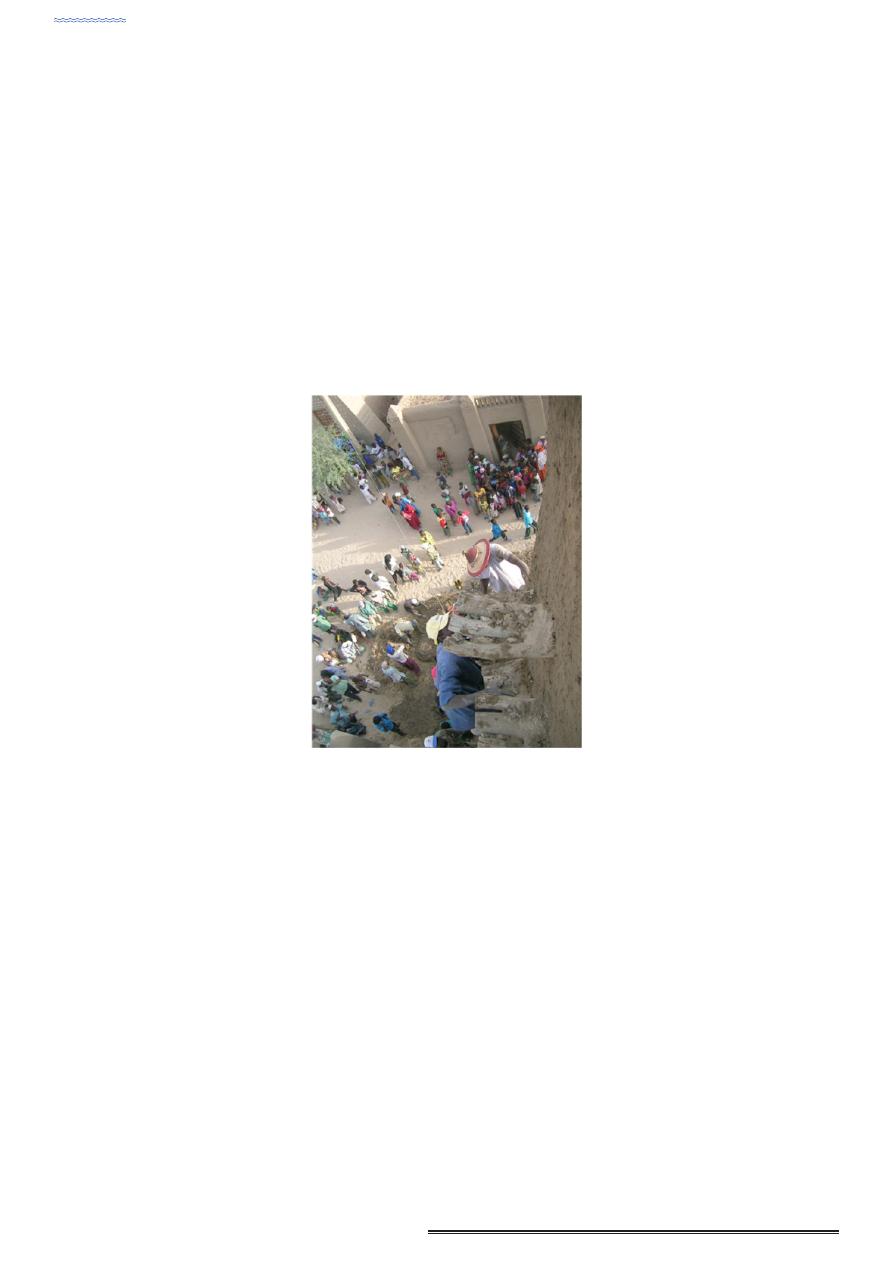
156
INTERNATIONAL JOURNAL OF
ASIA-PACIFIC HERITAGE STUDIES
SUSTAINABLE CONSERBATION OF
ASIA-PACIFIC CULTURAL HERITAGE FOR THE UNESCO CHAIR
유산 보호라는 SDG 11.4의 목표 달성에 대한 구체적 성과지표로서 ‘문화와 자
연유산 보존을 위해 사용된 예산의 비율’(11.4.1)과 ‘도시 지역과 역사·문화 지역
에 관여된 보존 상태 비율’(11.4.2) 두 가지가 제시되고 있다. 유산 보호를 위해
얼마나 많은 비중의 정부나 지방자치단체의 예산을 투입하는지는 가시적 성과
지표라 할 수 있다. 아울러 문화와 자연유산 지역을 난개발로부터 보호하기 위
한 개발 제한 기준을 적용하는 등의 행정조치를 통해 도시 내 유산 지역의 비중
을 일정 수준 유지하는 것 역시 측정 가능한 지표이다. 그리하여 결과적으로 도
시 내 유산 지역의 보존 상태를 개선하고자 하는 것이 SDG 11.4의 구체적 이행
방향인 것이다.
그림 3
지역주민들에 의해
복원되고 있는
말리의 팀북투 유산
출처: UNESCO
그러나 성과지표에서 말하는 유산이 비단 세계유산처럼 국제사회에 의해 가치
를 인정받은 뛰어난 유산에만 한정되는 것은 아니다. 오히려 지역주민의 정체성
과 지역문화 형성에 영향을 미치는 것은 그 유산의 향토유산으로서의 성격이 크
다. 실제로 2012년 말리의 세계유산인 팀북투(Timbuktu) 유적을 파괴한 혐의
로 국제형사재판소(ICC)에 기소된 이슬람 극단주의 무장세력 ‘안사르 디네’의
조직원인 아흐마드 알파키 알마흐디(Ahmad al-Faqi al-Mahdi)가 최근 9년 징
역형과 270만 유로(한화 약 36억원)의 배상 판결을 받은 사건이 있었는데, 판
결에서는 그가 단순히 세계적인 유산을 파괴했기 때문이 아닌 해당 지역 주민들
과 정신적 유대를 맺고 있는 문화적 자산을 조직적으로 훼손했다는 죄목이 강조
되었다. 즉, 한 유산이 지역사회에서 가지는 문화적 상징을 파괴한 행위가 국제
적 범죄로서 인식된 것이다. 따라서 어떤 유산이 세계유산, 국가유산, 지방유산
등으로 지정되었기 때문에 중요한 것이고 보호되어야 하는 것이 아니라, 그 유
산이 해당 지역에 가지는 의미가 충분하다면 모두 보호의 당위성을 갖는다고 볼

157
INTERNATIONAL JOURNAL OF
ASIA-PACIFIC HERITAGE STUDIES
SUSTAINABLE CONSERBATION OF
ASIA-PACIFIC CULTURAL HERITAGE FOR THE UNESCO CHAIR
수 있다.
2.2. 지역사회의 다양한 유산
유산의 형태역시 더 다양하게 생각해볼 수 있다. 도시 내에는 유형의 유산뿐만
아니라, 무형의 유산들도 존재하는데, 여기에는 과거로부터 구전되어 전승된 노
래와 춤과 같은 예술이나, 지방 특유의 음식을 생산하는 전통 기법, 큰 지역적 행
사에 앞서 진행하던 굿과 제례와 같은 관습 등 다양한 형태의 유산이 포함되어
있다. 이러한 무형유산들은 앞서 언급된 문화유산이나 자연유산과 더불어 지역
문화의 핵심적 요소로서 지역색을 구분 짓는 중요한 요소가 된다. 또한 이러한
지역색은 현대에 이어지면서 다양한 형태로 발전하기도 하고, 그 과정에서 창의
성의 원천이 되기도 한다. 그러나 근대 도시의 발전과정에서 새로운 커뮤니티가
형성되고, 이주가 활성화되면서 이러한 지역적 전통은 점점 사라지게 되었다.
도시 개발의 물리적 장애로 인식되는 유형의 유산처럼, 무형의 유산은 타파해야
할 구태의연한 과거의 유물로 인식되기도 한 것이다. 유형유산과 달리 지역 내
무형유산은 전승의 주체인 지역주민이 관심을 기울이지 않으면 그 생명을 잃기
가 매우 쉽다.
가치 인식과 관심이 무형유산의 보호에는 더 핵심적인 이유이다. 국제사회는 이
러한 무형유산의 취약성을 인지하고, 무형유산 보호를 위한 국제협약 도입을 논
의하였는데, 실제로 그 움직임은 서구보다 더 빠른 속도로 산업화가 진행되는 가
운데 전통과 문화가 부지불식간에 사라지고 있는 것에 위기의식을 가진 개발도
상국들이 주도하였다. 이에 2003년 채택된 유네스코 「무형문화유산 보호 협약」
은 사라져가는 무형유산들을 보호하고 인류의 문화적 다양성을 제고하고자 목
록 제도를 운영하고 있는데, 현재 긴급보호목록에는 26개국 47건이, 대표목록
에는 110개국 365건이 각각 등재되어 있다.
무형유산 외에도, 향토기록물에서부터 국가적, 세계적 기록유산에 이르기까지
다양한 형태의 기록은 해당 지역의 문화와 밀접한 관련이 있다. 유네스코는 1992
년 ‘세계의 기억사업(Memory of the World)’을 통해 훼손에 쉽게 노출되는 기
록유산을 발굴하고 보호하기 위해 노력해 왔는데, 특히 한국은 1377년 간행된
세계 최초의 금속 활자본인 직지심체요절을 2001년 유네스코 세계기록유산으
로 등재하고 그를 기념하여 2년마다 기록유산 보호에 많은 노력을 기울인 기관,
단체에 유네스코 ‘직지상’(Jikji Prize)을 수여하고 있다. SDG 11.4에서 말하는
유산은 이처럼 다양한 형태로 존재하며 저마다의 가치를 가지고 있는 것이다.

158
INTERNATIONAL JOURNAL OF
ASIA-PACIFIC HERITAGE STUDIES
SUSTAINABLE CONSERBATION OF
ASIA-PACIFIC CULTURAL HERITAGE FOR THE UNESCO CHAIR
3. 유산과 정체성
국제사회가 SDGs를 통해 유산을 보호하고자 하는 이유는 그 사회문화적 의미
와 가치에 있다. 특히 유산은 지역의 문화적 정체성과 밀접한 관련이 깊다. 이는
유산이 과거의 다양한 시간대의 역사를 그대로 담아냄으로써 그를 둘러싼 지역
주민으로 하여금 그들의 뿌리를 일깨워주는 역할을 하기 때문이다.
건축, 기념물, 기록물과 같은 유형의 문화유산은 그 역사의 흔적을 물리적으로
보여주고, 구전으로, 또는 손에서 손으로 전승되는 예술과 관습은 자신이 속한
공동체만의 문화로서 지역 주민의 삶의 일부로 존재한다.
현대 도시의 공간 속에서 그러한 유·무형의 유산은 항상 개발과 긴장 관계에 놓
여있다. 도시의 물리적 팽창 과정에서 지역의 역사적 정체성은 부정되고 발전의
반대에 놓이기 쉽다. 발전적 미래를 위해 과거는 잊혀야 할 것으로 여겨지기 쉬
운 것이다. 비슷한 맥락에서 도시의 물리적 팽창이 유산 지역을 소외시키는 경
우에도 지역적 정체성은 흔들릴 수 있다. 유산에 대한 가치를 인식하고 보호, 관
리하는 가장 밀접한 주체 없이는 유산은 물리적 존재 이상의 의미를 가지기 어
려운 것이다.
3.1 한국 하회마을의 사례
그림 4
하회마을 전경.
1984년 중요민속
문화재로
지정된 이래
국가적인 보호를
받고 있다.
출처: UNESCO
안동시에 위치한 하회마을도 현대 도시의 발전과정에서 유산의 공동화(空同化)
현상과 지역 정체성의 위기를 겪었다. 낙동강이 S자 모양으로 마을을 휘감아 돌
아가는 전형적인 배산임수의 풍수원리를 충실히 따라 자리 잡은 하회마을은 풍
산 류씨 가문의 씨족 마을로서 지난 500여 년간 전통을 유지해왔다. 그러나 산
업화의 과정에서 마을을 떠나 도심으로, 또는 더 큰 주변 도시로 이주하는 가운
데,1964년 166가구에 이르던 주민 수는 1999년에 약 100가구로, 주민 수는 75%

159
INTERNATIONAL JOURNAL OF
ASIA-PACIFIC HERITAGE STUDIES
SUSTAINABLE CONSERBATION OF
ASIA-PACIFIC CULTURAL HERITAGE FOR THE UNESCO CHAIR
까지 하락하였다. 그러던 중 1999년 영국 여왕 엘리자베스 2세가 마을을 방문자
하 관광객은 급증하기 시작했다. 관광 인프라가 부족한 가운데 무계획적으로 세
워진 건물들은 마을의 전통적 모습을 해치기 시작했고, 경제적 목적을 위해 새롭
게 이주한 주민들과 전통적 지역 공동체 간 갈등은 심화되어갔다. 마을의 보존을
이끌어나갈 다음 세대가 부재한 가운데 외부 문화의 유입은 고유한 문화적 정체
성을 흔들기 시작했고, 마을 내 전승되고 있었던 하회별신굿탈놀이도 더 이상
연행자를 찾기가 어려워졌다. 외부인들에 의한 탈놀이는 점차 상품화되고 문화
의 진정성과 완전성을 잃어갔다.
이에 주민들은 무분별한 외부 문화의 유입을 막고 전통을 지키는 역할을 적극 수
행하고자 노력했다. 마을 공동체 차원에서 젊은이들의 유산 관리 참여와 관련 경
제활동을 확대하고, 전통적 위계질서를 좀 더 평등한 것으로 바꾸기 위해 노력하
였다. 지방정부와 중앙정부에서도 방문객 증가에 따른 여러 기반시설을 확충하
고, 마을의 젊은 층을 대상으로 한 교육과 훈련을 확대하였다. 전통가옥과 같은
유산의 원형을 유지하기 위한 보수와 복원사업도 적극 추진하였다. 입장료 수입
의 40% 이상을 마을보존회의 보조금으로 지급하여 관광의 경제적 혜택을 지역
주민에 환원하는 시스템도 지역주민의 이탈을 막고 자발적으로 마을문화 보존
에 앞장설 수 있는 유인책이 되었다.
2010년 경주 양동마을과 함께 한국의 역사마을로 유네스코 세계유산 목록에 등
재된 이후에도 하회마을은 년 100만 명 내외의 관광객을 맞으면서도 지역의 유·
무형 유산을 잘 보존해오고 있는데, 2012년 유네스코가 세계유산협약 40주년을
기념하여 발간한 『세계유산, 인류를 위한 혜택』에서 세계유산의 핵심정신인 ‘지
속가능한 발전’을 가장 잘 구현한 26개 사례 가운데 하나로 이름을 올리기도 했
다. 물리적 공간은 물론 문화적 전통에 대한 증거로서 예술성이 담긴 축제나 행
사까지도 잘 보존한 점, 그러한 유산 보호를 위한 지역 주민의 노력 등이 높이 평
가 받은 것이다.
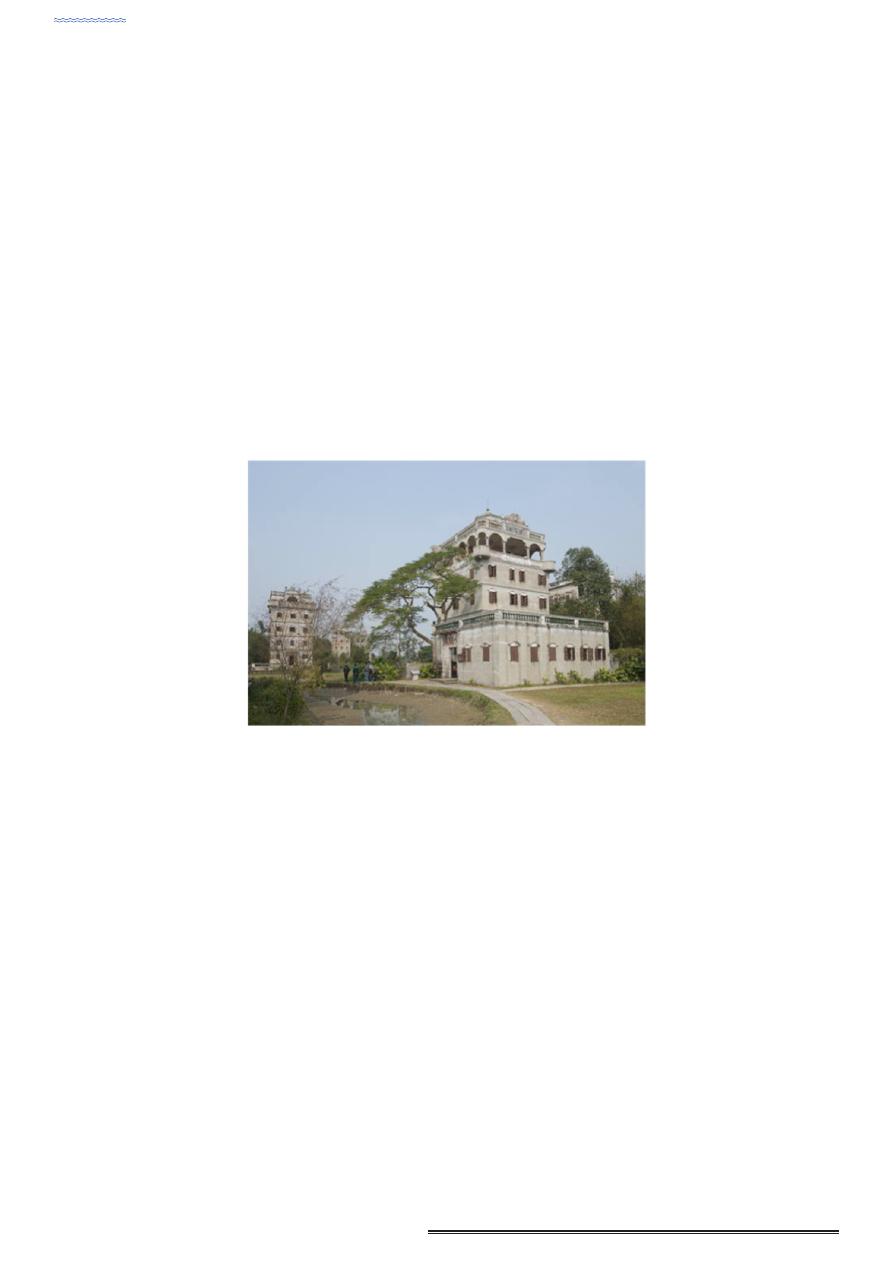
160
INTERNATIONAL JOURNAL OF
ASIA-PACIFIC HERITAGE STUDIES
SUSTAINABLE CONSERBATION OF
ASIA-PACIFIC CULTURAL HERITAGE FOR THE UNESCO CHAIR
3.2. 중국 카이핑 댜오러우의 사례
중국 광둥성 광저우시 남쪽에 위치한 카이핑시에 있는 다층으로 된 방어용 마을
주택인 댜오러우는 중국과 서양의 건축 양식이 융합되어 독특한 모습을 보여주
고 있다. 2007년 세계유산으로 등재된 이 건축물들은 19세기 일자리를 찾아 마
카오, 홍콩, 미국, 캐나다, 호주 등지로 대규모로 이주했던 화교들이 제1차 세계대
전 이후 고향에 돌아와 마을의 약탈에 대비해 세운 방호 목적의 건물이다.
1980년대 중국의 개방과 함께 많은 주민들이 마을을 떠나고, 대부분의 댜오러우
가 비게 되자 유산지역은 현대적 도로건설과 산업시설 공사계획에 점차 포함되
기 시작했다. 또한 유산의 가치를 인식하고 보호하는 사람들이 사라지자 건축물
들은 잦은 태풍과 홍수 등 자연재해에 그대로 노출되어 훼손 위기에 이르렀다.
그림 5
댜오러우 건축물
의 모습.
주변 경관과 조화로
운 모습을 보인다.
출처: Vincent Ko
Hon Chiu
그러나 댜오러우 건축물의 약 85%가 마을주민이나 해외에 거주하는 화교들의
소유라는 점과 보수와 복원기술을 가진 장인과 노동자의 90%이상이 마을주민
이라는 점은 유산이 여전히 지역의 문화적 정체성과 전통에 많은 영향을 미치고
있음을 의미하였다. 이에 카이핑시 정부는 소유주에 유산의 가치를 적극 설명하
고, 체계적인 유산 관리를 위한 위탁관리계약을 체결하였다. 아울러 전문적 연
구 인력을 통해 유산의 가치를 지키기 위한 활동을 추진하였다. 학생들이 댜오
러우의 의미를 제대로 알 수 있도록 여러 교육프로그램도 확대한 것도 유산의 지
속적 보호를 위한 중요한 장치가 되었다. 현재 지역주민과의 협력을 통해 유산
지역 내 새로운 건설계획은 엄격히 제한되고 있으며, 주변의 자연환경들도 통합
적으로 관리되고 있다.
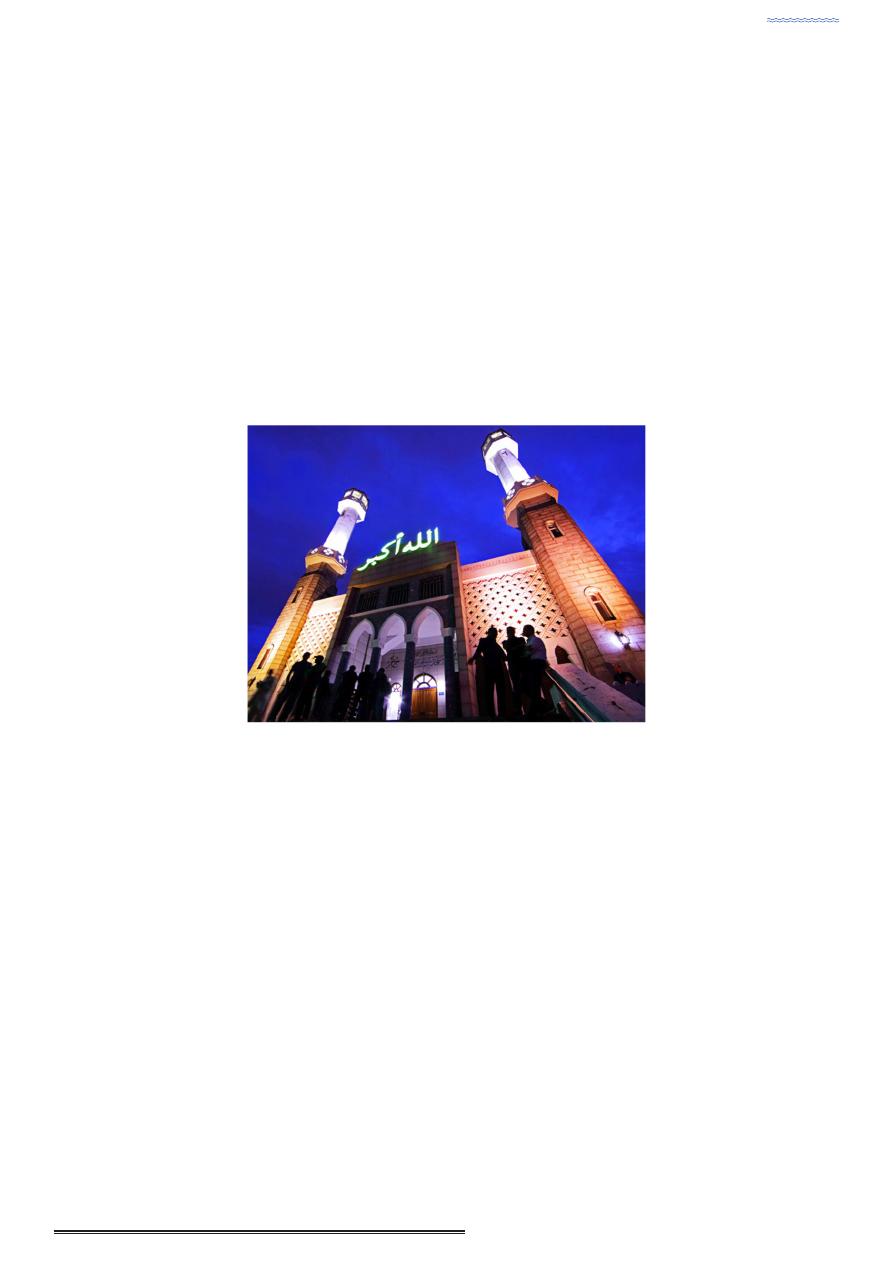
161
INTERNATIONAL JOURNAL OF
ASIA-PACIFIC HERITAGE STUDIES
SUSTAINABLE CONSERBATION OF
ASIA-PACIFIC CULTURAL HERITAGE FOR THE UNESCO CHAIR
3.3. 서울 이태원의 사례
통시적이 아닌 공시적인 측면에서 도시의 유산을 바라보면, 유산은 도시의 정
체성을 형성하고 유지하는 가운데 새로운 문화와 공존하기도 한다. 다양한 문
화적 요소의 공존은 도시 내 문화다양성을 제고하는 효과가 있다. 실제로 서울
만 하더라도, 북촌 한옥마을과 같이 전통적 서울 거주지역의 모습을 그대로 가
지고 있는 곳도 있지만 현대에 이르러 형성된 이주민 문화와 그 유·무형적 유산
을 쉽게 찾아볼 수 있다. 대림과 남구로 지역의 차이나타운, 이촌역 부근의 리틀
도쿄, 서래마을의 프랑스인 거주 지역, 동대문의 우즈베키스탄 상가 등이 그 대
표적 예라 할 수 있다.
그림 6
서울 용산구
한남동에 위치한
이슬람 사원의 야경
출처: 동아일보
이태원의 경우 국내 최초이자 최대의 이슬람 사원이 1970년 한국 정부로부터 부
지를 지원받아 지어지기도 하였다. 한국의 산업화가 심화됨에 따라 이슬람 국가
의 이주노동자가 급증하고, 이에 이슬람 커뮤니티가 이태원에 발달하게 되었다.
이 사원은 문화재로 지정되어 관리되지는 않지만, 서울의 작은 이슬람 공동체의
상징으로 여겨지며 이태원의 다른 다양한 국적의 외국인 공동체와 함께, 한국의
젊은 세대들의 호기심 어린 관심 속에 조화를 이뤄왔다. 최근 극단주의 세력에
의한 전 세계적 테러로 인해 이슬람 문화에 대한 거부감이 커지는 데에도 불구
하고, 이태원의 이슬람문화는 지난 반세기 가까이 평화로운 공존을 해 온 모습
그대로 지역 내 반이슬람주의를 불식시키는 데 기여하고 있다는 평가를 받는다.

162
INTERNATIONAL JOURNAL OF
ASIA-PACIFIC HERITAGE STUDIES
SUSTAINABLE CONSERBATION OF
ASIA-PACIFIC CULTURAL HERITAGE FOR THE UNESCO CHAIR
4. 유산의 경제학
유산이 도시의 정체성을 형성하고 문화적 다양성을 제고하여 과거와 현재, 그리
고 미래를 잇는 역할을 수행함에도 불구하고, 여전히 유산 보존은 개발의 반대
말처럼 받아들여지기도 한다. 미래를 위한 개발의 경제 앞에서 유산은 구태의연
한 과거의 것으로, 시대에 뒤쳐진 논의로 취급받게 되는 것이다. 한국의 경제성
장 과정만 보더라도 도시가 가진 긴 역사의 흔적들은 높아져가는 주택 수요, 도
로, 대중교통과 같은 인프라 구축 등의 문제를 해결하는 데 장애물로 여겨져 왔
다. 고층 빌딩에 비해 전통적 건축물들은 좁은 국토 내 인구밀집지역의 비효율
적 토지 사용처럼 취급받기도 하였다.
그러나 여러 사례나 통계를 들여다보면, 유산의 보호는 오히려 창의적인 경제
효과를 가져온다는 것을 알 수 있다. 특히 도시 계획에 도시의 역사와 정체성을
유지하기 위한 조치를 선제적으로 포함하는 것은 도시의 복합적 토지이용과 지
속가능한 도시 문화 보호에 기여하게 된다. 그리하여 유산 지역은 더 이상 개발
의 걸림돌이 아닌 개발과 공존 가능한 공간으로써 오히려 도시의 가치를 상승시
키는 효과를 창출하기도 한다.
4.1. 한국의 문화재보호법과 동대문디자인플라자(DDP)
한국은 문화재보호법에 따라 대규모 건설공사나 골재 채취 등을 앞두고 사전 지
표조사를 진행하는 매장문화재에 대한 구제 발굴조사 제도를 실시하고 있는데,
그 과정에서 매장문화재가 발견되면 과거에는 유물을 수습하고 그 위에 새로운
건축 계획을 그대로 진행하는 경우가 많았다. 그러나 최근에는 고고학적 유산이
도시의 역사를 보여주므로 보존해야 한다는 목소리가 커짐에 따라 발굴된 부분
을 그대로 보존하고 건축 계획을 수정하여 과거와 현재가 한 곳에 존재하는 모
습을 연출하기 시작했다.
그림 8
서울 동대문디자인
플라자(DDP)의
어울림광장
출처: 서울디자인
문화재단

163
INTERNATIONAL JOURNAL OF
ASIA-PACIFIC HERITAGE STUDIES
SUSTAINABLE CONSERBATION OF
ASIA-PACIFIC CULTURAL HERITAGE FOR THE UNESCO CHAIR
2014년 개관한 서울 동대문디자인플라자(DDP)가 대표적 예라 할 수 있다. 방문
객들은 세계적 건축가인 자하 하디드(Zaha Hadid)가 디자인한 현대적이고 최
첨단의 건물 안에 조선시대 유적이 고즈넉이 자리 잡고 있는 이색적인 장면을 마
주하게 된다. 실제로 이 지역은 동대문을 중심으로 서울의 오랜 역사를 품고 있
는 지역으로, 서울시는 2008년 DDP 건설 과정에서 조선시대 유적이 발견되자
모든 공사를 중단하고 1년 동안 발굴 작업에 전념하였다.
역사적 중요성이 높은 유적의 보존을 두고 많은 논란이 있었으나, 유산 보존을
가장 우선순위로 두고 전문가, 시민, 건축가와 협의하여 당초의 건물 설계를 변
경하는 것으로 결론지었다. 발굴 유적의 일부를 원형 그대로 건물의 일부분으로
보존하고, 일부는 이전하여 전시하게 된 것이다. 유산지역을 파편화하고 박제화
했다는 비판도 있지만, 한 공간에 과거와 현대가 공존하는 모습은 시민들로 하
여금 도시의 뿌리를 인식하게 하는 한편 개발 논리 앞에서 유산 보호가 가지는
중요성을 되새기는 계기를 자연스럽게 제공하기도 한다.
4.2. 개발과 유산보존의 경제적 관계
개발과 문화유산 보존이 상반되는 개념이 아니라는 점은 경제학적으로도 설명
될 수 있다. 물론 경제적 가치가 유산 보호의 모든 당위성을 설명하기는 어려우
며, 그 가치가 유산 보호가 가지는 다른 사회적, 역사적, 문화적 가치보다 훨씬
더 중요한 것은 아니다. 다만 개발을 생존과 직결된 경제적인 문제로 바라보는
시각이 유산 보호를 경제효과를 가지지 못하는, 따라서 후순위에 두어도 괜찮은
것으로 정당화하는 경우가 많다는 점을 지적되어야 할 것이다.
실제로 『역사보존의 경제학』의 저자인 국제유산전략연구소의 도노반 립케마
(Donovan Rypkema) 대표는 유산의 경제적 가치를 1) 일자리와 가계수입, 2)
재산 가치, 3) 도심 재활성화, 4) 소기업 육성, 5) 유산 관광 등 다섯 가지 지표
를 통해 설명하고 있다. 경제발전의 최우선순위는 일자리 창출과 수입 증대이
다. 그는 전 세계적 사례와 통계를 분석하여, 신규 건축에 비해 유산 복원과 재
활성화 사업이 더 양질의 일자리를 창출하고, 건물의 가치를 더 높일 뿐만 아니
라, 더 높은 도심 재개발 효과와 관련 소기업들을 발굴하고 육성하는 효과를 가
진다고 밝혔다.
실제로 2014년 세계유산으로 등재된 남한산성의 경우, 등재 이후 관광객 증가는
물론 관련 축제와 행사를 적극 추진하여 지역경제가 크게 활성화시켰다. 경기연
구원은 2014년부터 2033년까지 20년간 남한산성 정비 사업에 3천 892억 원을
투자하면 8천 81억 원의 생산유발, 3천 690억 원의 부가가치유발, 3천 695명의
고용유발효과가 기대된다는 연구결과를 발표했는데, 이는 도노반 립케마 대표
가 말하는 유산 보존을 통해 얻는 경제적 효과와 일맥상통하는 결과이다.
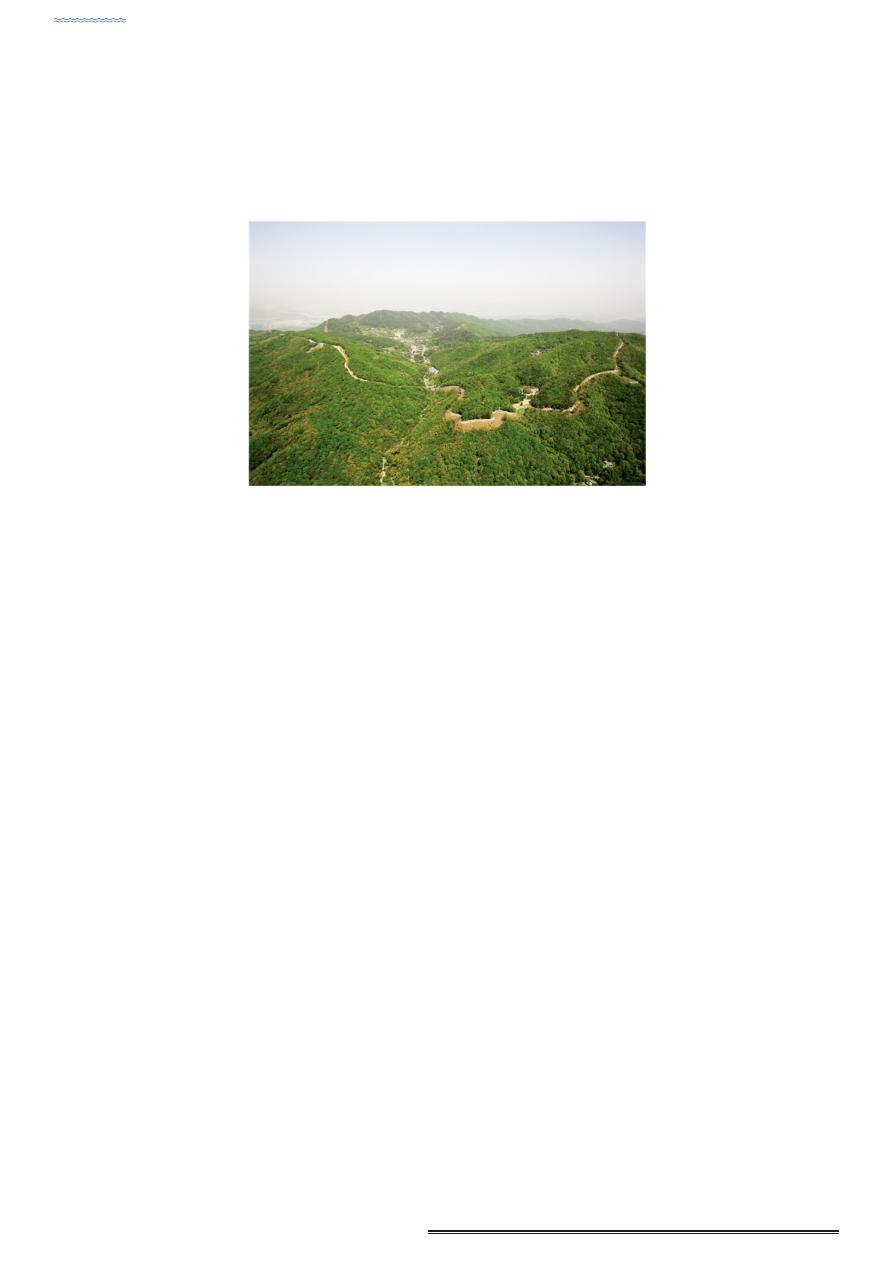
164
INTERNATIONAL JOURNAL OF
ASIA-PACIFIC HERITAGE STUDIES
SUSTAINABLE CONSERBATION OF
ASIA-PACIFIC CULTURAL HERITAGE FOR THE UNESCO CHAIR
이는 남한산성이 위치한 광주시, 성남시, 하남시가 힘을 합쳐 산성 지역을 정비
하고, 산성 내 거주하는 주민들의 참여와 방문객의 협조를 통해 더욱 유산 보호
에 힘쓰는 데 중요한 추진 근거가 되기도 하였다.
그림 9
남한산성 전경
출처: 경기도남한산
성세계유산센터
4.3. 지속가능관광에 대한 고려
그러나 흔히 유산보존을 통한 가장 직접적 경제활동으로 생각되는 유산 관광의
측면에서는 그는 오히려 관광 개발의 적정 수준을 강조하였다. 그 지적처럼, 지
나친 관광 활성화는 개발활동에 취약한 유산 자원을 과도하게 사용하고 주변 경
관 역시 훼손하기 쉽기 때문에 미래세대가 유산을 통해 얻을 수 있는 혜택에도
부정적 영향을 미칠 수 있다. 그러므로 편의, 위생 시설 등 필수적인 관광 인프라
를 구축하면서도 관광의 경제적 혜택은 다시 그 보존관리에 투입하여 유산의 핵
심적 가치가 손상되지 않도록 하는 ‘선순환적’ 구조는 도시의 유산을 더욱 지속
가능한 방향을 보존하는데 기여할 수 있다.
또한 지역주민들이 지나치게 많은 관광객으로부터 지나친 방해를 받기 쉬우므
로, 주민들의 평화로운 일상을 보장하기 위한 방안도 적극 마련될 필요가 있다.
최근 유럽의 유명 관광지를 중심으로 지역주민들이 거주민의 평온할 권리를 주
장하며 방문객들을 배척하는 현상이 나타나고 있는 것은 모두 과도한 관광 개발
에 따른 것이라 볼 수 있다. 관광을 통한 경제적 가치 창출이 지역주민의 삶의 질
을 희생되는 가운데 이루어지지 않도록 ‘적정 관광’ 또는 ‘지속가능한 관광’의 개
념을 항상 염두에 둘 필요가 있다.
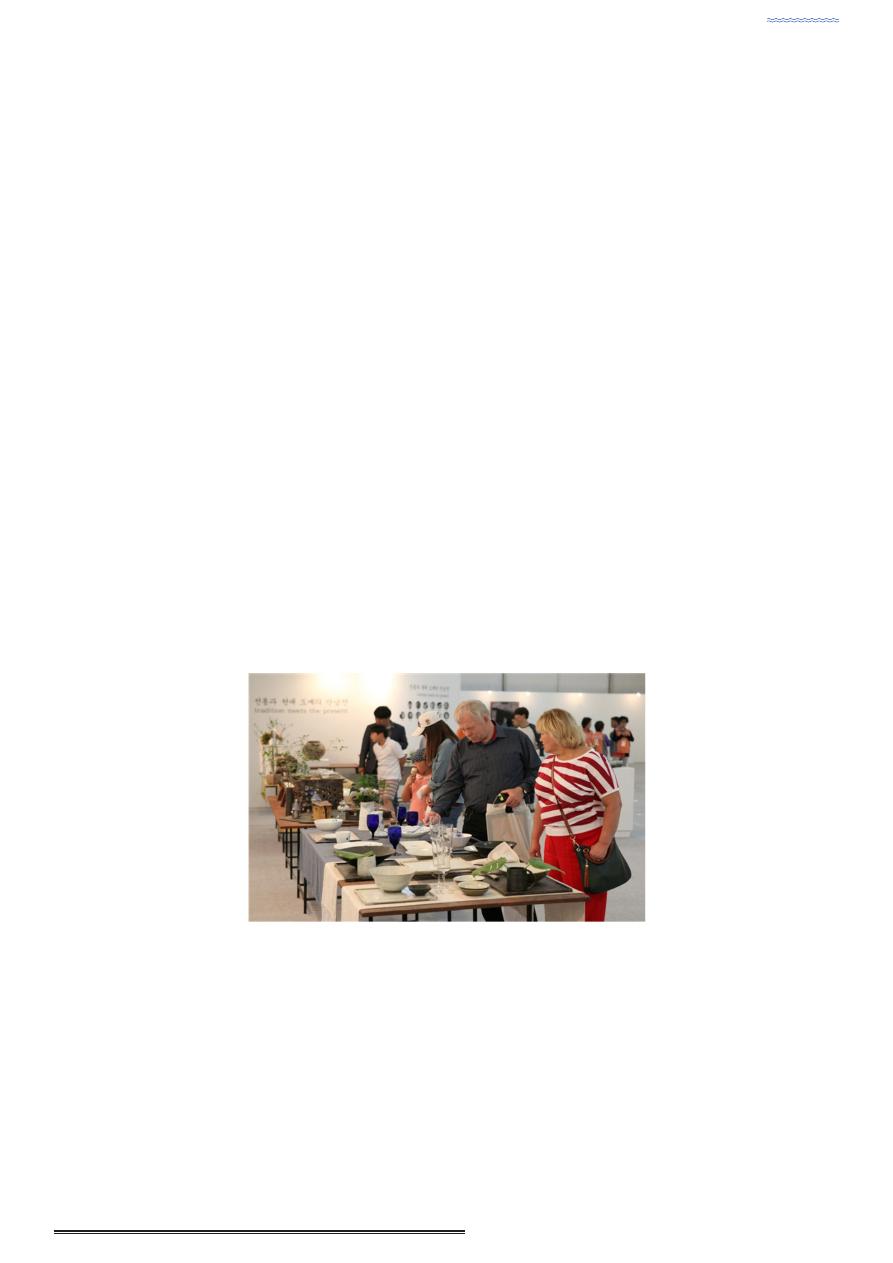
165
INTERNATIONAL JOURNAL OF
ASIA-PACIFIC HERITAGE STUDIES
SUSTAINABLE CONSERBATION OF
ASIA-PACIFIC CULTURAL HERITAGE FOR THE UNESCO CHAIR
5. 결론: 유산과 미래
유산이 지역공동체의 정체성 유지와 문화다양성 제고에 미치는 중요성을 인식
하는 것은 과거로부터 유산을 이어받은 현 세대가 가지는 의무의 시작점이라 할
수 있다. 따라서 지역사회는 과거의 유산을 보다 적극적으로 발굴하고 미래 세
대에 전승할 책임을 지닌다고 볼 수 있다. 한국의 여러 도시들은 지역 고유의 문
화를 발굴하고 활성화시키고자 많은 노력을 기울이고 있는데, 이천시의 경우 유
네스코 창의도시 네트워크라는 국제네트워크 가입을 계기로 그러한 노력을 한
층 더 끌어올린 대표적 도시로 손꼽을 수 있다.
이천시는 2010년 유네스코 창의도시 네트워크의 공예와 민속예술 분야에 가입
했다. 2000년대 중후반 창의도시 가입을 준비하는 과정에서 이천시는 지역 내
도자 관련 인프라를 전격 조사하면서 지역 내 도자 전통의 현재를 진단하는 계기
를 가졌다. 도자 생산 관련 인프라, 교육 및 연구 관련 지원 인프라, 축제 등을 통
한 홍보 인프라 등 다각적 측면의 중장기 계획 수립의 필요성을 인식하게 된 이
천시는 창의도시 가입을 기점으로 해당 계획들을 적극 추진하게 되었다. 도자예
술인과 관련 산업종사자들은 협동조합을 중심으로 긴밀히 협력하게 되었으며,
인천도예고등학교, 한국도자재단, 한국세라믹연구원의 이천 분원 등 관련 전문
교육과 연구기관은 지역 내 도자문화 활성화를 지지하는 큰 축이 되고 있다.
그림 11
이 천 도 자 기 축 제 를
관람 중인 외국인
방문객.
출처: 이천도자기
축제추진위원회
그러나 이러한 지역 유산의 재발견이 더욱 내실 있는 모습으로 지속되기 위해서
는 그 계승자의 역할이 가장 중요하다. 2014년 제정된 지역문화진흥법에서도 지
역문화지원 시스템 구축을 위한 예산 및 계획수립 등의 중요성과 더불어 그 기
반 확충을 위한 인력 양성의 중요성이 강조되고 있다. 특히 무형유산의 경우, 그
전승자가 유산의 지속가능성을 결정짓는 핵심이 되기 때문에 지역주민의 관심
과 참여가 더욱 필수적이라 할 수 있다.
이를 위해서는 학교 교육에서 전통 유산에 대한 교육을 확대하고, 지역 내 유·무

166
INTERNATIONAL JOURNAL OF
ASIA-PACIFIC HERITAGE STUDIES
SUSTAINABLE CONSERBATION OF
ASIA-PACIFIC CULTURAL HERITAGE FOR THE UNESCO CHAIR
형 유산에 대한 관심을 가질 수 있도록 장려해야 할 것이다. 현재 전국에는 5,300
여명의 문화예술교육강사가 학교현장에서 활동 중이나, 모두가 그 지역의 고유
한 문화적·자연적 자산과 적극 연계하여 교육하고 있지는 않다. 또한 실제로 학
교 교육에서 미래 세대에 대한 모든 교육을 담당하기란 현실적으로 불가능한 일
이기도 하다. 따라서 지역에서는 비정기적 교육활동과 축제 등의 계기를 통해
끊임없이 학생과 청년들의 참여를 독려할 필요가 있다. 제주도의 해녀학교 개소
와 졸업생들을 위한 지원이 젊은 해녀를 나타나게 한 주요한 동기가 되어 제주
해녀문화의 생명이 이어지게 된 것처럼, 유산이 지역 내 지속가능하게 보호되
고 전승되기 위해서는 미래 세대에 대한 관심을 게을리 하지 않아야 할 것이다.
<참고문헌>
1. 김지현. 2017. “유네스코의 문화유산 보호 협약과 사업의 현황: 세계유산, 무형유산,
기록유산을 중심으로” 『무형유산학』2(1). pp. 153-178.
2. 박세훈. 2016. “해비타트 Ⅲ
「새로운 도시의제」의 성립배경과 의의”
공간과 사회 26(4).pp. 9-39.
3. 유네스코한국위원회. 2011. 일상 속 20세기 도시문화유산의 가치와 보존.
서울: 유네스코한국위원회.
4. 유네스코한국위원회. 2013. 세계유산: 인류를 위한 혜택. 서울: 유네스코한국위원회.
5. 임종현 역, Donovan D. Rypkema 지음. 2008. 역사보존의 경제학:
지역사회 지도자를 위한 지침. 서울: 문운당.
6. UNESCO. 2015. Re-Shaping Cultural Policies: A Decade Promoting the Diversity of
Cultural Expressions for Development. Paris: UNESCO

GROUP
| Cultural Heritage Administration of Korea
NAME
| Sujeong Lee
Integrating
Sustainability
into Local
Context :
Needs and
Challenges


169
INTERNATIONAL JOURNAL OF
ASIA-PACIFIC HERITAGE STUDIES
SUSTAINABLE CONSERBATION OF
ASIA-PACIFIC CULTURAL HERITAGE FOR THE UNESCO CHAIR
Integrating sustainability to local context,
its needs and challenges
Sujeong Lee
Cultural Heritage
Administration of Korea
1. Introduction
The importance of sustainability is rapidly emerging from the social,
cultural, environmental, and economic aspects. As a core resource, cultural
heritage is a very significant keyword in discussing sustainability, but its
actual recognition is very low. This is because cultural heritage is still only
approaching from the perspective of heritages.
On the other hand, there are relatively few discussions on the specific
meaning of sustainability considering the various values of cultural heritage
and how to implement the principle.
From now on, it is necessary to understand the international research
outcomes and discussions and canvass the characteristics and attributes
of domestic cultural heritage, and the sustainability appropriate to
the institutional conditions and the environment for conservation and
management.
From this point of view, this paper describes the important role of cultural
heritage in the large social discourse of sustainability, and examines the
meaning and principles of sustainability in the heritage conservation. We
will examine the current status of domestic heritages for the application
of sustainability, and present the necessity of regional discourse based on
international discourse, in addition to the prospect for their realization.
2. Conceptual Aspects: Sustainability, and Sustainability in the
Conceptual Development of Cultural Properties
In 1987, the Brundtland Report, also known as Our Common Future, defines
sustainability as an evolution that meets current needs without sacrificing
the capability of future generations to meet their needs. The application
from the viewpoint of cultural heritage, sustainable conservation in cultural
heritage means that future generations will have a negative impact on the

170
INTERNATIONAL JOURNAL OF
ASIA-PACIFIC HERITAGE STUDIES
SUSTAINABLE CONSERBATION OF
ASIA-PACIFIC CULTURAL HERITAGE FOR THE UNESCO CHAIR
enjoyment and preservation of cultural heritage values. It can be said that
the current generation enjoys and maintains the value of cultural heritage
and delivers its significance to future generations.
This position has a coherent interrelation with the recent changes in
recognizing cultural heritage as a resource in terms of the sustainability
of resources that emphasizes sustainability. The passionate interest in
cultural heritage has been relatively short in comparison with the history of
philosophy, science, and art, but as the territory and scope of this field have
been expanded, the concept of objects and the principles of related actions
have been developed rapidly. As the concepts of cultural heritage as an
object have been changed over time, the direction, principles, and goals of
the actions have been developed in company with their advancement.
The process of evolution can be divided into three stages. The early stage
is that cultural heritage was seen as a material product shaped by historical
events. In the second stage, it has been evolved as the object of inheritance
that contains the past and present traces for the future generation. In the
third stage, the viewpoint that recognizes cultural heritage as a resource is
discussed and applied in the cooperation with many countries in Europe.
What is noteworthy is that valuation is a key element of cultural heritage that
has been continuously emphasized at every stage in the development of this
concept. Derivative values include socio-economic values and emotional
values that arise from the conducting process such as investigation,
conservation management, and utilization of cultural heritage. The values,
which are core attributes of cultural heritage, shape the foundation to make
heritages as a resource and are also a key requirement for sustainability.
3. The Roles and Application Principles of Sustainability in the
Cultural Heritage: International Status
In recent years, sustainability has been rapidly shifting to international
conventions and cultural heritage policies of each country. In 2005, the
FARO Framework Convention on the Value of Cultural Heritage for Society
defines cultural heritage as an object that expresses and reflects values,
beliefs, knowledge, and traditions that have continuously emerged as a
collection of resources inherited from the past.
In 2008, “Conservation Principles: Policies and Guidance” in the United
Kingdom introduced the sustainability as a principle of conservation and
management, providing concrete meaning to the concept of cultural heritage
in the national policy. The policy that recognizes heritage as a resource

171
INTERNATIONAL JOURNAL OF
ASIA-PACIFIC HERITAGE STUDIES
SUSTAINABLE CONSERBATION OF
ASIA-PACIFIC CULTURAL HERITAGE FOR THE UNESCO CHAIR
and that includes sustainability into conservation and management is more
apparent in the report “Heritage and Society” published in 2018.
The key point is that the majority of British people take a serious view of
the value of the historic environment and that cultural heritage is a vital
resource for the health and well-being of the members of the society. The
core element forms a sense of homogeneity and affects the point of view
of the place. It gathers people and stimulates community in education and
learning.
Unlike the direction of other fields regarding sustainability, the cultural
heritage will have to understand the value thoroughly, and comply with the
principle of value-oriented conservation-management and utilization.
The author considers the three essential requirements for the sustainable
preservation and management of cultural heritage as a resource of life.
The first is value-based conservation. the values must be preserved in order
to sustain cultural heritage through generations and contribute positively to
the sustainability and richness which condition our lives. Accordingly, it is
very important to preserve, manage and utilize according to the identified
and verified values.
The second requirement is rational decision-making. There is no correct
answer about the way to preserve, manage and utilize cultural heritage.
However, it is essential to ensure that the value inherent in cultural heritage
is maintained as much as possible. Therefore, it is very important to make
decisions based on rational procedures and logical grounds.
The third requirement is for community engagement. All decisions about
cultural heritage employ social processes. In other words, the community
is the main body of preservation, management and utilization of cultural
heritages. This means that the decision-making body for such an action
must be a community that constitutes and moves society.
4. Necessity and Challenges of Regional Discourse on Sustainability
In order to examine the status of local discourse on sustainability, this paper
deals with decision-making steps for the separation of murals from walls for
the preservation treatment of murals at the Buddha Hall at the Mihwangsa
Temple on Dalmasan (Dharma Mountain), nicknamed 'Geumgangsan
(Diamond Mountain) of the Korean peninsula, Haenam County, South Jeolla
Province. As another example of rational decision-making and community
participation, the author talks about the construction of a bridge, which is
planned by Gongju City and Nation Agency for Administration City Constr
uction, which is highly designated by the “Enforcement Decree Of The

172
INTERNATIONAL JOURNAL OF
ASIA-PACIFIC HERITAGE STUDIES
SUSTAINABLE CONSERBATION OF
ASIA-PACIFIC CULTURAL HERITAGE FOR THE UNESCO CHAIR
Special Act On The Preservation And Promotion Of Ancient Cities.” As
for the necessity and problem of local discourse, the author thinks it is
necessary for the first review in the following three fields. First, the policy
and administrative procedures should be carefully reconsidered to ensure
that the requirements of sustainability are met properly and that the value-
based rational judgments are performed correctly. Second, continuous
education and professionalism are needed. All stakeholders on cultural
heritage, namely the government, local government officials, researchers
and professionals in the various fields of cultural heritage, and the public
and local communities, should develop capability to fully understand and
practice numerous values contained in each cultural heritage in their work,
life, and curriculum.
The last is that unceasing discussion and dialogue are demanded. Such
activities make it possible to share the specificity of the region that exits
among countries with internationally similar circumstances as well as
communication among various stakeholders in the country.
It would be necessary to form appropriate regional discourse for each
country and region, and to find ways to integrate conservation-management
and utilization into the local area in a policy or cultural heritage site.
5. Discussion
The sustainability of the cultural heritage is sufficiently justified by the
public value of the cultural heritage and its role in enriching the present
and future life as a resource.
However, there is still a lack of discourse in Korea that considers the
concept and the specificity of the region, in comparison to the degree of
international discussion about sustainability.
Therefore, based on the relationship to sustainability, academia, and public
interest and understanding, a comprehensive discussion of the concrete
principles and directions for sustainability should be proposed through
international discussions. In addition, this paper discusses how to ensure
sustainability according to the domestic specificity and conditions.

173
INTERNATIONAL JOURNAL OF
ASIA-PACIFIC HERITAGE STUDIES
SUSTAINABLE CONSERBATION OF
ASIA-PACIFIC CULTURAL HERITAGE FOR THE UNESCO CHAIR
문화유산의 보존에 있어서 지속가능성에
대한 지역담론의 필요성과 과제
이 수 정
문화재청
고도보존육성과
1. 들어가는 말
문화유산보존에 있어서 지속가능성에 대한 본격적인 논의는 2000년대에 들어
서이다. 그 본격적인 논의의 시작은 2005년「사회를 위한 문화유산의 가치에 관
한 협약(Convention on the value of cultural heritage for society, 일명 파로
협약)」에서인데, 여기에서는 사회의 지속가능한 발전을 위해서는 문화유산이 지
니는 가치와 그것이 가지고 있는 다양한 잠재력이 자원으로서 잘 사용되어야 한
다고 강조하였다1.
현재 사회적·문화적·환경적·경제적 측면에서 지속가능성에 대한 중요성이 급속
히 부각되고 있다. 그 핵심자원으로 문화유산분야는 지속가능성을 논할 때에 매
우 중요한 키워드이지만 실제 그 역할에 대한 인식은 매우 낮다. 이는 문화유산
을 여전히 ‘자산(assets)’의 관점에서 수단적으로만 접근하고 있기 때문이다2.
즉, 문화유산을 개인의 재산으로 인식하거나 관광을 통해 고용과 이익을 창출하
는 경제적 수단으로서 그에 대한 보존을 하나의 투자로 인식하고, 관광객 숫자나
숙박업체 점유율 또는 입장권 수익 등으로 그 가치를 산정하고 있기 때문이다.
이러한 맥락 속에서 ‘문화유산의 지속가능성’ 또는 ‘문화유산의 지속가능한 보
존’에 대한 논의는 경제적인 차원에 집중되는 경향이 있다. 그에 비해 보다 근원
적으로 문화유산이 지니는 다양한 가치를 고려한 지속가능성의 구체적인 의미,
원칙, 실현방법 등에 대해서는 비교적 논의된 바가 매우 적다. 이러한 경향은 국
내도 마찬가지이다. 현재까지 국내에서는 지속가능성에 대한 국제적인 연구동
향과 담론이 소개되거나 문화재 분야의 전문가 간에 서로 그 개념을 공론화하
거나 이해하려는 시도가 거의 없었다. 그러므로 이제부터라도 국제적인 연구 성
과와 논의의 흐름을 이해하는 동시에 국내 문화유산의 특징과 속성, 그리고 제
도적 여건과 보존·관리 환경에 적합한 지속가능성이 무엇인지 논의하여야 한다.
1 | Council of Europe(2005) Council of Europe Framework Convention on the Value of Cultural Heritage for Society,
Council of Europe, p 2.
2 | Yang, M (2015) ‘Culture in moving the MDGs to the post-2015 development agenda: some reflection on the role of
living heritage for sustainable development’, in M Albert(ed) Perceptions of sustainability in heritage studies,
Berlin: De Gruyter, p 21.

174
INTERNATIONAL JOURNAL OF
ASIA-PACIFIC HERITAGE STUDIES
SUSTAINABLE CONSERBATION OF
ASIA-PACIFIC CULTURAL HERITAGE FOR THE UNESCO CHAIR
그러한 관점에서 본 논문에서는 지속가능성이라는 큰 사회적 담론 속에서 문화
유산의 중요성과 역할을 서술하고, 문화유산 보존에 있어서 지속가능성의 의미
와 원칙을 살펴보고자 한다. 그리고 지속가능성의 적용을 위한 국내 문화재분야
의 현황을 점검하고, 국제적 담론을 기본으로 하되 지역적 담론형성의 필요성과
그것을 실천하기 위한 과제를 시론적으로 제시해보고자 한다.
2. 개념적 측면 : 지속가능성, 문화재개념 발전에 있어서의 지속가능성
2.1. 지속가능성과 문화유산의 지속가능성
문화재분야에서의 지속가능성에 대한 담론을 시작하기 위해서는 우선 지속가능
성에 대한 일반적인 개념을 보아야 한다. 최근 지속가능성에 대한 기본개념과 토
대를 형성하고, 정책적 방향을 제시하는 데에 주요 역할을 한 보고서는 1987년에
발간된 『브룬트란트 위원회의 보고서(Our Common Future, The Brundtland
Report)』이다. 여기에서는 지속가능성을 ‘미래 세대가 자신들의 요구를 충족시
키는 능력을 희생시키지 않고 현재의 요구를 충족시키는 발전’으로 그 개념을
정의하고 있다
3 . 그 후 2015년 유엔 회원국들이 모인 유엔총회에서 2015년 이
전까지 진행되어 온 새천년개발목표(Millenium Development Goals)를 대치하
는 ‘지속가능한 개발목표(Sustainabile Development Goal)’를 수립하면서 지
속가능한 발전이 범 세계적으로 확산되었다. 여기에서는 빈민국이든 개발을 이
룬 국가이든 간에 구분 없이 모든 지역에 공통으로 적용될 수 있는 통합적인 17
개의 목표를 제시하였다. 그 내용은 기존의 새천년개발목표에 포함되었던 빈곤
이나 기아의 종식에서 더 나아가 복지증대, 차별근절, 지속가능한 에너지 보장,
지속가능한 경제성장 및 산업화, 소비 및 생산패턴 확립, 기후변화에 대한 대처,
지속가능발전을 위한 해양자원의 보존과 사용, 육지생태계 등 생물다양성 및 산
림의 관리, 지속가능발전을 위한 법적 제도 등을 그 목표로 두었다. 특히 ‘자원
(resource)’의 지속가능성을 강조하고, 자원의 합리적인 배분과 보존, 미래세대
의 지속가능성을 보장할 수 있도록 자원의 윤리적인 사용 등이 강조되었다.
앞서 살펴본 브룬트란트 위원회 보고서의 지속가능성에 대한 개념정의의 관점
을 적용해 본다면 문화유산에 있어서의 지속가능한 보존이란 미래의 세대가 문
화유산의 가치를 향유하고, 보존하는 데에 있어서 부정적인 영향을 미치거나 이
들 행위를 제한하지 않는 범위 내에서 현 세대가 문화유산의 가치를 향유하고 보
존하여 미래 세대에 전달하는 것이라고 할 수 있다. 그리고 그러한 관점은 지속
3 | World Commission on Environment and Development(1987) Our Common Future, The Brundtland Report,
Oxford University Press, 1987

175
INTERNATIONAL JOURNAL OF
ASIA-PACIFIC HERITAGE STUDIES
SUSTAINABLE CONSERBATION OF
ASIA-PACIFIC CULTURAL HERITAGE FOR THE UNESCO CHAIR
가능성에서 강조하는 자원의 지속가능성 측면에서 문화유산을 자원으로 인식하
는 최근의 변화와 일맥상통하는 상관관계를 지닌다고 볼 수 있다. 이에 대해서
는 문화유산에 대한 개념의 진화 및 발전과정을 설명하면서 살펴보기로 하겠다.
2.1. 문화유산과 보존에 대한 개념 변화에 있어서 지속가능성의 위치와 역할
문화유산에 대한 개념의 시작은 학자마다 그 시기를 달리 보고 있지만 전반적으
로 르네상스 시기로 보고 있다. 이 시기에는 인간에 대한 관심과 함께 인본주의
의 토대 위에서 역사에 대한 연구와 관심이 커졌고, 그 과정에서 역사적 산물이
가지는 중요성이 커졌다. 전대에는 주로 문헌연구에 의존해온 역사가들에 의하
여 역사가 서술되어왔지만 르네상스 시기에 들어서면서 매장문화재에 대한 발
굴이 시작되었고, 유물을 중심으로 역사의 빈 공간을 메꾸는 골통품 전문가가 등
장하면서 유물을 중심으로 역사를 서술하는 새로운 방식이 등장하였다. 문화유
산에 대한 관심은 철학이나 과학, 예술 등의 역사가 깊은 학문분야에 비하여 비
교적 그 역사가 짧았지만 이 분야가 대상으로 하는 영역과 범위가 확장되면서 대
상에 대한 개념과 관련 행위에 대한 원칙이 빠르게 발전하여 왔다. 대상인 문화
유산에 대한 개념이 진화하면서 그것을 대상으로 하는 행위의 방향과 원칙, 그리
고 목표도 함께 진화되어 왔다. 그 진화과정은 크게 세 단계로 구분해 볼 수 있다.
첫 번째는 개념 형성의 초기단계로서 이 시기에는 문화유산을 역사적 활동에 의
해 생산된 물질적 산물로 보았다. 이는 르네상시시기부터 20세기 초반까지에 주
로 가졌던 개념이다. 이 시기에는 역사를 말해주는 모든 물질적 산물을 하나씩
문화유산의 범주 안에 포함시키는 작업을 지속적으로 하면서 문화유산의 종류
를 크게 늘려온 시기이기도 하다. 예술적 가치가 높은 명작이나 건축적 가치가
높은 건축물, 중요한 역사적 사건을 말하는 기념물 뿐 만 아니라 다양한 민속품
이나 지질자원 등 인류의 삶과 연관되어 있는 모든 종류의 산물을 시대구분 없
이 포함하게 되었다. 이들이 역사를 물리적으로 보여준다는 보았기 때문에 문화
유산을 구성하는 유형적 측면을 중시하였다.
그에 따라 보존·관리는 물리적 요소, 즉 원 부재와 부속물을 포함한 형태와 재료
를 현재 시점 또는 특정시점에서 동결시키는 것을 목표로 하였다.
두 번째 단계에서는 문화유산을 과거와 현재의 흔적을 미래에 전달하는 상속의
대상으로 보는 관점으로 진화하였다. 단순히 역사적 산물로 인식하는 관점이 확
대되어 과거-현재-미래를 연결하는 매개체로 보게 되었다. 문화유산은 과거에
서 현재로, 그리고 그 모든 흔적이 다시 미래로 상속되므로, 유산으로 불리게 되
었다. 그러한 맥락에서 문화유산은 단순히 물리적인 것만이 아니라 유형적인 요
소와 일체를 이루는 정신적·사상적 측면, 예술적 미감, 역사적 인물이나 사건과
의 연관성 등을 모두 대상으로 보고 있다. 또한 한 세대와 다음 세대를 연결해 나

176
INTERNATIONAL JOURNAL OF
ASIA-PACIFIC HERITAGE STUDIES
SUSTAINABLE CONSERBATION OF
ASIA-PACIFIC CULTURAL HERITAGE FOR THE UNESCO CHAIR
간다는 차원에서 보면 그것이 지니는 역사적·예술적·학술적·경관적 가치는 개인
이 아닌 시공간적으로 존재하는 모든 사람과 모든 세대를 위한 것이다. 즉 문화
유산은 공적 속성을 가지고 있으며, 이러한 공적 가치(public value)를 최근 들
어 문화유산의 핵심적 속성으로 보고 있다.
문화유산이 공적 가치를 지니는 대상으로 그 개념으로 진화하면서 그에 대한 보
존관리행위는 공적 행위가 되었다. 그리고 이러한 공적 산물을 대상으로 하는
공적행위는 충분한 정보와 지식을 가지고, 논리적인 사고를 통해, 합리적 판단
을 내리는 것(informed conservation)을 목표로 하게 되었다. 이를 실천하기 위
해 소유자나 관리주체 뿐만 아니라 문화유산과 관련된 모든 이해당사자가 그 과
정에 참여하는 방안을 모색하고 있다. 또한 당대 뿐만 아니라 미래 세대까지 모
든 세대가 문화유산을 위한 의사결정의 주체로 인식하고 있다. 상속의 관점, 그
리고 그에 대한 행위가 시대를 거쳐 순환적으로 이루어진다는 관점에서 보존
‧관
리는 특정 시점에 끝나는 행위가 아니라 하나의 ‘사회적 과정(social process)’
으로 이해하고 있다.
이러한 관점은 지속가능성이 추구하는 개념적·철학적 측면을 문화유산 보존에
보다 적극적으로 적용할 수 있는 이론적 토대를 제공하였다. 보존행위를 세대
간에 연속적인 의사결정이 이루어지는 하나의 사회적 과정으로 이해하게 되면
서 앞서 언급한 브룬트란트 보고서에서 말하는 지속가능한 발전과 직접적으로
연관성을 가지게 된 것이다. 그에 따라 문화유산을 보존하는 원칙에 지속가능성
의 개념과 원칙이 깊이 유입되고 있다. 당대에 다음 세대가 해야 할 가치판단이
나 의사결정을 미리 앞서서 하지 않도록 하고, 당대의 의사결정이 다음 세대가
의사결정을 하는 데 있어서 선택의 폭을 제한하거나 가치향유에 부정적 영향을
미치지 않아야 한다는 보존원칙이 자리 잡아가고 있다.
세 번째 단계는 최근 유럽의 여러 국가를 중심으로 문화유산을 자원(resource)
으로 인식하는 관점이 논의·적용되고 있다. 양적인 측면에서가 아닌 인류의 삶
을 풍요롭게 해주고, 삶의 질을 향상시켜주는 자원이라는 관점이다. 이러한 관
점에서 보면 자원으로서 문화유산을 보존·관리해야 할 타당성이 새롭게 부여되
고, 행위의 방향 역시 당대인의 삶을 풍요롭게 해줄 수 있을 뿐만 아니라 다음 세
대가 미래의 자원으로 활용할 수 있도록 해주는 것이 목표이다. 다만 그러한 활
용은 경제적·문화적·환경적 혜택을 주기위한 수단으로 문화유산을 활용하는 것
이 아니라 문화유산이 지닌 가치를 올바로 인식하고 그 가치가 최대한 자원으로
발현되는 것을 의미한다.
지금까지 살펴본 문화유산과 보존에 대한 개념의 단계적 발전과정을 간단히 표
로 작성하면 다음과 같다.

177
INTERNATIONAL JOURNAL OF
ASIA-PACIFIC HERITAGE STUDIES
SUSTAINABLE CONSERBATION OF
ASIA-PACIFIC CULTURAL HERITAGE FOR THE UNESCO CHAIR
Phase 1
Phase 2
Phase 3
Perspective
Material remains
Tangible object
Past-present-future
Tangible, intangible
Inheritance
Public asset
Resource
Improving quality of life
Public resource
Purpose of
Conservation
Freezing
Protection
Preservation
Repair
Restoration
Rational decision-making
Social Process
value-based
public practice
Managing Change
Sustaining Values
Sustainability
Types of
Heritage
Single item : movable,
immovable(artistic object,
building, monument, statue,
bridge, etc)
Site or Area : ruins, fortress,
tombs, scenic site, etc
Religious
compound(Buddhist,
confuscian, Taoist, etc)
City, villages, or town :
historic town, ancient capital
city
표 1
Three phases
of evolving
concept of
heritage and
conservation
앞에서 고찰한 개념의 발전과정에서 전대의 개념이 다음단계의 개념으로 대체
되었다고 보기는 어렵다. 2단계의 유산으로 보는 관점은 1단계의 역사를 보여주
는 물리적 산물의 개념을 포용하고 있으며, 3단계의 자원으로 보는 관점은 1·2단
계의 세대 간에 상속으로 전달되는 유무형적 유산으로 보는 관점을 모두 끌어안
고 있다고 보아야 할 것이다. 또한 단계적 변화를 거치면서 각 단계별로 개념을
형성하는 철학적 토대가 깊어지고, 개념과 행위 간에 보다 체계적인 논리관계를
갖추게 되었다고 볼 수 있다.
한 가지 주목할 사항은 개념의 발전과정에서 모든 단계마다 지속적으로 강조해
온 문화유산의 핵심적인 요소는 가치라는 점이다. 문화유산을 앞의 3단계 중에
서 어떠한 관점으로 이해하든 그것을 구성하는 핵심요소는 가치에 있다. 그러한
가치는 현재 세계유산에서 설정한 ‘탁월한 보편적 가치(Outstanding Universal
Value)' 또는 국내법에서 명시한 ‘역사적·예술적·학술적·경관적 가치‘ 등이 있다.
그리고 이러한 고유의 가치 외에도 파생적 가치를 지닌다. 파생적 가치는 문화유
산에 대한 조사나 보존관리, 활용 등의 행위과정에서 발생하는 사회경제적 가치
나 정서적 가치 등을 포함한다. 문화유산의 핵심속성인 이들 가치는 문화유산을
자원으로 다루는 데 있어서 기초를 형성하고, 지속가능성의 토대가 되는 핵심요
건이기도 하다. 이에 대해서는 다음 장에서 살펴 볼 것이다.

178
INTERNATIONAL JOURNAL OF
ASIA-PACIFIC HERITAGE STUDIES
SUSTAINABLE CONSERBATION OF
ASIA-PACIFIC CULTURAL HERITAGE FOR THE UNESCO CHAIR
3. 문화유산분야에서의 지속가능성의 역할과 적용원칙 : 국제적 현황
3.1. 문화유산분야에서의 지속가능성의 역할과 적용 : 국제적 현황
최근 국제협약이나 각국의 문화유산 정책에 있어서 지속가능성이 빠르게 자리
매김 하고 있음을 볼 수 있다. 2005년 파로협약에서는 문화유산을 ‘과거로부터
상속받은 자원의 집합체로서 지속적으로 진화하여온 가치, 믿음, 지식, 전통을
표현하고 반영하는 대상’이라고 정의하고 있다
4 . 2008년 영국의 『역사환경에
대한 보존 원칙, 정책, 지침(Conservation Principles: Policies and Guidance)
』에서는 보다 구체적으로 국가정책에 있어서 문화유산개념에 자원으로서의 의
미를 부여하고, 그에 대한 보존관리의 원칙으로 지속가능성을 도입하였다. 이 원
칙에서는 제1항에서 ‘역사환경은 공유해야하는 자원’으로 서술하고 있다
5 . 그리
고 이러한 자원으로서의 문화유산을 보존하기 위해서는 가치를 지속(sustain)
시키고(제4항), 변화에 대한 의사결정은 합리적이고 투명하고 일관성 있어야 한
다‘는 원칙을 제시하고 있다. 이 원칙의 제일 앞에 명시된 6가지의 원칙과 책자
의 표지는 다음과 같다. (그림 1)
4 | 앞의 협약, p 2.
5 | English Heritage(2008) Conservation Principles Policies and Guidance for the Sustainable Management of the
Historic Environment, London: English Heritage, p 19.
『역사환경의 지속가능한 관리를 위한 보존원칙, 정책,
지침(2008)』에 명시된 6원칙
제1항 : 역사환경은 공유해야할 자원이다.
제2항 : 역사환경을 유지시키는 데에 모두가 참여하여야 한다.
제3항 : 장소의 중요성을 이해하는 것은 필수적이다
제4항 : 변화에 대한 결정은 합리적이고, 투명하고, 일관되어
야 한다.
제5항 : 기록과 의사결정으로부터의 배우는 것은 필수적이다.
그림 1
Cover and
contents of
『Conservation
Principles:
Policies and
guidance(2008)』
제1항에서는 문화유산의 공적속성을, 제2항에서는 공동체의 참여를, 제3항에서
는 문화유산의 지속가능성의 첫걸음이 그것이 지닌 중요성을 이해하는 것이라
는 점을, 제4항에서는 문화유산의 가치에 대한 보존관리에 있어서 합리적인 판
단이 중요하다는 점을, 그리고 마지막 제5항에서는 보존관리는 정답이 없는 사
회적 과정이므로, 반복적인 과정을 통해 늘 배우고, 후대를 위해 기록해두어야
한다는 점을 강조하였다.
179
INTERNATIONAL JOURNAL OF
ASIA-PACIFIC HERITAGE STUDIES
SUSTAINABLE CONSERBATION OF
ASIA-PACIFIC CULTURAL HERITAGE FOR THE UNESCO CHAIR
이러한 원칙을 바탕으로 보존·관리를 위한 실질적인 실행지침에서는 역사적 장
소에 대한 지속가능한 성장을 의사결정과정에 도입하는 것을 제시하고 있다.(그
림 2) 그 한 가지 방법으로서 역사적 장소, 즉 역사환경을 구성하는 다양한 종류
의 문화재들을 개별적으로 보존하는 것이 중요하며, 이들의 개별가치가 제대로
보존·관리될 때 역사환경의 중요성이 제대로 유지되고, 역사환경의 지속가능한
성장의 토대가 된다는 점을 강조하고 있다.
그림 2
『Constructive
Conservation:
Sustainable
growth for
historic
places(2013)
』 표지
자원으로서 문화유산을 인식하는 것, 그리고 지속가능성을 보존
․관리에 도입하
는 정책은 2018년에 발간된 『문화유산과 사회(Heritage and Society)』라는 보
고서를 통해 더욱 분명하게 드러나고 있다. 이 보고서는 문화유산이 사회 운영
에 있어서 차지하는 위치와 역할을 설명하고 홍보하는 책자이다. 여기에서는 문
화유산이 단순히 역사적 실체를 담는 개별적인 존재가 아니라 사회 내에서 구성
원과의 서로 분리할 수 없는 유기적인 관계를 형성한다는 점을 강조하고 있다.
그 핵심내용은 영국 국민은 다수가 역사횐경의 가치를 중시하고 있으며, 문화유
산이 사회구성원의 건강과 복지에 중요한 자원이며, 장소에 대한 동질감을 형성
하고, 장소를 바라보는 관점에 영향을 미치며, 사람이 모이도록 하고, 교육과 배
움에 있어서 공동체를 자극한다고 서술하고 있다. 그 표지와 주요 내용은 그림
3과 같다.

180
INTERNATIONAL JOURNAL OF
ASIA-PACIFIC HERITAGE STUDIES
SUSTAINABLE CONSERBATION OF
ASIA-PACIFIC CULTURAL HERITAGE FOR THE UNESCO CHAIR
『문화유산과 사회(2018)』에 명시된 7가시 주요사항
1. 영국의 역사환경은 수백만의 사람들이 향유한다.
2. 공공의 구성원들은 역사적 환경을 깊이 중시한다
3. 역사환경은 우리의 건강과 복지를 위해 중요하다
4. 역사환경은 장소에 대한 강한 느낌을 만들어낸다.
5. 역사환경운 우리가 장소를 이해하는 방식에 영향을 미친다.
6. 역사환경은 사람들을 모이게 만든다
7. 역사환경은 배우고 이해하는 데에 자극을 준다.
그림 3
Cover and
contents of
『Heritage and
Society(2018)』
3.2. 지속가능성의 핵심요건과 원칙
문화유산분야에서 지속가능성을 실현하는 데 있어서 필요한 철학적 전제, 그리
고 핵심요건과 원칙은 무엇일까. 앞서 언급한 파로협약에서 그 답을 어느 정도
유추해볼 수 있다. 우선, 문화유산을 ‘자원’의 관점에서 이해하는 것이다. 그리고
자원으로서의 문화유산이 인류의 삶을 풍요롭게 하는 데에 기여할 수 있도록 그
것이 지닌 ‘가치’를 보존·관리·활용의 중심에 두는 것이다. 최근 들어 문화유산을
자원의 관점이 파생적 경제적·문화적·교육적 수단 또는 관광을 위한 도구로 이
해하는 편협한 방식으로 한정되어가는 경향이 있으며, 이에 대한 비판과 우려도
적지 않다. 그러므로 문화유산은 지속가능성의 타 분야의 방향과는 달리 문화유
산의 가치를 철저히 이해하고, 가치 중심의 보존·관리, 그리고 활용하는 원칙을
준수하는 것이 필요할 것이다.
필자는 삶의 자원으로서의 문화유산의 지속가능한 보존·관리의 핵심요건을 크
게 3가지로 본다. 첫째는 가치 중심의 보존관리(value-based conservation)이
다. 문화유산이 세대를 거쳐 지속성을 유지하고 우리 삶의 지속가능성과 풍요
로움에 긍정적으로 기여하기 위해서는 가치가 제대로 보존되어야하므로, 규
명되고 확인된 가치에 따라 보존·관리·활용행위를 하는 것이 매우 중요하다.
이를 위해서는 가치에 대한 명확한 규명(value identification)과 해석(value
interpretation)이 필요하다. 해당 문화유산이 지닌 고유의 가치와 파생적 가치
를 종합적으로 규명하고, 그것이 보존, 관리, 활용 행위에서 어떻게 해석되고 적
용되어야 하는지 규명하여야 한다.
두 번째 요건은 합리적 판단(rational decision-making)으로 이는 첫 번째 요건
과 상관관계에 있다. 문화유산을 보존·관리·활용하는 방식에 대해서는 정답이
존재하지 않는다. 다만 문화유산 본연의 속성인 가치가 최대한 유지될 수 있도
록 하는 것이 중요하므로, 합리적인 절차와 논리적인 근거에 따라 의사결정을 하
는 것이 매우 중요하다. 합리적인 판단은 가치에 근거한 정당하고 적절한 절차와
검토과정을 거치는 것을 통해 실현된다. 판단 과정에서 중요한 사항은 가치를 제

181
INTERNATIONAL JOURNAL OF
ASIA-PACIFIC HERITAGE STUDIES
SUSTAINABLE CONSERBATION OF
ASIA-PACIFIC CULTURAL HERITAGE FOR THE UNESCO CHAIR
대로 규명하고 이해하는 것, 그리고 특정 행위가 가치에 미치는 영향을 검토하
는 것이다. 이 두 과정에서는 최대한 많은 정보를 수집하고, 다양한 이해당사자
의 의견을 들어 검토하여야 합리적 판단의 질적 수준을 높일 수 있다.
세 번째 요건은 공동체의 참여(community involvement)이다. 앞서 서술한 바
와 같이 문화유산은 사회를 지속시키고, 각 시대의 다양한 활동을 하는 데 있어
서 중요한 요소로 자리 잡고 있다. 그러므로 문화유산에 대한 모든 의사결정은
사회적 과정이다. 이는 바꾸어 말하면 문화유산에 대한 보존·관리·활용의 주체
가 공동체이며, 그러한 행위의 의사결정 주체는 사회를 구성하고 움직이는 공동
체이어야 한다는 것을 의미한다. 국내 또는 많은 지역에서는 아직도 의사결정의
주체가 정부 또는 일부 전문가로 제한되어 있지만 서구유럽을 중심으로 의사결
정의 주체가 지역사회 또는 대중 전체로 옮겨가고 있다. 문화유산분야의 비정부
기구나 민간단체의 활동이 지속적으로 증가하고, 그들의 역할이 커지는 것도 문
화유산의 공적 가치와 행위의 공적속성을 반영한 결과로 생각된다. 지속가능성
은 결국 문화유산으로 인한 수혜자이자 동시에 의사결정권자인 공동체가 적극
적으로 참여하고, 또한 합리적인 의사결정을 유도할 때에 가능하다. 그러므로 공
동체에 대한 이해와 분석이 반드시 있어야 하고, 이들이 합리적인 의사결정을 할
수 있도록 지속적으로 교육하고, 지원하는 정책이 필요할 것이다.
4. 지속가능성에 대한 지역담론형성의 필요성과 과제
이 장에서는 앞에 살펴본 지속가능성의 핵심요건과 원칙을 토대로 현재 국내에
서의 지속가능성에 대한 지역적 담론 현황을 사례와 함께 살펴보고, 앞으로 국
제적 흐름과 맥을 같이하면서 지역의 특성을 반영한 지역담론 형성의 필요성과
과제를 서술해보고자 한다.
4.1. 지속가능성에 대한 지역담론현황
4.1.1. 가치에 입각한 보존을 위한 요건과 국내현황
첫 번째로 가치에 입각한 보존에 대한 국내의 현황을 보기로 하겠다. 가치에 근
거한 보존을 실천하기 위해서는 우선 법적·제도적인 장치와 가치를 판단하는 데
에 필요한 연구·조사 역량과 기준, 다양한 문화유산에 대한 축적된 정보와 지식
등이 갖추어져야 한다. 그리고 이들 각각에 대한 기반을 갖추는 것도 중요하지
만 서로 융합하여 작동할 때 가치에 입각한 보존·관리가 효율적으로 작동할 수
있다. 가치 중심의 보존·관리는 실제 보존과 관리에 필요한 행정적 절차 속에서
이루어지는데, 그 절차는 크게 세 단계로 볼 수 있다.

182
INTERNATIONAL JOURNAL OF
ASIA-PACIFIC HERITAGE STUDIES
SUSTAINABLE CONSERBATION OF
ASIA-PACIFIC CULTURAL HERITAGE FOR THE UNESCO CHAIR
그 첫 단계는 가치의 규명단계로서 문화유산이 지닌 내재적·파생적 가치를 규명
하고 파악하는 단계이다. 이 과정에서는 해당 문화유산에 대한 체계적이고 깊이
있는 연구가 선행되어야 한다. 또한 이 단계의 마지막 작업은 가치의 양적·질적
수준에 따라 국가지정 또는 지방지정 등 지정이라는 행정적 행위이다.
여기에서는 앞서 언급한 연구조사 역량과 가치판단의 기준, 그리고 지정여부를
결정하는 데에 필요한 다양한 정보와 지식, 전문성 등이 갖추어져야 한다. 두 번
째 단계는 가치를 관리하고 지속시키는 단계로 유형문화재의 경우 보존, 복원,
수리 등의 행위가 이에 해당한다. 이 단계에서는 앞서 규명한 가치를 감소시키
거나 손상시키지 않고 잘 유지하고 지속시키는 것이 매우 중요하다. 그러므로
문화유산의 가치에 대하여 보존, 복원, 수리 등의 가치유지행위가 미치는 영향
을 면밀히 검토하여 문화유산의 가치와 중요성이 유지되도록 결정하는 것이 필
요하다.
이를 위하여 법적·제도적 기반이 마련되어야 하고, 영향평가를 할 수 있는 연구
역량과 기준 등도 있어야 한다. 마지막 세 번째 단계는 가치를 확산하는 단계로
1단계에서 파악된 가치와 2단계에서 유지된 가치를 공적인 활용이나 사용을 통
해 확산시키고, 널리 이해시키며, 증대시키거나, 공익에 기여하는 단계이다. 이
과정에서는 가치를 공공이 사용할 수 있도록 개방적인 접근이 가능하도록 하고,
문화유산의 가치를 보다 많은 대중이 누리고 혜택 받을 수 있는 방안을 연구하
고 고민하고 실천하는 것이 필요하다. 이상 살펴본 가치의 이해-가치유지-가치
의 확산 등 세 단계는 순환적이고 반복적으로 이루어지는 과정이다.
이러한 가치에 근거한 보존·관리의 국내현황을 살펴보자. 우선 현재 이를 실현
할 수 있는 법적·제도적 장치는 비교적 잘 정비되어있다고 볼 수 있다. 연구 및
조사절차가 법적으로 보장되어 있고, 그에 대한 재원조달도 가능하도록 되어 있
다. 또한 수리나 보존처리를 위한 객관적인 의사결정제도나 수리과정에서 지속
적으로 전문가가 참여하고, 필요한 경우 전문가의 깊이있는 연구나 자문을 받을
수 있는 제도적 장치도 마련되어 있다. 그 일환으로 전문성과 객관성에 입각한
지정과 수리를 위하여 문화재위원회를 운영하고 있다. 그리고 연구·조사가 가능
한 국가나 민간기관 등 인적 역량도 어느 정도 갖추고 있다고 볼 수 있다.
그럼에도 불구하고 현재 가치에 근거한 보존·관리가 이루어지고 있다고 보기는
어렵다. 실제 각 단계별로 가치 중심의 행위가 이루어지고 있지 못한 데에는 각
단계간가 개별적으로 분리되어 운영되고 있기 때문이다. 즉 1단계인 가치의 규
명단계가 2단계와 3단계에 연동되어 순환되어야하지만 실제 이들 단계는 별도
로 실행된다. 지정단계에서 규명한 가치가 분명하지 않고, 당시의 지정사유가 일
일이 기록되어 있지 않다. 그래서 2단계인 보수나 수리단계에서 관리해야 할 가
치가 무엇인지 명확하지 않아서 가치에 따른 의사결정이 이루어지지 않는다. 대
개의 경우 단순히 형태를 온전히 보존하는 데에 판단기준을 두고 있다.
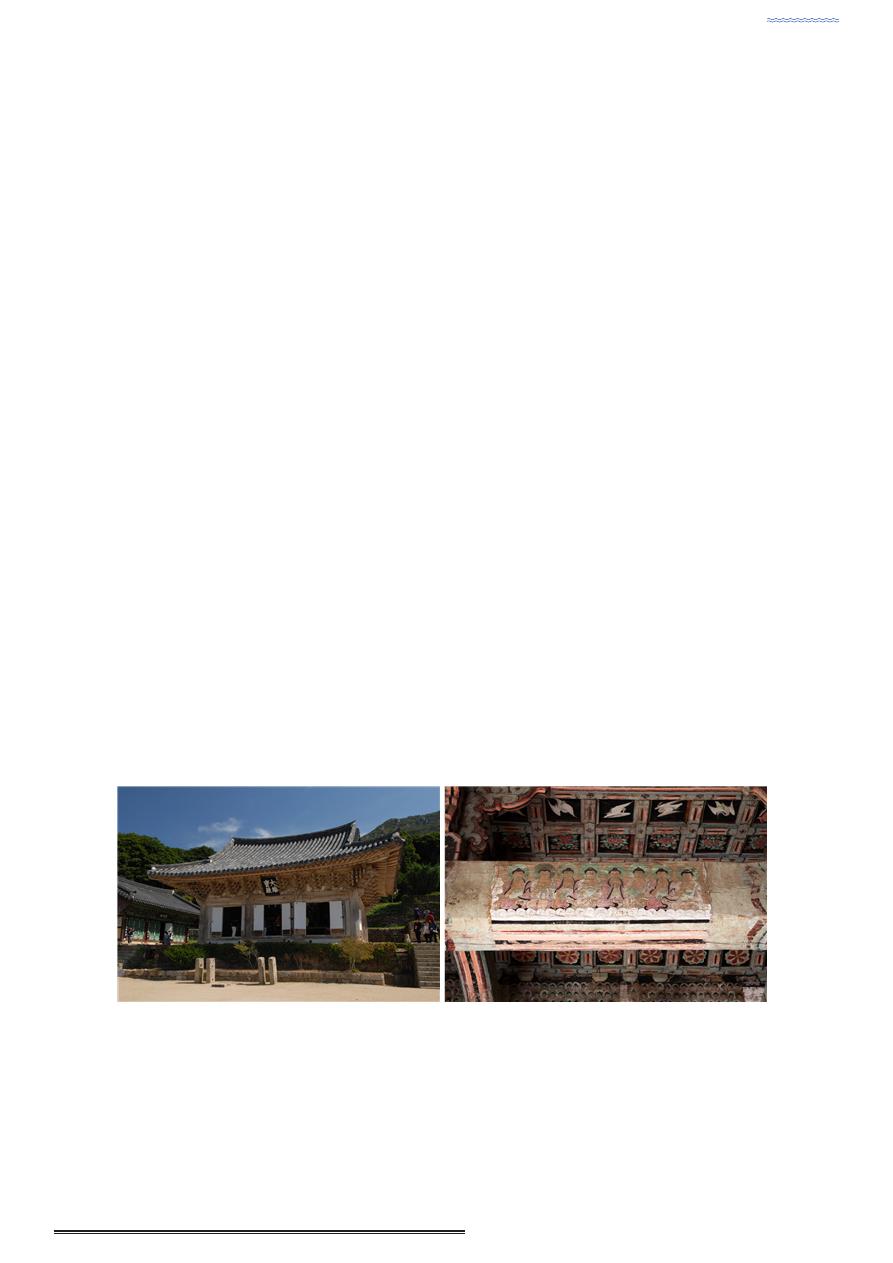
183
INTERNATIONAL JOURNAL OF
ASIA-PACIFIC HERITAGE STUDIES
SUSTAINABLE CONSERBATION OF
ASIA-PACIFIC CULTURAL HERITAGE FOR THE UNESCO CHAIR
가치의 확산단계에서도 문화유산의 어떠한 가치를 널리 알려야 하는지는 가치
의 이해단계부터 고민되어야 하는데 그러한 단계별 연속성이 단절되어 있다.
이러한 문제점이 개선되지 않으면 진정한 의미의 가치중심의 보존이 이루어지
기 어려우며, 가치가 제대로 보존·관리·활용되지 않으므로, 문화유산분야에서의
지속가능성을 보장할 수 없게 된다.
그 한 예로 해남 미황사 대웅전 내 천불도의 보존처리를 위하여 벽체로부터 벽화
를 분리하는 것에 대한 의사결정을 들 수 있다.(그림 4) 보물 제947호로 지정된
대웅전 내부의 벽에 있는 천불도는 건축문화유산인 대웅전과는 연관성이 없는
것으로 생각될 수도 있다. 그러나 종이 위에 그린 천개의 각기 다른 부처님은 대
웅전의 가치를 구성하는 매우 중요한 물질적 요소이다. 천불도는 누구나 불성을
가지고 있어서 언젠가는 우리 모두가 성불할 수 있다는 대승불교의 핵심적인 사
상을 표현한 그림이다. 그러므로 대승불교의 가장 보편적인 주불전인 대웅전 내
부 벽면에 봉안된 천불도는 대웅전과 분리될 수 없는 일체성을 이룬다.
또한 미황사 대웅전이 다른 대웅전과는 차별화된 종교적 의미와 가치를 가지도
록 하는 중요한 요소이다. 미황사 대웅전을 지정할 당시 천불도가 지정가치에 어
떠한 역할을 하는지에 대하여 검토하였는지, 또는 천불도를 대웅전의 일체적 요
소로 보았는지에 대해서는 문화재청의 문화재 설명 자료에는 없으므로, 확인할
수 없다. 다만 종이에 그린 천불도의 희소성이나 대승사상과의 연관성 등의 측
면에서 볼 때 대웅전과 깊은 연관관계를 지니고 있으며, 그러한 일체성은 지정
후 보존처리에 관한 의사결정과정에서 고려하여야 하는 핵심속성이다. 그러므
로 대웅전에서 벽화를 일시적 또는 영구적으로 분리하는 것은 벽화의 보존처리
후 재 부착 여부에 관계없이 대웅전의 가치와 원형에 영향을 미친다.
그림 4
미황사와
대웅전 내 천불도
벽화의 분리행위로 인하여 원형의 중요한 요소인 원 위치와 본래의 기술·재료 등
에 변화가 오기 때문이다. 가치에 근거한 판단을 하려면, 대웅전에서 벽화를 분
리하였을 때 대웅전의 역사적, 예술적, 학술적 가치 등에 어떠한 영향을 미치는
지, 그리고 원형유지에 어떠한 영향을 미치는 지에 대하여 면밀히 검토하는 과

184
INTERNATIONAL JOURNAL OF
ASIA-PACIFIC HERITAGE STUDIES
SUSTAINABLE CONSERBATION OF
ASIA-PACIFIC CULTURAL HERITAGE FOR THE UNESCO CHAIR
정이 필요하다. 그리고 그에 대한 내용을 기록으로 남겨야 한다.
그러한 가치 변화에 대한 검토과정은 벽화 분리를 결정하기 전에 거쳐야 하는 과
정이다. 궁극적으로는 당대의 판단이 미래 세대가 미황사 대웅전의 가치를 향
유하고 이해하는 데에 영향을 미치기 때문이다.
4.1.2. 합리적 의사결정을 위한 요건과 국내현황
두 번째로 합리적 의사결정에 대한 국내 현황을 보고자 한다. 모든 의사결정에서
는 판단기준이 의사결정의 객관성과 함께 의사결정의 질적 수준을 좌우한다. 공
적 자산인 문화유산의 지속가능성을 보장하기 위해서는 문화유산의 가치에 판
단기준을 두어야 하며, 가치의 변화를 최소화하는 방향으로 검토하는 것이 중요
하다는 점은 앞서 여러 차례 언급한 바 있다. 그래야 합리적 의사결정이 가능하
다. 때문에 국내·외에서 모두 문화유산에 대한 물리적 개입 또는 문화유산 주변
의 개발행위에 대한 검토는 해당 행위가 문화유산의 가치에 미치는 영향을 검토
하는 것으로 이루어진다. 그래서 국제적으로는 이미 영향검토에 대한 방법과 기
준에 대하여 활발한 연구와 논의가 진행되고 있다. 이러한 영향검토 과정을 통
하여 합리적 판단을 유도하기 위해서는 영향검토를 할 수 있는 절차와 기준이 있
어야 하며, 그것을 의사결정에서 적용하여 최종 판단을 하는 의사결정권자가 전
문적인 지식과 객관적인 판단능력을 갖추어야 한다.
결국 기준과 전문성이 합리적 의사결정의 핵심요인데 아직 국내에서는 그에 대
한 체계적이고 깊이 있는 논의를 시작하는 단계에 있다. 그 중에서 일부 제도는
국제적으로 앞서 있는 제도도 있다. 그 중 하나가 문화유산 주변의 역사문화환경
보존구역 행위에 대한 검토이다. 소위 현상변경제도로 일컫는 영향검토제도에
는 여러 형식이 있다. 우선 『문화재보호법』에 의거하여 국가지정문화재로 지정
한 문화재에 대한 현상변경이나 지정문화재 주변 500미터 반경 내에서 설정한
역사문화환경 보존지역에서의 행위허가 여부를 결정하는 과정이다.
그 외에 『고도보존 및 육성에 관한 특별법』에 의하여 지정된 지정지구 내에 하는
행위의 경우 역시 마찬가지로 해당 행위가 고도의 가치에 미치는 영향에 대하여
검토하는 제도가 있다. 그러한 영향검토를 보다 효율적으로 하면서 사유재산권
을 최대한 허용할 수 있도록 하기 위하여 역사문화환경 보존지역에서의 행위에
대해서는 허가를 받지 않고도 할 수 있는 행위의 종류와 범위를 설정하고 일반에
게 공개하여 해당지역에 일어나는 변화를 합리적으로 관리하고 있다. 만약 행위
가 허가 없이 할 수 있는 범위를 벗어나게 되면 영향검토과정을 개별적으로 거
쳐 허가를 받을 때에만 계획대로 행위를 할 수 있다.
앞서 언급한 『고도 보존 및 육성에 관한 특별법』에 의하여 국내에서 고도로 지
정된 곳은 경주, 공주, 부여, 익산 등 4개 지역이다.
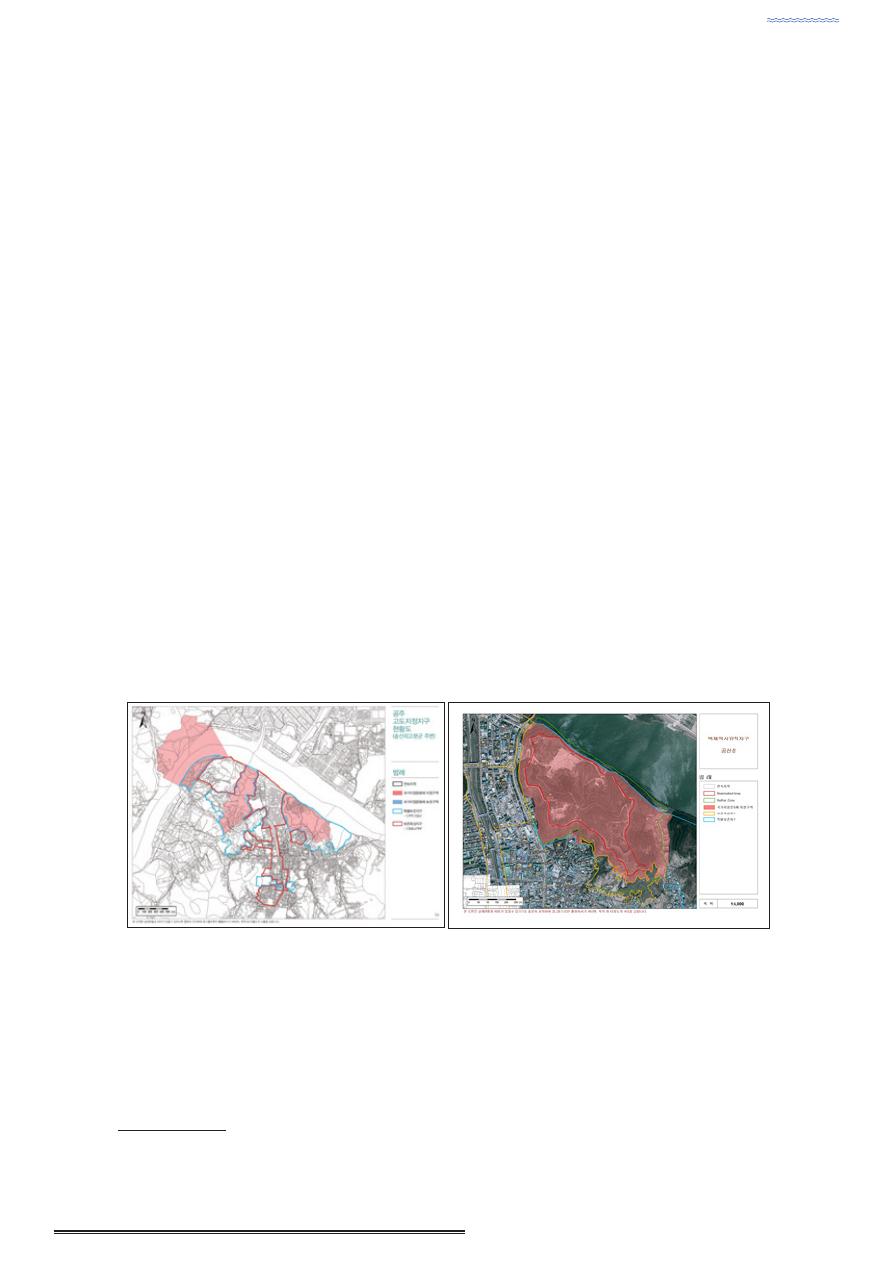
185
INTERNATIONAL JOURNAL OF
ASIA-PACIFIC HERITAGE STUDIES
SUSTAINABLE CONSERBATION OF
ASIA-PACIFIC CULTURAL HERITAGE FOR THE UNESCO CHAIR
이들 4개 고도는 지방자치단체의 행정구역 전체를 고도로 지정하고, 그 안에서
고도역사문화환경 특별보존지구와 보존육성지구를 지정한다. 보존육성지구는
‘고도의 원형을 보존하기 위하여 추가적인 조사기 필요한 지역이나 역사문화환
경 특별보존지구 주변의 지역 등 고도의 역사문화환경을 보존·육성할 필요가 있
는 지역’을 의미한다
7 . 특별보존지구는 ‘고도의 역사문화환경 보존에 핵심이 되
는 지역으로 그 원형을 보존하거나 원상이 회복되어야하는 지역’이다2. 고도 내
에는 이러한 특별보존지구와 보존육성지구 외에도 개별 건축물이나 유적이 지
정되기도 하고, 유네스코에 등재된 세계유산도 포함되어 있다. 4개 고도 중에서
공주를 예로 들어 고도 내에서 지정된 서로 다른 유형의 지정지구(또는 지정물)
를 보면 그림 5와 같다.
공주는 삼국시대의 백제의 도읍지였다. 당시 도읍을 지키기 위한 공산성은 금강
을 자연해자로 이용하여 조성한 성으로 금강의 이남지역에 강변에 연접하여 공
산성을 배치하였다.(그림 5의 오른쪽 위성사진), 그 왼쪽에는 제사유적인 정지
산 유적과 왕릉인 송산리고분군이, 그리고 그 왼쪽에는 강을 중심으로 남북지역
에 걸쳐 공주 고마나루(명승)라는 경관적 가치를 지니는 자연유산이 배치되어
있다. 금강은 공산성의 도읍지 기능을 강남 지역에 배치하는 데에 큰 기능과 상
징적 의미를 부여하였다. 그리고 공산성과 정지산 유적 사이부터 남쪽으로 주거
공간이 이어지고, 그 남쪽 끝 지점에는 공주목으로서 조선시대에 지역통치의 중
심지 역할을 했던 목관아터와 감영터 유적이 분포되어 있다.
7 | 문화재청 (2018) 「고도보존 및 육성에 관한 특별법」제10조(지구의 지정 등) 제1항
8 | 동법 (2018) 제10조(지구의 지정 등) 제2항
그림 5
Designated
Ancient City
Area of Gongju
city and World
Heritage Property
Zone and Buffer
Zone
공주는 공주 석장리 구석기유적을 시작으로 삼국시대 백제의 도읍지로서의 흔
적, 그리고 고려시대를 거쳐 조선시대의 행정중심지로서의 흔적, 일제강점기의
근대건축물 등 시대별로 역사적 연속성을 보여주는 흔적이 고르게 분호되어 있
다. 이러한 다양한 시기의 유적은 공주시 내에서 권역별로 그 영역을 구분할 수
있을 만큼 도시의 배치에 있어서도 명확히 역사적 흔적과 다양한 가치를 읽어내

186
INTERNATIONAL JOURNAL OF
ASIA-PACIFIC HERITAGE STUDIES
SUSTAINABLE CONSERBATION OF
ASIA-PACIFIC CULTURAL HERITAGE FOR THE UNESCO CHAIR
는 데에 많은 도움을 주고 있다. 이러한 시대별, 유적의 성격별로 공주가 지닌 다
양한 유·무형적 흔적은 고도를 구성하는 중요한 가치이며, 그러한 가치들은 세
계유산등재신청서와 고도보존육성기본계획에 그대로 명시되어 있다. 이들은 곧
공주가 고도로서 그리고 문화유산으로서 지속가능성을 가지는 데에 매우 핵심
적인 요소이다.
최근 공주시와 행복도시건설청이 계획하고 있는 교량건설은 앞서 서술한 고도
로서 또한 세계유산으로서의 가치에 매우 큰 영향을 미칠 수 있는 계획으로서 이
에 대한 영향검토가 진행 중에 있다. 현재 공주의 강북지역은 최근 들어 개발이
빠르게 이루어지고 있는 지역으로서 구도심 내 주거공간의 부족을 해소하기 위
한 주거 및 각종 편의시설이 들어서 있다. 이에 비해 강남지역은 각종 유산이 집
중되어 있어서 관광객의 유입이 많고, 관공서와 학교가 집중되어 있어서 강북-
강남 간에 교통량이 많은 편이다. 그러한 문제를 해소하기 위하여 세계유산이자
사적인 공주 공산성에 연접하여 교량을 건설하고자 하는 계획이 지역의 숙원사
업으로 오랫동안 계획되어왔고, 최근에 예산이 편성되었다. 현재 이에 대한 설
계를 진행 중에 있다. 교량의 건설은 국가지정문화재(사적)인 공주 공산성의 역
사문화환경 보존지역으로서 「문화재보호법」에 의하여 문화재청장의 허가를 받
아야만 진행할 수 있는 사업에 해당하므로, 현재 문화재청에서는 개발 사업이 문
화유산의 가치에 미치는 영향을 검토하고 있다.
교량의 건설이 공주 공산성 문화유산에 미치는 영향에 대한 검토는 크게 3가지
의 측면에서 이루어지게 된다. 첫째는 국가지정문화재 사적 제12호 공주 공산성
의 역사적·학술적·예술적·경관적 가치에 미치는 영향, 두 번째는 세계유산인 백
제역사유적지구의 하나인 공주 공산성의 탁월한 보편적 가치에 미치는 영향, 세
번째는 고도 역사문화환경 특별보존지구에 미치는 영향을 검토하게 된다.
첫 번째로 국가지정문화재로서 지정가치에 미치는 영향 측면에서는 문화유산
유형별 검토기준이 적용되는데, 공주 공산성은 성곽에 해당하는 유적으로서 장
소성, 조망성, 일체성 등이 주요 검토사항이다. 여기에서는 성곽, 산, 강 등 지형
적 특성이나 성곽 내·부의 조망, 그리고 성곽과 일체성을 이루는 해자(금강)에서
이루어지는 개발행위가 미치는 영향을 검토하게 된다. 두 번째로 세계유산 백제
역사유적지구의 일부로 공주 공산성이 유네스코 세계유산목록 등재 시 인정받
은 탁월한 보편적 가치는 등재 당시 제출한 세계유산보존관리계획에 명시된 내
용을 중심으로 검토하게 된다. 이 계획에서는 공주 공산성이 북쪽으로 금강, 남
쪽으로 구릉, 서쪽으로 완만한 경사지형 등 지형적 특성을 성곽의 경관을 유지
하는 핵심요소로 보고, 이들에 대한 경관을 관리하겠다는 계획이 명시되어 있
다. 그러므로 자연해자로서 금강이라는 자연지형을 이용하여 조성한 공주 공산
성이 지니는 탁월한 보편적 가치가 금강에 교량을 건설함으로서 어떠한 영향을
미치는 지를 검토하게 된다.

187
INTERNATIONAL JOURNAL OF
ASIA-PACIFIC HERITAGE STUDIES
SUSTAINABLE CONSERBATION OF
ASIA-PACIFIC CULTURAL HERITAGE FOR THE UNESCO CHAIR
세 번째로는 2014년에 수립하여 공주를 고도로서 보존·육성하는 데에 기초적인
계획인 공주 고도보존육성 기본계획에 명시된 내용을 기준으로 고도 공주에 미
치는 영향을 검토하는 것이다. 이 계획에서는 공주의 금강 이남지역에 위치한
구도심지역으로 통과하는 교통을 우회하도록 하고 구도심의 대중교통수단을 확
충하여 대중교통을 통한 도심의 접근성을 제고하겠다는 계획이 명시되어 있다.
앞서 서술한 세 가지 차원에서 검토해 보면, 교량의 건설이 문화유산인 고도 공
주에 미치는 부정적인 영향은 분명히 있다고 보인다. 다만 문화유산에 미치는 영
향이 부정적이라고 해서 무조건 개발행위를 막을 수는 없는 것이 현실이다. 그
러므로 다른 많은 영향검토에서와 마찬가지로 해당 개발행위가 미치는 부정적
인 영향을 감수할 만큼의 개발에 대한 타당성과 공익이 어느 정도인지를 충분한
정보와 자료를 가지고 면밀하게 검토하여야 한다. 만일 그러한 개발행위로 인해
문화유산에 미치게 될 부정적인 영향을 수용할 만큼 교량건설의 필요성이나 효
과가 충분히 제시되지 않는다면 교량의 건설은 허용하기 어렵다.
만일 교량건설의 타당성이 문화유산에 미치는 부정적인 영향보다 더 크고, 정말
로 불가피하다고 인정되면 교량위치를 다른 곳으로 변경하거나 교량의 디자인
을 변경하는 등의 절충안을 수립하여 개발행위로 인해 문화유산에 미치는 부정
적인 영향을 최소화할 수 있는 방법을 검토하게 된다. 이러한 검토는 시간이 많
이 소요된다. 그러나 합리적인 판단을 위해서 또한 문화유산의 지속가능성을 보
장하기 위하여 반드시 거쳐야 한다. 이 과정에서 검토를 위한 자료수집과 다양
한 이해당사자와의 협의와 소통, 세계유산센터 등 관련 기관이나 문화재위원회
와의 의견조율 등이 체계적이고, 반복적으로 이루어져야 한다. 특히 교량 건설
에 대한 타당성이 지역사회 내에서 단기적으로 인정된다 하더라도 공주 인구의
지속적인 감소, 구도심 지역 내 인구유입 가능성 등의 다각적인 측면에서 교량
건설이 실제 공주의 지역개발에 긍정적인 도움이 될 것인지에 대한 검토가 이루
어져야 한다.
지역사회를 위한 교량건설이 궁극적으로 자원으로서의 문화유산의 지속가능성
을 저해하는 것 말고도 더 크게 지역사회에 중장기적으로 미치는 부정적인 영향
이 있는지 신중하게 검토해야 할 것이다.
4.1.3. 공동체의 참여를 유도하기 위한 요건과 국내현황
마지막으로 공동체의 참여 대한 국내의 현황을 살펴보겠다. 공동체의 참여가 제
대로 이루어지려면 문화유산이 지닌 공적 가치가 사회 내에서 널리 인정받고, 공
적가치를 위하여 사적이득이나 사유재산권이 일정부분 제한될 수 있다는 것에
대한 사회적 합의가 전제되어야 한다. 그리고 그러한 공적가치를 존중하고 미래
세대에 지속가능하도록 하려면 대중의 동참이 있어야 한다.

188
INTERNATIONAL JOURNAL OF
ASIA-PACIFIC HERITAGE STUDIES
SUSTAINABLE CONSERBATION OF
ASIA-PACIFIC CULTURAL HERITAGE FOR THE UNESCO CHAIR
앞서 서술한 영국의 역사환경에 대한 보존원칙(제2항)에서도 역사환경을 유지
시켜나가는 데에 모두가 참여해야 한다고 명시한 것도 그러한 맥락에서 나온 원
칙이다. 이를 위해서는 많은 사람들이 문화유산이 지니고 있는 다양한 가치에 대
하여 이해하고, 그것을 공동의 노력으로 지켜나가고, 삶의 질적수준을 높이는 자
원으로 활용할 의지가 있어야 한다.
그러나 현재 국내에서는 문화유산에 대한 행위, 그 중에서 특히 보존하는 행위는
지속가능성을 보장하는 가장 중요한 단계임에도 불구하고 그것을 규제행위로
인식하고 있다. 개인의 재산권을 제한하고, 사유권을 침해하는 행위로 인식하는
것이 전반적인 보존에 대한 국내적 이해이자 관점이다. 때문에 문화유산 주변의
역사문화환경 내에서 받아야 하는 행위허가 과정에 대한 불만과 민원제기가 많
다. 앞서 서술한 교량건설에 대한 사항도 충분한 영향검토과정을 기다리고 동참
하여 함께 고민하기 보다는 그러한 과정 자체를 대중의 편익을 제한하는 것으로
이해하여 정부와 시민 간의 갈등관계로 발전할 소지가 있다. 이러한 대립구조는
문화재행정을 규제행정으로 보는 한 더욱 심화될 수 밖에 없다.
모든 행정의 원칙은 투명성, 일관성, 합리성이다. 이에 따라 현재 문화유산에 대
한 국내의 행정이나 정책은 투명하고, 일관되며 합리적인 방향으로 운영하고지
지속적으로 개선해 나가고 있다. 역사문화환경 보존지역에서의 현상변경 허가
제도도 마찬가지이다. 이 제도는 문화유산의 경관과 주변환경에 대한 일체성, 경
관성 등을 지속가능하도록 하기 위하여 일정 구역에 대하여 올바른 개발행위를
유도하는 제도이지 규제를 목적으로 하는 제도가 아니다. 행정의 3가지 요건을
적용하기 위하여 해당지역의 개발여건과 도시계획, 문화유산의 가치와의 관계
등을 고려하여 허가 없이도 할 수 있는 개발행위를 주기적으로 검토하여 이를 고
시하고 있다. 또한 허용기준을 넘어서는 개발행위에 대해서는 개별적으로 개발
행위와 문화유산의 가치 간의 경중을 검토하여 문화유산의 가치보존과 사적 재
산권 간의 합리적인 절충방안을 제시하고 있다.
앞서 서술한 바와 같이 지역주민의 참여를 문화유산에 대한 의사결정에 참여하
는 것으로 생각하기 보다는 국내의 특수성과 여건 상 먼저 해결되어야 할 과제
가 있다. 그것은 바로 문화유산에 대한 가치를 충분히 이해시키고, 합리적인 의
사결정에 사익을 양보하려는 당대의 책임을 이해하도록 하는 일이다. 또한 문화
유산을 자원으로 인식하고, 그러한 자원을 가지고 삶의 질을 풍요롭게 할 수 있
는 방안이 무엇인지 함께 고민하고, 자원이 지닌 잠재력을 실질적으로 활용하는
주체로서 공동체의 참여를 유도하여야 한다.
그러나 현재 국내에서는 아직 문화유산의 중요성은 모두 이해하고 있으나 그것
이 공적 자원이라는 점에 대한 인식이 낮은 편이며, 문화유산의 주인으로서 자원
으로서 활용하는 주체의 역할보다는 권리만을 주장하는 경항이 강하다.

189
INTERNATIONAL JOURNAL OF
ASIA-PACIFIC HERITAGE STUDIES
SUSTAINABLE CONSERBATION OF
ASIA-PACIFIC CULTURAL HERITAGE FOR THE UNESCO CHAIR
4.2. 지역담론의 필요성과 과제
앞서 살펴본 문화유산의 지속가능성을 위한 3가지 사항에 대한 요건과 국내의
현황을 고려할 때 지역의 여건과 현황을 고려한 담론을 고민하는 것이 필요하
다. 필자는 특히 다음의 3가지 분야에서 우선적으로 검토가 필요하다고 본다.
첫째로 현재의 정책과 행정절차가 지속가능성의 요건을 갖추고 가치 중심의 합
리적 판단이 이루어지고 있는지 면밀히 검토하여야 한다. 문화유산의 지속가능
성을 담보하기 위한 법, 정책, 행정절차에 있어서 국제적 원칙과 지역의 여건 간
에 어느 정도 간극이 존재하는지 검토하고, 지역의 특수성이 무엇이며, 그러한
특수성은 현재의 법과 행정절차에 어떻게 담아야하는지 검토하고 개선방향을
모색해야 한다.
둘째로 지속적인 교육과 전문성 향상이 필요하다. 문화유산에 대한 모든 이해당
사자, 즉, 정부와 지방자치단체 행정가, 문화유산의 다양한 분야의 연구자와 전
문인력, 대중과 지역공동체 등이 문화유산에 대한 공적가치와 각각의 문화유산
에 담겨있는 다양한 가치들을 업무나 생활, 교육과정 등에서 충분히 이해하고
실천할 수 있는 능력과 역량을 키워야 한다. 그리고 각 분야별로 필요한 전문성
과 윤리의식을 갖출 수 있도록 전문과정도 필요하다. 지역의 여건에 맞는 그리
고 대상자별로 차별화된 교육과정이 마련되어야 문화유산의 지속가능성에 대한
합의된 지역담론이 체계적으로 형성될 수 있을 것이다.
마지막으로 지속적인 토론과 대화가 필요하다. 국내의 다양한 이해당사자 간의
대화와 소통 뿐만 아니라 국제적으로 우리와 여건이 비슷한 국가 간에 공유하고
있는 지역의 특수성을 공유하고, 각 국가별·지역별로 적절한 지역담론을 형성하
여, 해당 지역에 적합한 문화유산 보존관리·활용에 정책적으로나 문화유산 현장
에서 담아나갈 수 있는 방법들을 함께 찾아나가는 과정이 필요할 것이다.
5. 마치는 말
지금까지 문화유산의 개념의 발전과정에서 지속가능성이 차지하는 위치를 살펴
보고 지속가능성의 개념과 역할을 간략히 언급하였다. 이어서 문화유산의 지속
가능성에 대한 국제적인 담론과 주요 내용을 서술하고, 지속가능성의 필요요건
에 대하여 제시하였다. 마지막으로 그러한 국내에서의 현황과 문제점을 사례와
함께 살펴보고 지역담론의 필요성과 과제를 제시하였다. .
문화유산이 지닌 공적 가치와 함께 그것이 자원으로서 현재의 그리고 미래의 삶
을 풍요롭게 해 줄 수 있는 역할만으로도 문화유산의 지속가능성은 충분한 당위
성을 지닌다. 하지만 국제적으로 지속가능성에 대하여 논의하는 정도에 비하여
아직 국내에서는 개념에 대한 이해나 지역의 특수성을 고려한 담론이 부족한 상

190
INTERNATIONAL JOURNAL OF
ASIA-PACIFIC HERITAGE STUDIES
SUSTAINABLE CONSERBATION OF
ASIA-PACIFIC CULTURAL HERITAGE FOR THE UNESCO CHAIR
황이다. 그러므로 지금부터라도 지속가능성에 대한 관계, 학계, 그리고 대중적
인 관심과 이해를 바탕으로 국제적으로 논의되고 있는 지속가능성의 원칙과 방
향에 대하여 검토하고, 국내의 특수성과 여건에 맞게 지속가능성을 보장하기 위
한 고민을 시작하여야 할 것이다.
<참고문헌>
1. Council of Europe (2005) Council of Europe Framework Convention on the Value of
Cultural Heritage for Society, Council of Europe
2. (2017) Historic Cities Preservation and Promotion Act
3. English Heritage (2008) Conservation Principles Policies and Guidance for the
Sustainable Management of the Historic Environment, London: English Heritage.
4. English Heritage (2013), Constructive conservation: sustainable growth for historic
places, London: English Heritage.
5. Gongju Municipal City (2014) Gongju Historic City Preservation and Promotion
Master Plan, Gongju City.
6. World Commission on Environment and Development (1987) Our Common Future,
The Brundtland Report, Oxford University Press, 1987
7. Yang, M (2015) ‘Culture in moving the MDGs to the post-2015 development agenda:
some reflection on the role of living heritage for sustainable development’, in M
Albert(ed) Perceptions of sustainability in heritage studies,
Berlin: De Gruyter, 21-34.

THE FOURTH MID-TERM INVIT
A
TIONAL TRAINING PROGRAM
FOR CAMBODIAN EXPERTS IN 2018
Ⅰ | Program Overview
Ⅱ | Program Contents
Ⅲ | Related Photos about the Program


193
INTERNATIONAL JOURNAL OF
ASIA-PACIFIC HERITAGE STUDIES
SUSTAINABLE CONSERBATION OF
ASIA-PACIFIC CULTURAL HERITAGE FOR THE UNESCO CHAIR
1. Conservation and Restoration Project
of the Preah Pithu temple group in
complex
The Korea International Cooperation Agency
(KOICA) of the Republic of Korea (ROK) and
the Authority for the Protection of the Site
and Management of the Region of Angkor
(APSARA) are jointly responsible for the
general management of the Preah Pithu Temple
Restoration Project in Angkor Monuments,
Cambodia. They have been collaborating for the
Project since September in 2015. The project
is executed by the Korea Cultural Heritage
Foundation (KCHF) affiliated with Cultural
Heritage Administration of the Rep. of Korea.
They are engaged in a comprehensive restoration
project to conserve cultural assets through a
range of activities from preliminary research
and establishing plans to support Cambodia
with technology and equipment to strengthen
the country’s capacity of the conservation of
cultural heritage. The Preah Pithu Restoration
Project marks the country’s commitment to the
international campaigns to preserve the remains
of Angkor Monuments. The ROK promises to
strengthen their capacity in this area as they
continue to participate in activities to conserve
important cultural assets of the world.
2. Summary of the 4th Mid-Term
Invitational Training Program
for Cambodian Experts in 2018
In 2018, Korea Cultural Heritage Foundation
(KCHF) held the 4th Mid-Term Invitational
Training Program. The Cambodian experts
are from the Authority for the Protection of
the Site and Management of the Region of
Angkor(APSARA) who are the technical staffs;
engineer, architects and archaeologist. They
stayed 89days in Korea and learn about how to
conserve the old historic buildings especially
about their structures and safety.
Table 1. Summary of 2018 Invitational Training Program
Category
Contents
Title
2018 Invitational Training Program
for "conservation and Restoration
Project of the Preah Pithu temple
group in Angkor Complex"
Duaration
4th Mid-Term : August 1(Wed.) -
Octover 28(Sun.), 2018 / 89days
Objectives
- For the enhancement and
develpoment of the Cambodian
experts for cultural heritage
conservation
- Cultural heritage exchange
between Cambodia and Korea for
policy and technique in order to
develop mutual relationship
Medium of Instruction English
Venue
Seoul, Pangyo, Buyeo etc.,
Republic of Korea
Implementing Agency
Korea Cultural Heritage Foundaiton
(http://www.chf.or.kr)
Accomodations
IBIS Style Ambassador Gangman,
KNUCH Student's Dormitory etc.
Ⅰ Program Overview
Ⅱ | Program Contents
Ⅲ | Related Photos about the Program
THE FOURTH MID-TERM INVITATIONAL
TRAINING PROGRAM FOR CAMBODIAN
EXPERTS IN 2018

194
INTERNATIONAL JOURNAL OF
ASIA-PACIFIC HERITAGE STUDIES
SUSTAINABLE CONSERBATION OF
ASIA-PACIFIC CULTURAL HERITAGE FOR THE UNESCO CHAIR
Table 3
Module
Lecture
Field Trip
Module
Conservation
and
Management
of Cultural
Heritage
- Orientation
- Introduction of Conservation and Management for Cultural
Heritage
- Environmental Assessment of Cultural Heritage
- Principles of Conservation of Cultural Heritage
- Preservation of Historic Cultural Sites
- National Research Institute of Cultural
Heritage
- Restoration Site in Gyeongbok-Gung
- Traditional Architecture Elements
Conservation Center
Module
Analysis
of building
structure
- Basics of Architectural Structure
- Basic Theory and Practice of Structural Analysis
- S/W Operation Method and Practice
- MIDAS IT (Pangyo)
- Seoul
- Buyeo
Module
Korean
Architectural
Cultural
Heritage
- Introduction of Korean Architecutral Heritage
- Korean Old Capitals and Historic Sites
- Experiment of Architectural Materials
- Safety, Disaster Prevention, and its monitoring system
- Korea National University of Cultural
Heritage (from now KNUCH, Buyeo)
Module
Korean
Traditional
Cultural
Heritage
- World Heritage in Korea
- Cultural Tour
National Museum of Korea,
National Folk Museum of Korea,
Gyeongbok-Gung(Palace), etc.
- National Museum of Korea,
- Namsan etc.
Workshop
Presentation and discussion (At least 2 times)
- Seoul
- Pangyo
- Buyeo etc., Republic of Korea
Table 2. List of Tutors
Name
Group
Sovanlylin
MENG
Technical staff of Department of
Conservation of the Monuments in Angkor
Parkland Archeological Prevention APSARA
National Authority
Panhavonetey
KEAN
Basith
SY
Visaradaptra
SYTHA

195
INTERNATIONAL JOURNAL OF
ASIA-PACIFIC HERITAGE STUDIES
SUSTAINABLE CONSERBATION OF
ASIA-PACIFIC CULTURAL HERITAGE FOR THE UNESCO CHAIR
Table 4. Summary of Programm
Arrival / Orientation
Arrival
Hotel Check-in, Bank Account open, Stabilization of Living
Orientation, Lecture, Field trip
KOICA Orientation, Expert Lecture 1, 2
Visit National Research Institute of Cultural Heritage
Visit Cultural Heritage Conservation and Restoration Sites
Professional Training 1
MIDAS GEN Introduction
Professional Training 2
Practice General Usage
3D simple 2Bay Frame, Plant Structure, Web-opening
Detail Analysis, Hammerhead Pier, General Modeling
Professional Training 3
Practice RC & Steel Design, Steel Structure,
Seismic Design, Capacity Design, Mashed Slab Design
Professional Training 4
Practice Advanced Analysis 1
Construction Stage Analysis, Eigenvalue Analysis, RS Analysis, P-Delta, Buckling, Thermal Analysis
Professional Training 5
Practice Advanced Analysis 2
Time History Analysis, Pushover Analysis, Material Nonlinear Analysis, Advanced Analysis
Practical Training
Structural Analysis, Safety Diagnosis
(Field Study at NUCH in BuYeo / 9.17~9.19)
Status documentation (Lecture in KCHF / 9.20~9.21)
Professional Lecture 1
Korean Thanksgiving Holidays (ChuSeok)
Expert Lecture for Cultural Heritage, Study Visit
Hotel Check out (during morning time) / 10.01, Move to BuYeo (Shuttle Bus) / 10.01
Professional Lecture 2
Architectural Heritage of Korea, Old Capital and Historic Sites of Korea,
Architectural Structure Analysis practice
Professional Lecture 3
Korean Architectural Structure(Wooden, Masonry)
Safety and Disaster Prevention
International Course for Cultural Heritage Management
Expert Lecture and Study Visit with ICCHM
Conservation Principles and Ethical Philosophy
Preservation of Historical Old Cities
International Course for Cultural Heritage Management
Expert Lecture and Study Visit with ICCHM
Move to Seoul (IBIS Styles Ambassador) / 10.23, UNESCO CHAIR Program Seminar / 10.24
Study Visit of Conservation and Restoration Sites of Cultural Heritage, Closing Ceremony /10.25
Preah Pithu Seminar / 10.26
Departure
Back to Siem Reap (17:30)

196
INTERNATIONAL JOURNAL OF
ASIA-PACIFIC HERITAGE STUDIES
SUSTAINABLE CONSERBATION OF
ASIA-PACIFIC CULTURAL HERITAGE FOR THE UNESCO CHAIR
2. Program Contents
2.1. Detailed Schedule
Table 5. MIDAS IT
Date / Time
Program Description
2018.08.13 (Mon) 10:00 ~ 18:00
-Introduction of MIDAS IT and Orientation / Basic Understanding of Force and Load ①
2018.08.14 (Tue) 10:00 ~ 18:00
-Basic Understanding of Force and Load ② / Basic Understanding of Force and Load ③
2018.08.16 (Thur) 10:00 ~ 18:00
-Basic Usage of Midas Gen ① / Basic Usage of Midas Gen ②
2018.08.17 (Fri) 10:00 ~ 18:00
-Simple Beam Design / Simple Beam Modeling
2018.08.20 (Mon) 10:00 ~ 18:00
-Dream House Design / Dream House Modeling
2018.08.21 (Tue) 10:00 ~ 18:00
-Dream House Presentation
2018.08.22 (Wed) 10:00 ~ 18:00
-Understanding of Dead Load / Dead Load Practice
2018.08.23 (Thur) 10:00 ~ 18:00
-Understanding of Seisimic Load / Seisimic Load Practice
2018.08.24 (Fri) 10:00 ~ 18:00
-Understanding of Wind Load / Wind Load Practice
2018.08.27 (Mon) 10:00 ~ 18:00
-Structural Analysis Theory ①
2018.08.28 (Tue) 10:00 ~ 18:00
-Structural Analysis Theory ②
2018.08.29 (Wed) 10:00 ~ 18:00
-Code Design
2018.08.30 (Thur) 10:00 ~ 18:00
-Combined Load Factors to the Dream House
2018.08.31 (Fri) 10:00 ~ 18:00
-Structural Analysis of Dream House
2018.09.03 (Mon) 10:00 ~ 18:00
-Understanding of Linear Analysis
2018.09.04 (Tue) 10:00 ~ 18:00
-Understanding of Non-Linear Analysis
2018.09.05 (Wed) 10:00 ~ 18:00
-Building Structure Design
2018.09.06 (Thur) 10:00 ~ 18:00
-Building Structure Modeling
2018.09.07 (Fri) 10:00 ~ 18:00
-Structural Analysis of Building Structure
2018.09.10 (Mon) 10:00 ~ 18:00
-Understanding of Masonry Structure
2018.09.11 (Tue) 10:00 ~ 18:00
-Masonry Structure Design
2018.09.12 (Wed) 10:00 ~ 18:00
-Masonry Structure Modeling
2018.09.13 (Thur) 10:00 ~ 18:00
-Structural Analysis of Masonry Structure
2018.09.14 (Fri) 10:00 ~ 18:00
-Masonry Structure Presentation / Completion Ceremony

197
INTERNATIONAL JOURNAL OF
ASIA-PACIFIC HERITAGE STUDIES
SUSTAINABLE CONSERBATION OF
ASIA-PACIFIC CULTURAL HERITAGE FOR THE UNESCO CHAIR
Table 6. Nouvelle Vie A&C
Date / Time
Program Description
Remarks
2018.09.17 (Mon)
14:00 ~ 18:00
-Understanding of Ultrasonic Wave
-Understanding of Ultrasonic Wave Test
KNUCH
(Buyeo)
2018.09.18 (Tue)
10:00 ~ 18:00
-Practice of Ultrasonic Wave Test on Stone Cultural Heritage
KNUCH
(Buyeo)
2018.09.19 (Wed)
10:00 ~ 18:00
-Practice of Ultrasonic Wave Test on Stone Cultural Heritage
KNUCH
(Buyeo)
2018.09.20 (Thur)
10:00 ~ 18:00
-Making a Distribution Chart
KCHF
(Seoul)
2018.09.21 (Fri)
09:00 ~ 12:00
-Case Study
KCHF
(Seoul)
Table 7. Korean Culture Tour ①
Date / Time
Program Description
Remarks
2018.09.26 (Thur)
15:00 ~ 16:00
Participating in a special event
'Welcome! This is my first time to visit Korea House in Chuseok'
Korea House
(Seoul)
15:00~16:10
Making Songpyeon (Korean traditional rice cake)
16:30~18:00
Korean traditional performance
2018.09.27 (Wed)
09:00 ~ 18:00
Field Trip to Suwon Hwaseong Fortress,
Yongin Korea Folk Village
Hwaseong
Fortress(Suwon)
Korea Folk
Village(Yongin)
09:00~09:50
Move Seoul to Suwon
09:50~11:00
Suwon Hwaseong Fortress
11:00~11:50
Move Suwon to Yongin
12:00~13:00
Lunch
13:00~17:20
Yongin Korea Folk Village
17:30~18:00
Move Yongin to Seoul
Table 8. A theoretical lecture in KNUCH
Date / Time
Program Description
Remarks
2018.09.27 (Thur)
10:00 ~ 12:00
Values and Philosophy of Cultural Heritage Conservation
Youngjae Kim
2018.09.28 (Fri)
10:00 ~ 15:00
Conservation and Restoration of Paper Cultural Heritage
2018.10.01 (Mon)
10:00 ~ 12:00
Current Status of Restoration of Stone Cultural Heritage
Youngjae Kim
2018.10.02 (Tue)
10:00 ~ 12:00
Interpretation regarding general principles on repair,
Restoration and management of historical building and ruins
Youngjae Kim
2018.10.04 (Thur)
10:00 ~ 12:00
Case studies; Restoration of Korean Historic Buildings
Youngjae Kim
2018.10.05 (Fri)
10:00 ~ 12:00
Fourth Industrial Revolution Technology on the Cultural Heritage
Jeongmin Yu
2018.10.08 (Mon)
14:00 ~ 16:00
Understanding of Stone Pagoda in Korea
Ju-Hwan Cha
2018.10.10 (Wed)
14:00 ~ 16:00
Digital Preservation
Dongwook Hwang
2018.10.11. (Thur)
15:00~17:00
Dismantling Process of Iksan Miruksa Pagoda
Heondeok Jang

198
INTERNATIONAL JOURNAL OF
ASIA-PACIFIC HERITAGE STUDIES
SUSTAINABLE CONSERBATION OF
ASIA-PACIFIC CULTURAL HERITAGE FOR THE UNESCO CHAIR
Table 9. Korean Culture Tour ②
Date / Time
Program Description
Remarks
2018.10.03 (Wed)
10:00 ~ 14:00
Field Trip to Buyeo National Museum
Buyeo
National Museum
10:00~13:10
Buyeo National Museum
13:00~14:00
Lunch
2018.10.07 (Sun)
10:00 ~ 13:00
Field Trip to Baekje Cultural Land
Baekje Cultural Land
10:00~12:00
Baekje Cultural Land
12:00~13:00
Lunch
2018.10.12 (Fri)
07:00 ~ 20:00
Field Trip to Temple Sites around Jiri Mountain Region
Jiri Mountain Region
07:00~09:30
Move Buyeo to Sancheong
09:30~11:00
Daewon Temple
11:30~12:30
Lunch
12:30~13:00
Move Namwon to Sancheong
13:00~14:30
Silsang Temple
14:00~15:20
Move Namwon to Gurye
15:30~17:00
Hwahom Temple
17:00~19:00
Move Gurye to Buyeo
19:00~20:00
Dinner
2018.10.13 (Sat)
09:00 ~ 14:00
Field Trip to Gongju National Museum
Gongju
National Museum
09:00~09:40
Move Buyeo to Gongju
10:00~12:00
Gongju National Museum
12:00~13:00
Lunch
13:00~13:30
Move Gongju to Buyeo
Table 10. Participate in 2018 UNESCO CHAIR International Conference
Date / Time
Program Description
Remarks
2018.10.09 (Tue)
10:00 ~ 12:00
Preparation of 2018 UNESCO CHAIR
(Selecting Topic)
KNUCH
(Buyeo)
2018.10.14 (Sun)
10:00 ~ 12:00
Preparation of 2018 UNESCO CHAIR
(Preparing Presentation)
KNUCH
(Buyeo)
2018.10.20 (Sat)
10:00 ~ 12:00
Preparation of 2018 UNESCO CHAIR
(Final Rehearsal)
KNUCH
(Buyeo)
2018.10.24 (Thur)
10:00 ~ 18:00
<Sustainable Conservation of Asia-Pacific Cultural Heritage>
-Conservation Principles in Angkor (Basith SY)
-Ultrasonic Wave Test and Cultural Heritage (Visaradaputra SYTHA)
-Angkor Thom and Hwaseong Fortress (Panhavontey KEAN)
-Technologies and Cultural Heritage (Sovanlylin MENG)
National Palace
Museum
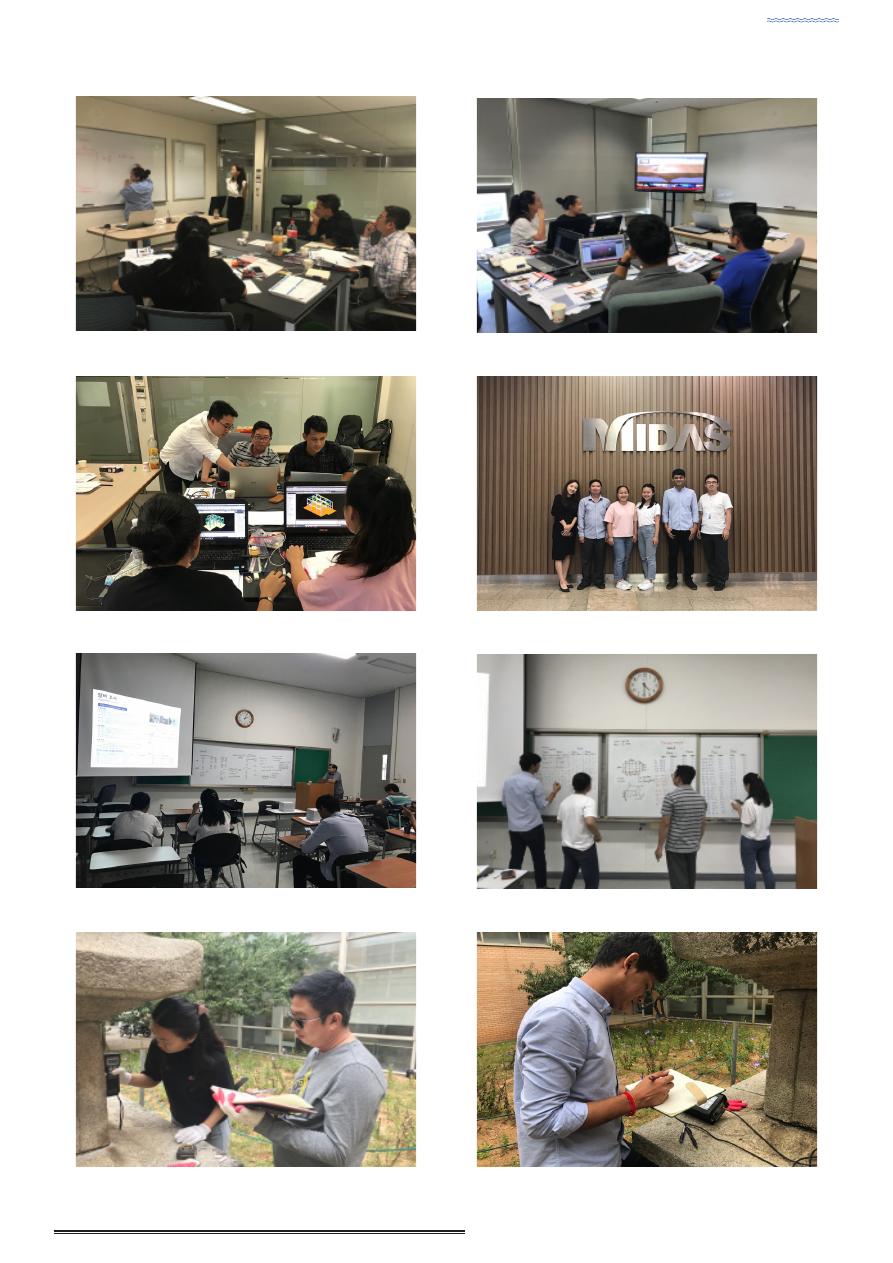
199
INTERNATIONAL JOURNAL OF
ASIA-PACIFIC HERITAGE STUDIES
SUSTAINABLE CONSERBATION OF
ASIA-PACIFIC CULTURAL HERITAGE FOR THE UNESCO CHAIR
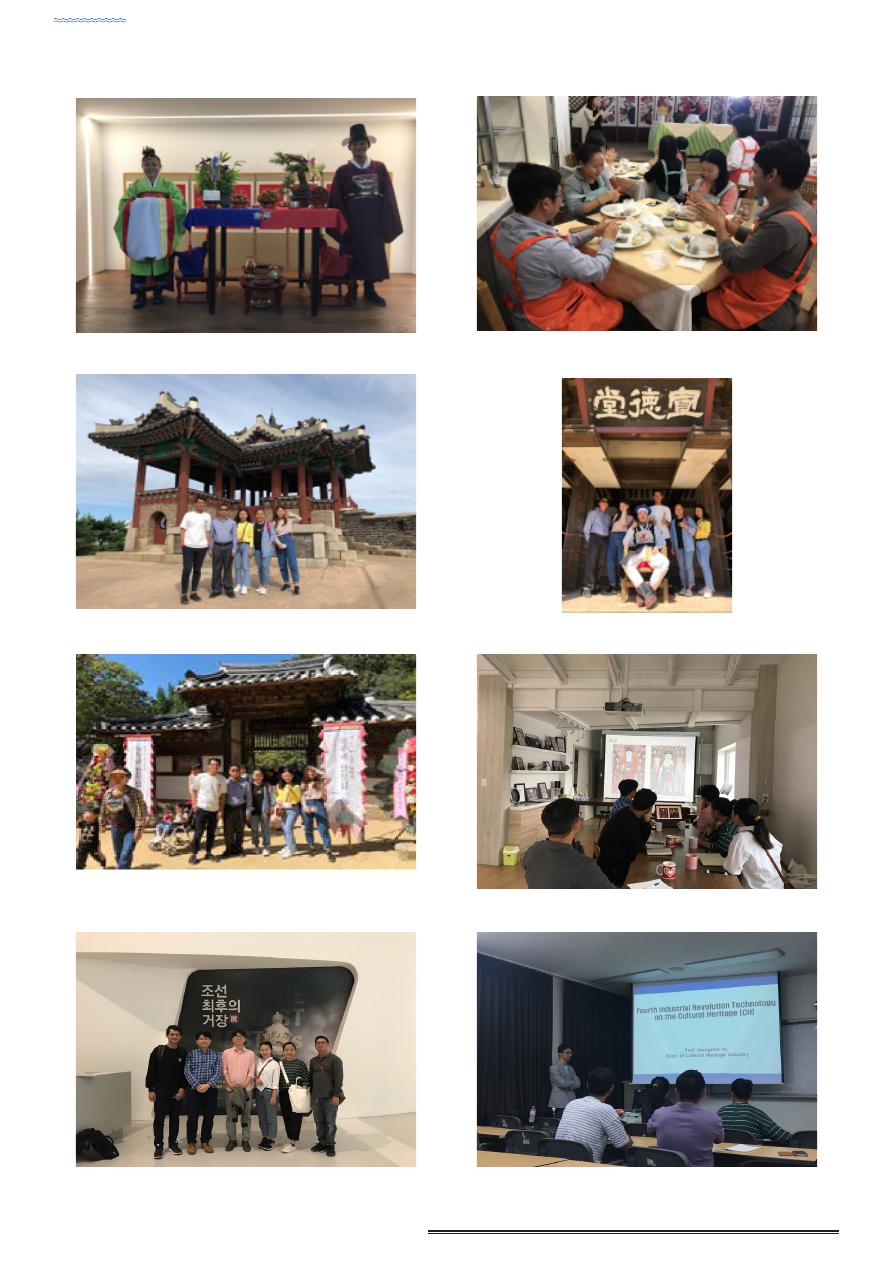
200
INTERNATIONAL JOURNAL OF
ASIA-PACIFIC HERITAGE STUDIES
SUSTAINABLE CONSERBATION OF
ASIA-PACIFIC CULTURAL HERITAGE FOR THE UNESCO CHAIR
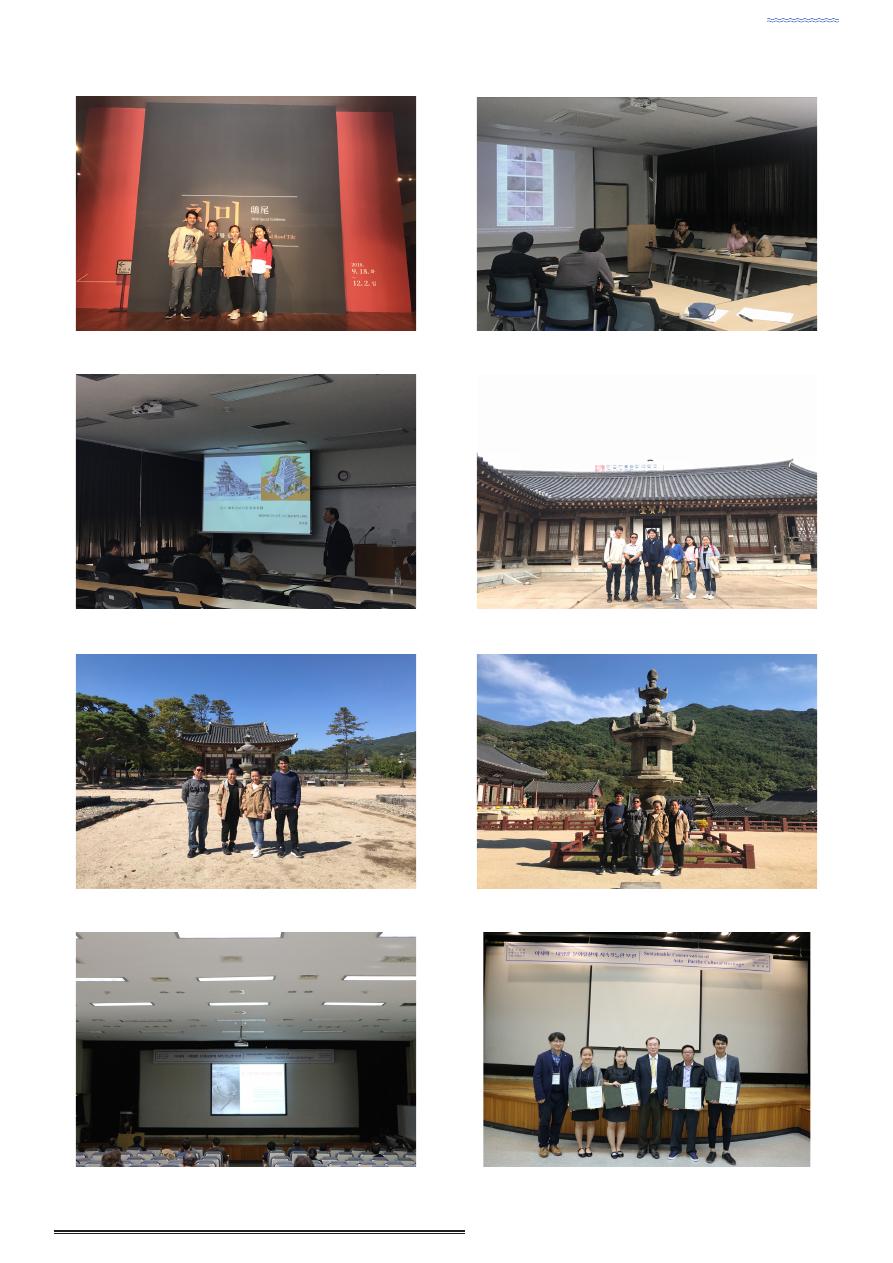
201
INTERNATIONAL JOURNAL OF
ASIA-PACIFIC HERITAGE STUDIES
SUSTAINABLE CONSERBATION OF
ASIA-PACIFIC CULTURAL HERITAGE FOR THE UNESCO CHAIR


INTERNA
TIONAL JOURNAL OF ASIA-P
ACIFIC HERIT
AGE STUDIES
| O R G A N I Z E R |
Derpartment of Heritage Conservation and Restoration,
Graduate School of Cultural Heritage,
Korea National Unversity of Cultural Heritage
| C O O P E R A T I O N |
· Cultural Heritage Administration of Korea
· Korea National Commission for UNESCO
· Korea Cultural Heritage Foundation